-
Lorenzo negli stadi
Rockol.it – a music-oriented online magazine I work with – published the reportage I did at the Jovanotti’s “Lorenzo negli stadi tour 2013” in Pescara (IT). Here are the other pictures.
-
Three of a Kind
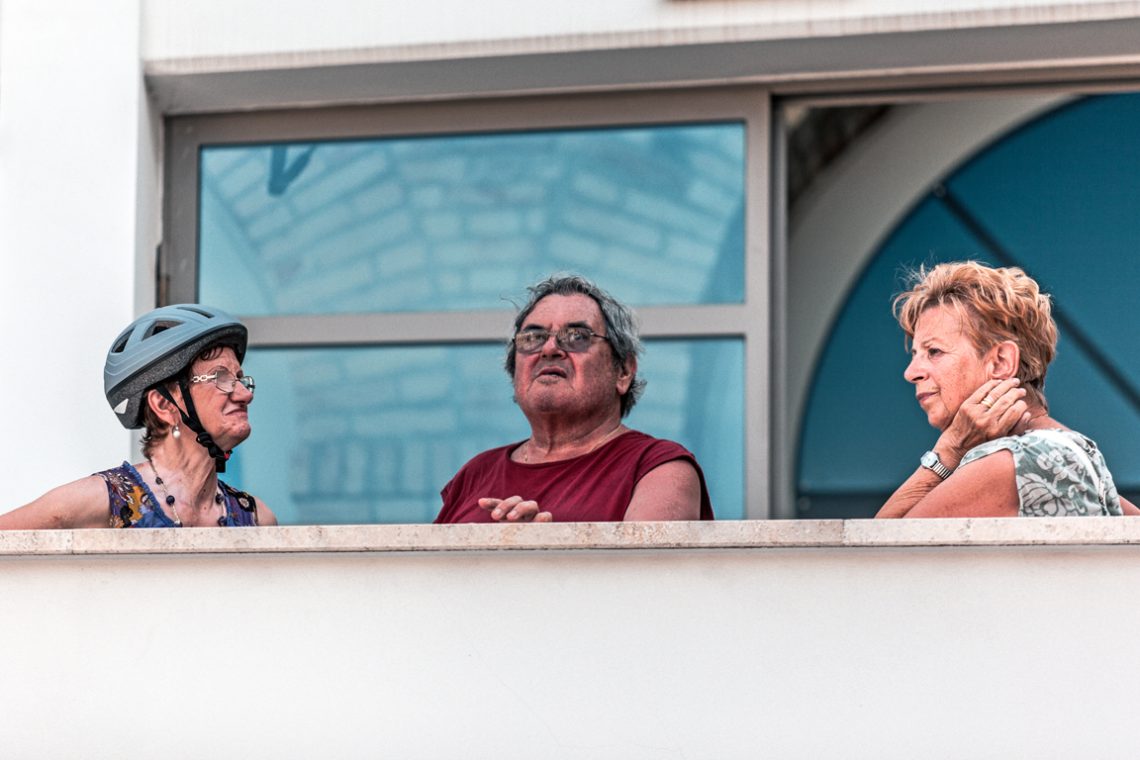
Shot from street level, this image captures an everyday theatre performed quietly on a terrace. Three people — two women and one man — are held together by proximity but separated by gesture, expression, and posture. It’s a fleeting constellation of personalities, caught just before it disperses. I was struck by the triangular tension: the woman on the left, sporting a bicycle helmet and pursed lips, locked in on the man’s casual delivery. He stands as the pivot, mid-sentence, while the third figure leans away, hand on neck, visibly disengaged. The emotional distance between them expands far beyond the physical. Technically, the image relies on a crisp focus and compressed…
-
The Calm Newsreader
Piazza del Duomo is never truly still. The stone expanse acts as both stage and thoroughfare, where the pace of life is measured in contrasts. In this pair of images, that tension is laid bare: a young woman, mid-stride, the blur of her step almost audible, shares the same visual field as a man in a red shirt who sits in unhurried contemplation, newspaper in hand. The composition in the first frame benefits from the deliberate use of foreground and background separation. The woman is caught in that decisive moment—foot lifted, eyes focused ahead—while the man remains anchored in his position, reading. The interplay between their postures tells a story…
-
A Lost Towel
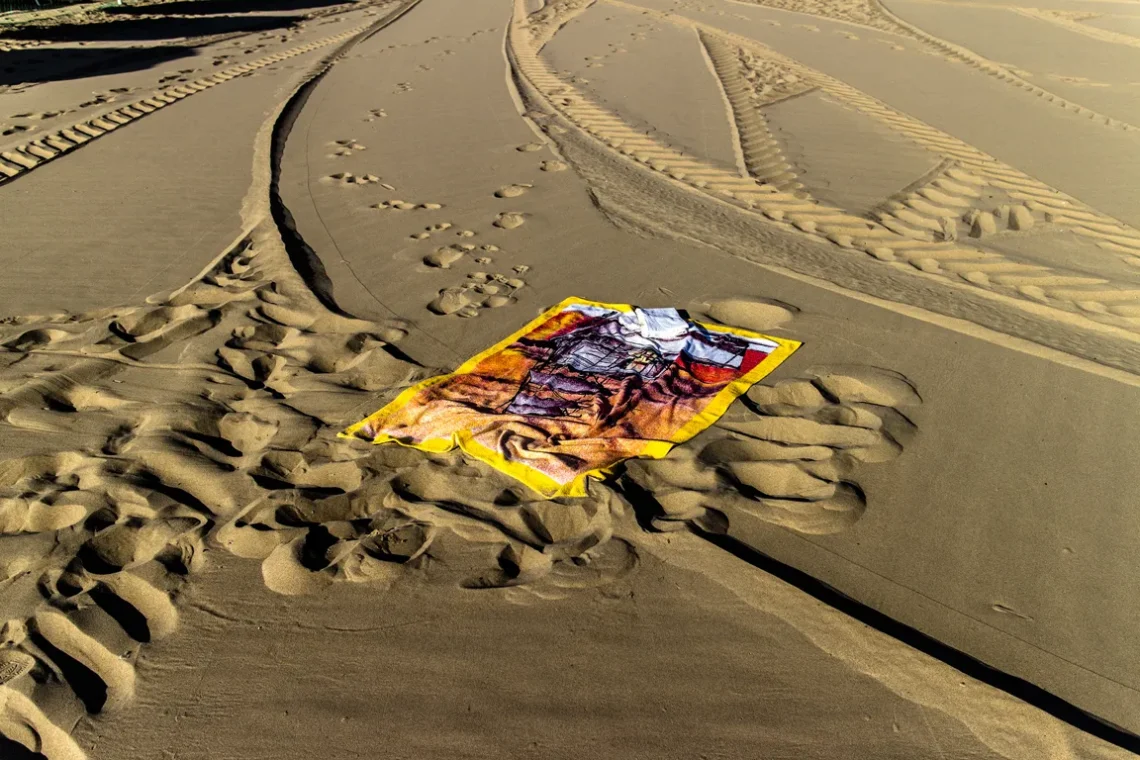
No one around. Just sun, sand, and something left behind. The beach was empty when I passed through—early or late, hard to say—but this towel was there, alone, crumpled and vivid. Its colours refused to blend in: yellows, reds, a printed image of something once meaningful, now half-folded by the wind. It didn’t look forgotten. It looked abandoned. What caught my eye more than the towel was what surrounded it: tyre marks, footprints, all criss-crossing paths layered into the sand. As if everyone passed by but no one stopped. It felt recent, but not urgent—like whoever left it didn’t mean to come back. The shot came together quickly. Low angle…
-
The Smoke Teacher
-
The Elders’ Council
-
Urban Scavenger
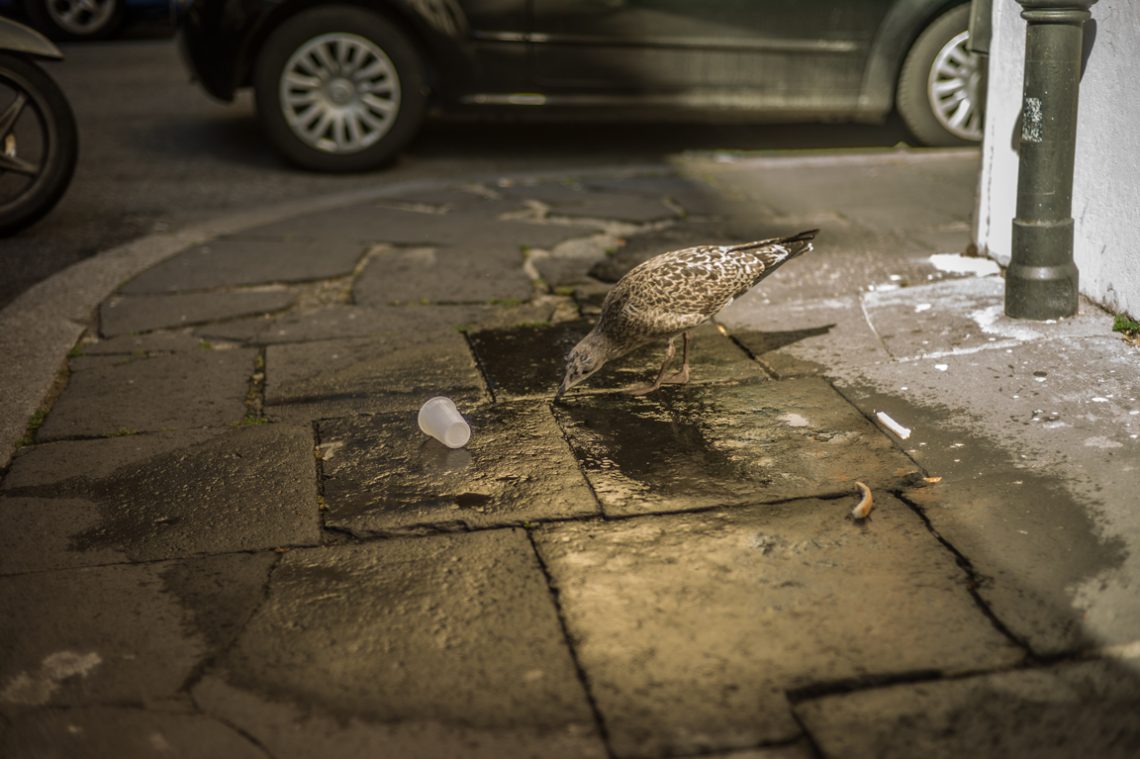
I photographed this scene late at night, drawn by the way a single pool of light exposed the fragments of urban life that usually go unnoticed. The gull was feeding on scraps by the kerb, a plastic cup discarded nearby, while traffic and people passed outside the frame. What emerged was a study of survival in the margins of the city, where wildlife and waste collide under sodium lamps. Compositionally, the image hinges on that triangle of illumination falling across the pavement. The lit area acts almost like a stage, isolating the bird against the darker periphery. I placed the gull slightly off-centre, letting the curved kerb and the lines…
-
A Quiet Evening
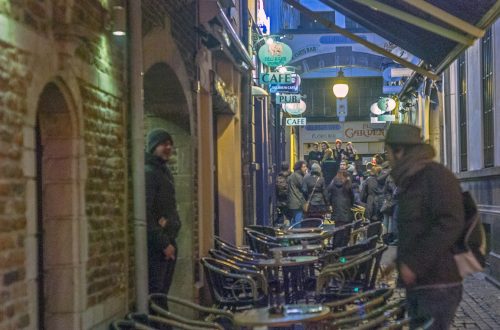
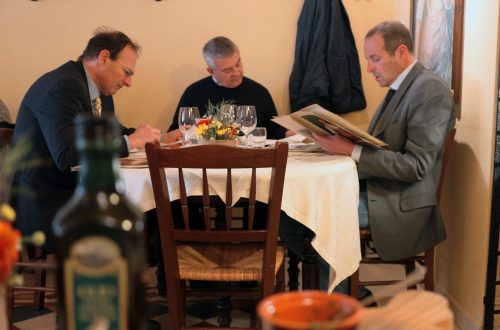
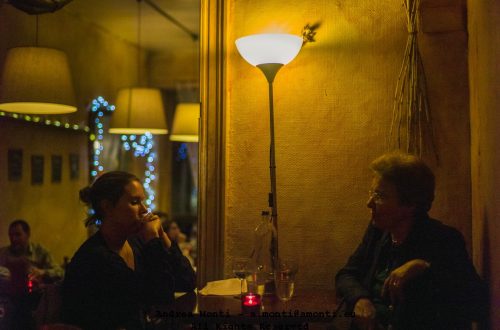
… in the heart of Rome, an old trattoria let people enjoy a quiet diner.
-
The Sailor
Hey, there’s no water straight there!
-
Trento, After Dark
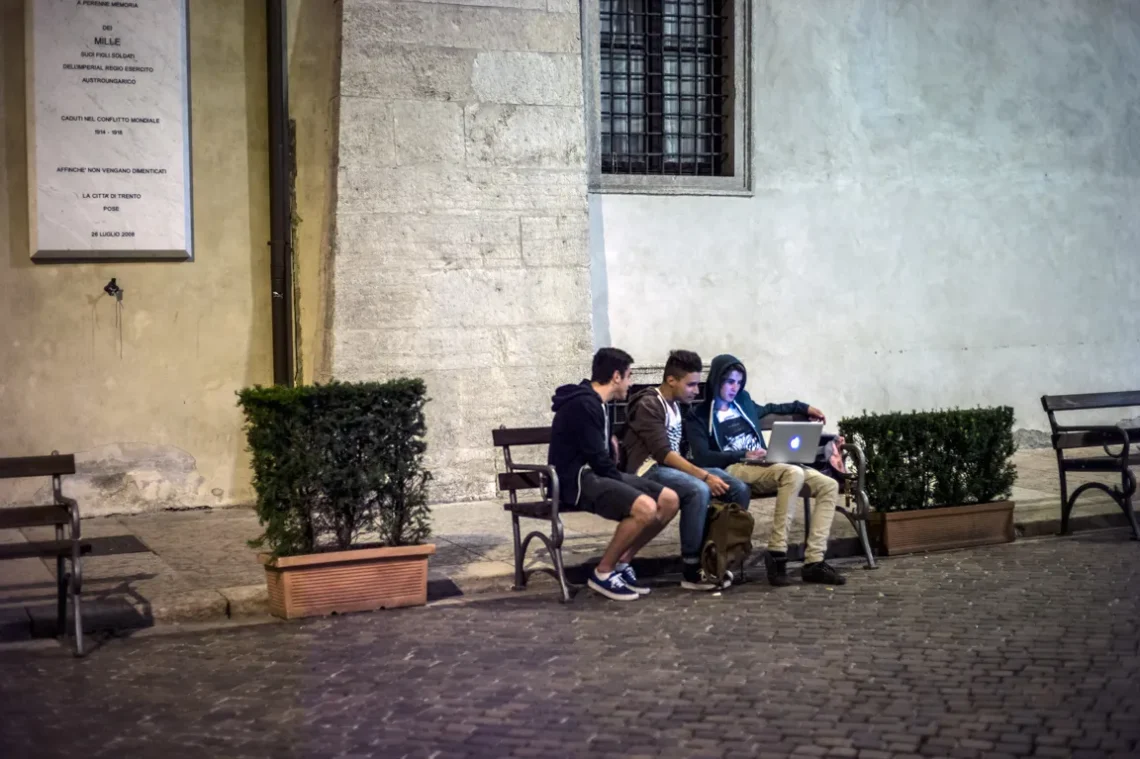
There’s a plaque on the wall behind them—honouring soldiers of the Austro-Hungarian Empire, fallen in a war a hundred years gone. But they’re not looking at that. Instead, three boys sit shoulder to shoulder on a wooden bench, huddled around a glowing Apple logo. A little too bright for the square. The light falls on their faces the way a fire once would have. They’re focused, not speaking much. Two watch the screen; one taps at his phone. Nobody’s in a rush. This is Trento at night: limestone façades, uneven cobbles, Mediterranean shrubs in planters, and now Wi-Fi in the air. The square is mostly empty. Just a few benches,…
-
Alone, Together…
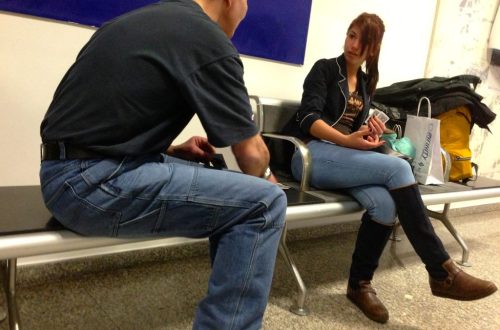
Are they friends, or do they just share the table?
-
A Silent Dialogue
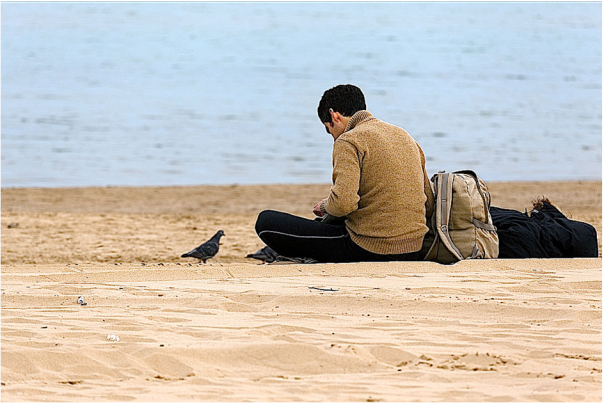
A restrained coastal tableau built around stillness and separation. The seated figure is placed slightly right of centre, turned away from the viewer, which shifts emphasis from identity to gesture and mood. The backpack anchors the narrative as travel or pause, while its bulk balances the composition against the open sand. The scene is organised in three calm bands—foreground ripples of sand, a mid-ground strip of beach, and the softly textured sea beyond. This horizontal structure stabilises the frame and amplifies the contemplative register. A lone pigeon, small but sharply legible, introduces a secondary point of attention and a faint counter-rhythm to the figure’s inward focus. Colour is deliberately subdued:…
-
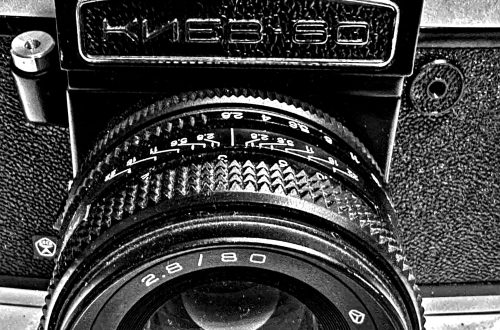
My camera’s early test shots
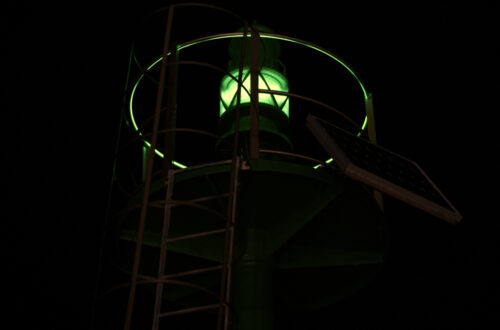
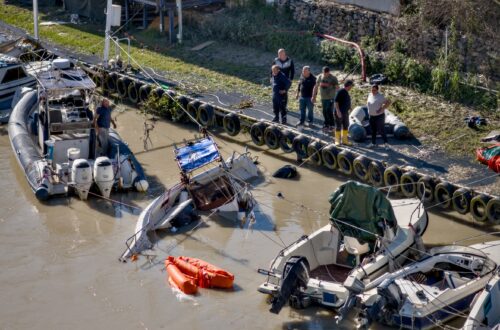
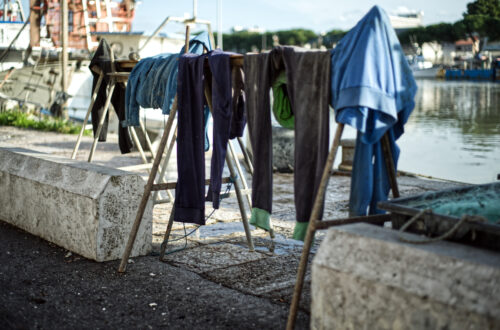
Unlike fishing villages or marinas, they are not built to be looked at. They are built to work. Every object has a purpose, every line leads somewhere, every apparently random piece of machinery exists because somebody, at some point, needed it to solve a practical problem. There is very little room for decoration. This is probably why I enjoy photographing them.