-
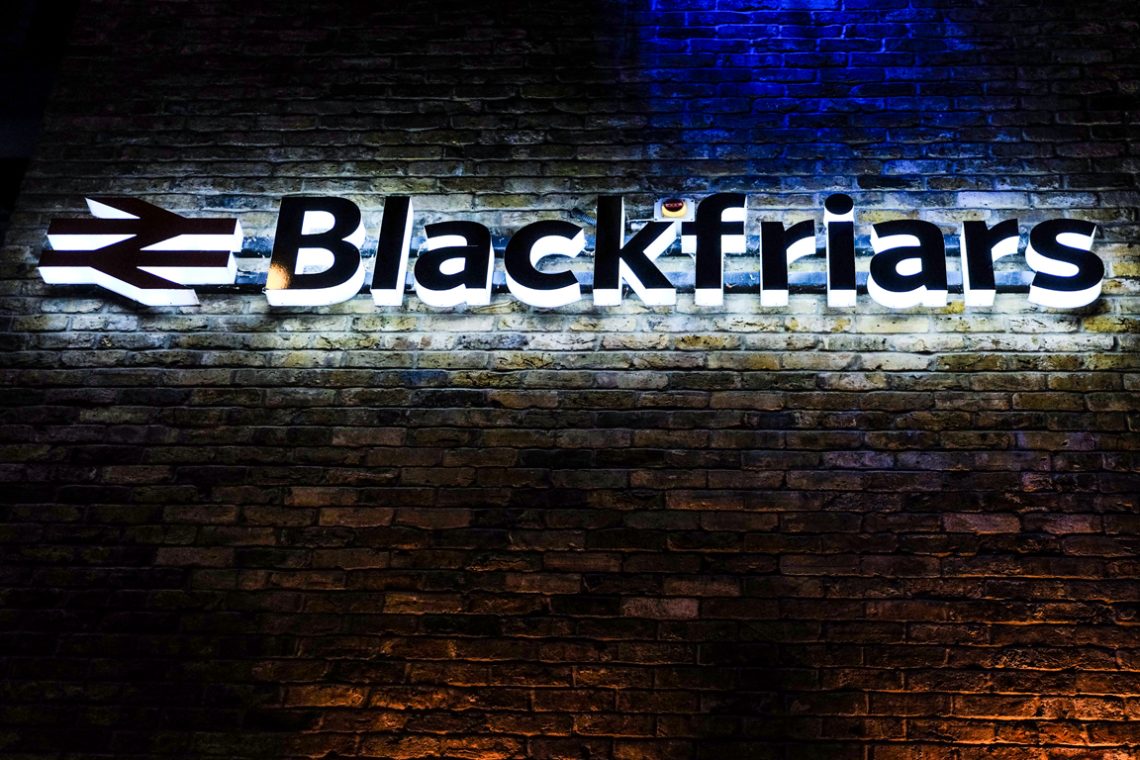
Blackfriars Train Station Banner
-
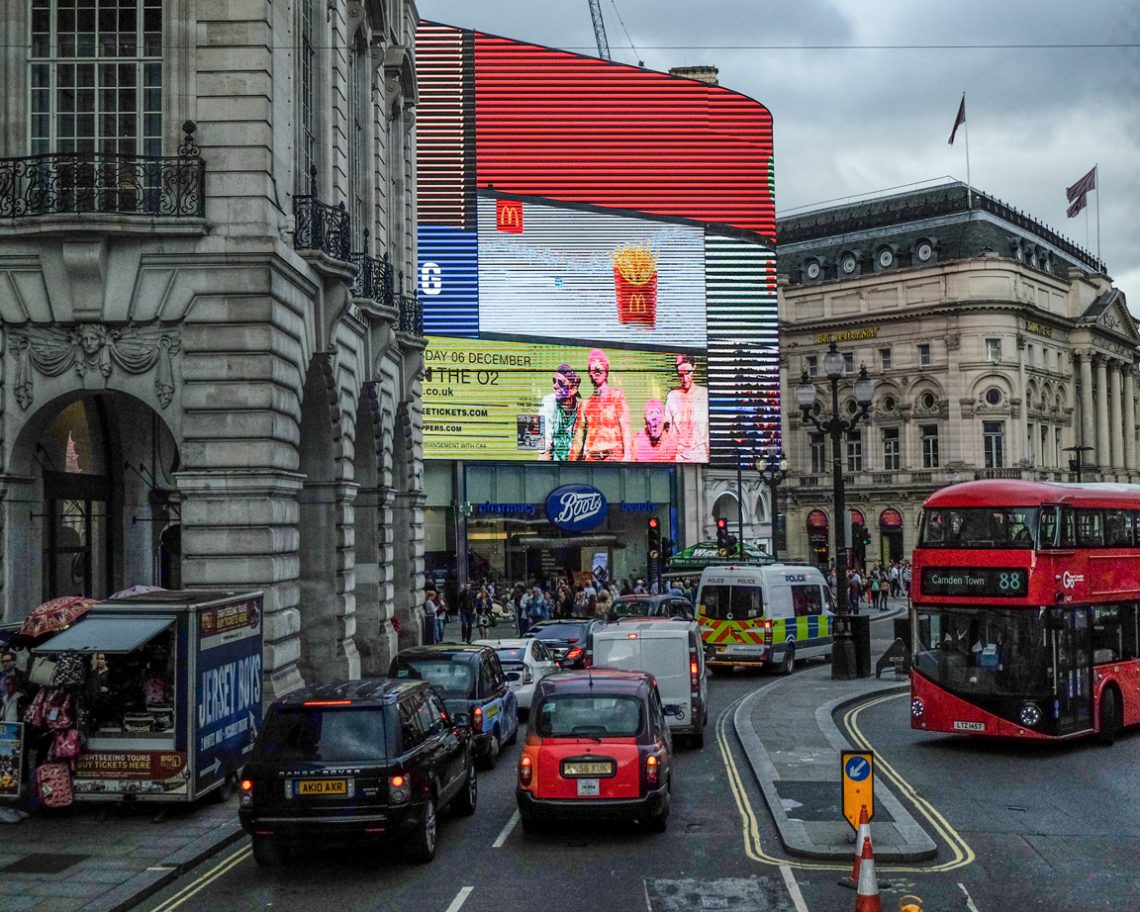
Just Another Piccadilly Circus’ View
There’s a temptation, when standing in the middle of London’s Piccadilly Circus, to think that you’ve seen it all before. And in a way, you have. This is one of the most photographed corners of the city—neon-lit, traffic-heavy, forever brimming with tourists. Which is precisely why I wanted to make this frame. Not to reinvent the wheel, but to quietly acknowledge its inevitability. I chose a slightly elevated position, letting the sweep of Regent Street’s curve pull the viewer’s eye into the frame. The red double-decker is exactly where it should be—almost a cliché—but here it works as a punctuation mark in the composition, tying in with the bold McDonald’s…
-
A Boat Under The Bridge
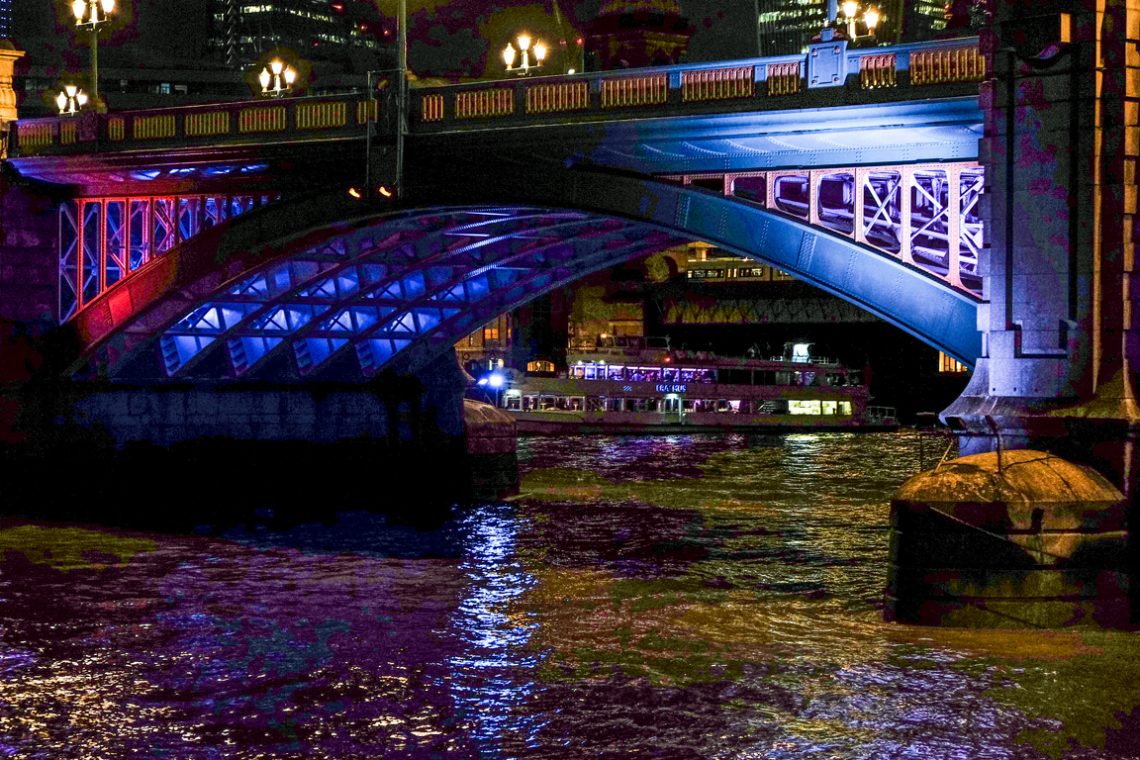
There’s something inherently cinematic about the Thames at night. The water becomes a restless mirror, fractured and stitched together by the city’s lights. In this photograph, taken beneath one of London’s bridges, the play of colour is what first arrests the eye: deep blues and purples flood the steel framework, punctuated by warm reds and yellows that seem almost to breathe against the cold tones. From a compositional standpoint, the arch of the bridge acts as a powerful leading line, drawing the viewer’s gaze toward the illuminated boat gliding quietly in the background. The layering here — water in the foreground, the bridge’s underbelly at mid-frame, and the distant boat…
-
Bus Driver
-
A London’s Skyline
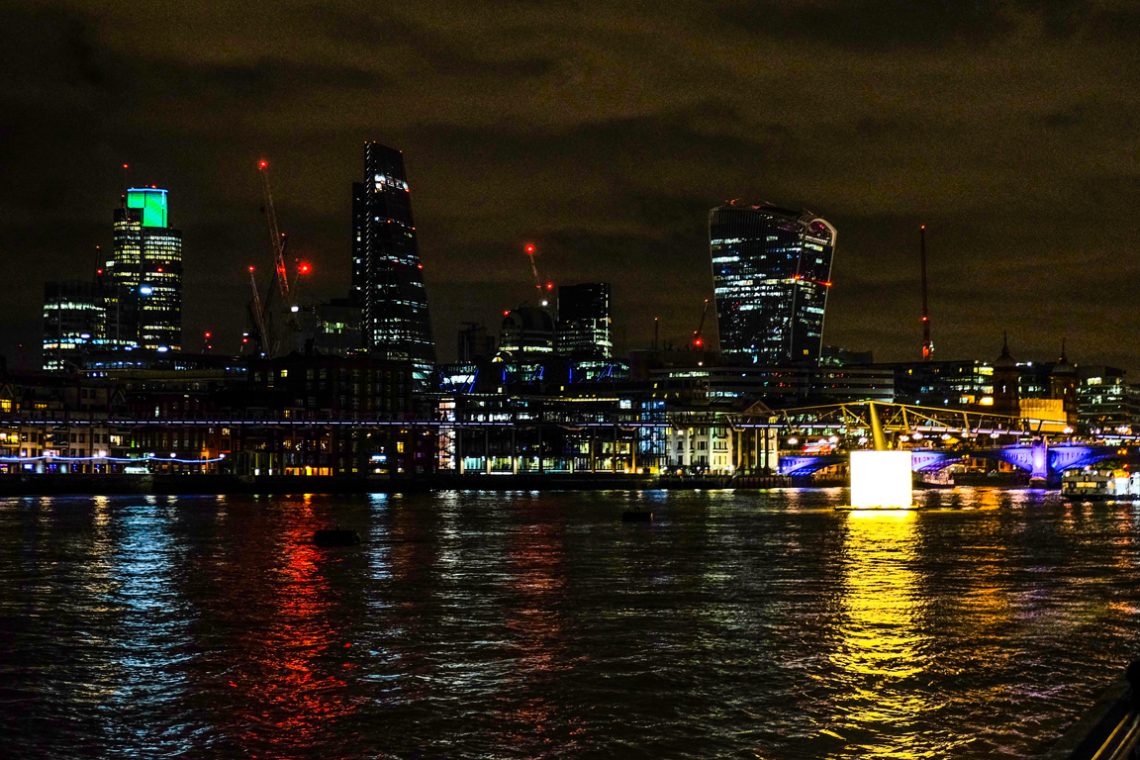
London at night has an entirely different pulse. From the South Bank, the city stretches across the Thames in a jumble of modern glass and steel, its towers blinking like an impatient circuit board. In this frame, the Walkie Talkie leans imposingly to the right, while the jagged edges of the Cheesegrater and other high-rises punctuate the skyline. The Millennium Bridge slices across the scene, leading the eye to that bright cube of light floating on the river—a beacon, a question mark, perhaps both. Technically, this was a balancing act. Night photography in an urban environment often tempts you to overexpose the lights or lose detail in the shadows. Here,…
-
Safe Living (?)
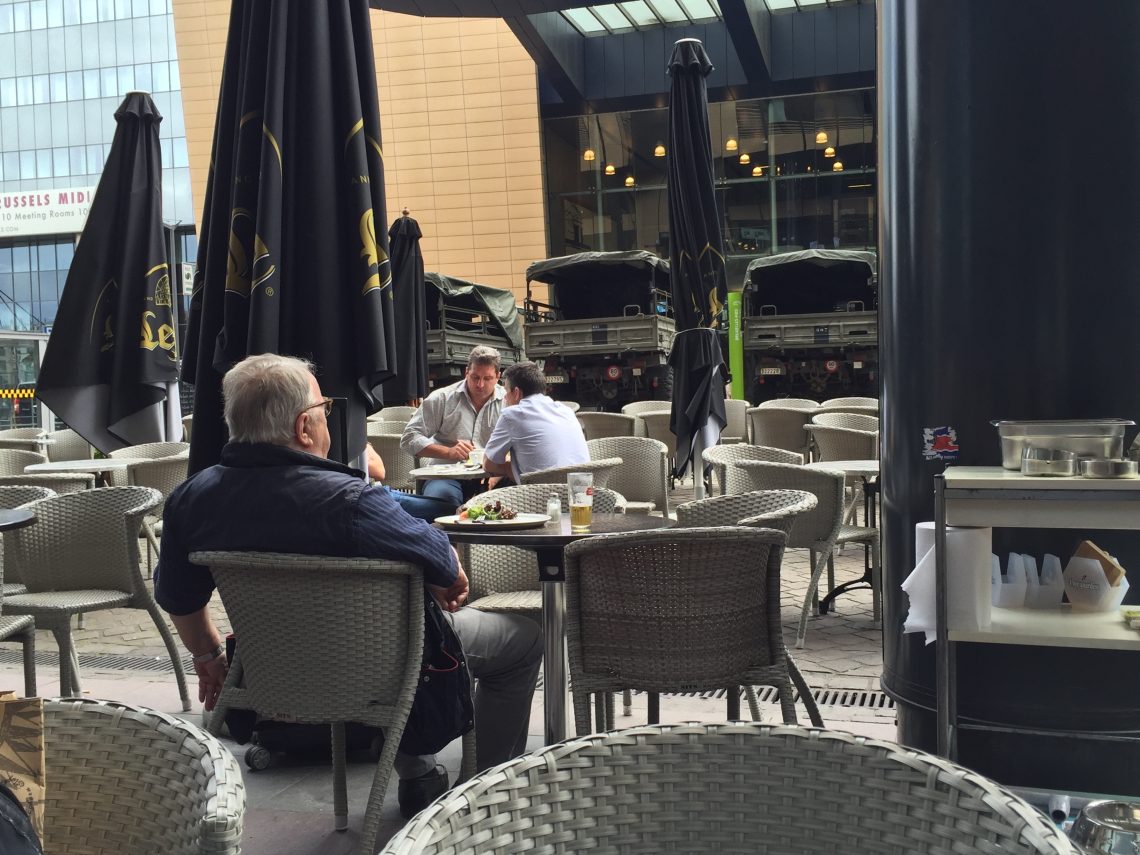
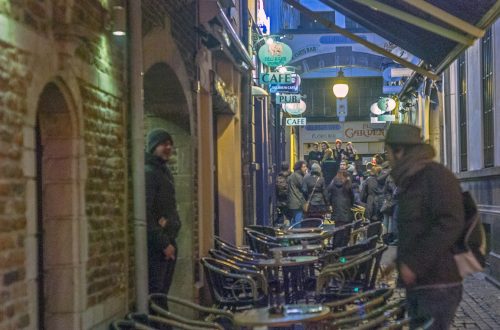
I took this photograph sitting at a café table in Brussels, camera inconspicuously in hand, not to catch a moment of drama but to freeze the dissonance that unfolded naturally. A plate of food cooling in the foreground, a couple mid-conversation, and beyond the empty chairs—military trucks parked tightly against the glass façade of a commercial complex. No one paid them much attention. This image isn’t about extremes. It’s about the almost absurd coexistence of casual living and implied threat. It’s a subtle juxtaposition—the idle comfort of café life shadowed by the presence of camouflaged machinery. Compositionally, I used the umbrellas and columns to frame the shot and push the…
-
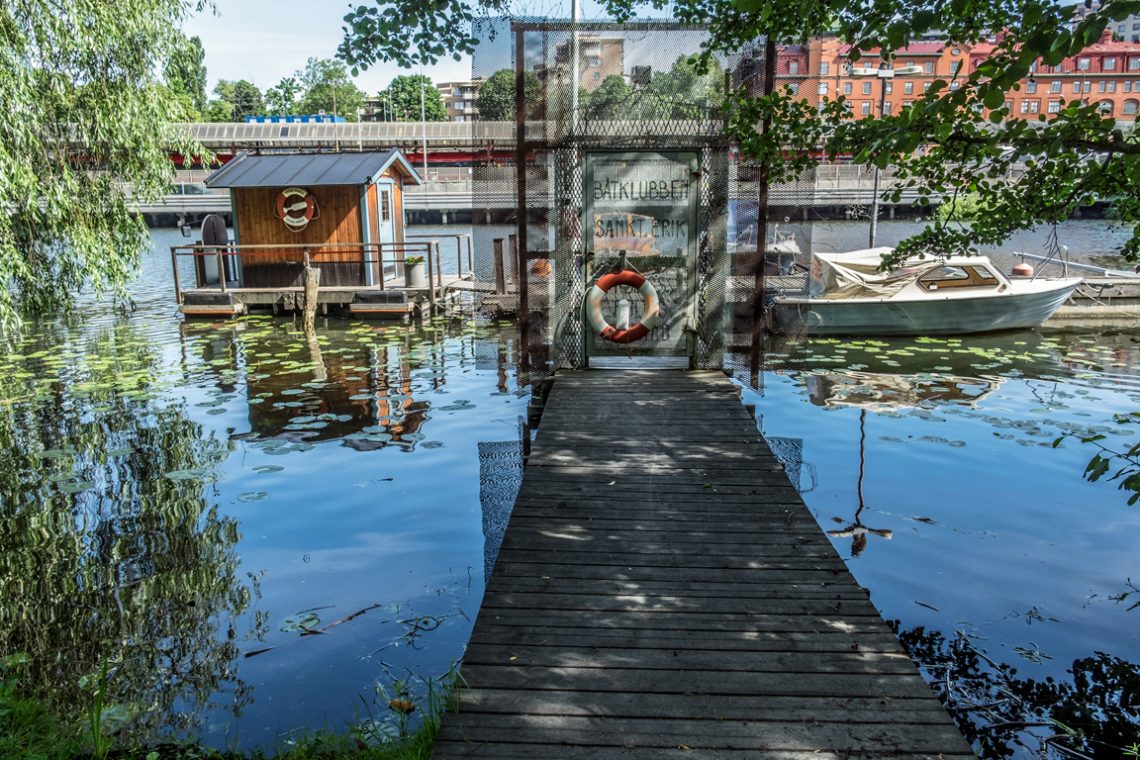
Batklubben
-
The Ubiquitous Mobile
-
Vasa’s Ghost
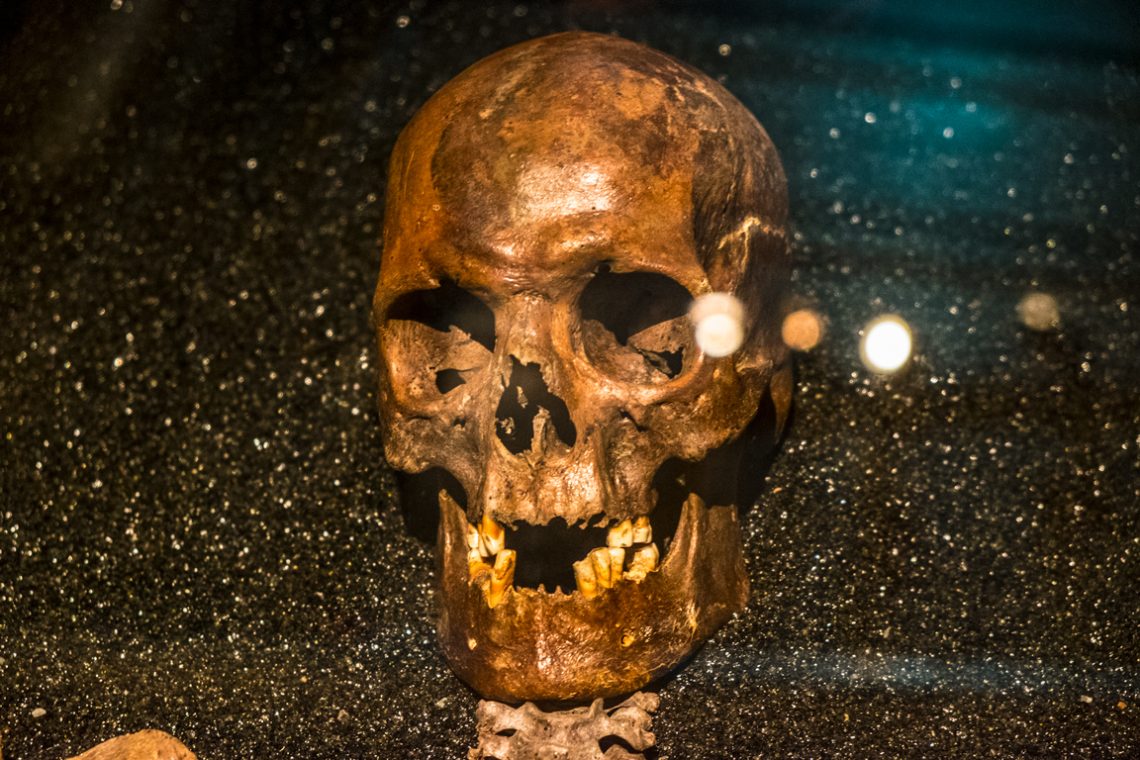
Photographing in museums is always a challenge — a careful dance between respecting the subject, working within strict lighting conditions, and negotiating the inevitable glass barriers. This image, taken in the Vasa Museum in Stockholm, is an excellent example of how those constraints can actually contribute to a picture’s mood rather than hinder it. The subject — a centuries-old skull — sits isolated against a dark, glittering background, its ochre tones warm against the cold, almost cosmic speckling that surrounds it. The lighting, subdued yet precise, falls in a way that enhances the contours of the cranium, the hollowed sockets, and the jagged remnants of teeth. The reflections — likely…
-
Even
-
A Special Dress for a Special Party
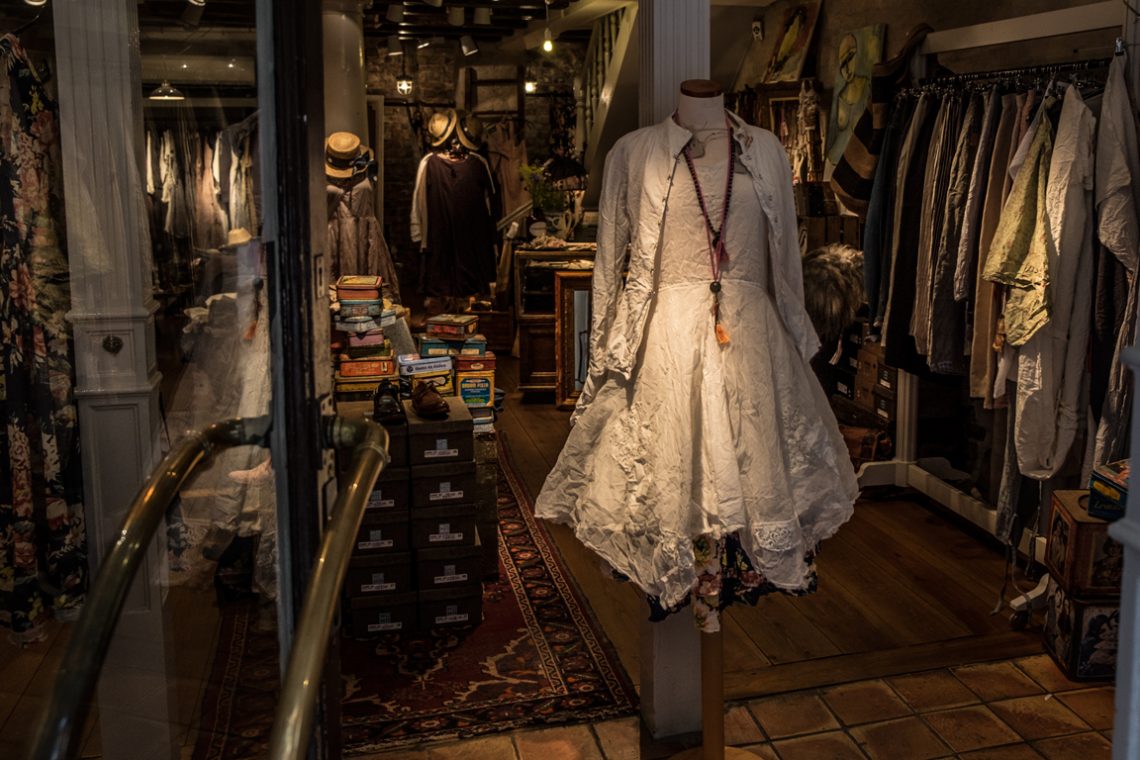
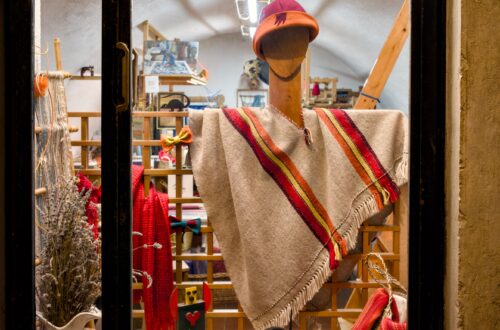
At night in Stockholm, when shop windows become small stages and the city quiets enough, interiors to speak outward. The mannequin stands alone, dressed in white, suspended between the street and the room behind it. There is no reflection of passers-by, no movement intruding — only the slow, deliberate stillness of fabric and objects. The dress is light, almost ceremonial, while the surrounding space is heavy with material: stacked books, dark wood, layered garments, textured rugs. The shop feels less like a retail space than a private archive, somewhere between wardrobe and memory.
-
Strolling in Stockholm
-
Outside the Nobel Museum
-
Under The Bridge
Thank to its architecture, Stockholm is a very good place to shoot modern pictures. ストックホルムは現代の写真を撮るには良い場所です
-
Different Life
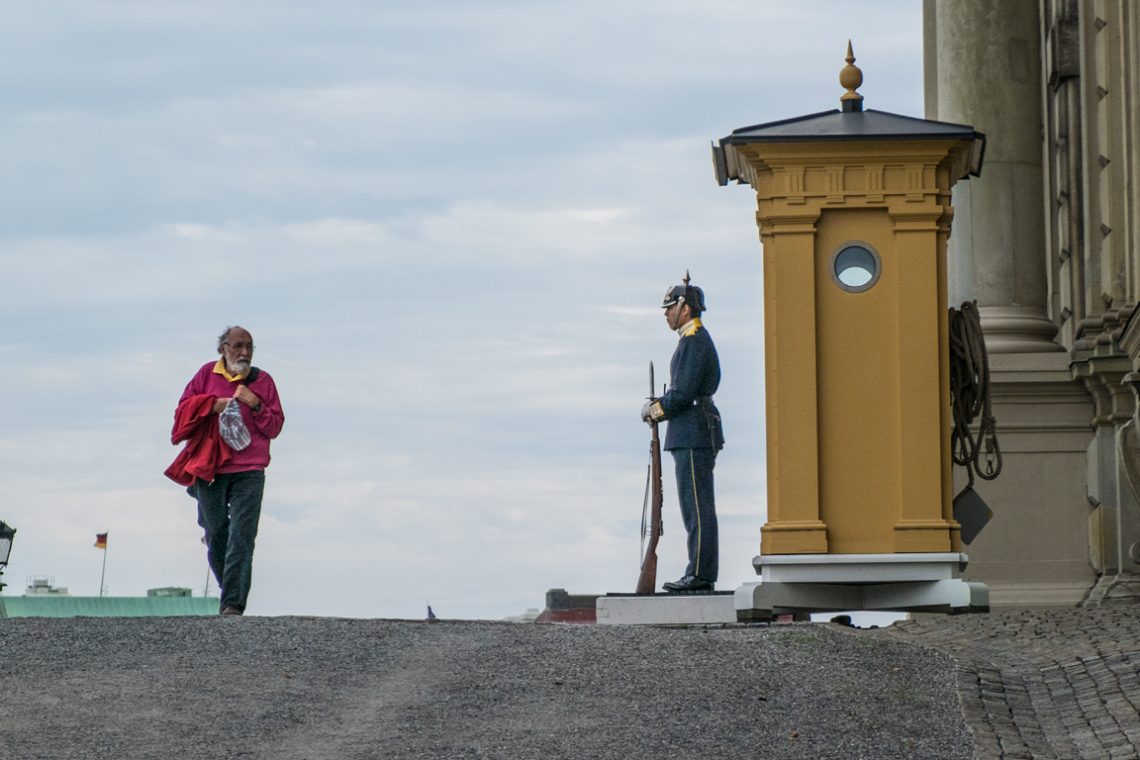
Taking royal sentries pictures is usually useless because all the pictures look alike, unless something happens that gives the composition a new life. この写真は、スウェーデン王宮のセンチネルを示しています. しばしば退屈です. しかし、別の何かを追加することにより、 写真は新しい人生を取得します
-
Frames for Sale at Via Margutta
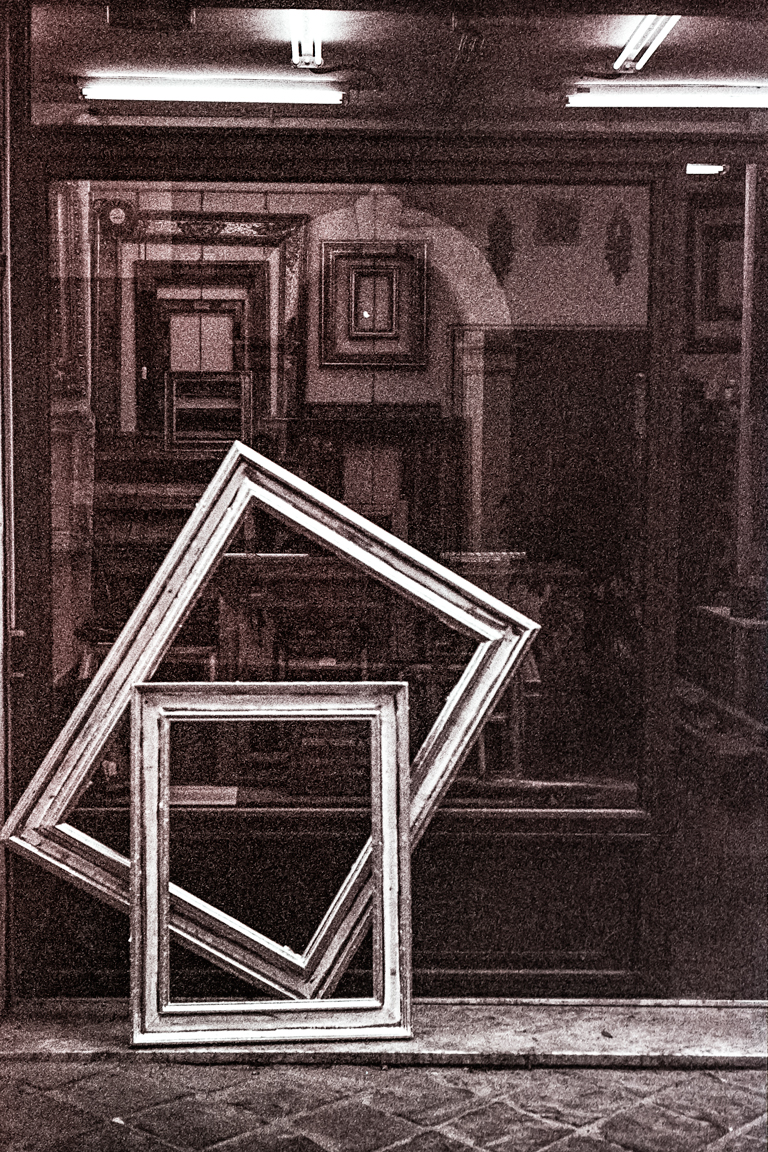
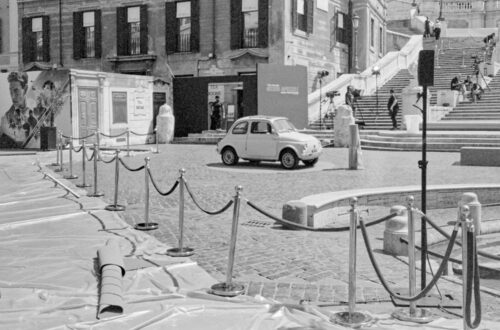
I was walking along Via Margutta when the geometry in this shop window stopped me cold. Two empty frames leaned against the glass, one upright, the other tilted sharply as though it had slipped out of formation. Behind them, more frames receded into the dim interior, creating an optical echo — rectangles within rectangles, stretching away into the dark. I shot it in black and white film, embracing the grain and high contrast that the low light demanded. The texture is almost intrusive, but it adds a grit that feels appropriate for a street scene late in the evening. Exposure was tricky: I wanted to preserve the fluorescent highlights inside…
-
Hard Stare
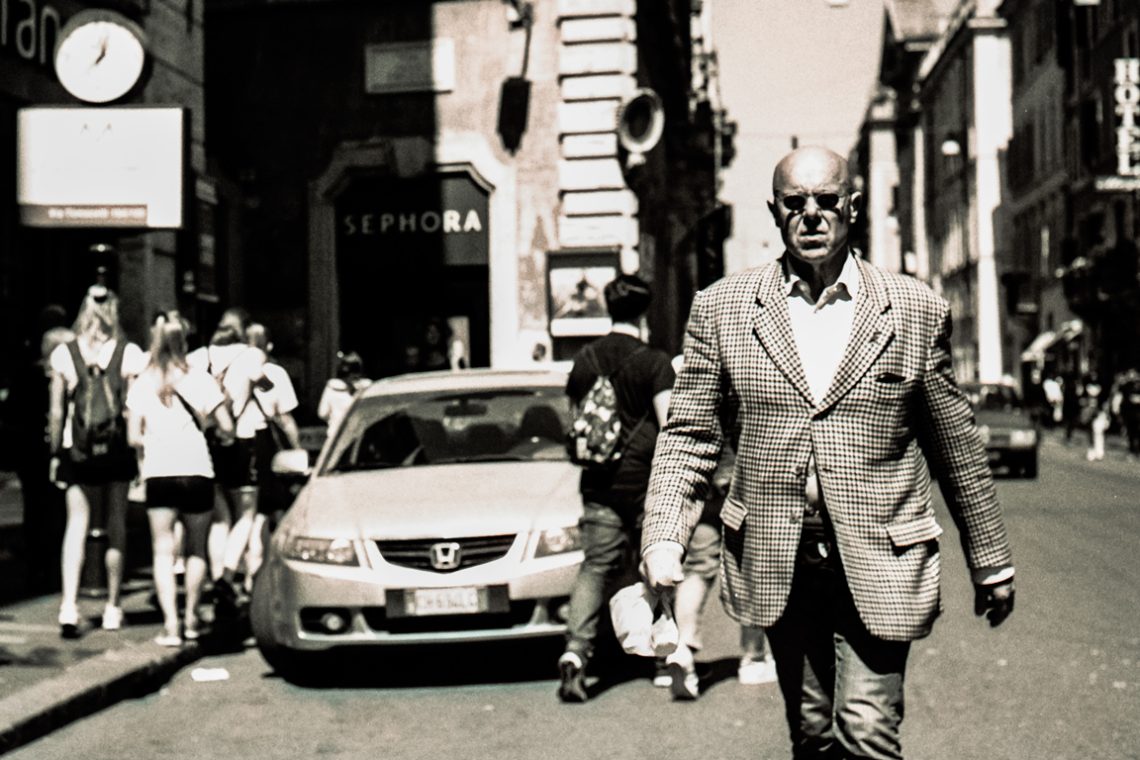
Shot this on a sun-scorched afternoon with harsh overhead light slicing the scene into contrast-heavy planes. The man in the checkered blazer didn’t slow his stride, didn’t shift his glare. He simply walked straight into frame, embodying the kind of presence that turns candid street into psychological confrontation. The choice of film stock—contrasty and slightly expired—helped strip the scene down to its tension lines. Midtones were sacrificed in favour of stark lights and choked shadows, a deliberate trade-off to drive mood over neutrality. The image is overexposed in the background, the whites blooming around the tourist group like a visual buffer, pushing them back and letting him advance. Compositionally, I…
-
What Could I Do?
Don’t be afraid to do a mistake, but fear its consequences… 失敗を恐れていません でも 結果を恐れて
-
As Deep As The Ocean
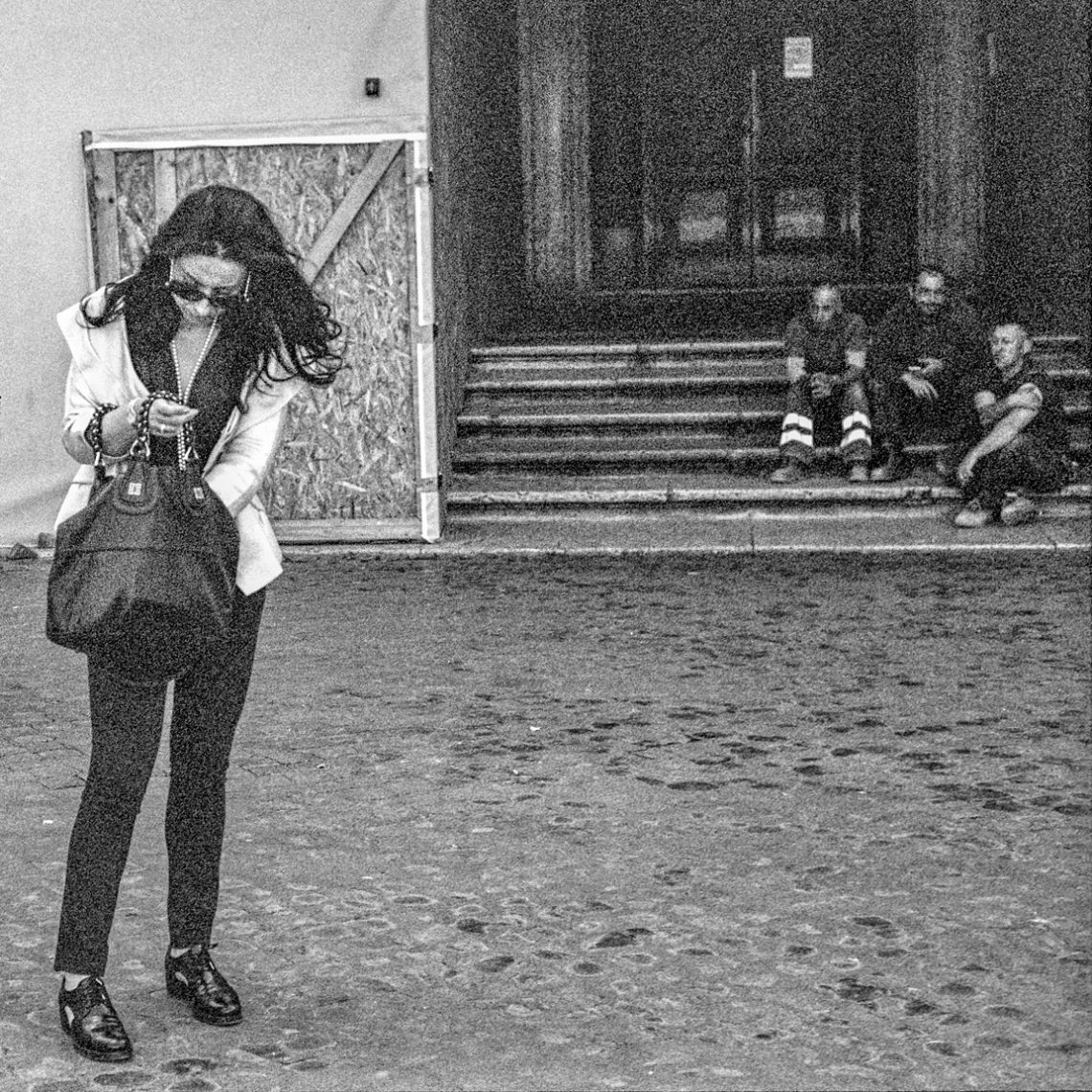
Shot on high-speed film, probably pushed too far for its own good, this image leans unapologetically into its grain. That’s not a romantic defence—it’s noisy, and there’s no hiding it. But the grit serves the subject well. This isn’t a fashion shot, despite what the woman’s posture might suggest at first glance. It’s a street portrait in conflict, a moment of clashing worlds on a Roman piazza. She walks absorbed in her bag—her hands, her head, everything drawn into that black void hanging at her side. And then, almost dismissed by distance and shade, the three men sit slouched on the steps, in hi-vis trousers, watching. They’re not interacting, not…
-
Multiple Peripheral Visions
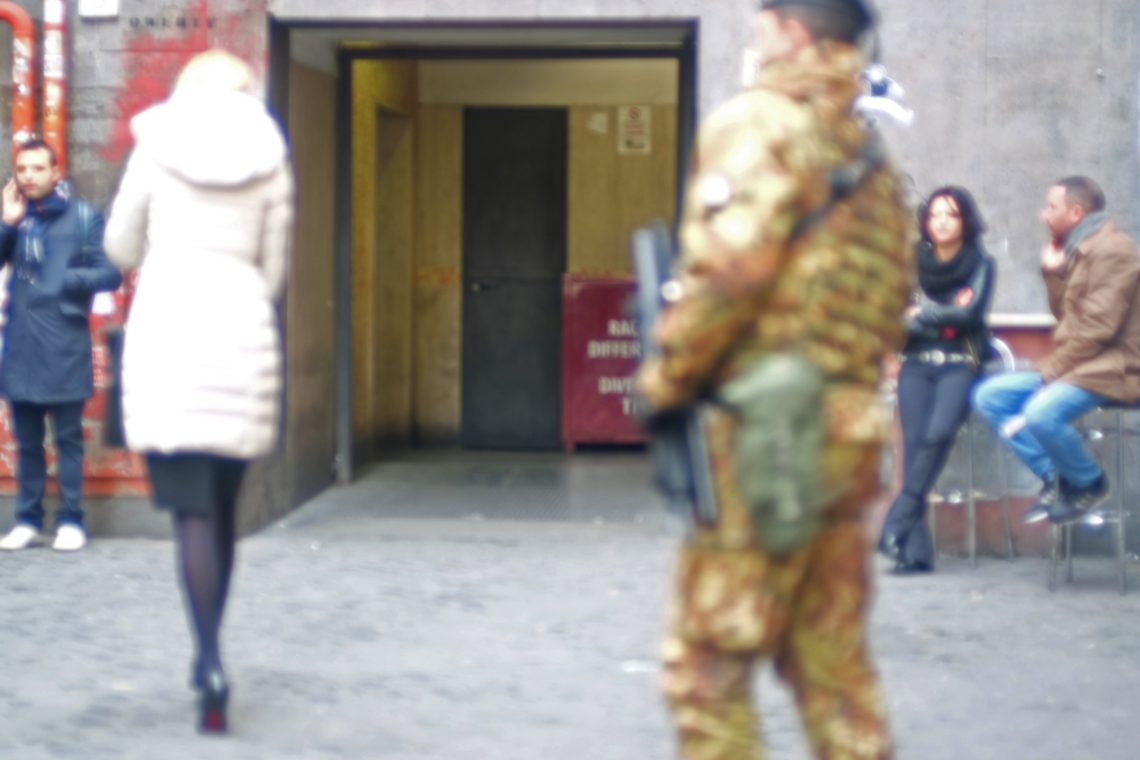
This frame was shot instinctively—no time to refocus, no second attempt. What emerged is less a photograph than a study in misdirection. Every figure in this image is out of focus, yet the meaning is sharper than most high-resolution portraits. The scene plays like theatre. A soldier, heavily armed, stands at ease in the foreground. A woman in heels walks away, blurred into silhouette. In the background, people sit, smoke, talk, check phones. The corridor and its black door—dead centre, unnerving in its neutrality—stares back like a question. The sign reads “BALCONE DIPLOMATICO,” almost comical in its contrast to the ordinariness of what surrounds it. Technically, it’s a failure by…
-
Carabinieri:To Serve And Protect
-
Art Auction at Piazza Navona
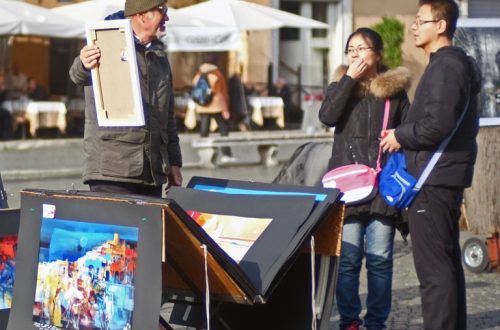
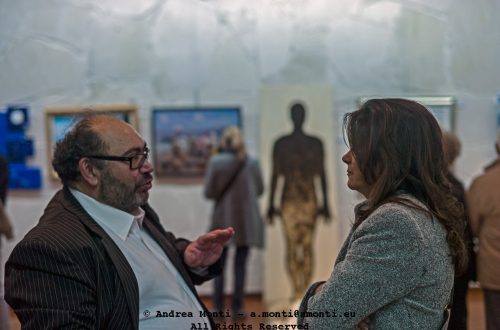
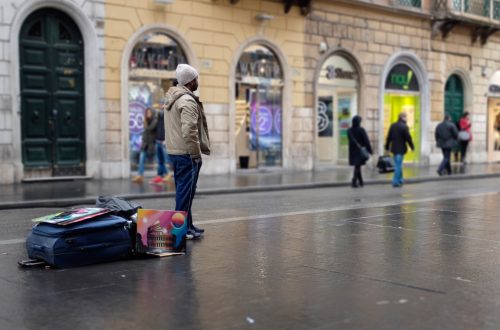
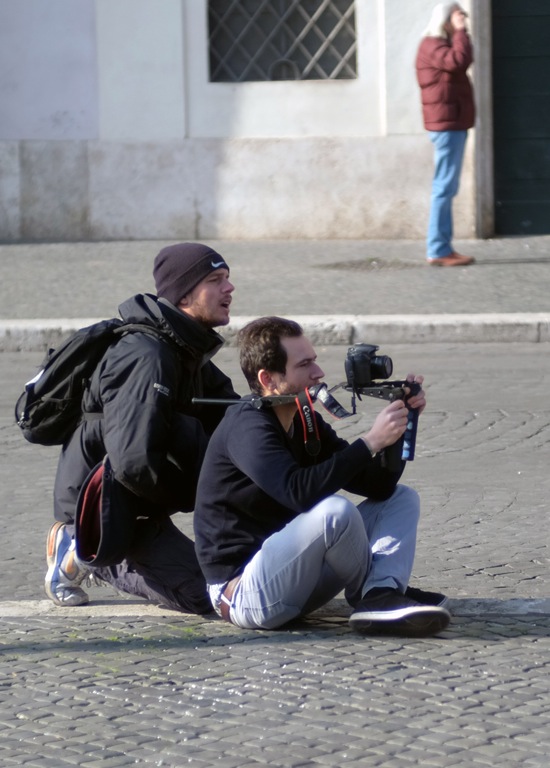
Piazza Navona, with its fountains, baroque facades, and endless hum of voices, has always been more than a square—it’s a theatre. In this scene, the performance is one of persuasion. An artist, dressed for the chill in a beanie and heavy jacket, holds up a framed painting. His expression is animated, hand gesturing as he speaks, the stance of a man who knows he has only a few minutes to turn curiosity into commitment. Across from him, a young couple listens. The woman’s hand hovers near her mouth—hesitation, calculation, or perhaps simply the reflex of someone considering a purchase that’s more about emotion than necessity. The man, in his blue…
-
A coffee at Saint Eustachio’s
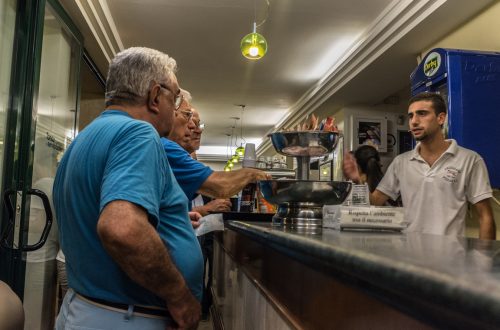
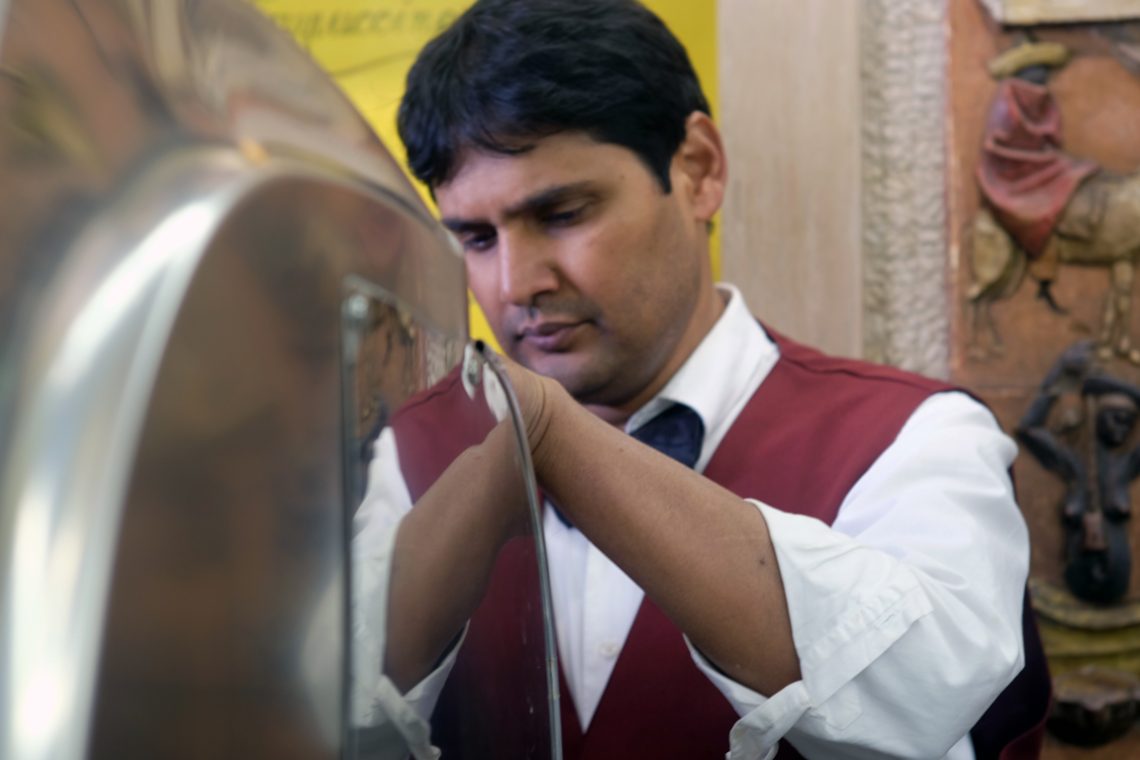
Saint Eustachio is not a place for rushed photography. Between the crush of customers, the warm glare off the coffee machines, and the tight spaces, you’ve got to work with precision — and patience. Using the Fuji X-E2 with a Zeiss Planar 50mm f/1.5, I knew this would be a manual focus game. Autofocus would have been hunting in the low light, and besides, the Planar has a way of rewarding the slowness it demands. I focused carefully on the barista’s eyes, knowing that at f/1.5 depth of field would be razor thin. He was completely absorbed in his work, and I wanted that concentration to be the anchor…
-
Action! (beware of Fuji X-Pro 2)
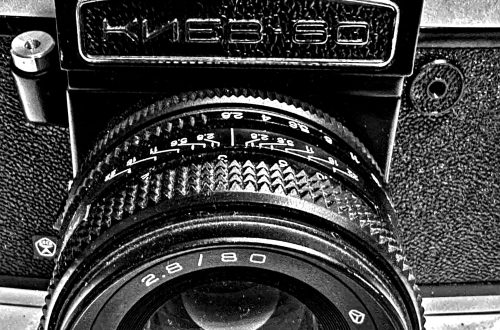
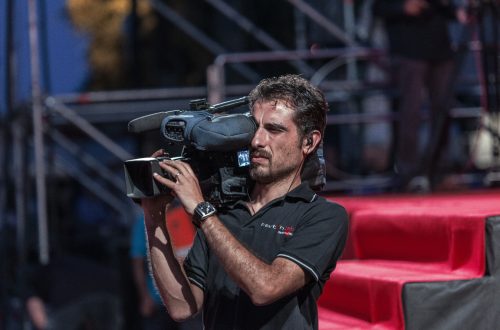
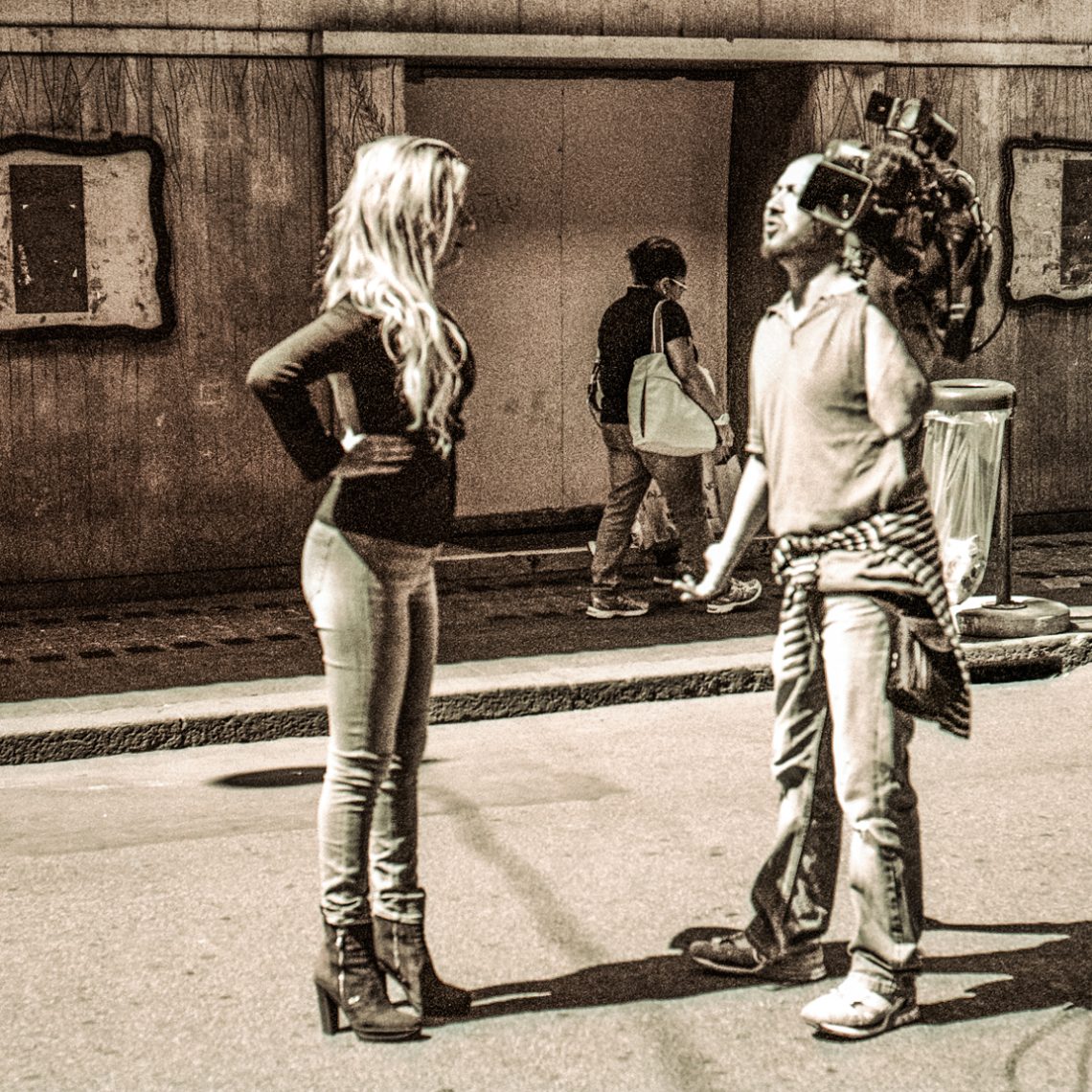
I’ve shot this picture with a Fujifilm X-E2 and a Zeiss C Sonnar T* 1,5/50 ZM. The split-image manual focus confirmation worked properly (though with a strong light it’s more difficult to handle it) and the resulting file in term of size and quality is fairly satisfying. Enter the X-Pro2 with a bigger resolution and new RAW format. While a 24 Megapixel APS-C sensor creates file that can be handled by most of the computer currently in place, the new RAW format will require the latest Photoshop CC/Lightroom update. So, if you chose not to enter into the mud of a subscription-based software licensing model, all of a sudden you…