-
Waiting for a Future to Tell
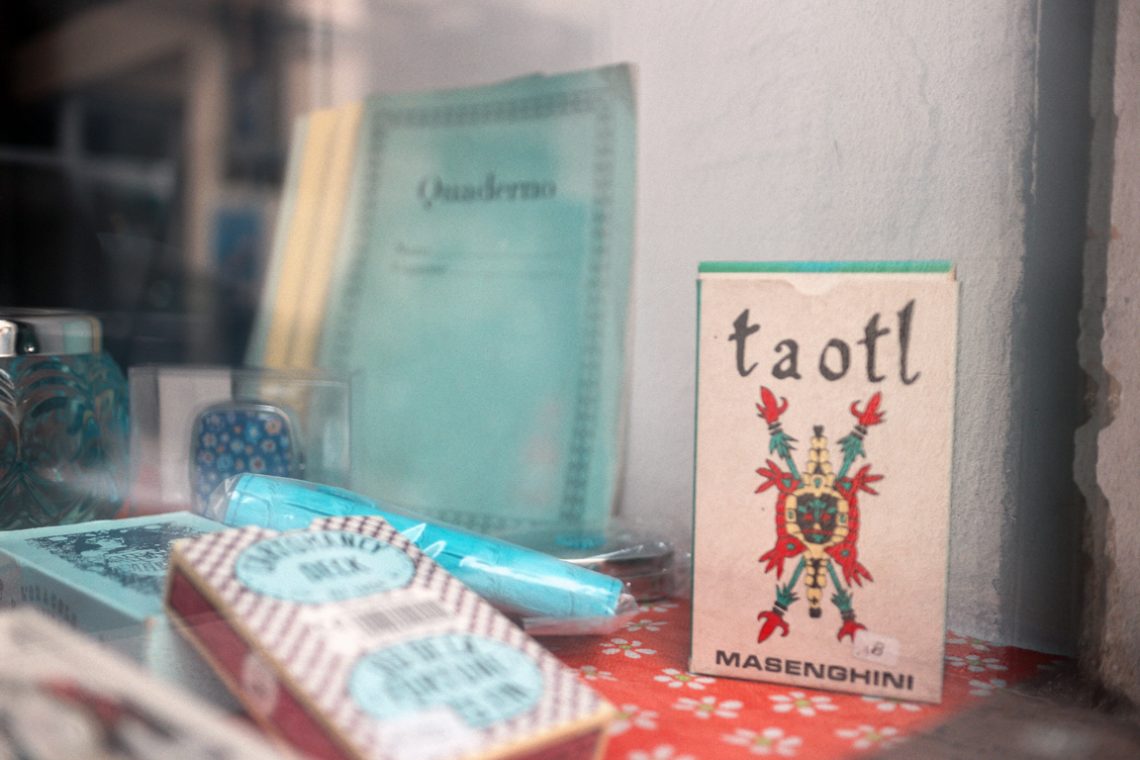
Behind the slightly dusty glass of an old tobacco shop window, a box of tarot cards stands upright, holding its ground with a quiet dignity. The label reads taotl, the colours still vivid despite the years: red flames, green leaves, a central emblem that seems both protective and dangerous. Beneath, the name Masenghini anchors it in a very specific history of Italian card-making, a craft now mostly relegated to collectors and the nostalgic. Around it, other objects share the same slow fate: a light-blue school exercise book titled Quaderno, some patterned boxes, a rolled cylinder of bright turquoise paper. Everyday relics, all bathed in the soft, uneven light that only old glass and time…
-
The Worst Moment to Fix a Shoe’s Problem
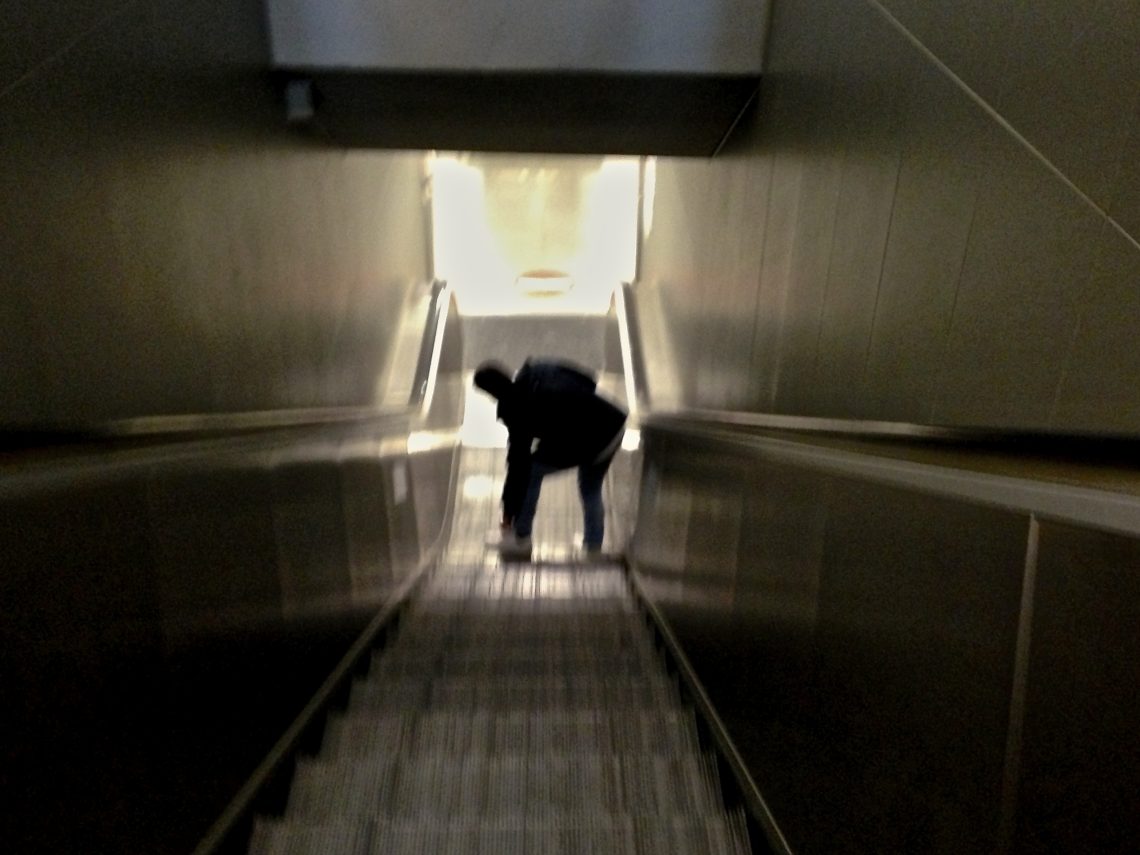
Caught on a descending escalator, mid-bend, mid-thought—this is the photograph of a decision made too late. Everything in this frame leans forward. The vanishing point pulls you down, hard, like gravity with intention. The blur on the metal steps mimics momentum. You can almost feel the hum of machinery and the silent urgency of descent. At the centre of it all: a man hunched over, trying to wrestle control over something small and unruly—perhaps a loose shoelace, perhaps something more symbolic. I didn’t plan this shot. It happened fast. A reflex. Shot handheld, low light, no time to think, just enough to feel. The imperfection—the motion blur, the noise, the…
-
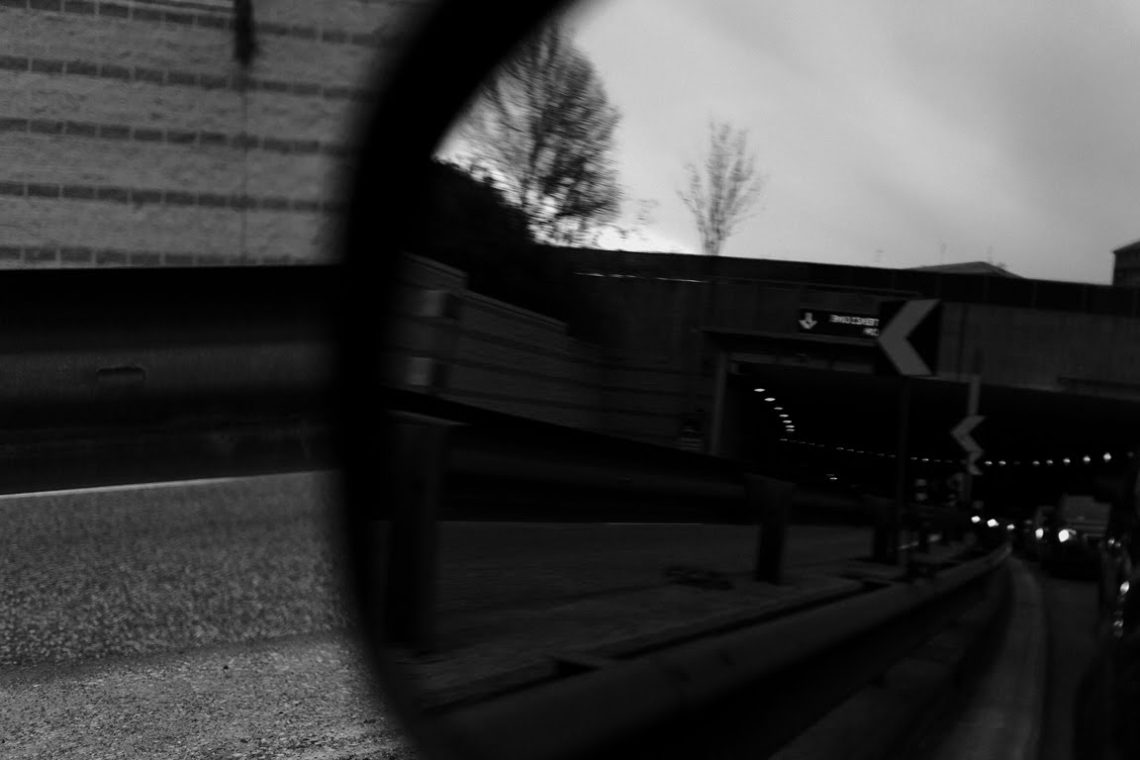
Sideways Through the Tunnel
This photograph was taken in the last leg of a trip to Rome, from inside my car while standing still because one of the many and usual traffic jam on the Tangenziale. I tried to have the road not to dominate the frame, fragmenting it, instead. A dark curve cuts through the image, separating two visual registers: the solid, static wall on the left and the receding tunnel of lights on the right. The image is less about travel than about perception while travelling. The motion blur and softness at the edges weren’t deliberate; they happened by chance. However, I like the result nonetheless. The photo would have felt dishonest…
-
Hard Spam
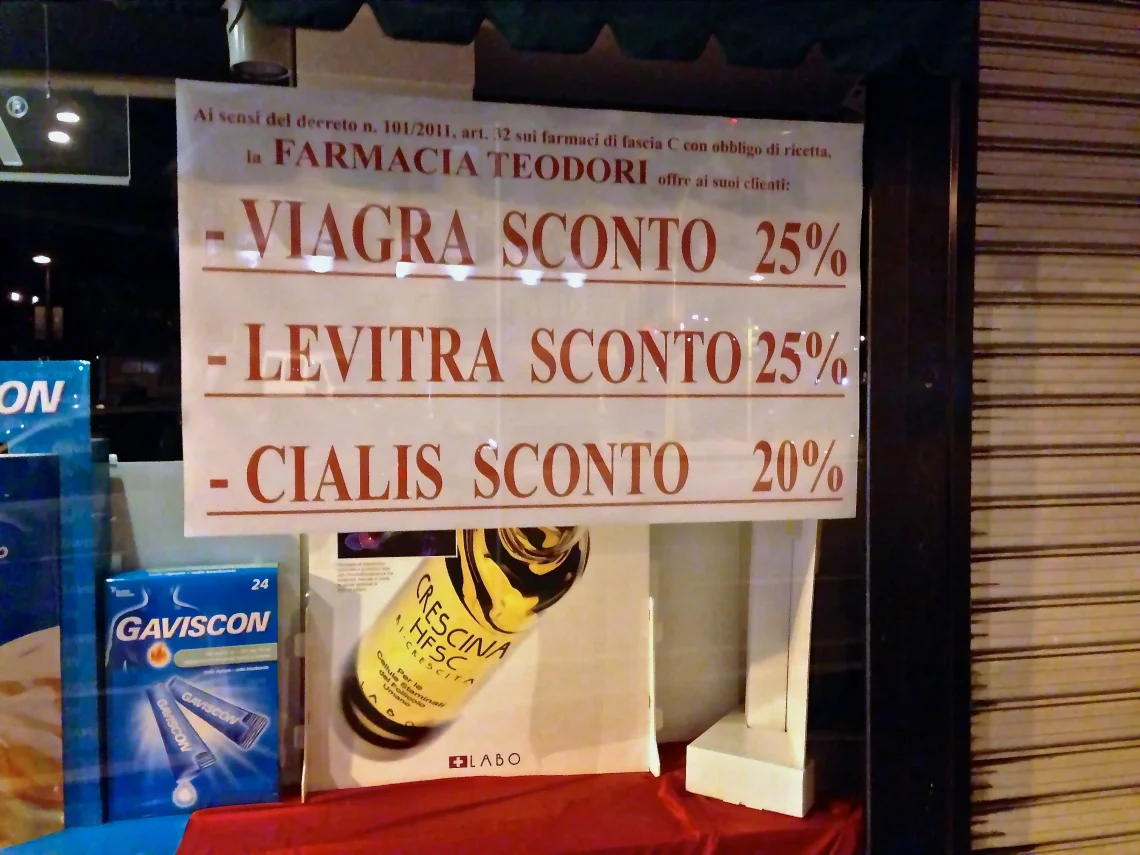
Sometimes spam doesn’t hide in your inbox. It glows in a pharmacy window. Shot on a quiet evening walk, this storefront display in Rome—or somewhere very much like it—caught my attention with the subtlety of a neon bullhorn. A perfectly literal interpretation of hard advertising: Viagra, Levitra, Cialis. Bold red font, urgent discounts, official decree cited. Street-level pharma meets street-level comedy. The scene is absurdly human. Framed by a closed shutter and a lonely Gaviscon box, the paper sign is taped like a last-minute school notice, but the message is anything but shy. There’s no algorithm, no clickbait. Just unapologetic, front-facing capital letters offering a prescription-strength punchline. It’s spam—but analogue. No filters,…
-
Waiting for the Justice to Arrive
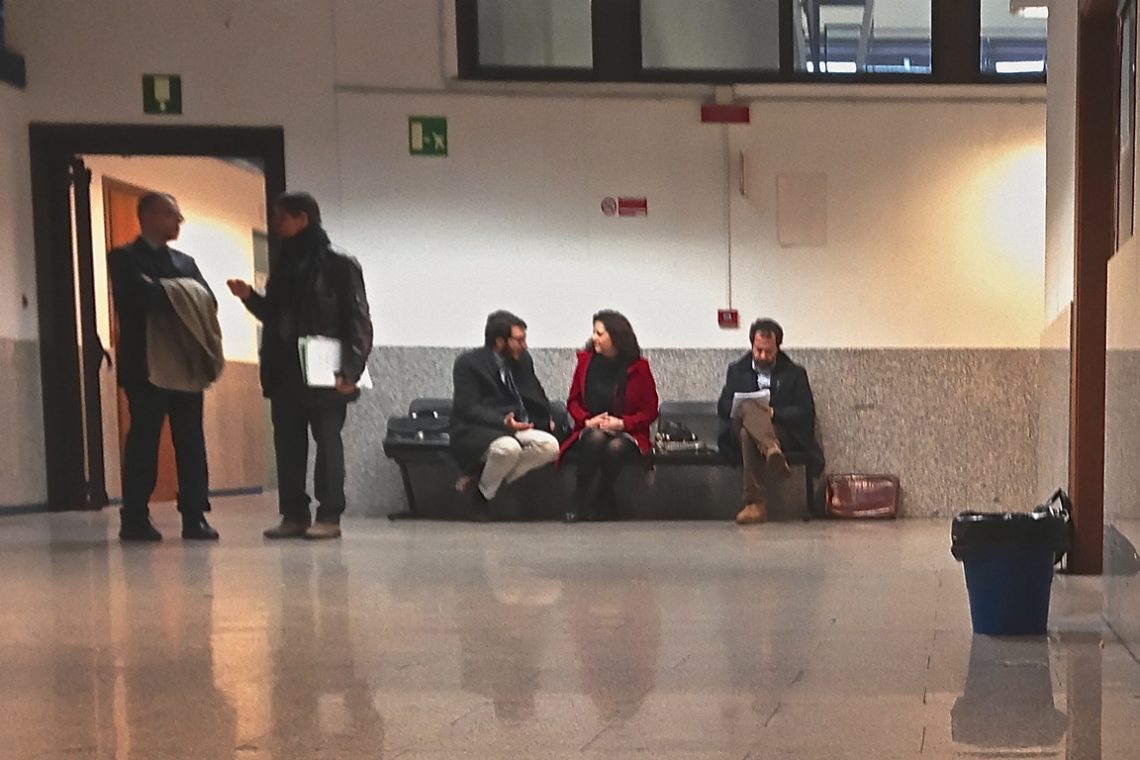
In this hallway of the Tribunale Penale di Roma, time seems suspended. Lawyers sit or stand, briefcases at their feet, bundles of files in hand. Some engage in hushed conversation, others review notes with ritualistic precision. A woman in red draws the eye—a rare burst of colour in an otherwise subdued palette of solemnity. The title, Waiting for the Justice to Arrive, operates on two planes. On the surface, it is procedural. The court has not yet opened its doors; the judge is late, the hearing is postponed. These legal professionals must simply wait—idle, static, alert. Justice, here, is both person and principle: the judge must enter the courtroom for proceedings…
-
Under the Yellow Umbrella
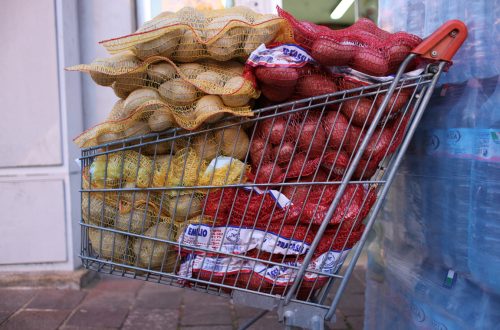
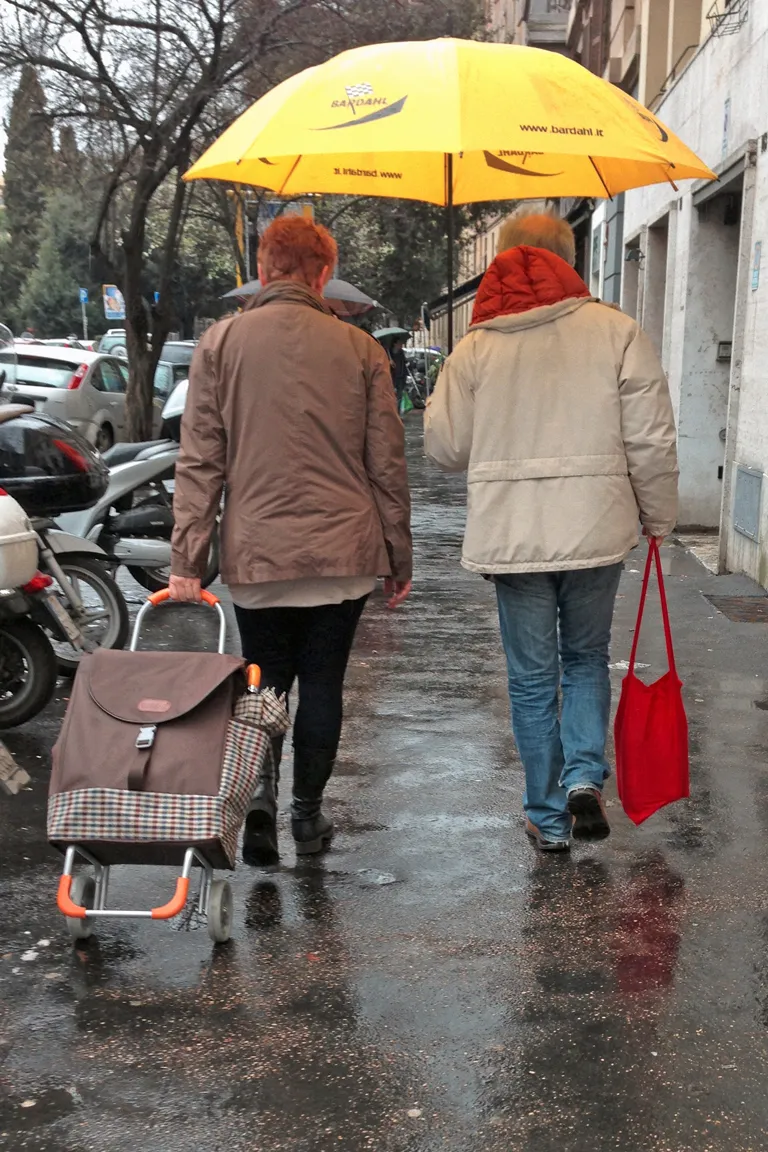
It had just stopped raining—just enough to make the pavement shine, but not enough to fold away the umbrellas. I took this photo in passing. No setup, no waiting. Just a quiet moment shared by two people walking slowly, pushing a shopping trolley and carrying a red bag, both tucked under a loud yellow Bardahl-branded umbrella. The kind of umbrella you don’t buy, but are given somewhere and end up using forever. There’s nothing dramatic here. No grand gesture. Just two people—maybe a couple, maybe not—navigating a wet day together. The colours caught me: the dull browns, the muted jackets, that flash of red, and of course the umbrella. It…
-
Head-Dresser
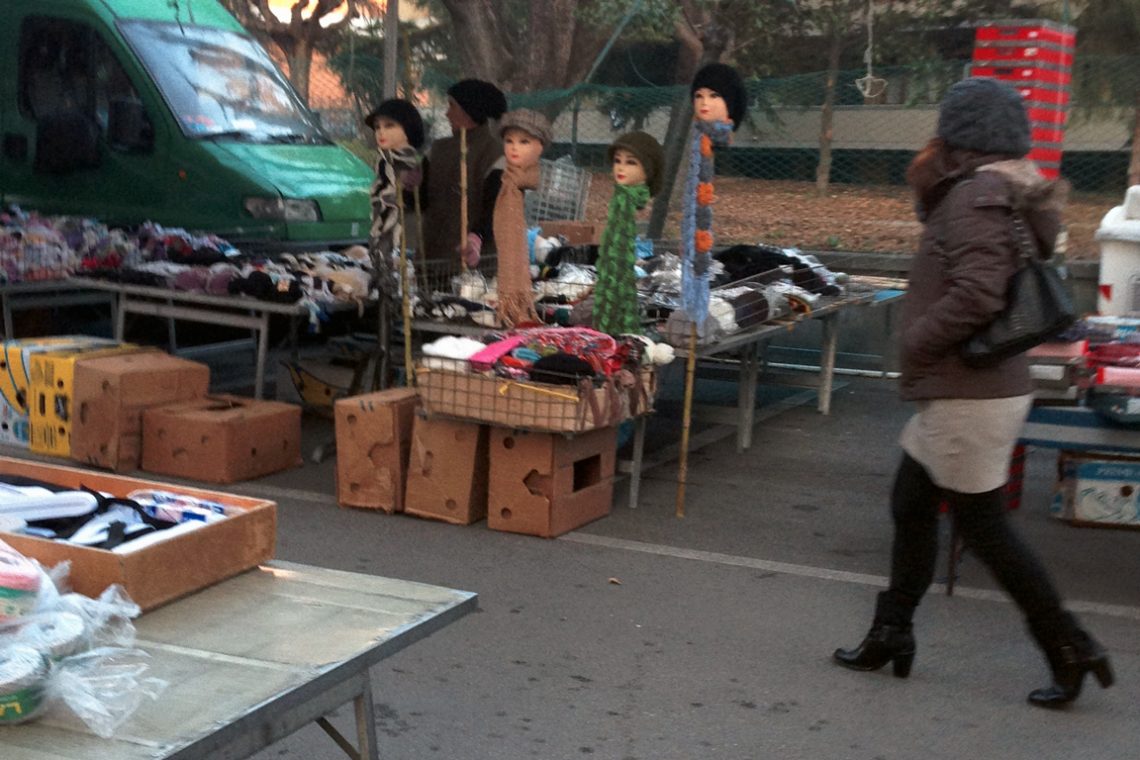
A market stall at first glance, and yet, a surreal composition unfolds. Plastic mannequin heads rise from wooden sticks, lined up with aloof dignity, each adorned with scarves and hats meant to lure the hurried passer-by. They stare silently into space, held aloft like modern-day trophies, eerily anthropomorphic yet stubbornly artificial. The display isn’t just for commerce—it’s unintentional theatre. The pun in the title Head-dresser plays cleverly on the expected hairdresser. But instead of grooming the living, this stall ‘dresses’ the disembodied, the ornamental. These mannequins are not being styled—they are the style, repurposed vessels for fashion’s utilitarian need. And to the side, a woman walks past in winter garb, seemingly unaware of…
-
Why on Earth people, in Italy, still eat junk food?
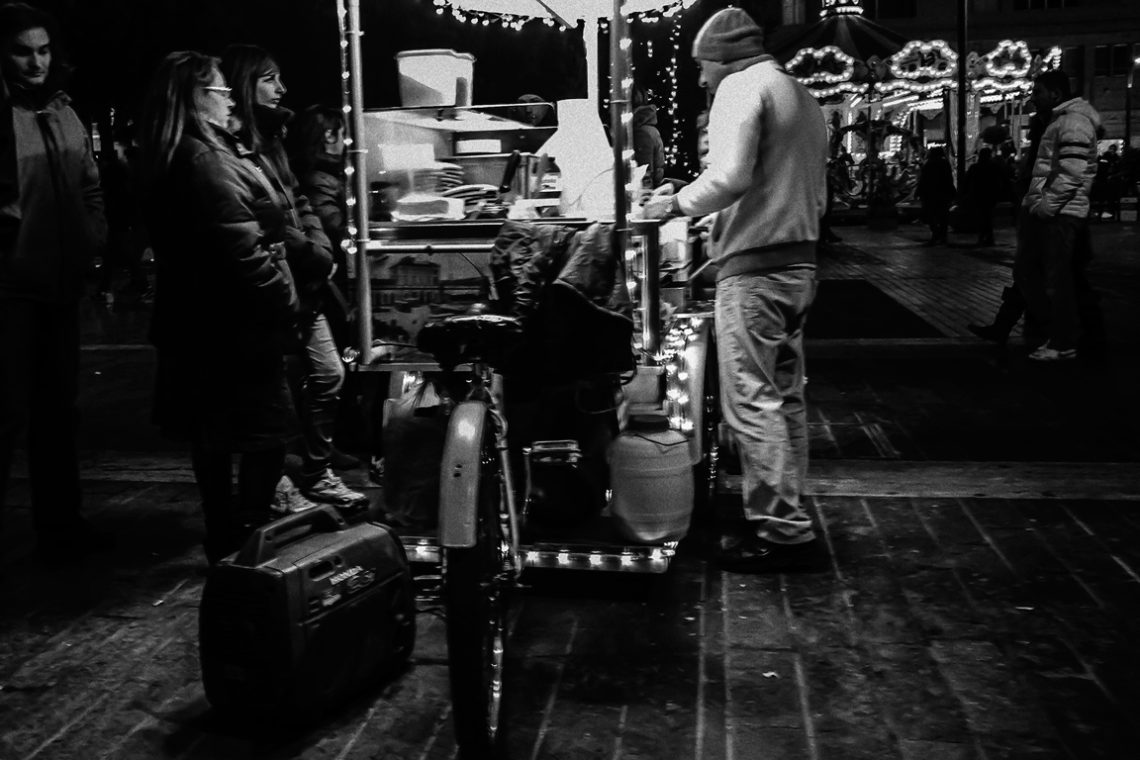
A cold night in an Italian piazza. The air carries the scent of roasted chestnuts, espresso, and wood smoke—but here, under the halo of fairy lights, the smell is unmistakably different. Oil. Sugar. Processed salt. A small crowd stands in front of a street cart, its bicycle frame weighed down with canisters, bags, and the faint hum of a generator. The vendor moves with practised speed, ladling batter, folding paper, handing over parcels of deep-fried comfort. The queue is patient, hands buried in pockets, eyes following the ritual as if it were part of the winter tradition. Beyond the cart, a carousel spins in soft blur, its music faint against…
-
A Silent Dialogue
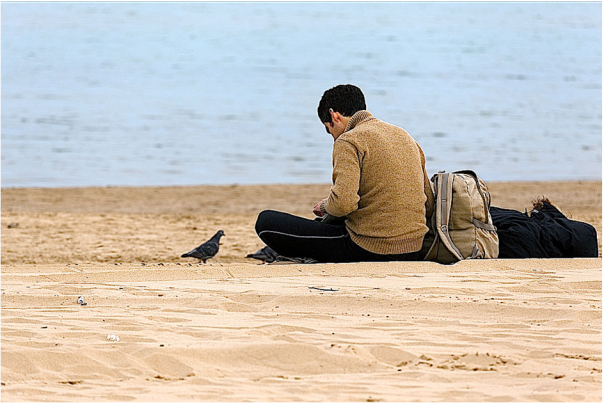
A restrained coastal tableau built around stillness and separation. The seated figure is placed slightly right of centre, turned away from the viewer, which shifts emphasis from identity to gesture and mood. The backpack anchors the narrative as travel or pause, while its bulk balances the composition against the open sand. The scene is organised in three calm bands—foreground ripples of sand, a mid-ground strip of beach, and the softly textured sea beyond. This horizontal structure stabilises the frame and amplifies the contemplative register. A lone pigeon, small but sharply legible, introduces a secondary point of attention and a faint counter-rhythm to the figure’s inward focus. Colour is deliberately subdued:…
-
My camera’s early test shots
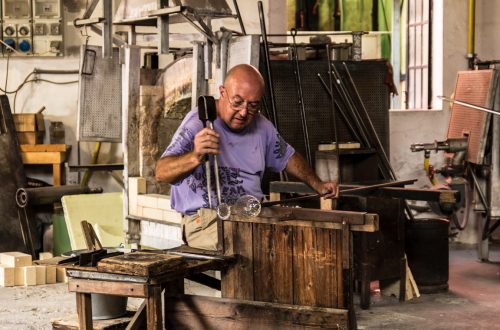
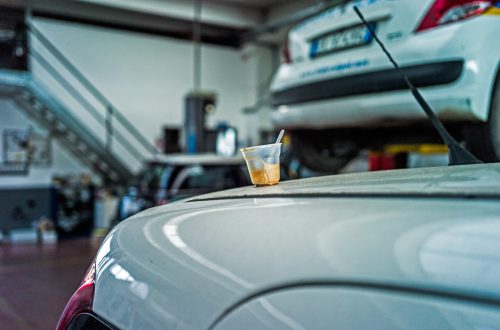
Unlike fishing villages or marinas, they are not built to be looked at. They are built to work. Every object has a purpose, every line leads somewhere, every apparently random piece of machinery exists because somebody, at some point, needed it to solve a practical problem. There is very little room for decoration. This is probably why I enjoy photographing them.