-
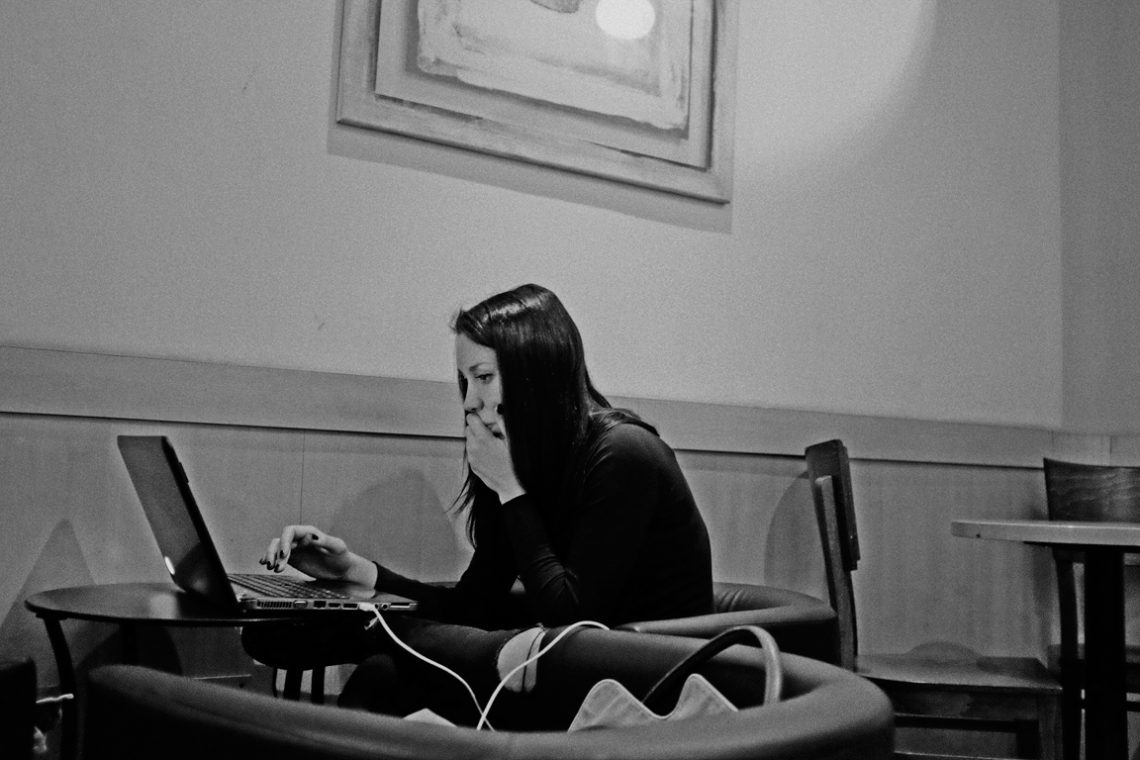
After a Tough Day
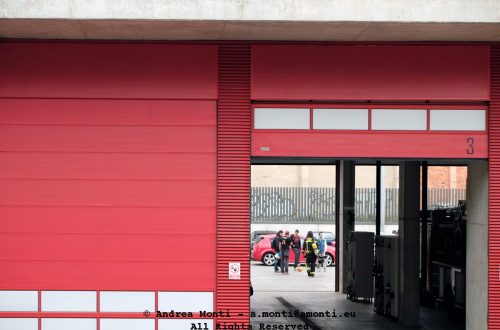
I took this photo with a Fujifilm X-E2 and a Leica Elmarit 90/2,8. Manual focusing with the split-image option has been fairly easy.
-
Sales Force
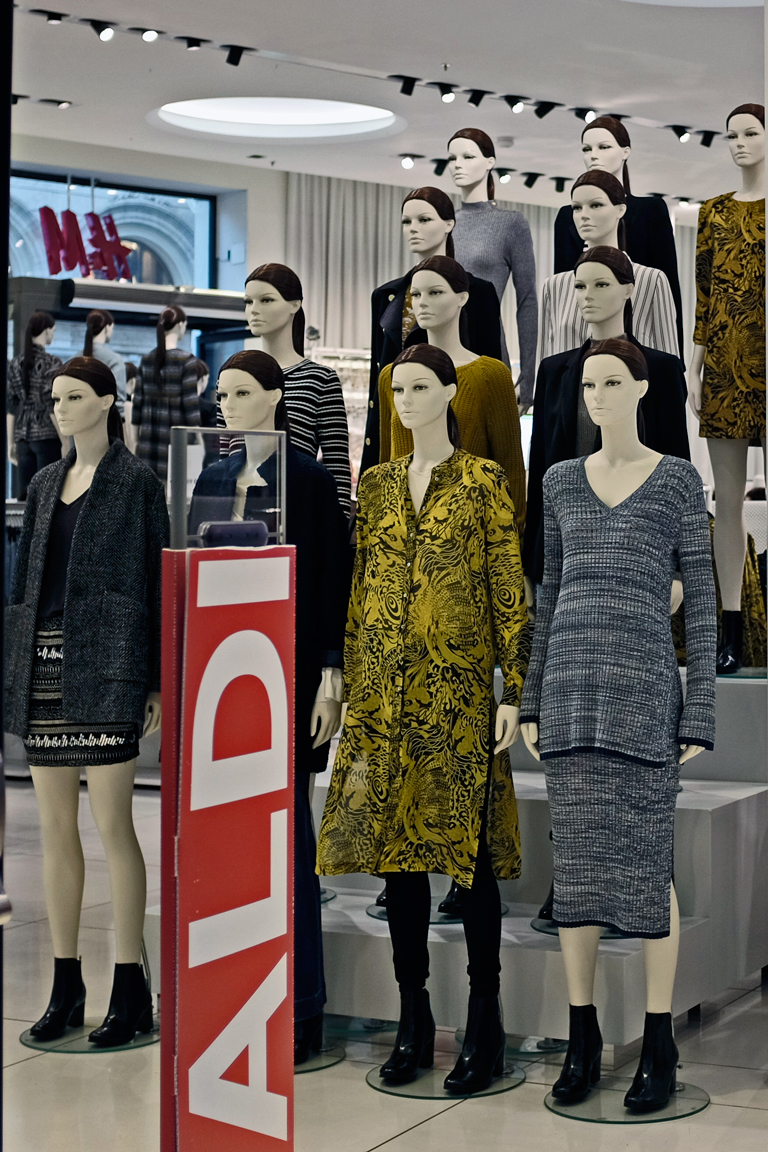
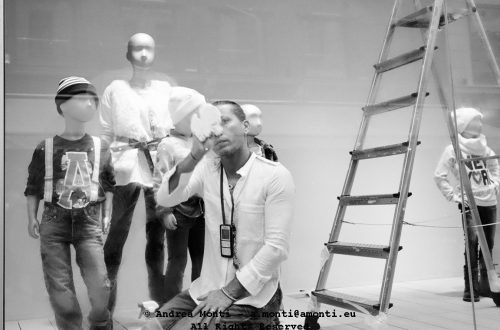
There’s an odd tension in this photograph — one that pulls you in before you’ve even had time to work out why. On the surface, it’s a straightforward shop-window scene: mannequins in carefully styled outfits, lit with that clinical precision that retail chains excel at. Yet the longer you look, the more unsettling it becomes. The composition is tight, almost regimented, with the mannequins arranged in military formation. Their identical, expressionless faces create a chorus of stillness, reinforced by the repetition of hair colour, pose, and stance. The red “ALDI” sign in the foreground slices into the frame with an almost aggressive verticality, its bold typography competing for attention with…
-
Without Glasses @ via del Corso
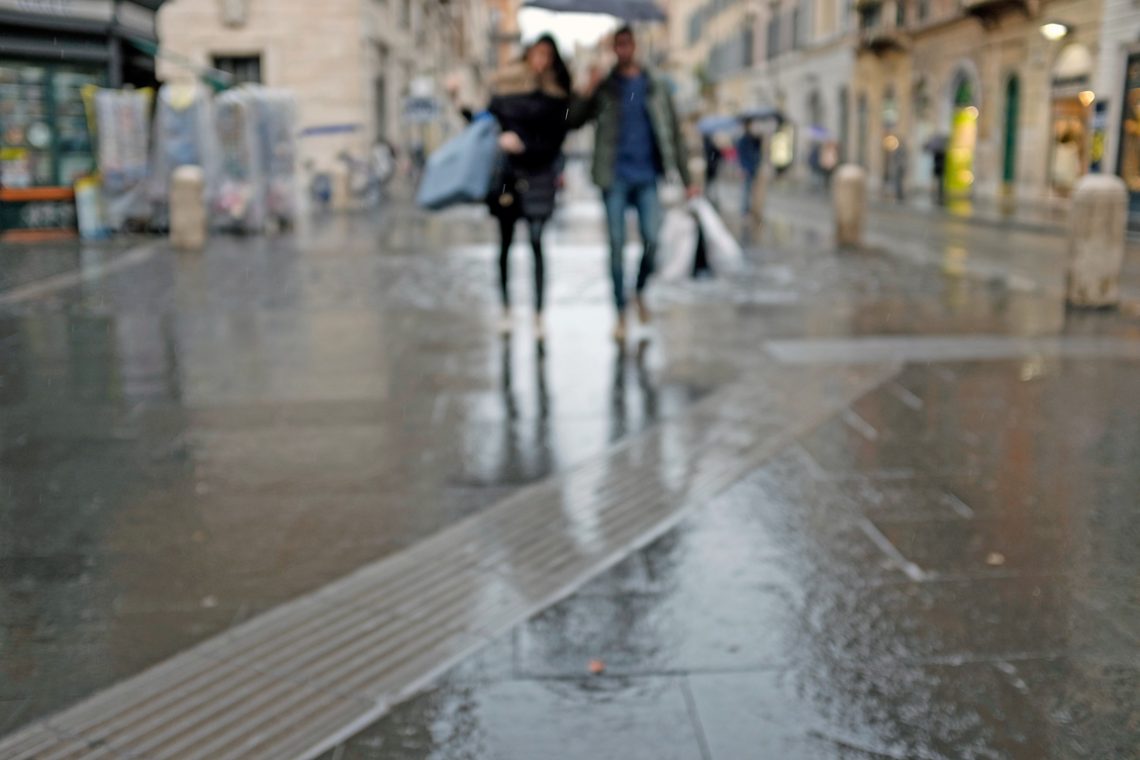
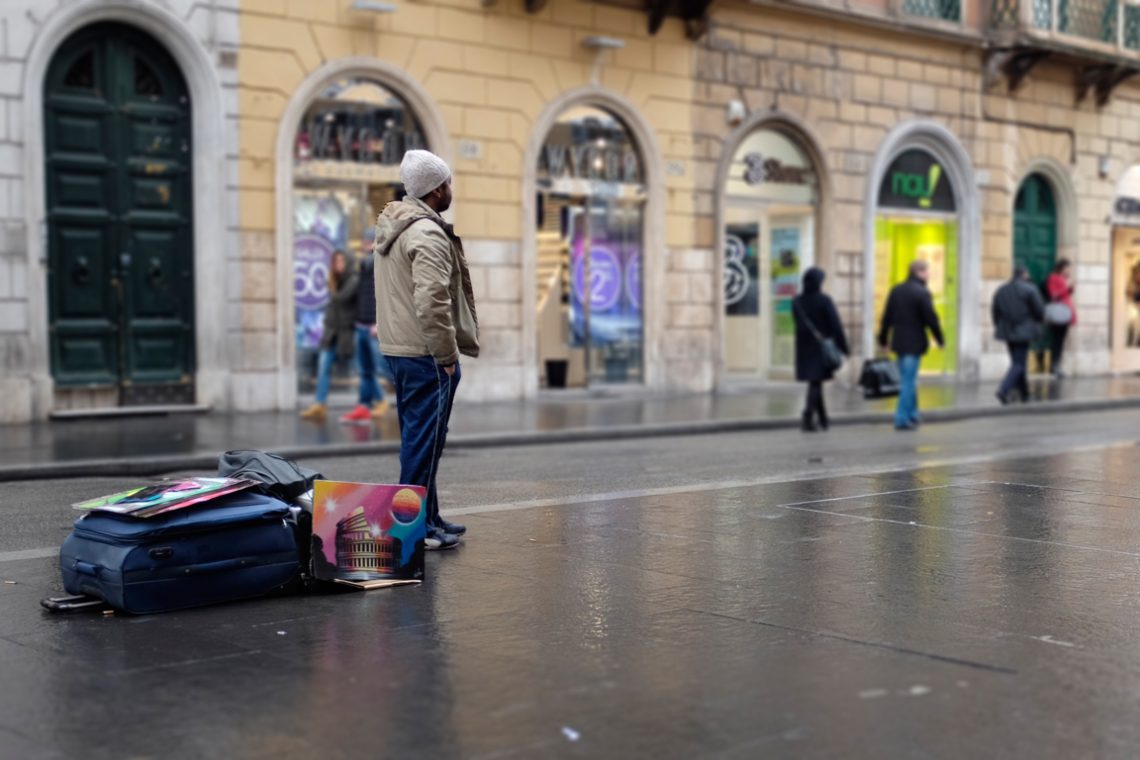
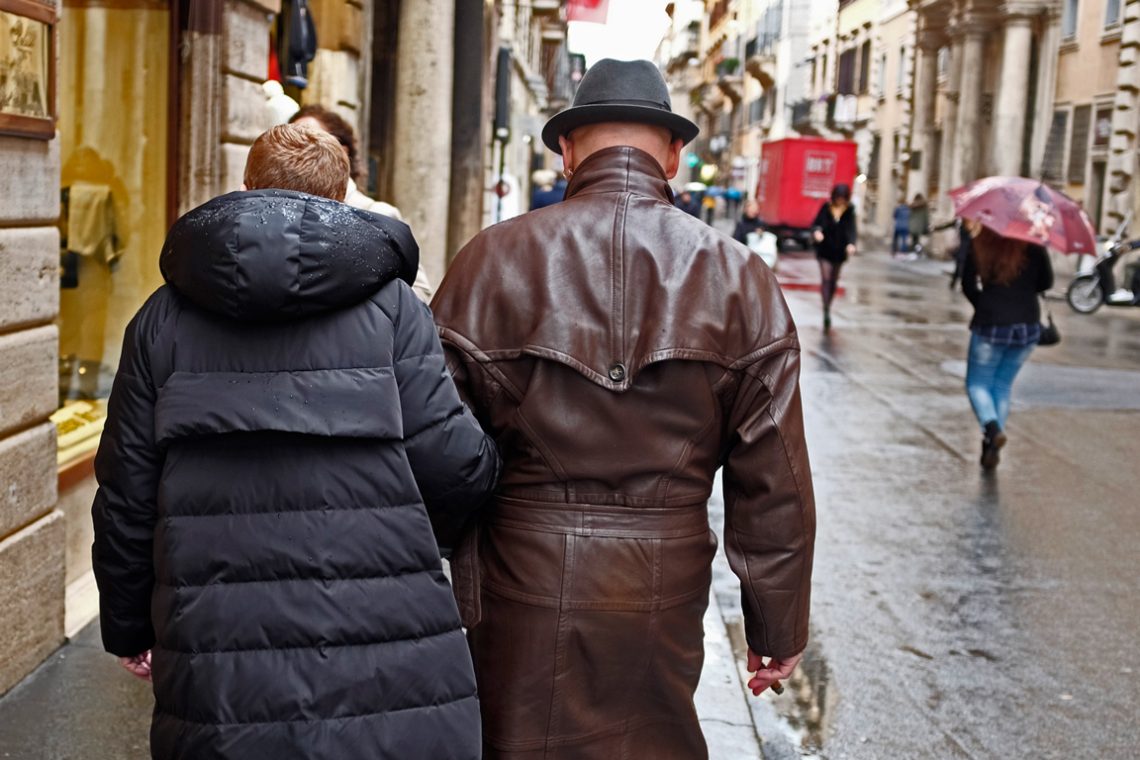
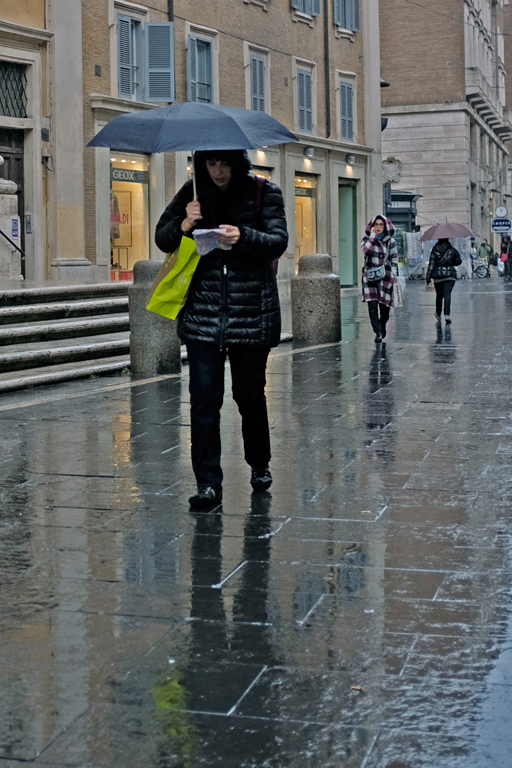
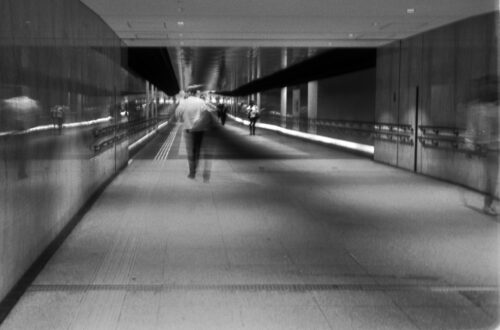
I made this photograph in Rome on a wet afternoon, deliberately throwing the focus to the foreground while the main figures walked straight into softness. It’s not a mistake. It’s an exercise in perceptual ambiguity—what the world looks like when memory is sharper than vision, when emotion fills in the blanks that optics don’t. The Fujifilm X100s, with its fixed 23mm f/2 lens, let me shoot discreetly. I prefocused on the pavement, framed instinctively, and let the rest blur into suggestion. The couple—arms linked, shopping bags swinging, half-sheltered under an umbrella—aren’t anonymous; they’re imagined. Their presence is read through posture, not detail. Technically, it’s anti-precision. Depth of field was shallow,…
-
Should I Buy It? (Best Taken With an 85mm)
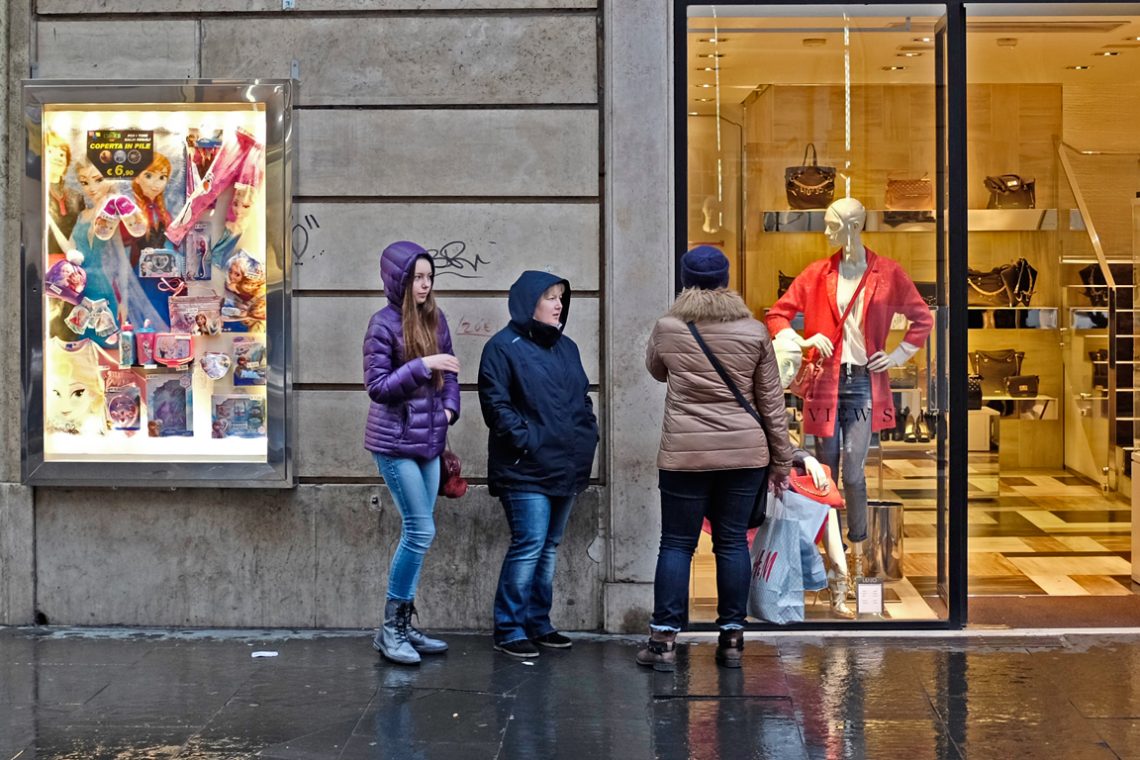
…but actually with a 23mm (35mm equivalent, cropped.) It’s not just a shopping street. It’s a stage. Look closer: this frame holds a silent performance — a subtle interplay of desire, decision, and doubt. Three women stand just outside the warmth of the boutique, their eyes fixed on mannequins who, ironically, seem far more confident than the living observers. The mannequin inside strikes a bold pose, clad in red and certainty. The women outside? Bundled in coats, their body language somewhere between ambivalence and negotiation. On the far left, another kind of window. A glowing child’s fantasy, plastered with Disney’s “Frozen” — a reminder of simpler times, when wanting something…
-
The Watchman (Street-Photography Shortcuts)
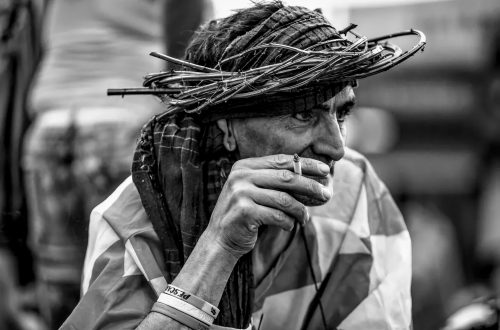
As every thing under the sun, Street-Photography too has its own shortcuts: freaky street-portraits are one of those. It’s easy to have your pictures noticed when your subject is a 60-years old Brit-Punk, an implausible-color dressed man or whatever alike: these subjects do the work on your behalf and it is very hard to obtain such kind of picture AND conveying actual meaning. Personally I like photos that – alone or made meaningful by a title – can tell a story. This way I can try to (pretend to) make “unique” shots, that stand with dignity in front of the zillions of 500px/Instagram/Flickr’s great images that are often perfect but…
-
True Leather (Saved by Photoshop’s Crop)
A 35mm focal length is definitely much too wide for my kind of street-photography, but I must admit that the advantages of using a Fujifilm X100s in terms of efficiency and portability, beat any other issue related to the wideness of the lens. And the X100s’ resolution is good enough to obtain a good composition through Photoshop’s crop feature.
-
Fujifilm X-Pro 2: Does It Worth It? (Lost In Via Del Corso)
As a Fujifilm camera early adopter (during time I got the X-pro 1, X100, X100s, X-E1 and X-E2) I was waiting for the X-Pro 2 to come and when that finally happened I didn’t feel so compelled to trash my (now) old cameras to do the switch. Long gone are the days of GAS (Gear Acquisition Syndrome), so I shall not buy this new piece of electronics because it doesn’t do anything that I can’t do with my actual set up (in particular, with the X100s and the X-E2.) The only actual point of interest, to me, are the dual-slot card and the weather sealed body: but I never needed…
-
A Nikon’s Portrait Made With a Fuji
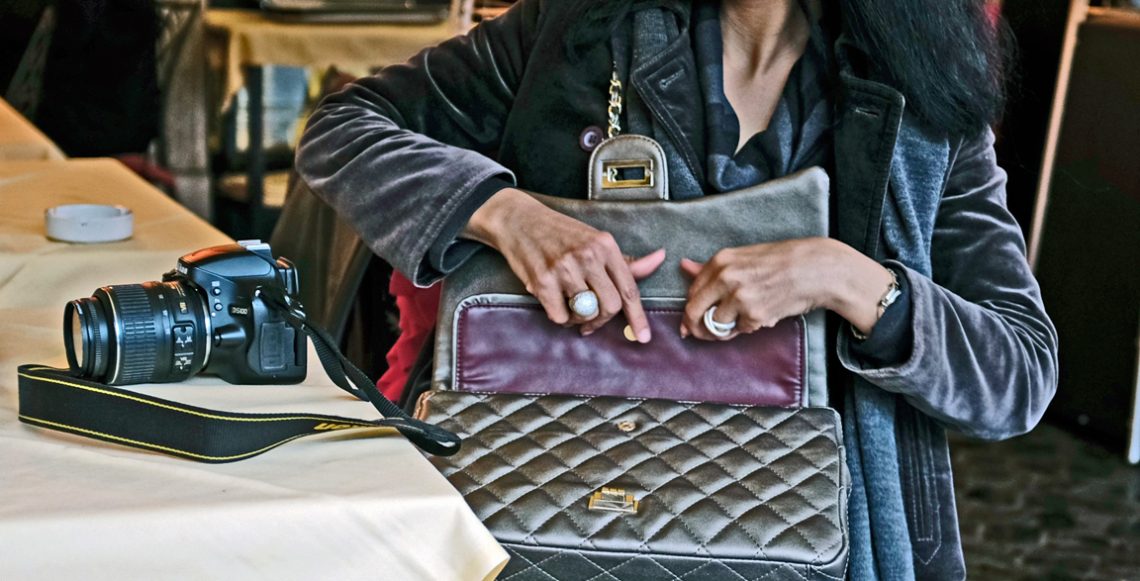
A Nikon camera strap curls into the lower left of the frame, its familiar yellow letters unmistakable to anyone who’s ever held one. Yet the photograph itself was taken with a Fujifilm—a quiet, almost private joke between photographer and viewer. The rest of the image leans into misdirection. The camera is not the subject, at least not in the obvious way. Centre stage belongs to a pair of hands opening a quilted leather handbag, rings catching the light, fingertips poised in the act of searching or arranging. The fabrics, textures, and colours—matte grey, deep burgundy, soft velvet—compete gently for attention. The Nikon strap rests there almost incidentally, but of course…
-
Reflexes
-
Labcoats In A Moment Of Rest
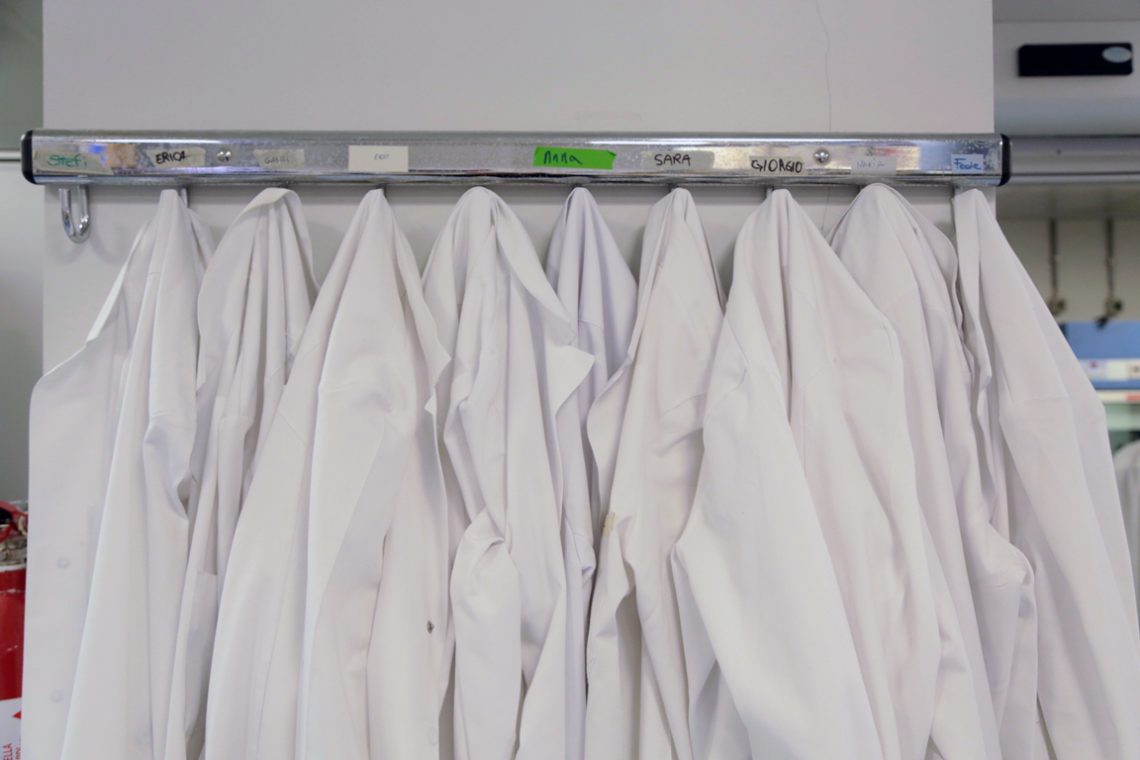
The lab was quiet. Machines still hummed, but the people had stepped away—lunch maybe, or a seminar down the corridor. I found this row of coats, slack and ghostlike, lined up with the kind of accidental symmetry that only happens when no one’s trying. Each hook bore a name: Stef, Erica, Anna, Sara, Giorgio… markers of identity in a place that prizes protocol over personality. Shot on a Canon 5D Mark II with the 24–105, the image leaned into its neutrality. No attempt to stylise the whites or fake a sterile glow. The coats were wrinkled, some slightly yellowed at the seams. I kept the exposure honest—highlights restrained just below…
-
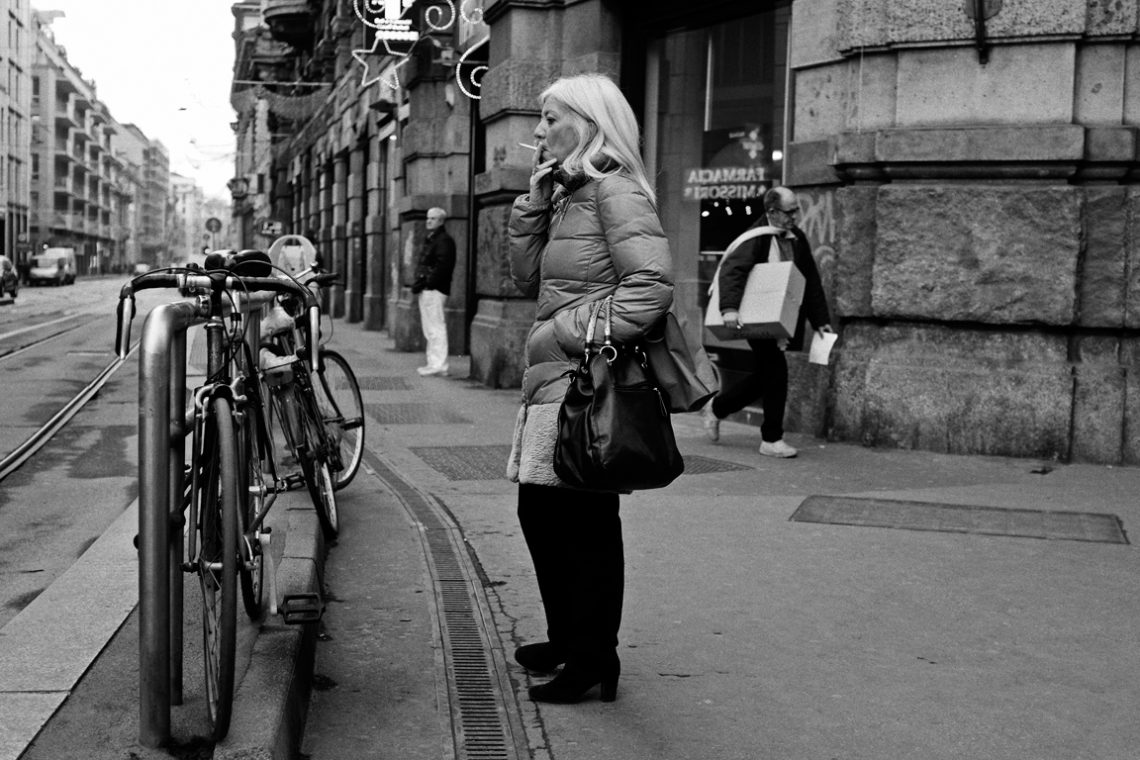
Last Puff Before the Ride
-
Busy
-
Earbuds
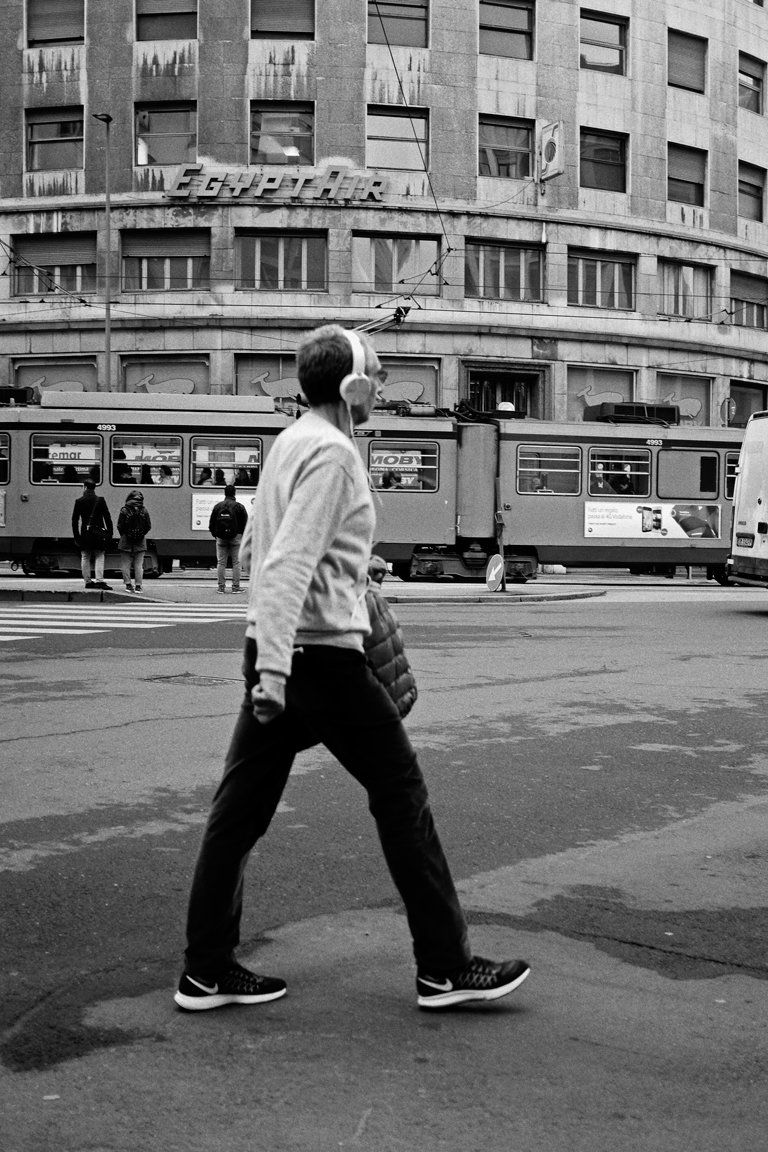
A man crosses the street in mid-stride, headphones enclosing him in his own private world. Behind him, a line of people stands at the tram stop, their stillness a counterpoint to his movement. The tram, painted in tired colours, seems almost fixed in place, its presence dwarfed by the weathered façade of the building above. The sign EgyptAir—faded, peeling—hangs over the scene like an echo from another time, hinting at journeys and destinations that have little to do with this grey urban moment. The building’s windows are uneven in tone, some dark, some reflecting a pale sky, all framed by streaks of wear from decades of weather. What draws the eye…
-
Traffic Jam in Rome
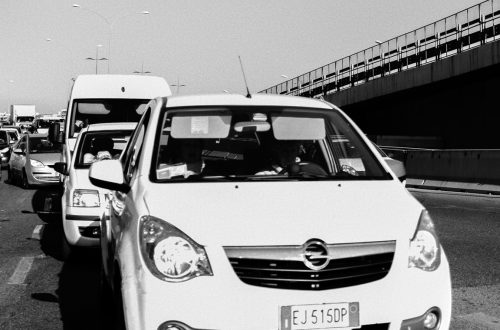
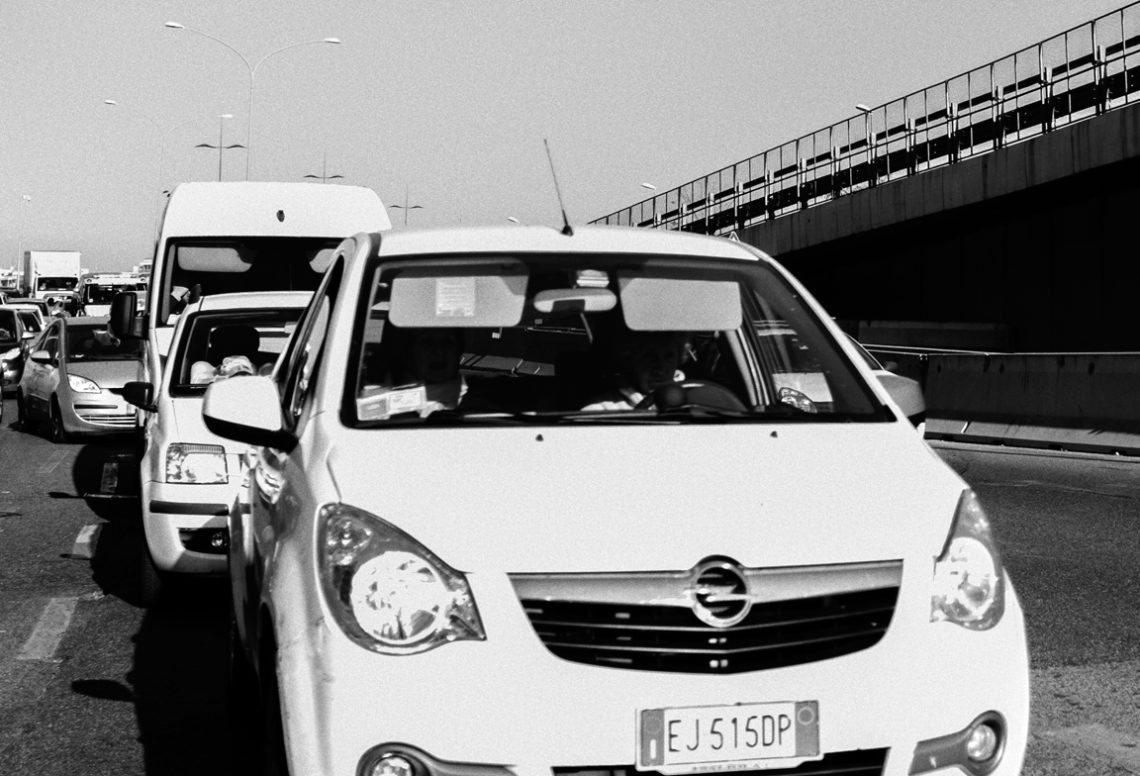
Traffic Jam in Rome turns a mundane urban frustration into a tightly composed study of rhythm, glare, and human impatience. Shot in black and white, the image removes the distraction of colour, allowing form, texture, and contrast to carry the story. CompositionThe frame is dominated by the lead vehicle, a small Opel, positioned slightly off-centre but close enough to the lens to dwarf the rest of the scene. Its mass blocks the viewer’s way forward, much as the driver is blocked in reality. The eye then steps back through a staggered row of vehicles, each one receding into the compressed depth of traffic, until it meets the horizon cluttered with more…
-
The Coffin
-
A (Out-of-Focus) Break Between Lunch and Supper
-
Priority Pass Lounge at Fiumicino Airport
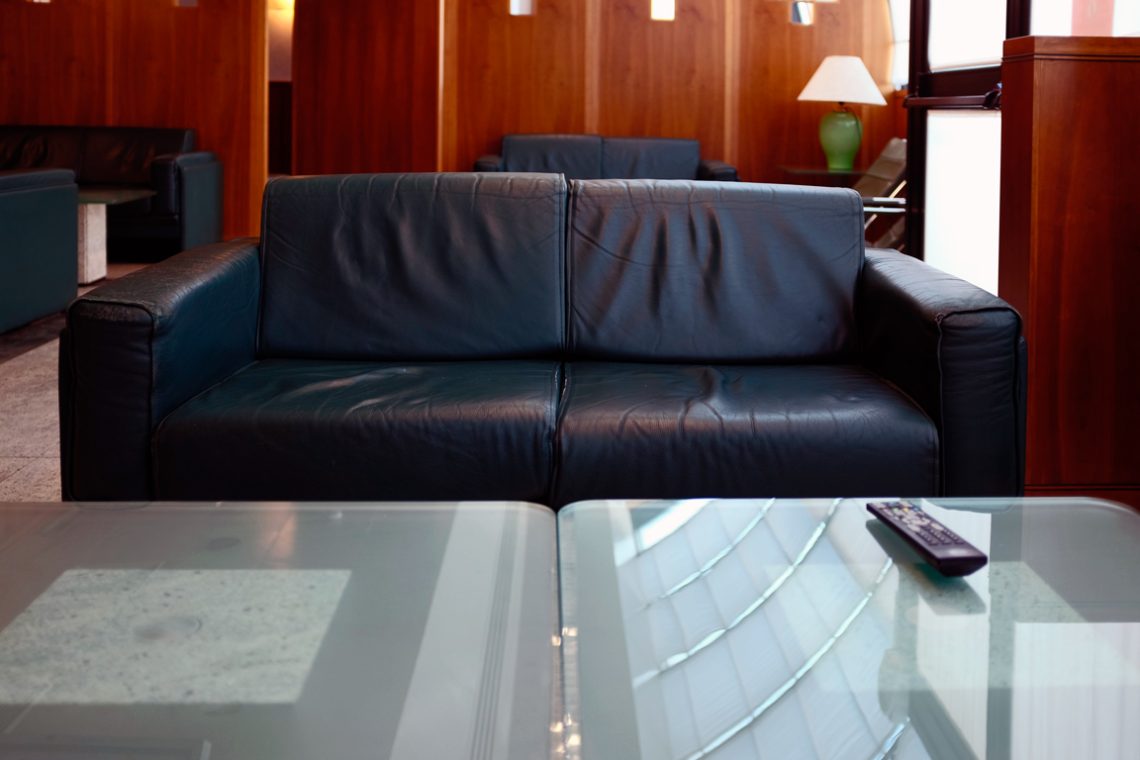
A black leather sofa sits squarely in the centre, its creases marking years of passengers waiting, resting, or passing time. In front, a glass table reflects the curved lines of the airport ceiling above, while a remote control lies to one side, a small symbol of temporary control in a transient space. The setting is clean but impersonal, designed for comfort without intimacy. Composition is frontal and symmetrical. The sofa occupies the full width, anchoring the frame, while the table stretches forward as an intermediary between viewer and seat. Depth is layered by repetition: another sofa behind, a lamp, wood-panelled walls. The geometry enforces a sense of order, reinforcing the…
-
Washed
-
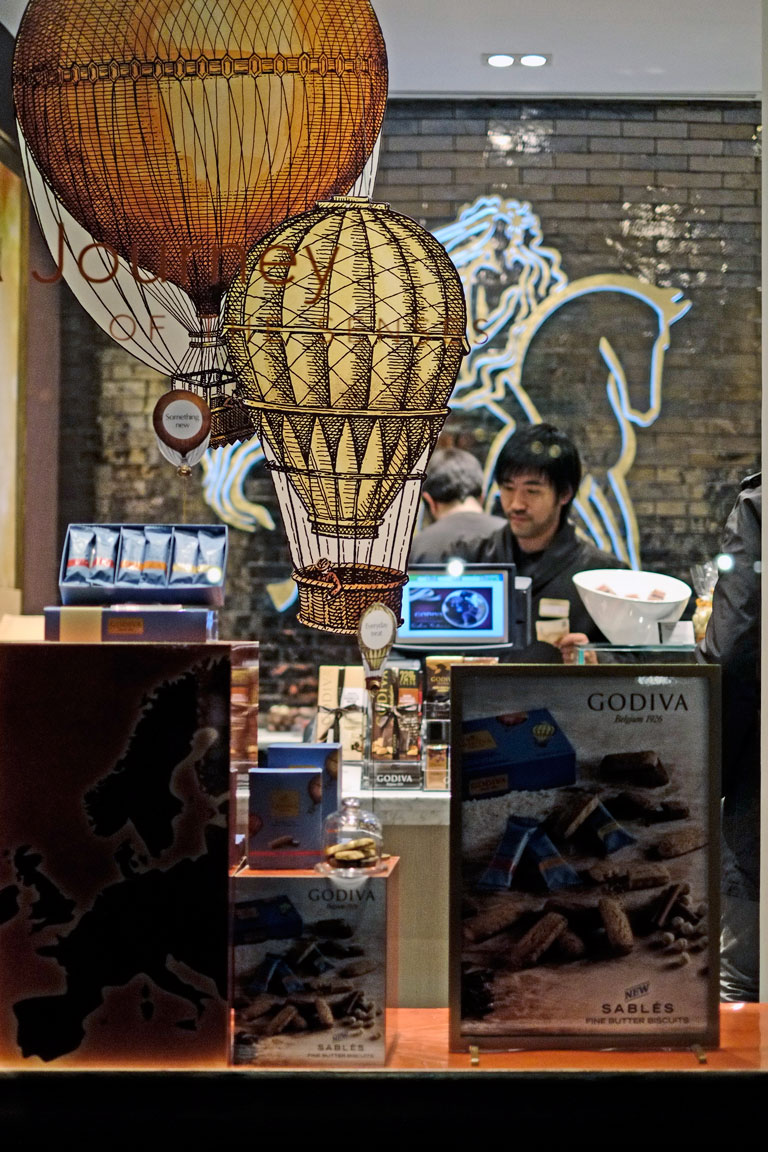
Belgian Chocolate – Godiva
-
The Jewels Sale
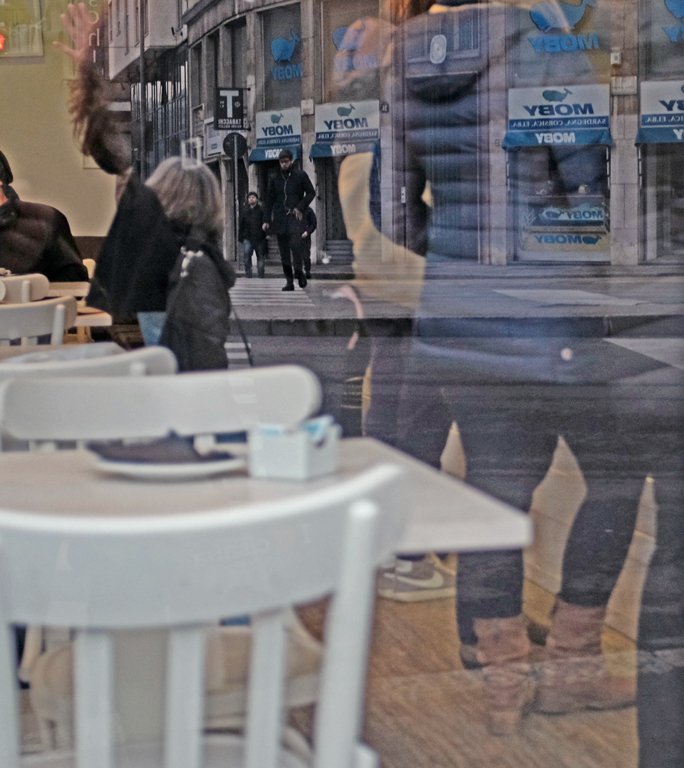
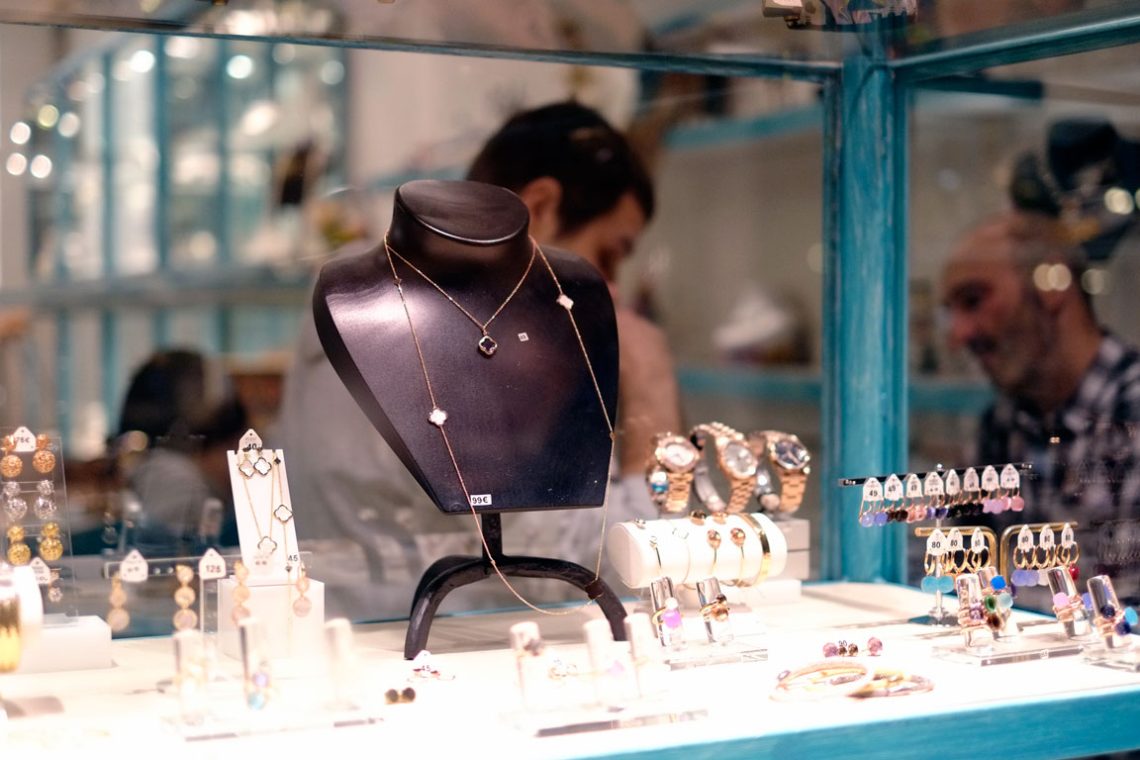
Photographing through glass is always a test of patience. Here, I wanted to capture not just the jewellery but the human presence behind it—the quiet choreography of selling and browsing. The glass served as both barrier and canvas, introducing subtle reflections that blend the sparkle of the display with the blurred outlines of the people behind it. Compositionally, the image leans on the central placement of the black necklace bust. Its matte surface contrasts with the glint of gold and the shimmer of stones around it, giving the frame a clear focal point. The surrounding watches and earrings fill the edges without overwhelming the centre, leading the viewer’s gaze in…
-
Belgian Chocolate – Neuhaus
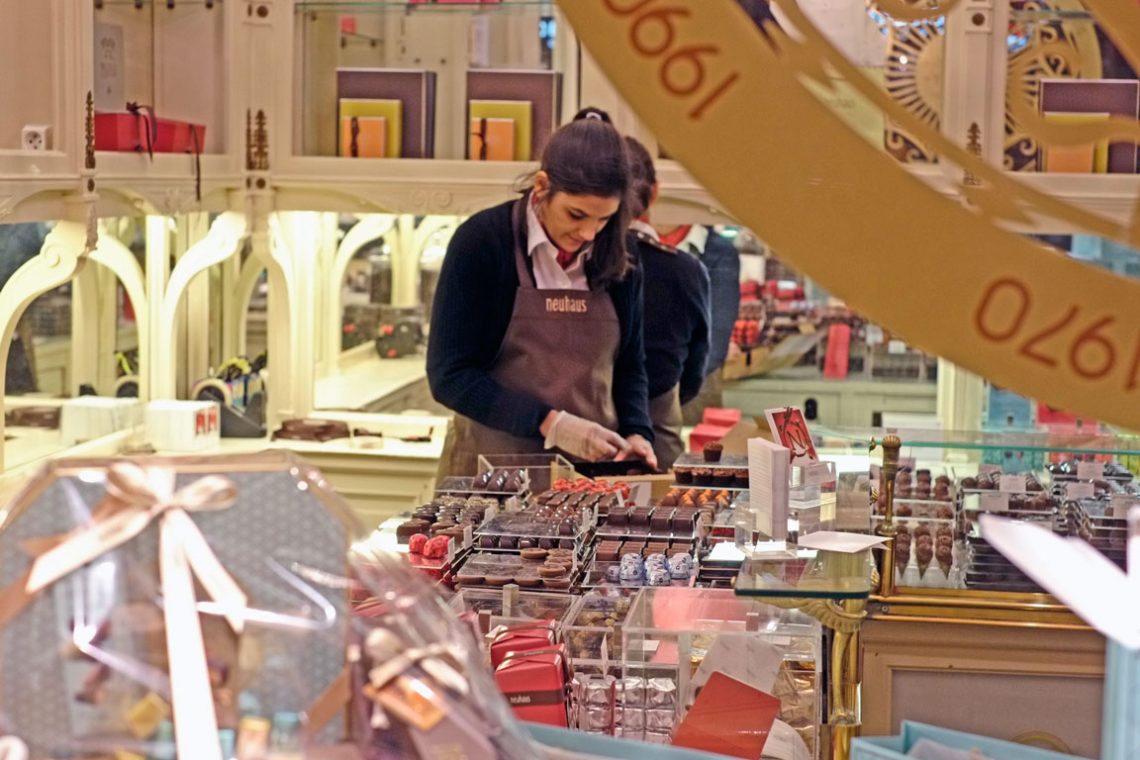
Photographing in a place like this Neuhaus boutique is always an exercise in restraint. The scene is a sensory overload: gold, red, pastel blues, mirrored surfaces, and the intricate geometry of countless chocolate boxes. It’s easy for the camera to drown in the details, and the trick is to find an anchor point—the human presence that gives context and focus. Here, that anchor is the shop assistant, absorbed in her task, the bend of her head drawing the viewer into the very centre of the composition. The overhead golden arc with the reversed “1970” is not accidental—it creates a frame within the frame, hinting at the brand’s heritage while subtly…
-
Glancing Books In A Brussels’Night
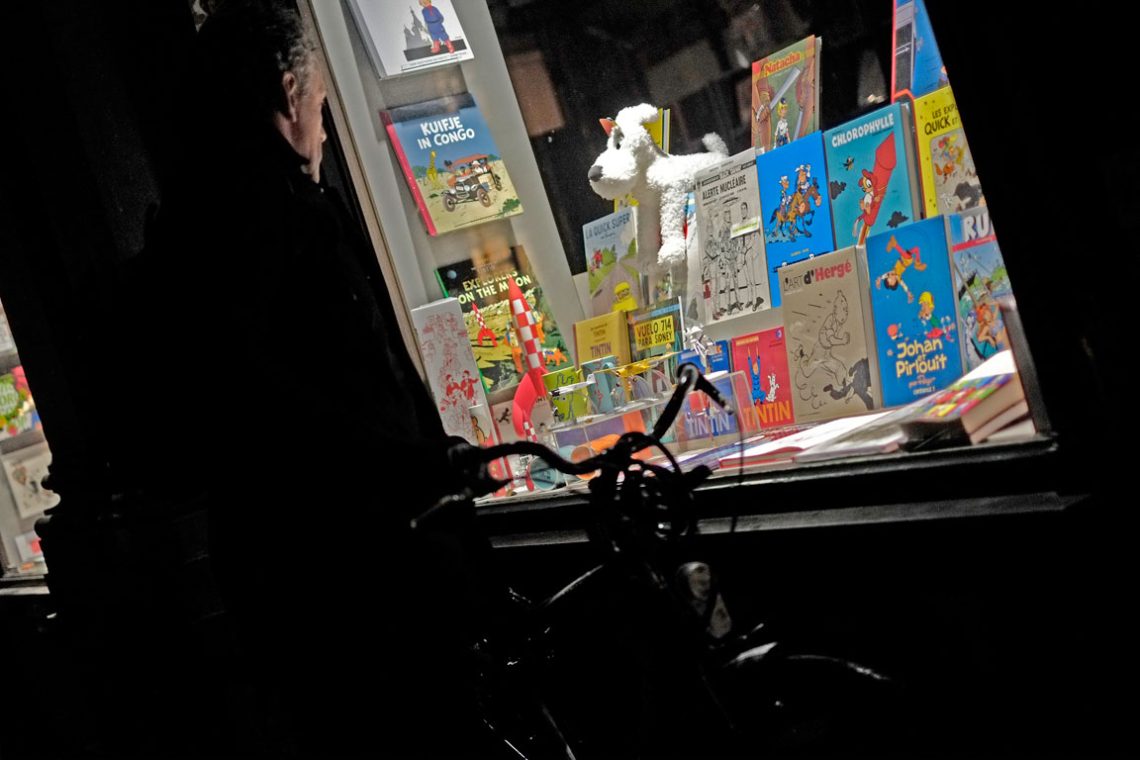
A casual walk in a Brussels’early evening, wandering through the old streets near the city centre. The light from a comic-book shop window cut into the dark pavement like a beacon. Inside, Tintin, Snowy, and the bright spines of Hergé’s world stood stacked and waiting — nostalgia perfectly lit for passers-by. Then a man stopped with his bicycle, leaning slightly toward the glass. He didn’t enter; he only looked — half-curious, half-distracted. The glow of the display made him a silhouette, almost part of the window’s composition. His reflection blended with the books, erasing the boundary between observer and story. For a moment, the scene assembled itself.
-
Fancy a Beer?
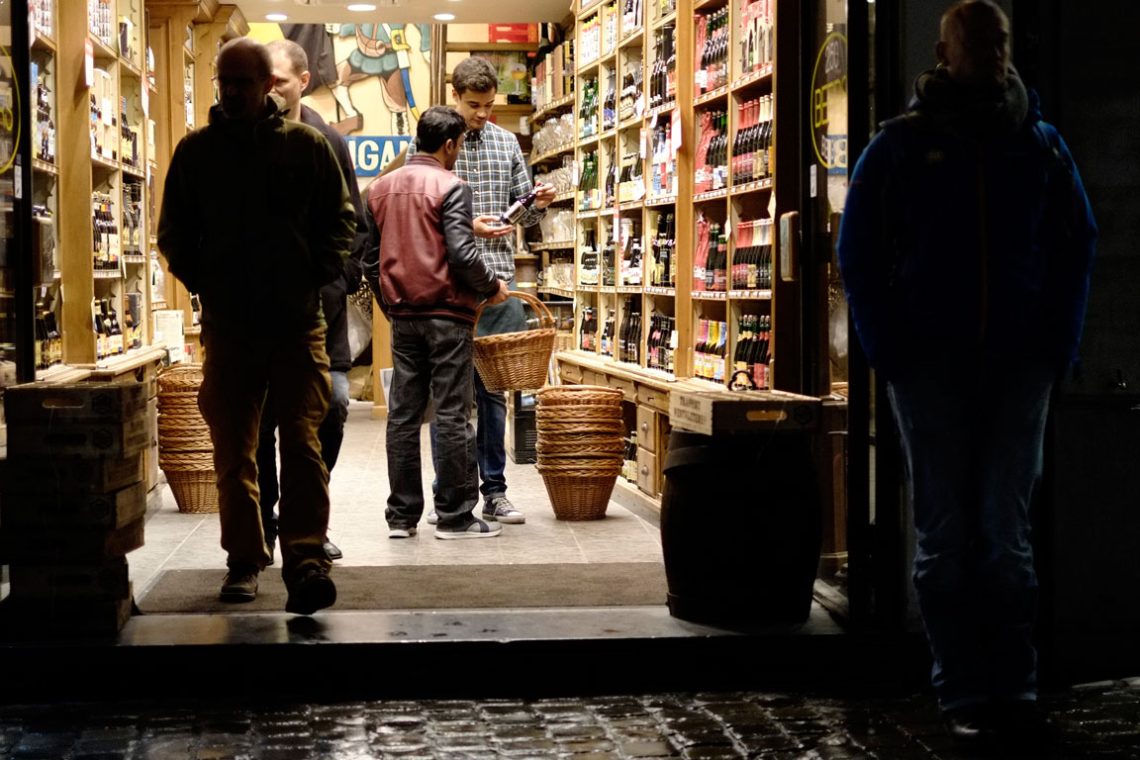
In the warm light of a Brussels beer shop, shelves stacked floor to ceiling with bottles, two men weigh a purchase. One holds the bottle carefully, the other studies it with interest, a wicker basket dangling between them. Their small exchange sits at the heart of the frame, illuminated against the darker figures of passersby drifting in and out of the doorway. The composition splits into layers: the inviting glow of the shop interior, the mid-ground where the buyers stand, and the silhouetted outlines of those entering or leaving. This layering gives depth, making the viewer feel both inside and outside at once. The shelves, neatly arranged in repeating verticals…
-
Inside the Palaces of Power – Bruxelles
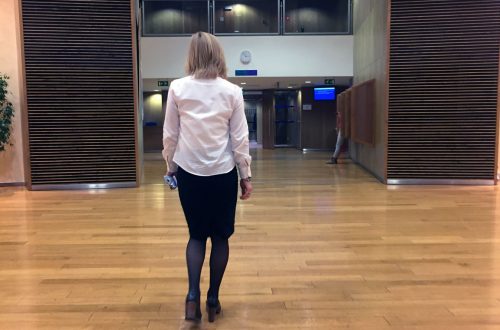
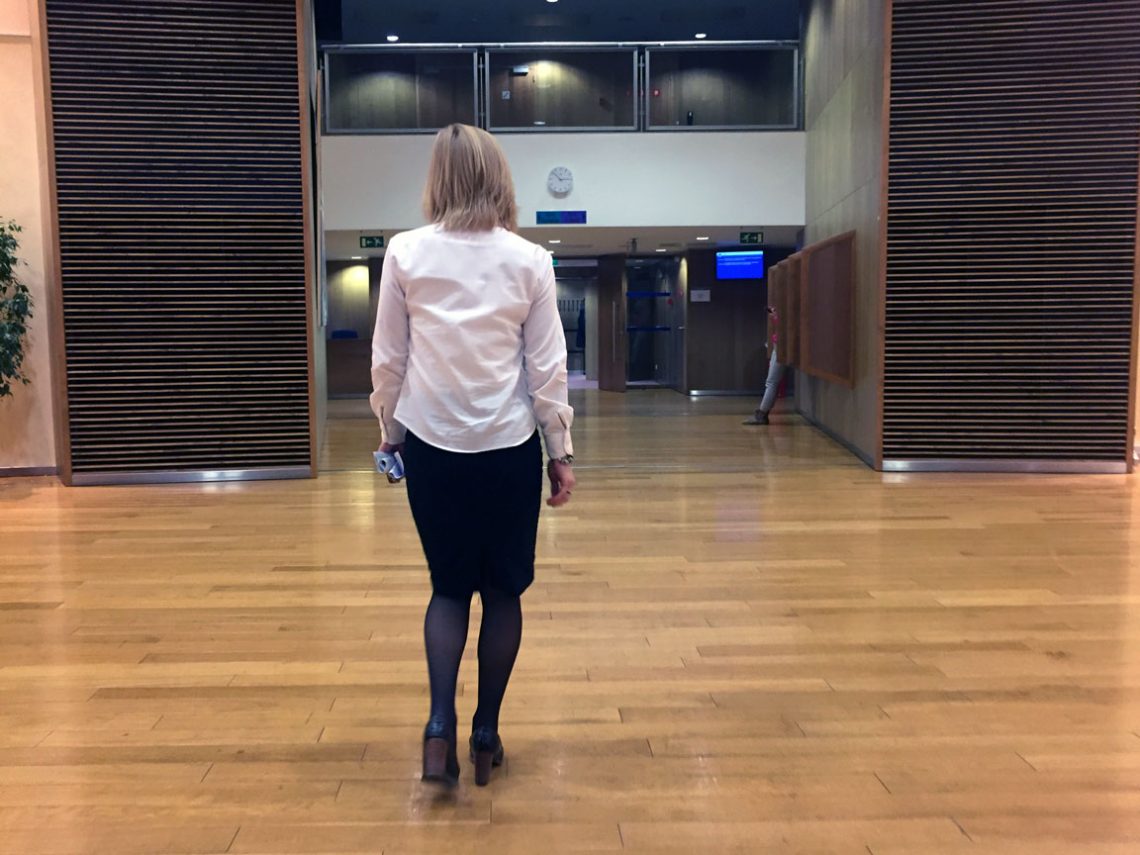
The first thing that strikes me about this image is its deliberate sense of distance—not just physical, but psychological. We see a woman from behind, walking away toward a set of glass doors, her stride steady, her posture contained. There’s no attempt to catch her expression; her anonymity allows her to stand in for anyone navigating the quiet, often opaque corridors of authority. The architecture plays as much of a role here as the human subject. Vertical wooden slats flank either side, creating a symmetrical frame that channels our gaze straight toward the central doors and the clock above them. The space is clean, polished, almost acoustically still. The high-gloss…