-
The Jewels Sale
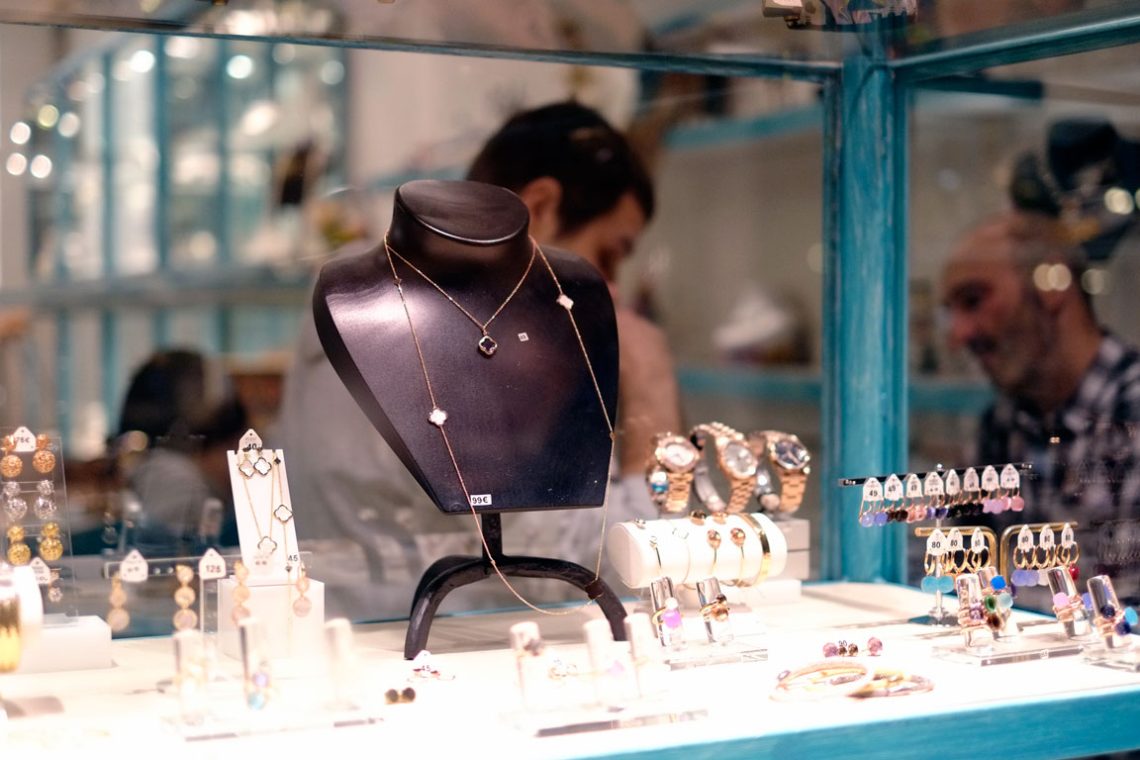
Photographing through glass is always a test of patience. Here, I wanted to capture not just the jewellery but the human presence behind it—the quiet choreography of selling and browsing. The glass served as both barrier and canvas, introducing subtle reflections that blend the sparkle of the display with the blurred outlines of the people behind it. Compositionally, the image leans on the central placement of the black necklace bust. Its matte surface contrasts with the glint of gold and the shimmer of stones around it, giving the frame a clear focal point. The surrounding watches and earrings fill the edges without overwhelming the centre, leading the viewer’s gaze in…
-
Belgian Chocolate – Neuhaus
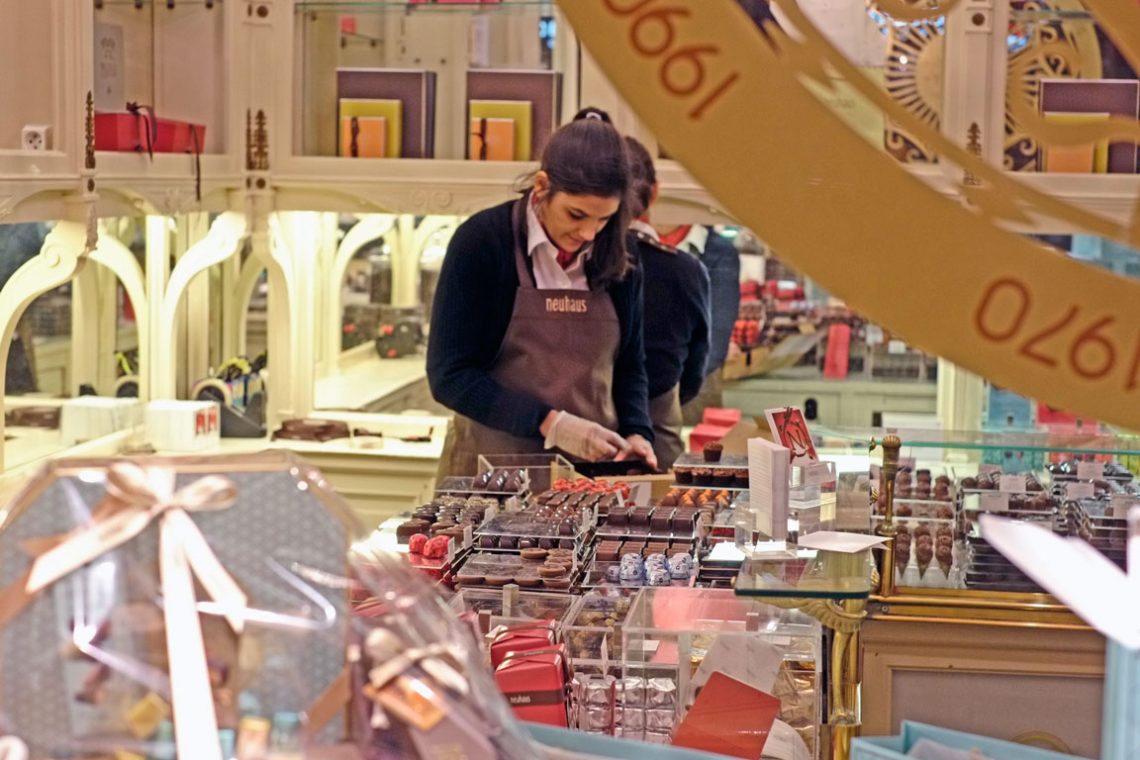
Photographing in a place like this Neuhaus boutique is always an exercise in restraint. The scene is a sensory overload: gold, red, pastel blues, mirrored surfaces, and the intricate geometry of countless chocolate boxes. It’s easy for the camera to drown in the details, and the trick is to find an anchor point—the human presence that gives context and focus. Here, that anchor is the shop assistant, absorbed in her task, the bend of her head drawing the viewer into the very centre of the composition. The overhead golden arc with the reversed “1970” is not accidental—it creates a frame within the frame, hinting at the brand’s heritage while subtly…
-
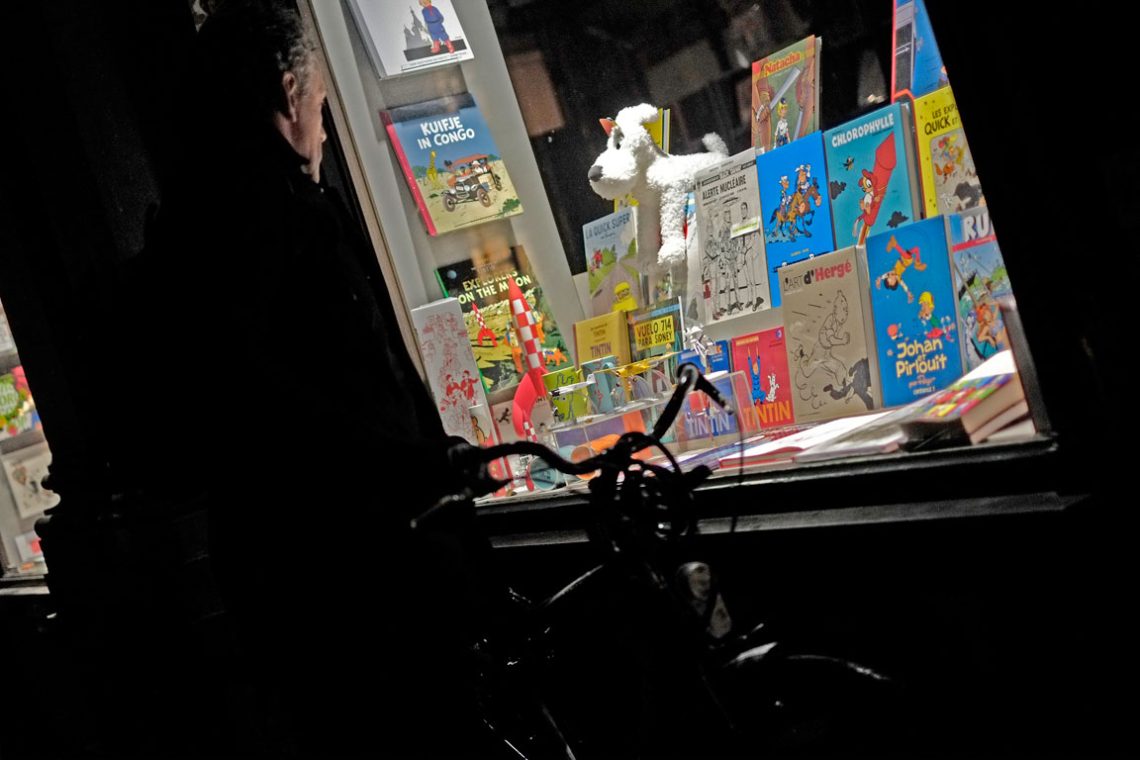
Glancing Books In A Brussels’Night
A casual walk in a Brussels’early evening, wandering through the old streets near the city centre. The light from a comic-book shop window cut into the dark pavement like a beacon. Inside, Tintin, Snowy, and the bright spines of Hergé’s world stood stacked and waiting — nostalgia perfectly lit for passers-by. Then a man stopped with his bicycle, leaning slightly toward the glass. He didn’t enter; he only looked — half-curious, half-distracted. The glow of the display made him a silhouette, almost part of the window’s composition. His reflection blended with the books, erasing the boundary between observer and story. For a moment, the scene assembled itself.
-
Fancy a Beer?
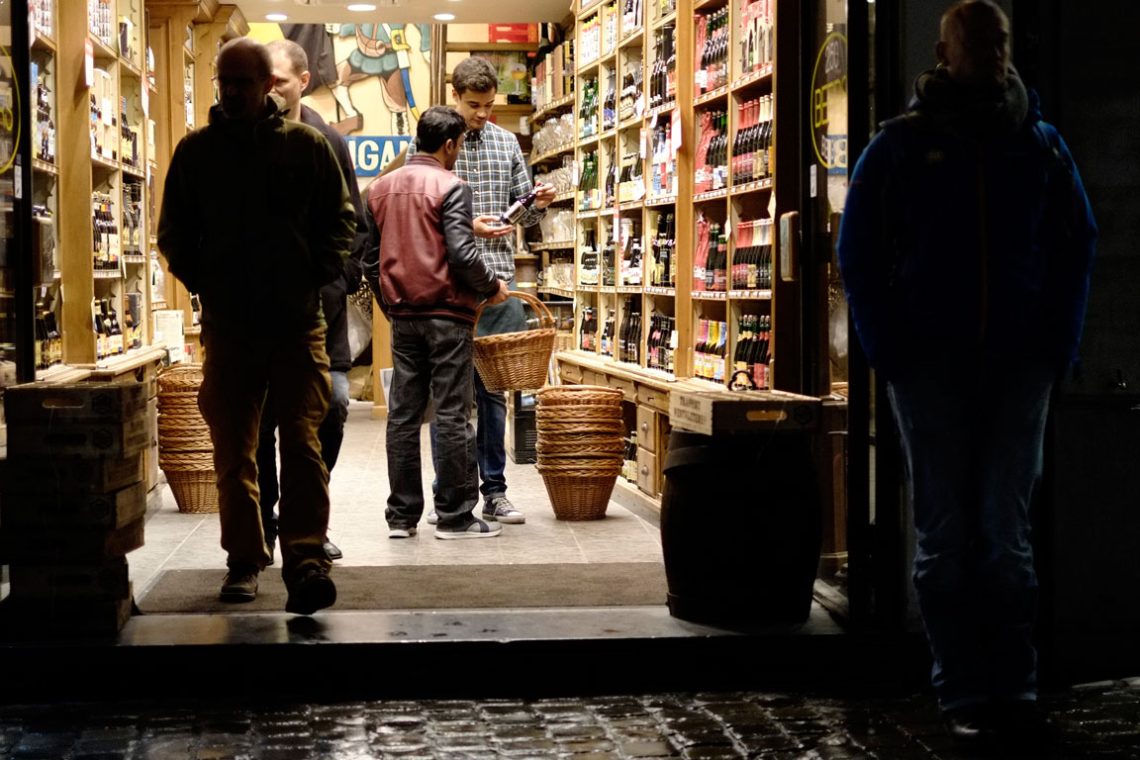
In the warm light of a Brussels beer shop, shelves stacked floor to ceiling with bottles, two men weigh a purchase. One holds the bottle carefully, the other studies it with interest, a wicker basket dangling between them. Their small exchange sits at the heart of the frame, illuminated against the darker figures of passersby drifting in and out of the doorway. The composition splits into layers: the inviting glow of the shop interior, the mid-ground where the buyers stand, and the silhouetted outlines of those entering or leaving. This layering gives depth, making the viewer feel both inside and outside at once. The shelves, neatly arranged in repeating verticals…
-
Inside the Palaces of Power – Bruxelles
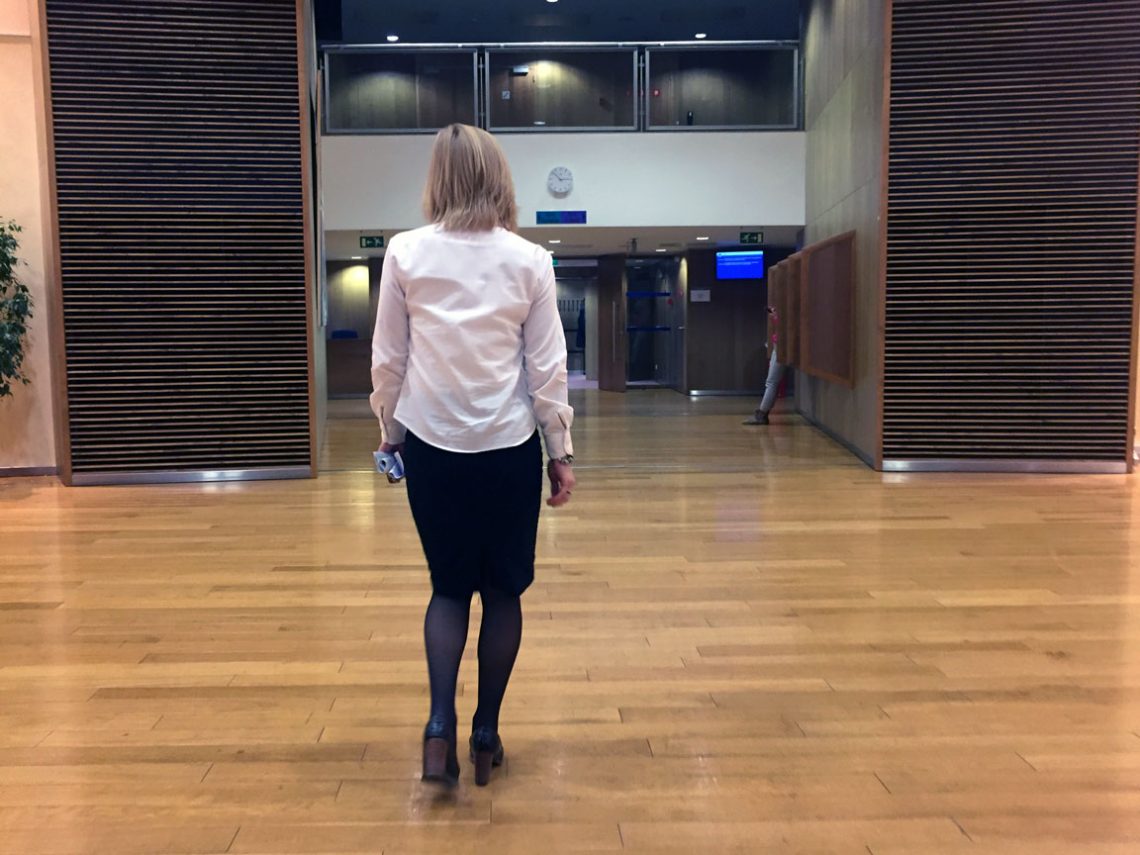
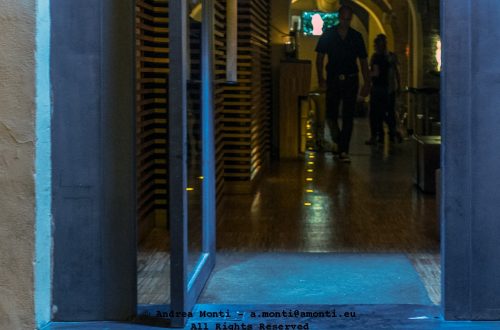
The first thing that strikes me about this image is its deliberate sense of distance—not just physical, but psychological. We see a woman from behind, walking away toward a set of glass doors, her stride steady, her posture contained. There’s no attempt to catch her expression; her anonymity allows her to stand in for anyone navigating the quiet, often opaque corridors of authority. The architecture plays as much of a role here as the human subject. Vertical wooden slats flank either side, creating a symmetrical frame that channels our gaze straight toward the central doors and the clock above them. The space is clean, polished, almost acoustically still. The high-gloss…
-
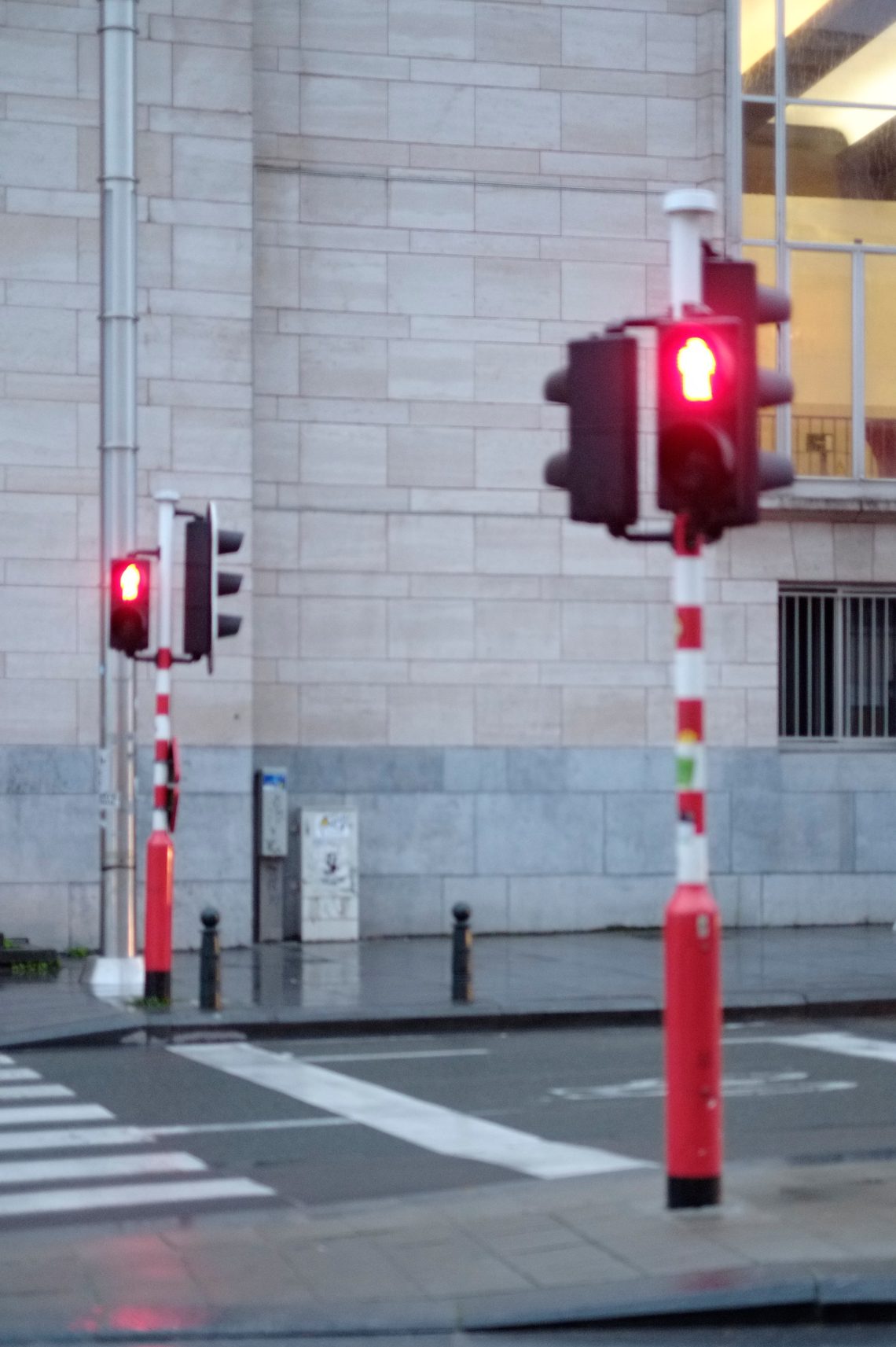
RedLight
-
Sweet Dilemma
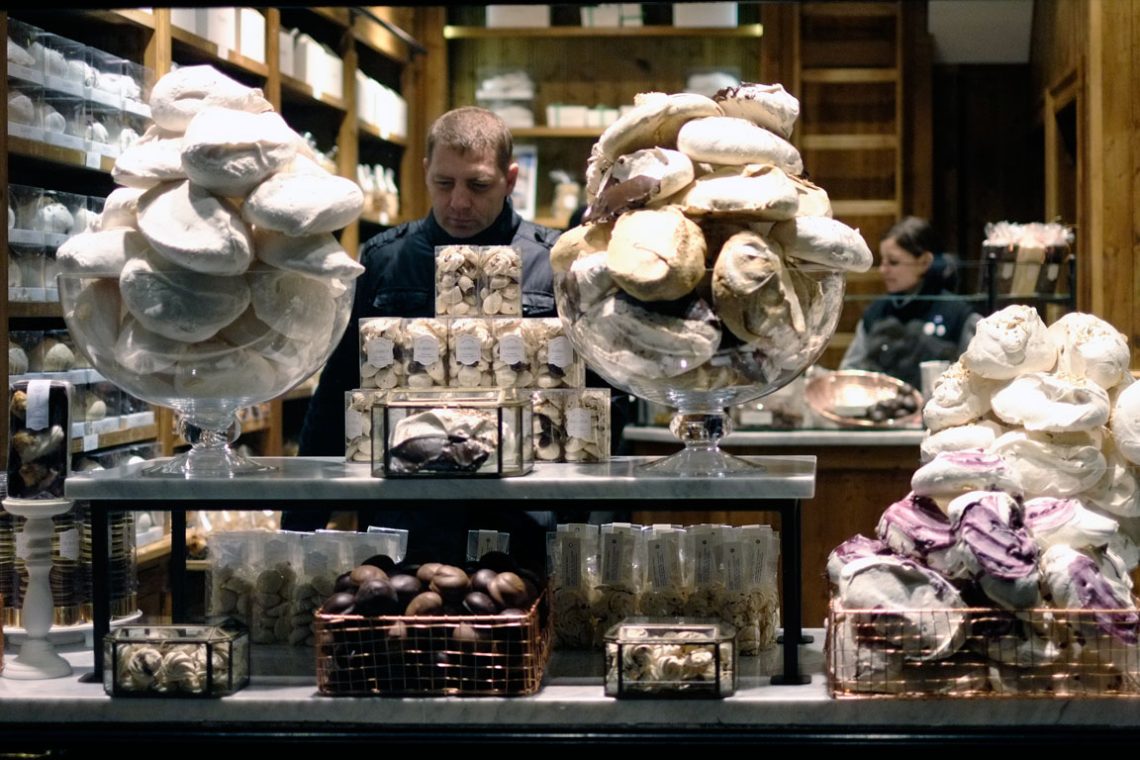
I took this photograph in one of those shops that could easily bankrupt anyone with a sweet tooth. The window was a theatre stage, and the protagonists were mountains of meringues, chocolates, and sugared confections, all arranged with military precision. The display was so perfectly composed it demanded to be photographed — though translating that abundance into a frame without losing the sense of order was a challenge in itself. I shot head-on, centring the display so the symmetry would hold the composition together. The large glass bowls act as visual anchors, while the pyramid of packaged goods in the middle draws the eye inward. Behind, two figures — the…
-
Belgian Macarons
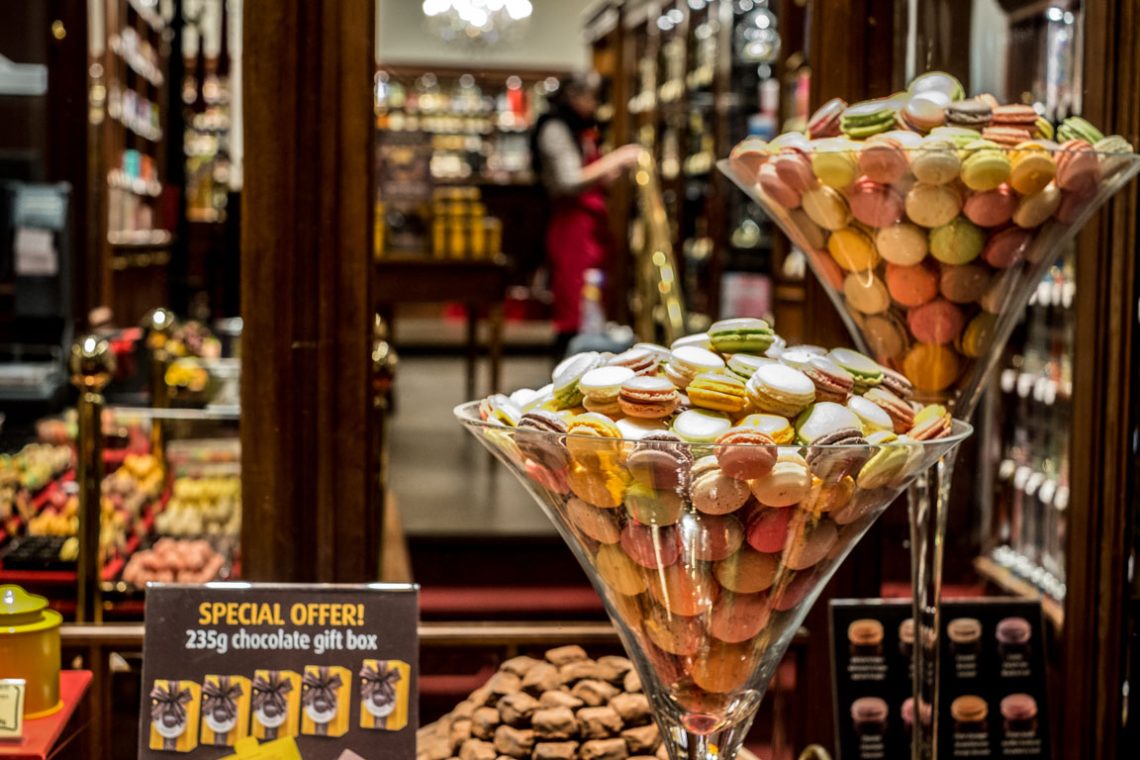
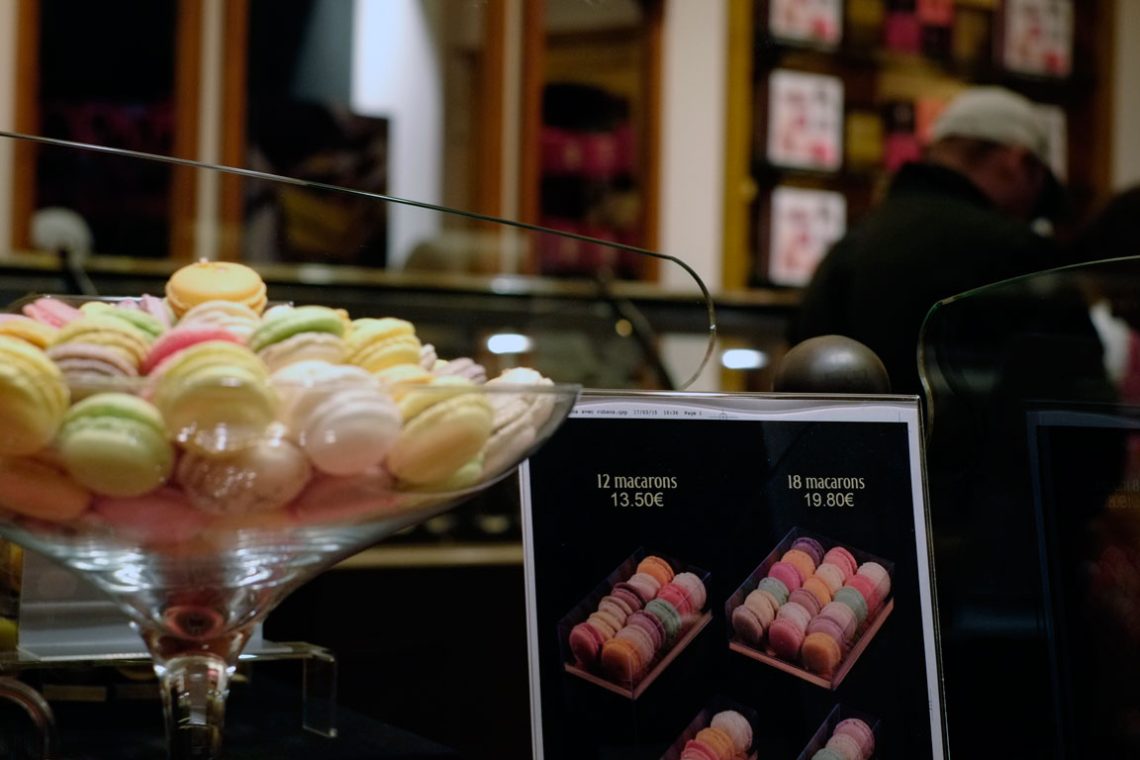
In Brussels, indulgence is not hidden—it’s celebrated, displayed like a jewel in a shop window. Here, two towering martini glasses overflow with macarons, their shells in perfect rows of pastel and jewel tones. Pistachio green, raspberry pink, lemon yellow, cocoa brown—each one a promise of texture and flavour, crisp edges giving way to soft, rich fillings. The composition draws the eye first to the abundance in the foreground, then to the warm wooden shelves receding into the shop’s interior. A figure in a red apron moves in the background, blurred but purposeful, the quiet curator of this edible gallery. The lighting is golden, not harsh, bathing the scene in the…
-
Buying Chocolate
-
Macarons. Again
I made this photograph inside a pâtisserie, focusing on a glass bowl overflowing with pastel-coloured macarons. The shallow depth of field brings the confectionery into crisp attention while softening the background, where figures and shelves dissolve into warm blur. The arrangement of sweets, piled almost carelessly, conveys abundance rather than the rigid order usually associated with patisserie display. Technically, the image works through contrast of light and tone. The reflective surface of the glass bowl catches highlights, while the soft illumination keeps the delicate textures of the macarons intact. The exposure holds steady despite mixed lighting, managing both the bright surfaces of the sweets and the darker recesses of the…
-
Belgian Hats
-
Belgian Gloves
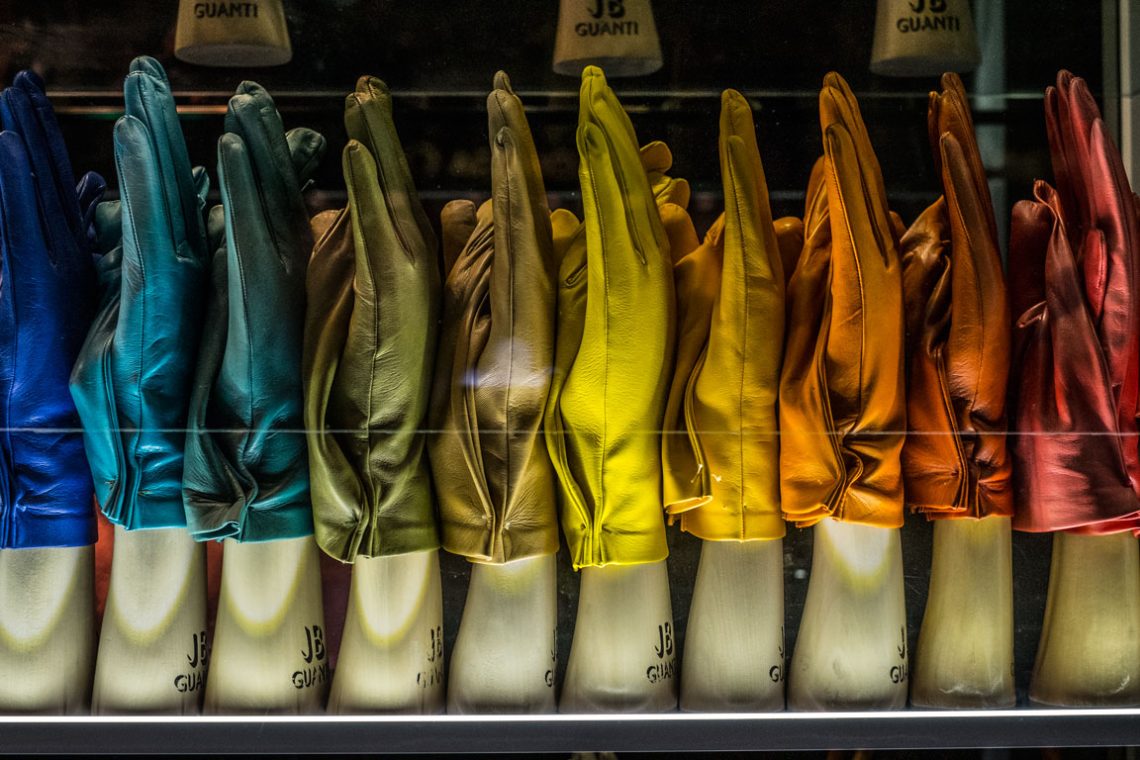
There’s a certain satisfaction in encountering a composition that seems to have arranged itself for the camera, as though the visual world conspired to present its colours and forms in perfect order. Belgian Gloves offers just that: a tight row of leather gloves, each perched on a mannequin hand, marching in a perfect gradient from cool blues through greens, yellows, oranges, and finally deep reds. It is at once commercial display and chromatic study. From a compositional perspective, the image benefits enormously from its frontal, symmetrical framing. By positioning the gloves parallel to the camera, the photographer creates a sense of order that invites the eye to travel along the…
-
Ray-Ban in Milan
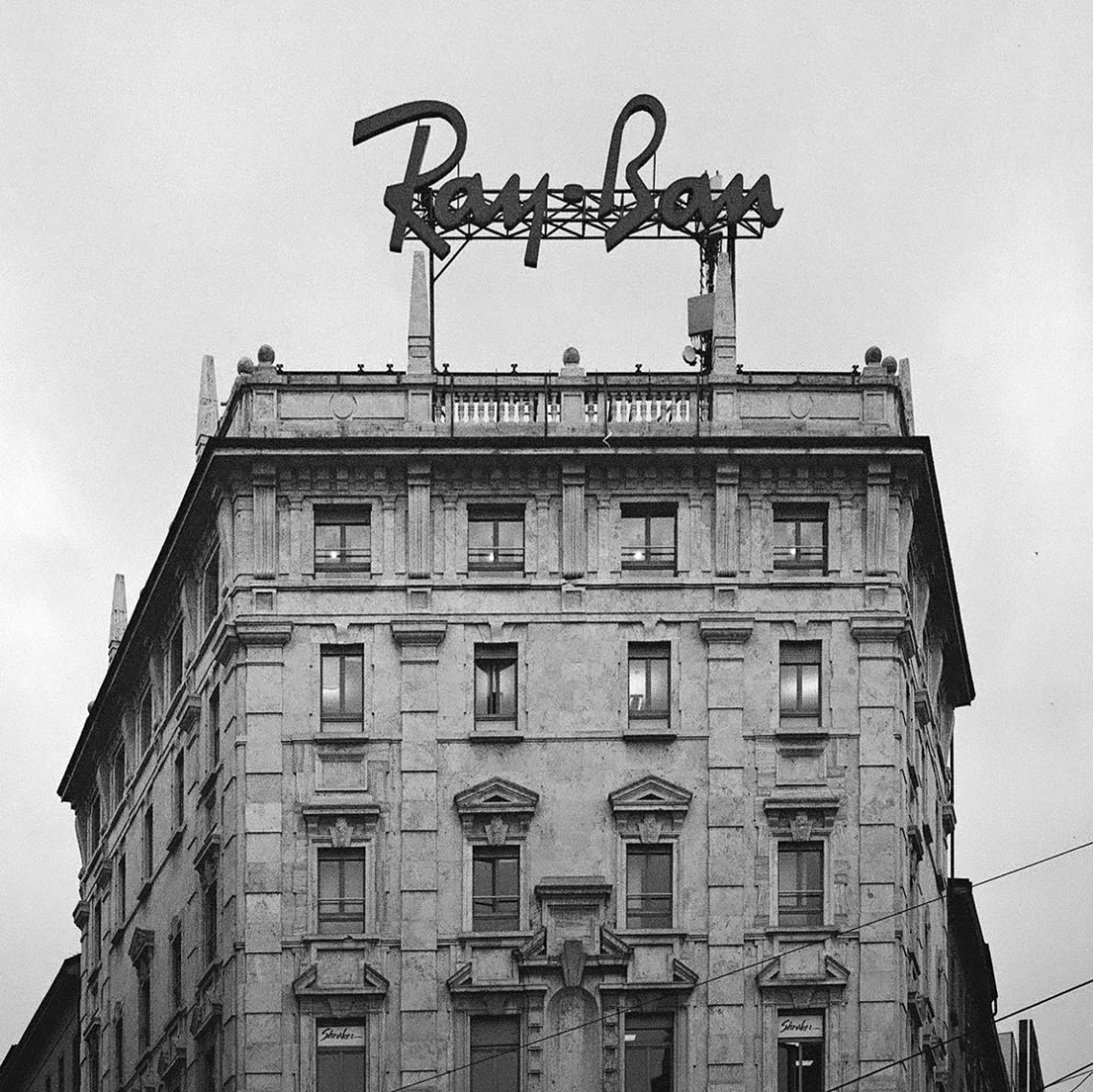
It’s not just about what sits on the roof—it’s about what it says without blinking. Shot in the heart of Milan, this image captures a building that has seen eras come and go, crowned by a brand that has spent decades convincing the world to look cool while blocking out the light. The lettering floats above the stone like graffiti gentrified by permanence. I framed the photo dead-on, as if to let the architecture and the logo negotiate their own contrast. The façade is neoclassical, orderly, almost too proud to wear an ad. But there it is—Ray-Ban—scribbled in neon above cornices and keystones, as defiant as it is inevitable. Black…
-
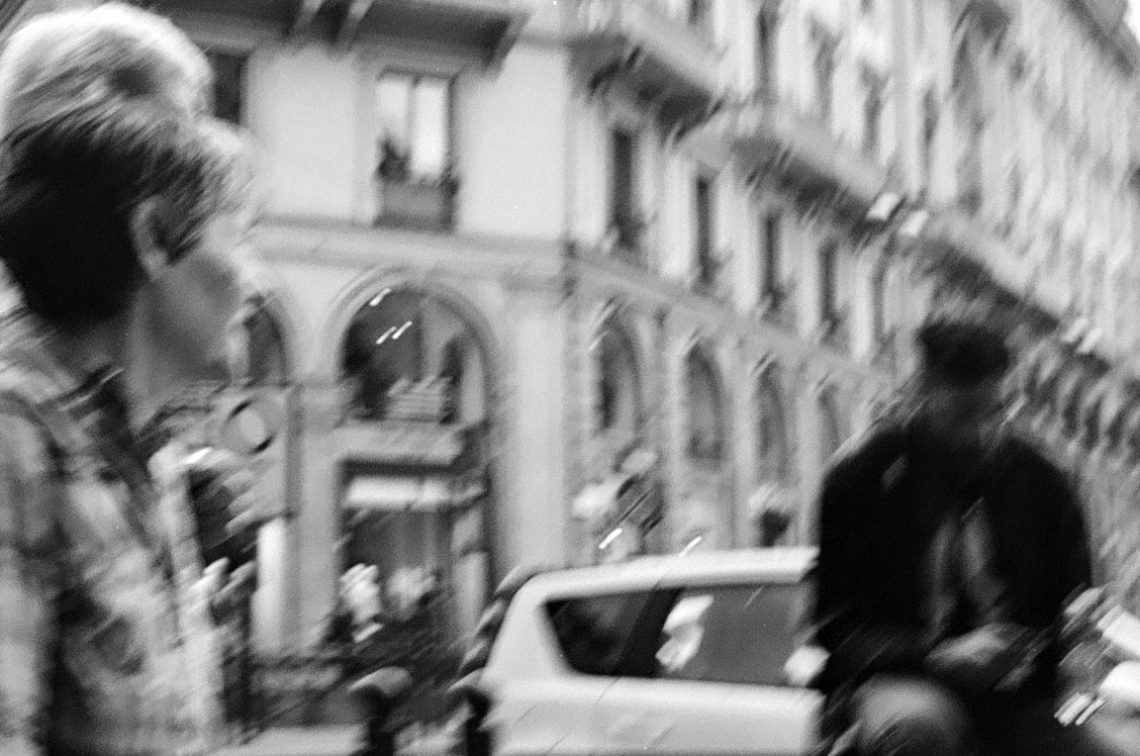
Shaken
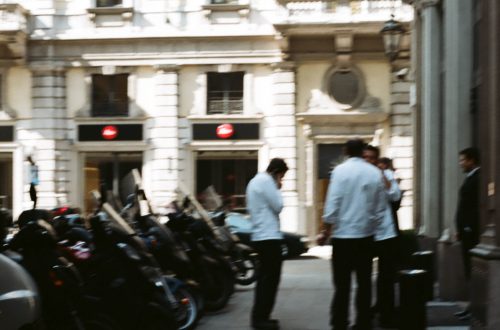
The frame is a study in disarray — not in subject matter alone, but in its very execution. The scene, taken on a busy street, is blurred throughout: the figures, the car, the elegant repetition of arches behind them. Whether caused by an unsteady hand, a slow shutter, or a deliberate choice, the result is an image where nothing stands still enough to become the focal point. Two figures anchor the composition: one in the foreground to the left, caught mid-turn, the other to the right, hunched over something in his hands. Their outlines dissolve into the tonal softness, denying the viewer access to facial expression or fine detail. The…
-
A Waiter in via Sardegna
-
Inside The Palace of Power
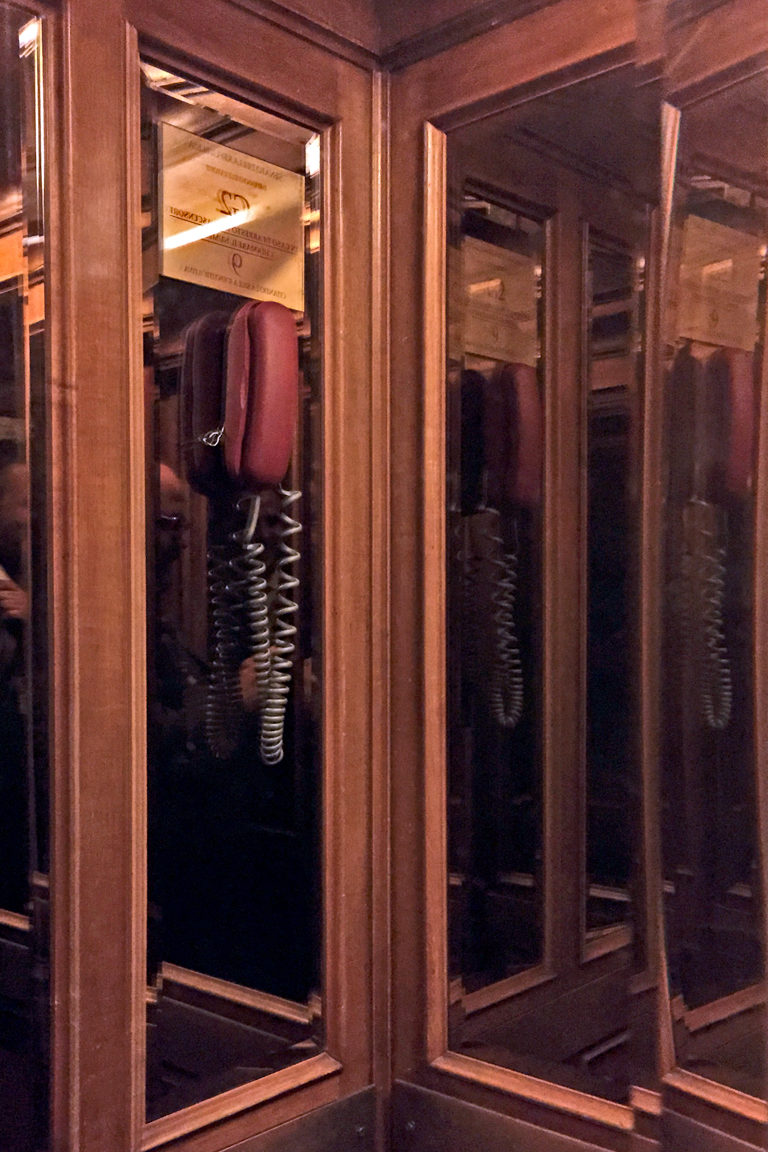
I took this photograph inside a government building, in the afternoon, when the corridors echo in silence and the light is all reflected memory. The image focuses on a phone—old-style, maroon, hanging uselessly from its hook—framed by dark wood panels and infinite reflections. It’s a cliché of power, really: opulence, silence, and an obsolete instrument of control. The technical conditions weren’t ideal. I had no tripod, the light was dim and uneven, and I was working with a handheld digital camera not built for low-light finesse. ISO had to go up, and with it came the noise. But I decided not to clean it. Grain, in this case, felt appropriate.…
-
Table Dressing
-
Lost
-
Nice Drink
-
Are you Sure?
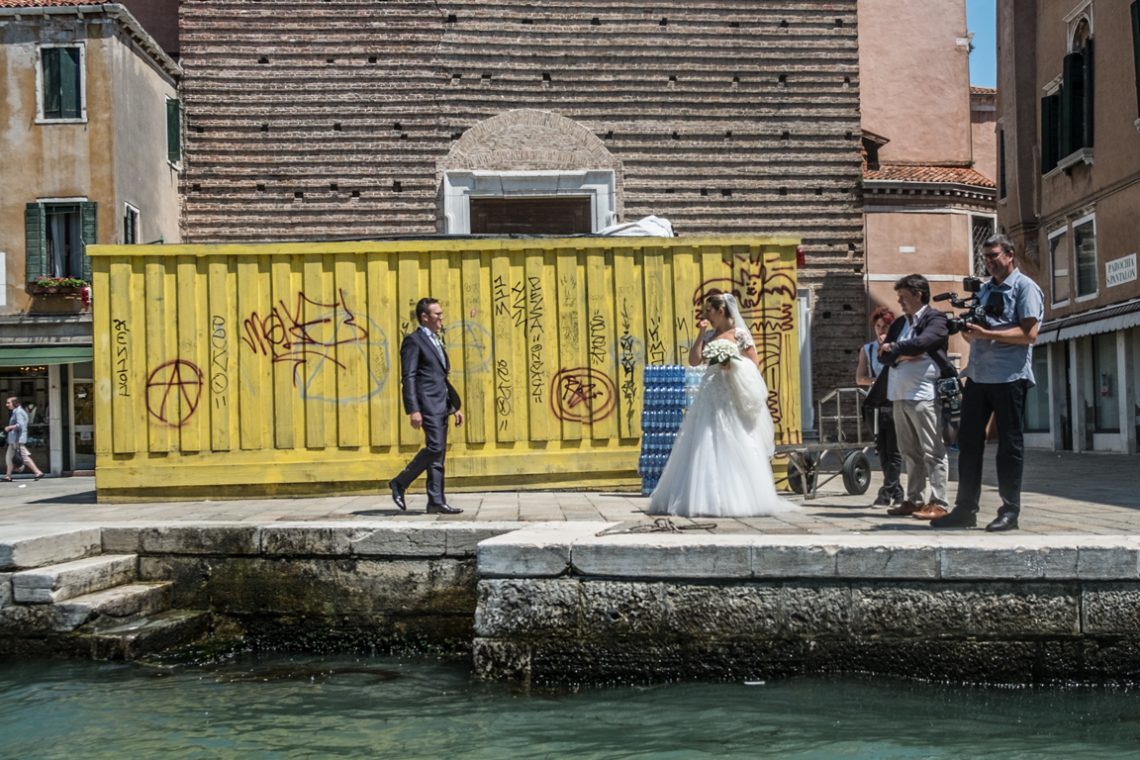
There is a delightful dissonance at work in this photograph, taken on Venice’s docks. We expect wedding portraits to be carefully curated affairs — romantic, timeless, perhaps even a little clichéd. Yet here, the scene unfolds against a backdrop of a bright yellow, graffiti-stained container, with stacks of bottled water and the raw brick of a church wall behind it. From a compositional perspective, the frame is well balanced. The groom, positioned to the left, strides toward the bride, who stands slightly off-centre to the right. The eye is drawn naturally from him to her, and then to the small entourage of photographers and onlookers who appear more amused than…
-
The Stroller
-
Indifference
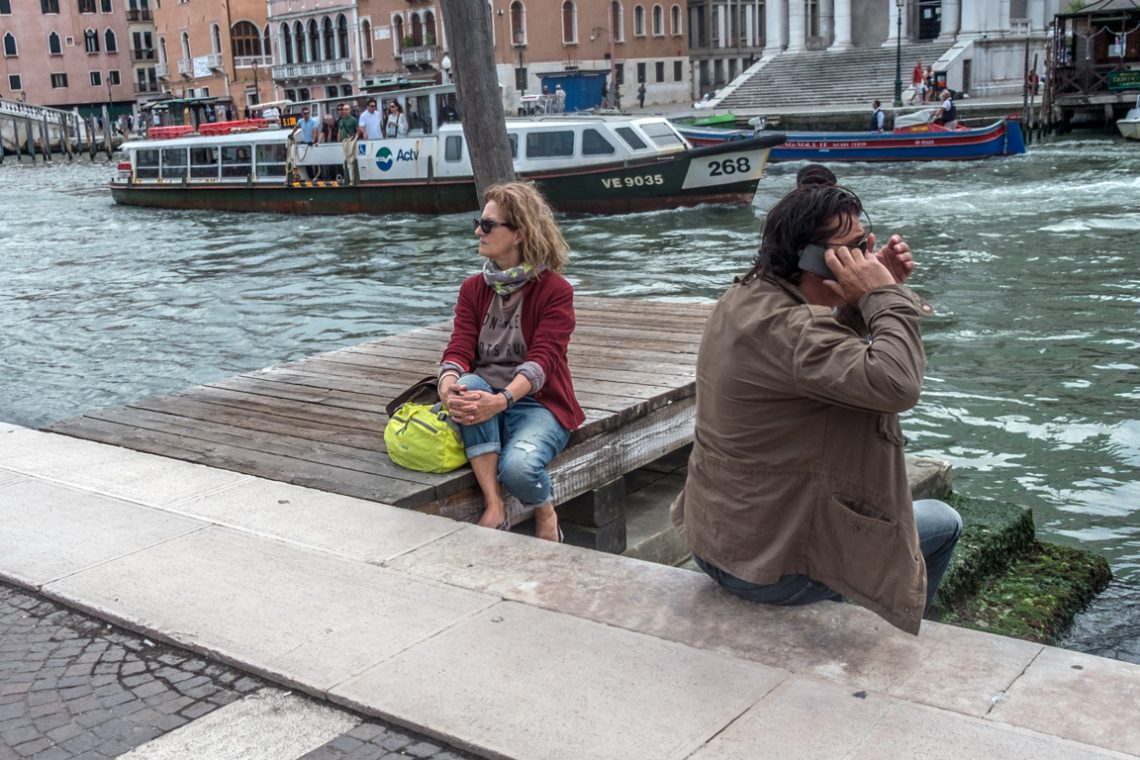
They might be travelling together, but their body language tells a different story. I spotted them in Venice, sitting mere inches apart, yet continents away in attitude. She looks ahead, arms crossed, eyes shaded, posture closed. He’s buried in his phone call, face half-covered, shoulders turned. The irony of their proximity to water — a place where people typically pause, connect, reflect — only heightens the emotional disconnect. Compositionally, I was drawn to the layered diagonals: the canal’s edge slicing across, the dock projecting out, the visual wall created by their backs. Their separation isn’t just emotional — it’s architectural. Framing them just off-centre, I allowed the background vaporetto and…
-
The Porter
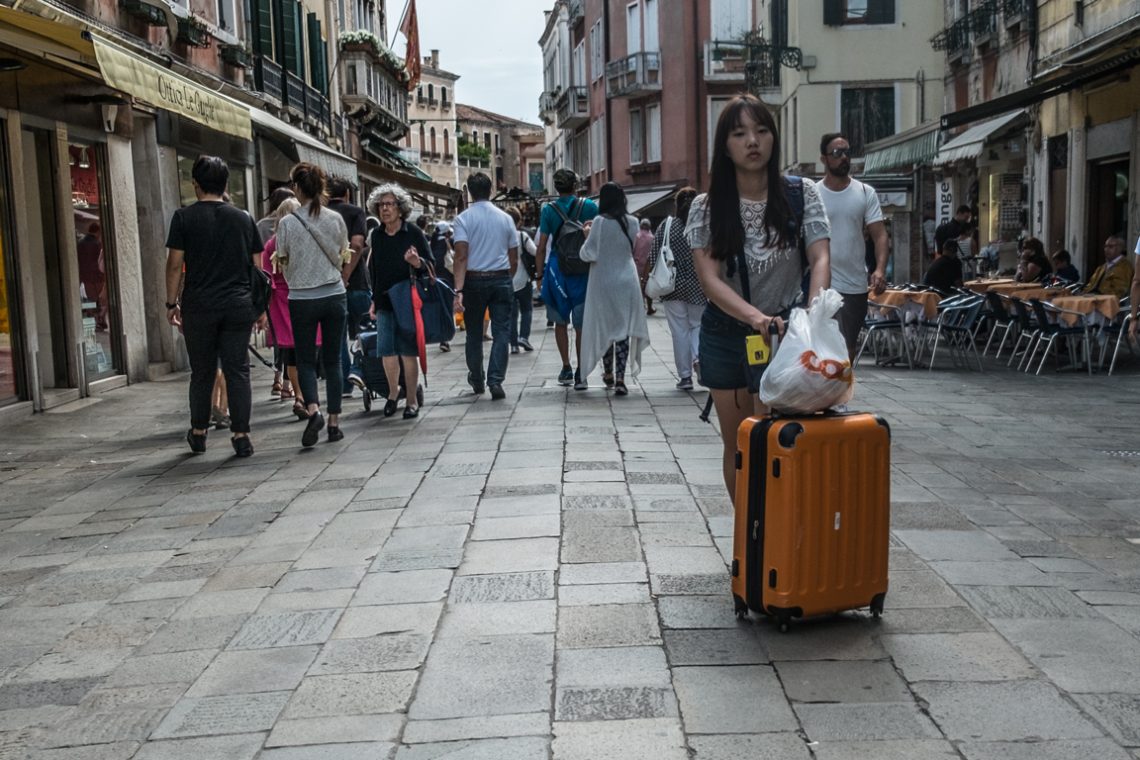
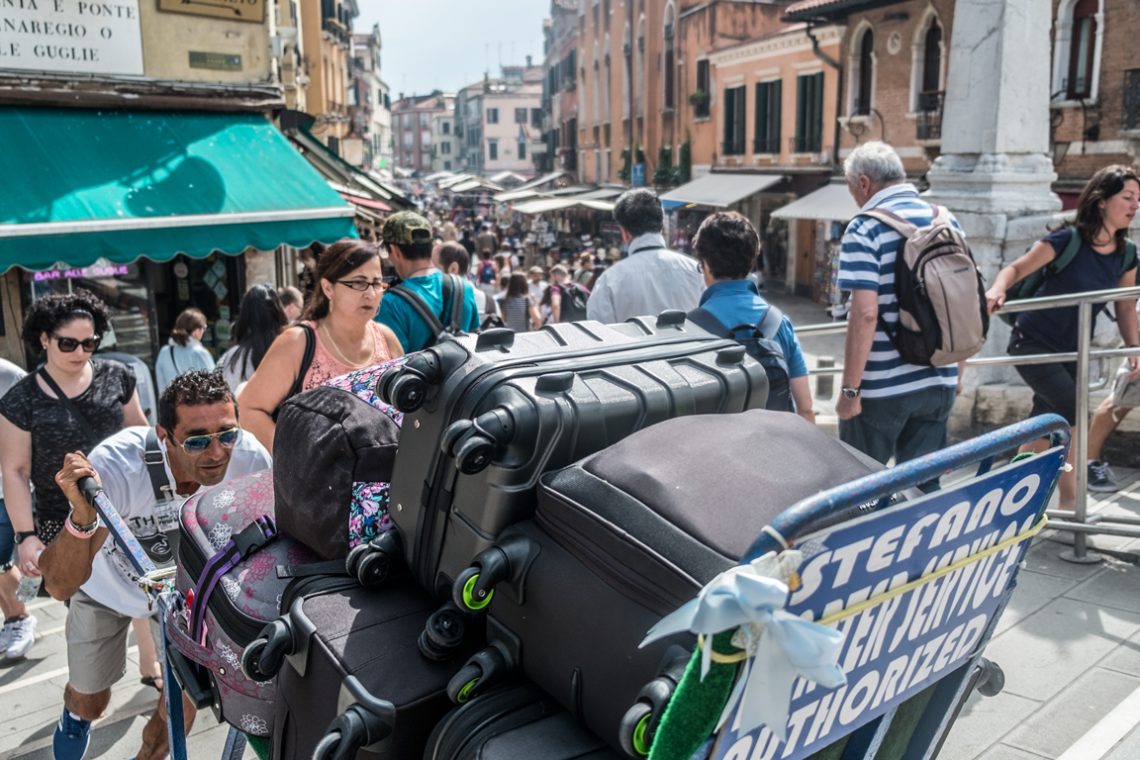
There is a peculiar rhythm to Venice in summer — a constant shuffle of feet, a hum of voices in a dozen languages, the clack and roll of suitcase wheels over stone. This image came from within that chaos, taken almost in the middle of the stream. The porter is pushing against the tide, a functional counterpoint to the leisure of the surrounding crowd. His trolley, loaded with a fortress of luggage, dominates the frame, almost spilling out toward the viewer. The sign with his name and “authorized” status lends a touch of officialdom to what is otherwise a raw, physical job. I positioned myself low and close, so the…
-
The Violinist