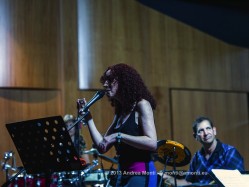
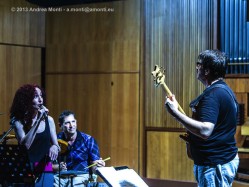
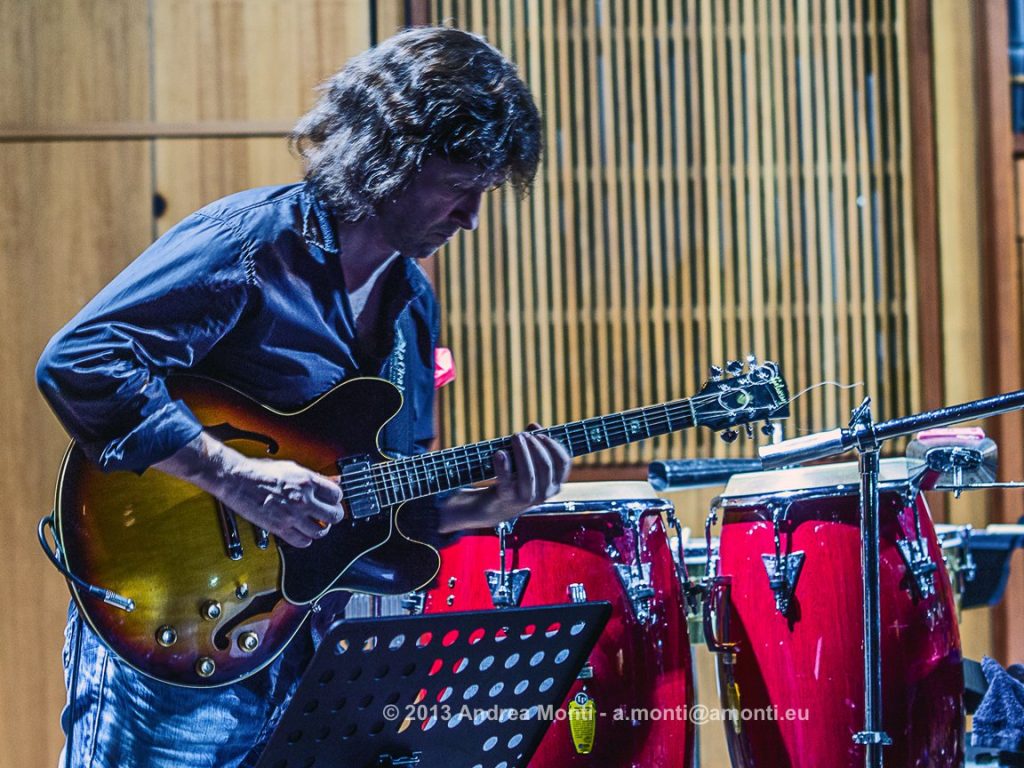
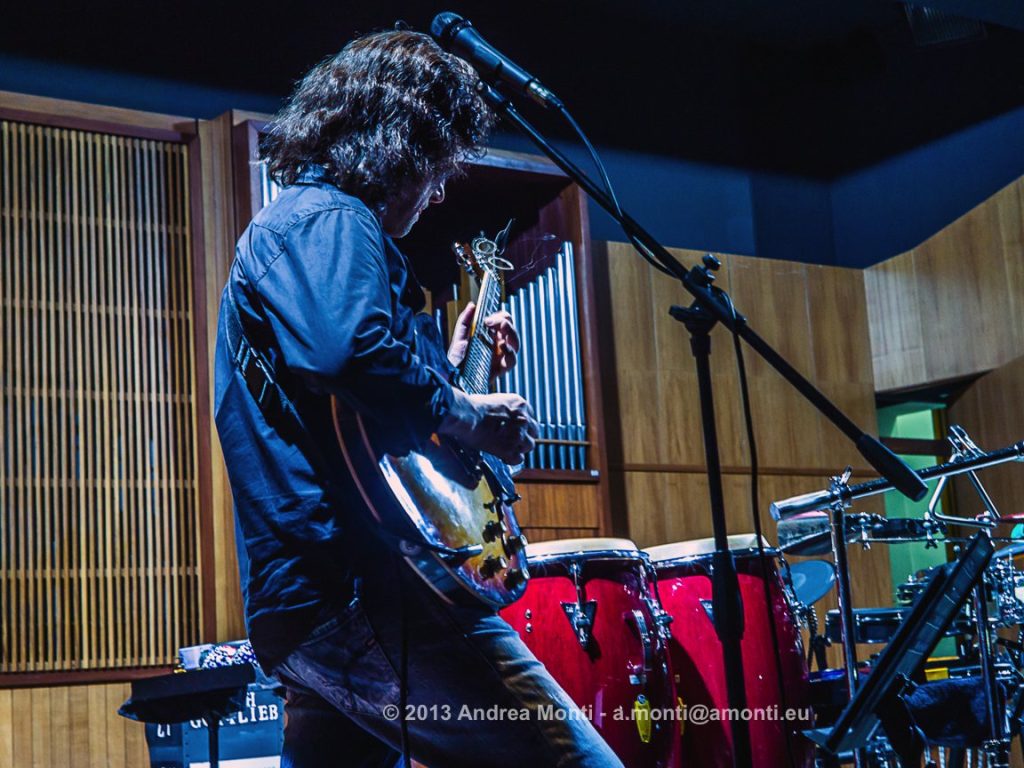
Rocco Zifarelli, Jeff Berlin, Beth&Danny Gottlieb, Gabriela Sinagra
These frames—made on a Leica M9 with an Elmarit 90/2.8—form a compact essay in concert reportage the labour of musicianship. The 90mm perspective is decisive here. It compresses the space, trims away the audience and the room, and turns performance into a sequence of concentrated gestures: hands, shoulders, the angle of a head, the moment a player listens as much as they play.
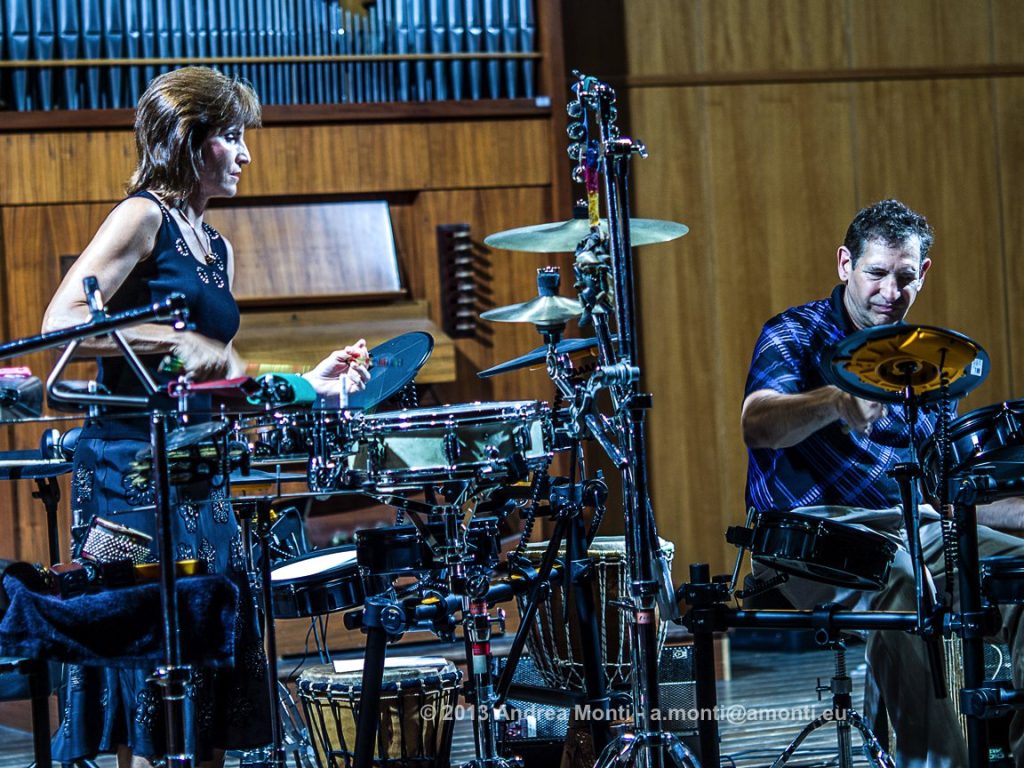
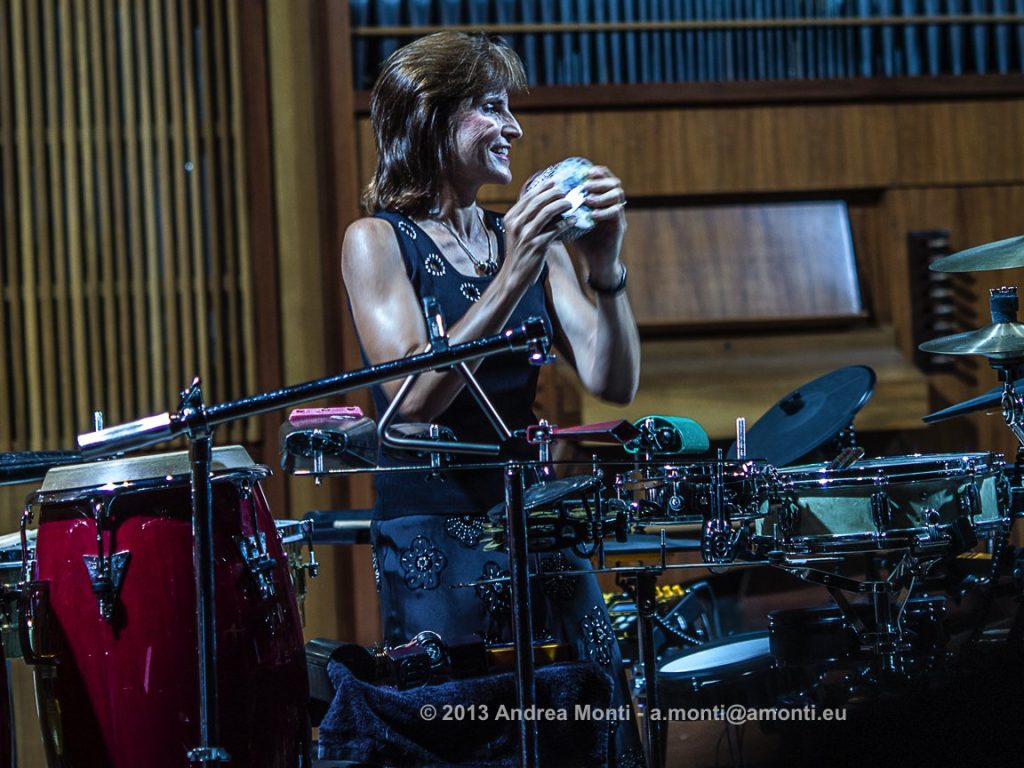
In the images of Danny Gottlieb and Gabriela Sinagra, the percussion rig reads almost architectural—chrome scaffolding, drum heads, cymbals, clamps—an engineered ecosystem that frames the human figure. One photograph catches a brief off-beat human interval: the percussionist smiling, holding a small shaker-like instrument, the expression suggesting camaraderie rather than virtuoso display. Another widens to include two players and the dense machinery between them, making the kit itself a protagonist.
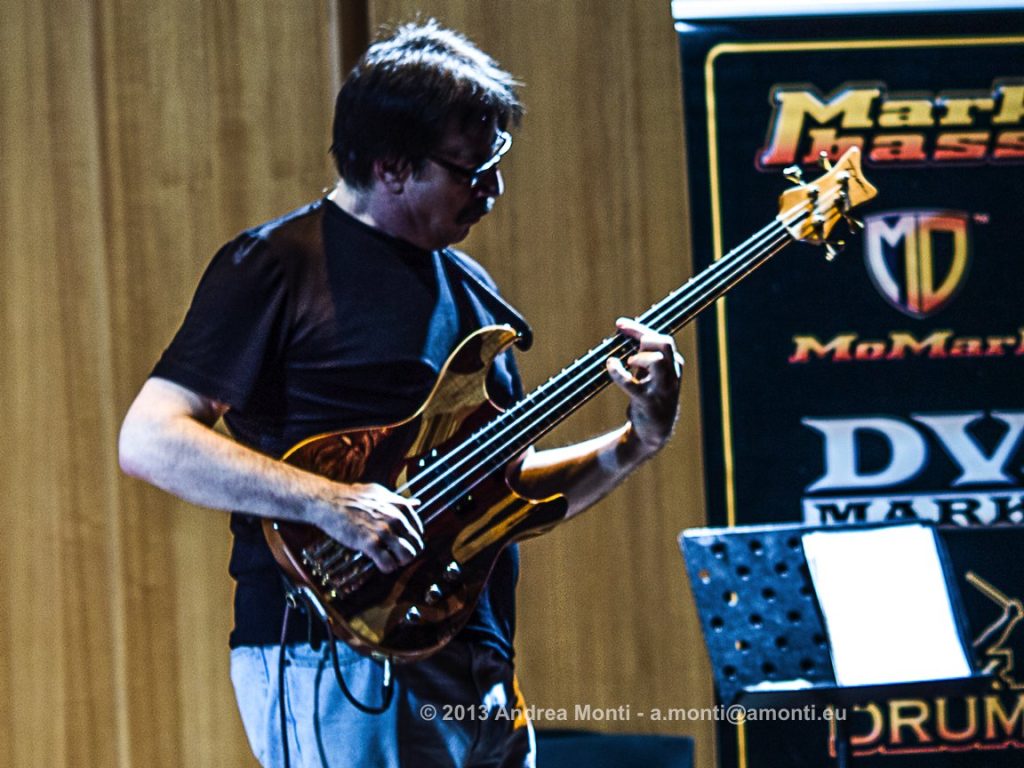
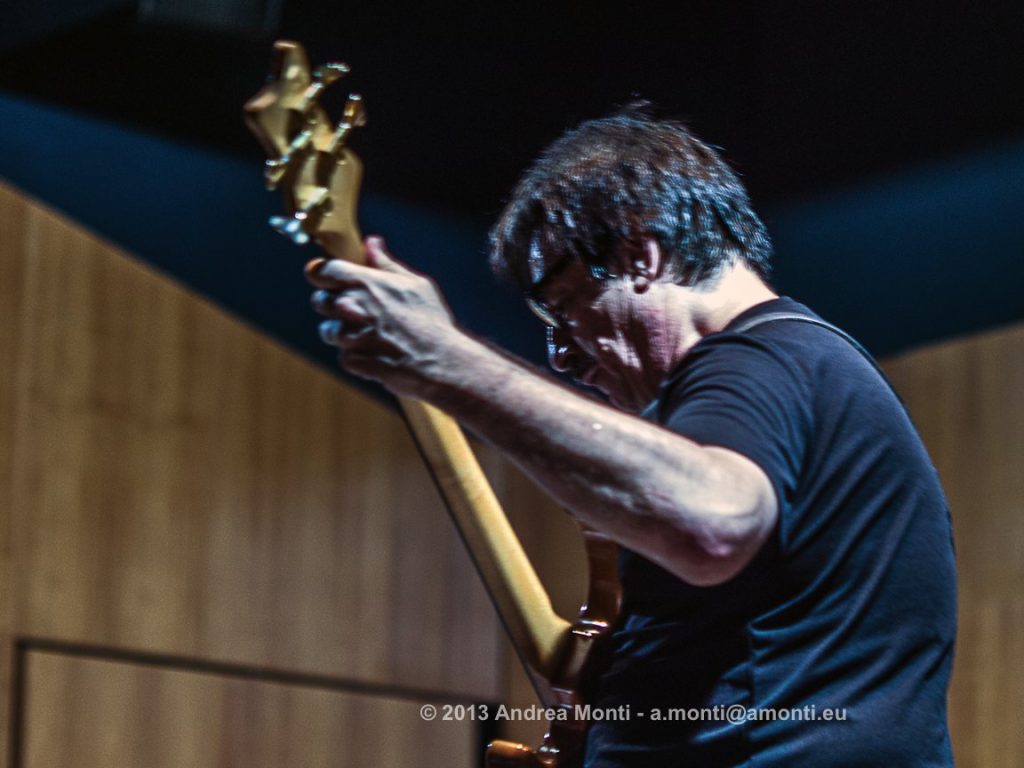
The two photographs of Jeff Berlin shift the emphasis from apparatus to intensity. The bass becomes a dark, polished mass against stage lighting, its curves reflecting highlights like wet lacquer. In one frame, Berlin is absorbed in the fretboard, the shot reading as craft—precision, placement, restraint. In the other, the camera pushes closer and higher, isolating the upper body and neck of the instrument: the posture tightens, the image becomes about force and concentration, the kind that is visible only when the photographer commits to proximity and timing. The shallow depth of field and performance lighting lend the pictures an almost cinematic separation, though the mood remains documentary: nothing is staged, merely selected.
Rocco Zifarelli appears as a complementary register—string work as contour and silhouette—where the scene’s ambient darkness and hard stage light carve out the player’s profile and the instrument’s geometry. The photograph is less about “who” and more about “how”: a musician defined by the relationship between body and tool, the line of the strap, the bend of the elbow, the angle at which the instrument meets the torso.
Across the set, the colour and exposure choices lean into the realities of stage light: hot highlights, cooler shadows, and a palette that often skews toward blue. Rather than fighting those conditions, the photographs accept them as part of the narrative. That acceptance is what makes the sequence cohere. It feels like reportage rather than recital photography—images that prioritise attention, interaction, and the visual evidence of sound being made.
Taken together, the quartet reads as an argument for the 90mm at concerts: a lens that cannot “include everything”, and therefore compels the photographer to decide what matters. Here, what matters is the human scale of performance—work, listening, micro-expression—set against the metal-and-wood theatre that makes music possible.