Photography Does Not Exist (Until the Eye Makes It)
Foreword
This post is the first of a series meant to organise in a logical and structured corpus the ideas collected in this blog throughout years of taking photos in various environments.
Introduction
A preliminary misunderstanding that should be addressed immediately is that a photography does not exist per se.
The photograph begins only when the eye intervenes—when it selects, isolates, and organises a continuous visual field indifferent, in itself, to interpretation. This means that an image is not discovered but constructed, and this construction may even fail, as when a narrative is imposed that later proves to be incorrect.
From the outset, therefore, photography must be understood as an active process of interpretation of the reality.
The Eye as the Origin of the Image
Once photography is framed as construction, the centrality of the eye becomes unavoidable.
It is tempting—especially at the beginning—to attribute failure to external factors: autofocus inaccuracies, lens limitations, sensor performance.
This explanation, though, collapses under scrutiny. If the same errors recur across different systems, they reveal their true origin: the photographer. Training, therefore, must focus both on perception and technique, to make the most out of what the camera has to offer.
The Moment as a Construct of the Eye
The “moment” is often treated as something that exists independently and must simply be captured. Is that actually so?
It is a recurring assumption in this short text that a fleeting interaction—a gesture between a grandfather and a child—becomes a photograph not because it exists, but because it is recognised as such. This is apparent when an image is not extracted from a burst but captured in a single exposure, thus showing that the photograph is the result of a decision.
At the same time, the admission that such an image may be “pure luck” introduces an important nuance. Construction does not always imply or require control, questioning the possibility to consider as human-made an image extracted from a burst, where the photographer only pressed the shutter and let the camera do the heavy lift.
Meaning as an Imposition
There are cases in which the image, taken on its own, does not carry any particular weight. Yet, when framed within a narrative—here, the transformation of a neighbourhood under the pressure of urban development—it acquires meaning.
Such a mechanism is not exceptional, as if it is true that photography is a vehicle for meaning, it also true that meaning can be assigned at different levels of connection with the image.
Composition as Learned Vision
If the photograph is made by the eye, then composition cannot be reduced to a set of rules. Therefore the statement that “the eye sees what the mind is prepared to comprehend” should be taken literally.
The reference to classical painting in the linked post is not incidental, as it points to the role of cultural and visual education in shaping perception. Mind, though: photography, in this sense, resembles painting, but under radically different temporal constraints. In painting, time tends to infinite, in photography it collapses in fraction of seconds. Photography is painting in (almost) real time, without the possibility of correction.
Imperfection as a By-product of Vision
Technical imperfection is often treated as a defect. In practice, it may be consistent with the logic of the image.
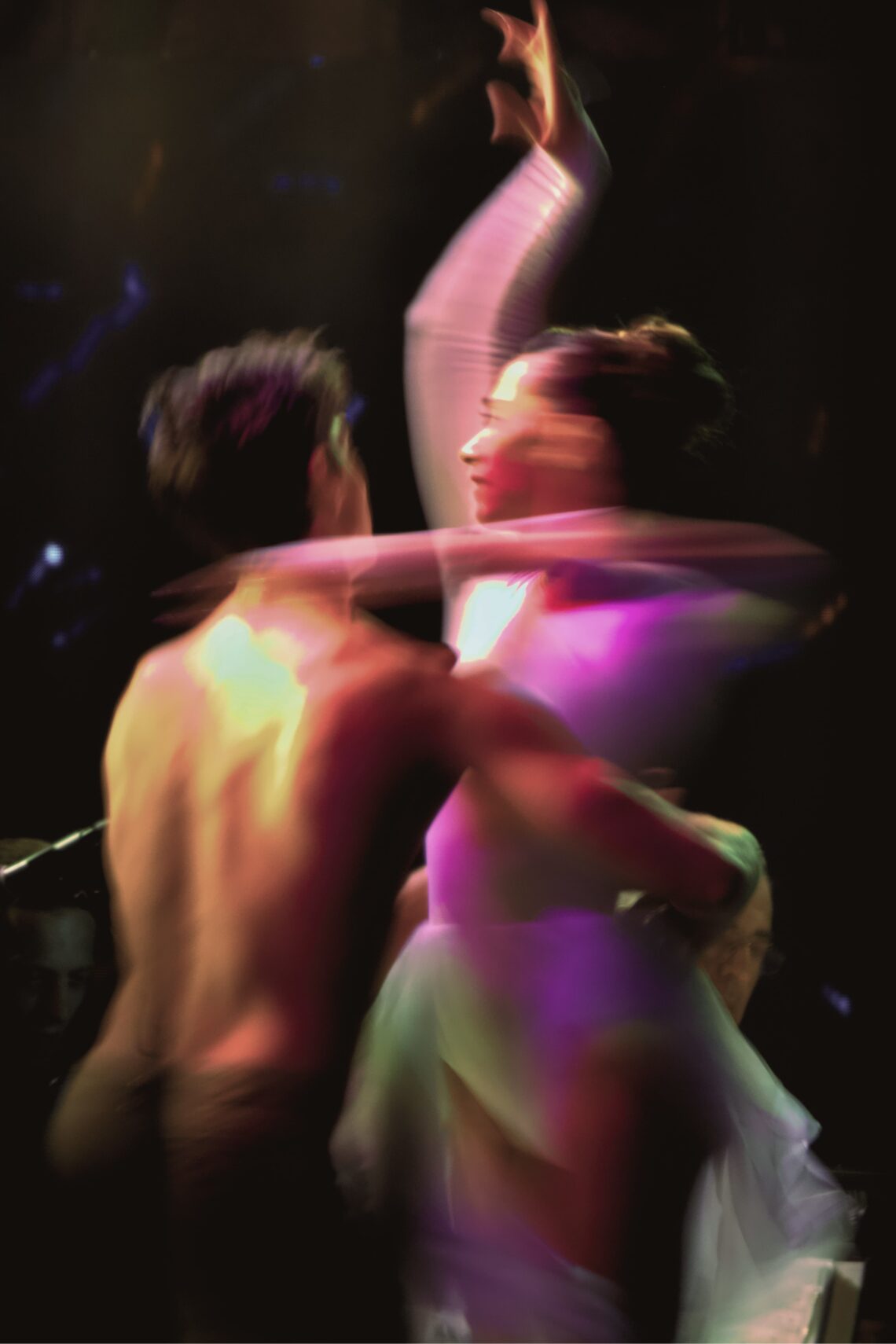
A blurred and out-of-focus photograph would, by conventional standards, be considered a failure, yet it may still convey a sense of speed, tension, and action. The image “works,” despite—or because of—its flaw.
In other words, this means that technical criteria are insufficient to evaluate a photograph. What matters is whether the image matches the act of seeing that produced it. Imperfection, in this context, is not an anomaly but a possible outcome of prioritising meaning over precision. However, this approach cannot be an ex post excuse for a sloppy command of technique and rules.
Recognition, Validation, and Professional Practice
External validation introduces a different set of considerations.
Awards, mentions, and competitions provide recognition, but their relationship to photographic practice is ambiguous.
Receiving an honourable mention may create a sense of achievement, but it also raises questions. Does this recognition improve the photographer? Does it reflect something intrinsic to the image, or does it depend on contingent criteria?
There are no definitive answers. On the one hand, competitions may or may not contribute to the development of an individual style but , in some instances, they may even distract from it. Practice, therefore, whether professional or not, cannot (or, at least, cannot only) be grounded in external validation. It must rely on a continuous process of refinement, informed by experience and critical reflection.
Conclusion
As mystical as this ‘closing argument’ may sound, photography does not exist independently of the photographer; photography is the photographer and vice versa.
A photo is not embedded in reality, waiting to be extracted. A photographer builds reality when the eye—trained, fallible, and situated—decides that what is in front of it makes sense, or at least enough sense to justify pressing the shutter.
Everything else is secondary.