Hanging Towels
Some photographs are not about events, people, or decisive moments. They are about the quiet visual structures that shape daily existence without asking for attention. This frame belongs to that category.
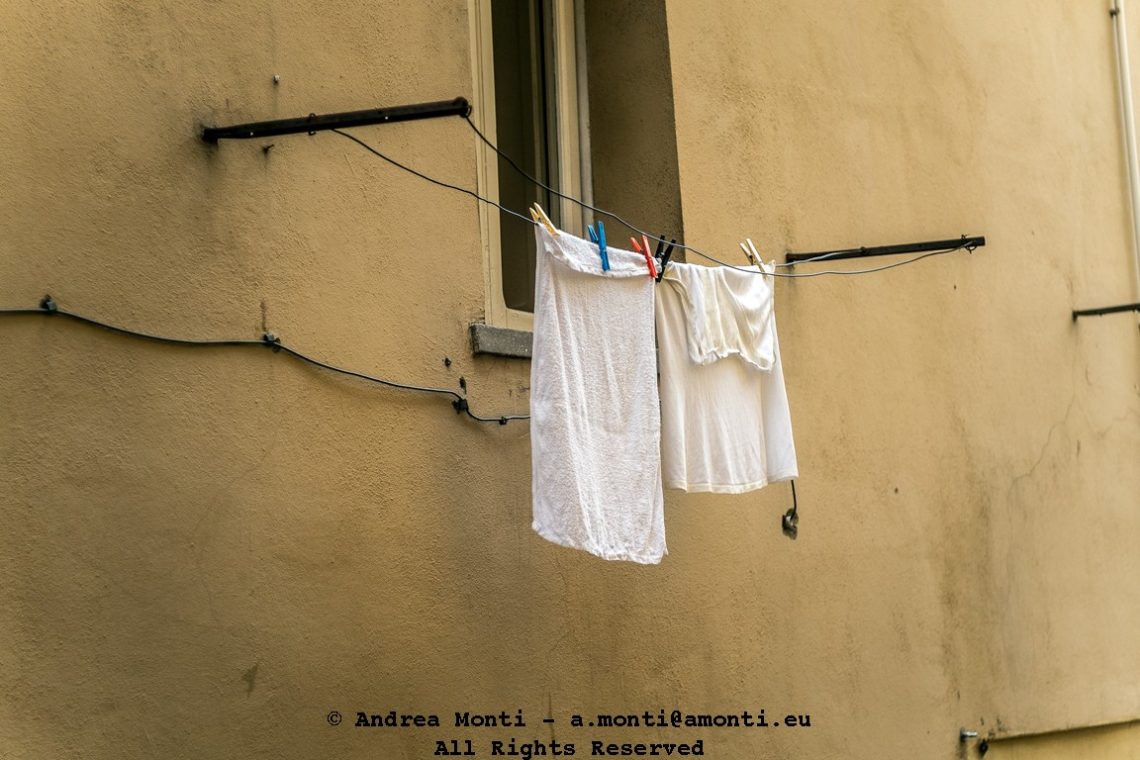
Taken with a Fuji X-T1 fitted with a Summicron 50 mm lens, the image centres on a simple domestic gesture: a few pieces of laundry left to dry against a sun-worn wall. There is nothing exceptional in the scene itself. What makes it photographically interesting is the way ordinary elements align into a restrained composition that almost constructs itself.
The visual order of the frame is defined by horizontal tensions. The clothesline, slightly sagging under the weight of damp fabric, runs across the image like a modest horizon. Below and above it, electrical cables trace parallel paths, introducing a subtle graphic rhythm. These lines do not dominate the photograph, but they provide a structural skeleton that keeps the image from dissolving into anecdote.
The fabrics — pale, soft, almost translucent in places — function as tonal anchors. Their subdued highlights and gentle contrast transitions are typical of a classic Summicron rendering: detail is present but never aggressive, edges are defined without becoming brittle. The result is a quiet optical description rather than a technical display. The Fuji sensor contributes to this understated mood by maintaining natural colour restraint. The ochre wall, textured and imperfect, becomes less a background than an atmospheric field within which the scene breathes.
There is no visible human figure, yet human presence is unmistakable. The improvised line, the practical clothespins, the modest architectural setting all speak of routine and habitation. The photograph suggests continuity rather than action, maintenance rather than drama. In this sense, it sits closer to a tradition of observational urban photography that values small signs of life over spectacular narrative moments.
Images like this rarely stand alone as protagonists. Their strength emerges when they are placed within a broader sequence: as pauses between more intense frames, as visual punctuation that allows a story to exhale. They remind us that the texture of everyday existence is often built from such quiet arrangements — unnoticed until the camera gives them a momentary form.