-
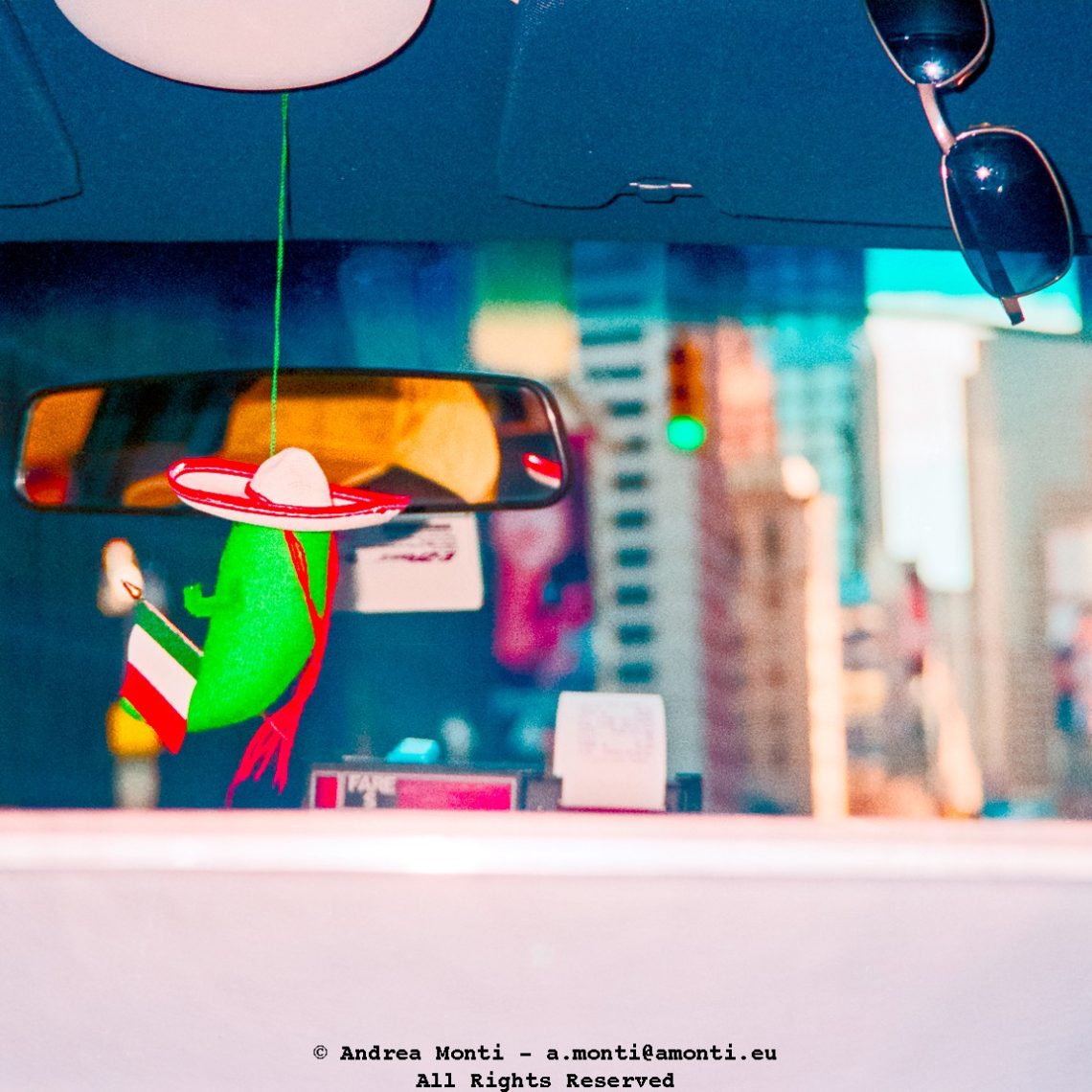
Arriba El Mexico!
I took this photograph from the passenger seat of a cab, during that suspended moment when traffic stalls and the city becomes a collage of reflections and colour. The small felt figure hanging from the mirror caught my attention first—bright, slightly absurd, and placed without irony. The tiny sombrero, the stitched flag, the green felt body: a souvenir turned mascot, living in the blurred space between décor and identity. What interested me was how this small object commanded the frame. The background—city lights, signage, fragments of buildings—exists only as colour fields and soft shapes. The mirror picks up hints of the driver, the interior, and the street behind us, but…
-
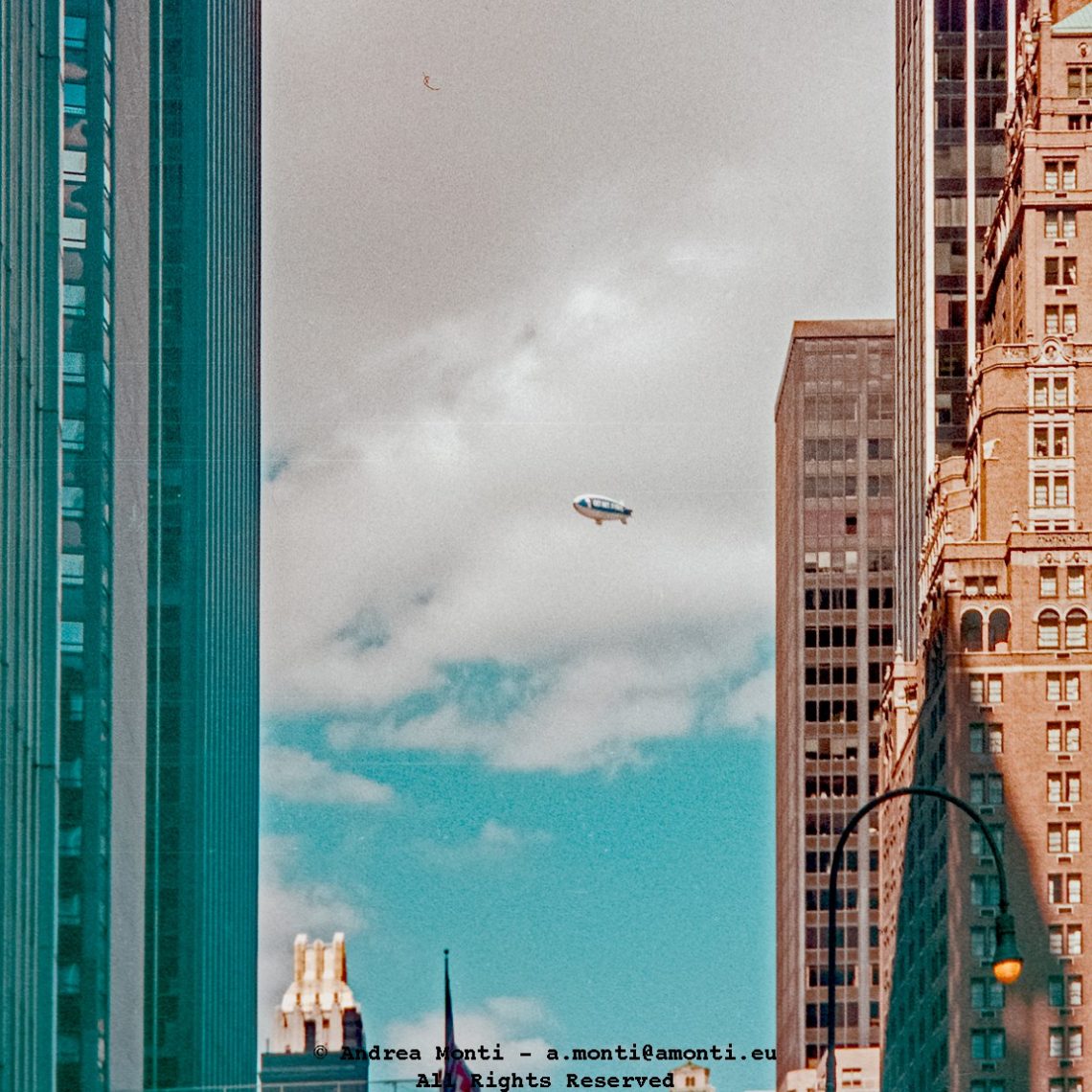
A Zeppelin in The New York Sky
New York, 2000. I remember looking up from the crowded streets and seeing it — a zeppelin, drifting slowly above the jagged canyon of Midtown’s architecture. In that moment, it felt like something out of a different century had quietly slipped into ours. I didn’t have much time to think; I just framed, focused, and released the shutter. The composition is as much about absence as it is about presence. The airship is small, almost swallowed by the negative space of the sky, yet the buildings act as monumental bookends, forcing the eye toward the centre. The turquoise cast of the glass facade on the left and the warm brick…
-
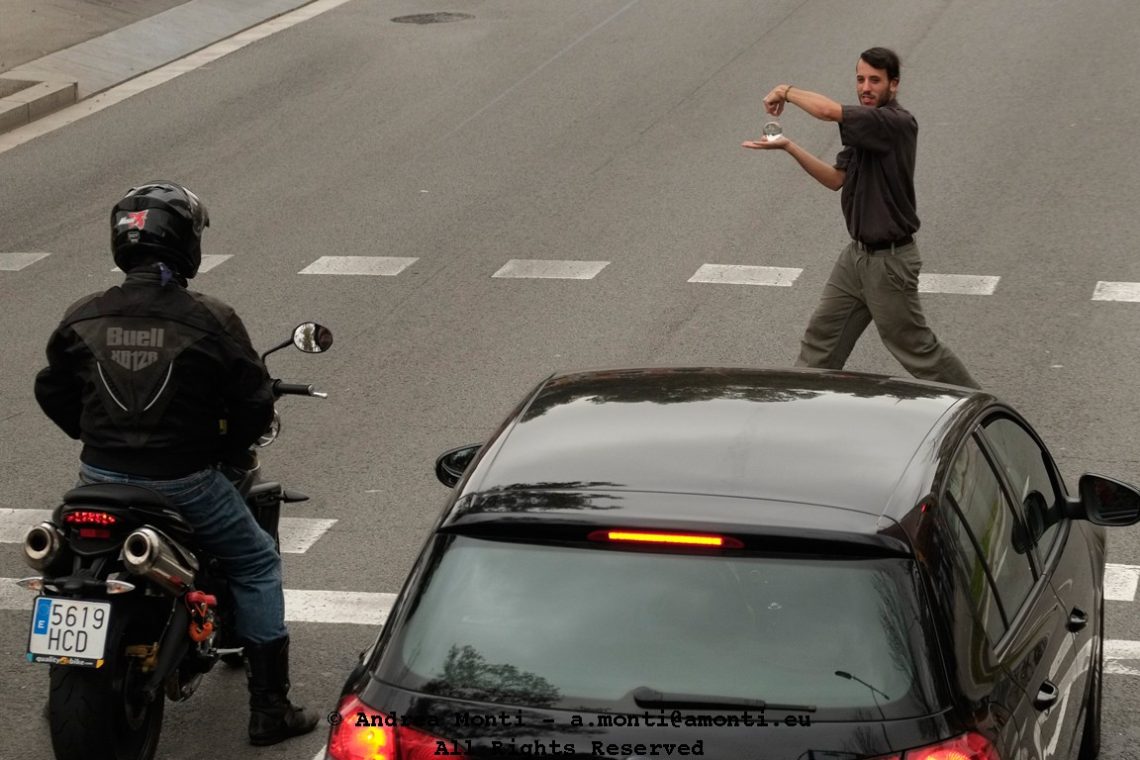
Now You See It…Street Juggler at a Red Light in Barcelona
Caught this just as the traffic paused. The juggler—or maybe illusionist—stepped onto the zebra crossing like it was a stage, pulling a contact juggling sphere from his pocket with the same ease most reach for a cigarette. No microphone, no music, no hat on the ground. Just confidence, and a tight, silent routine aimed at no one and everyone. I shot from slightly above, which flattened the scene into layers: the motorcyclist on the left, the car breaking the frame in front, and the performer, suspended mid-gesture. The composition benefits from the crosswalk marks, which slice the image horizontally and echo the performer’s stance. It’s geometry meeting theatre. Technically, this…
-
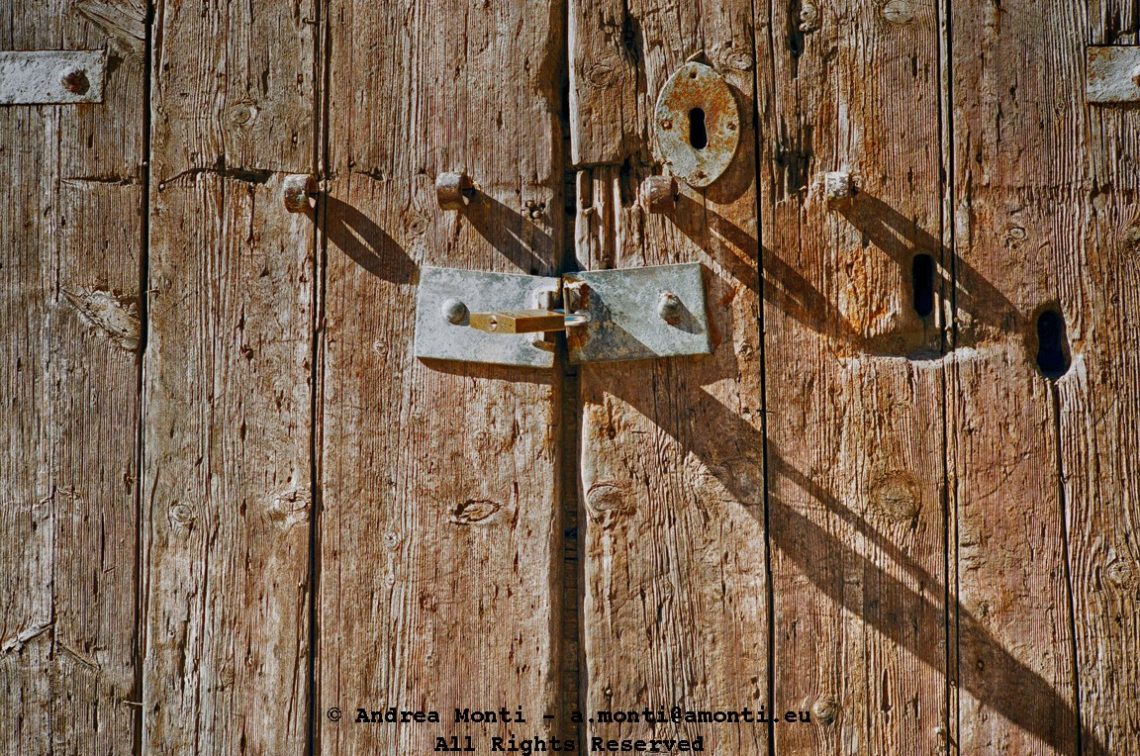
The Lost Lock
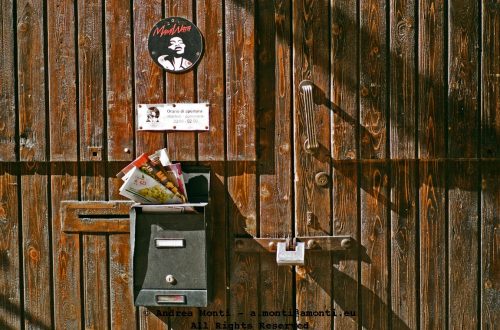
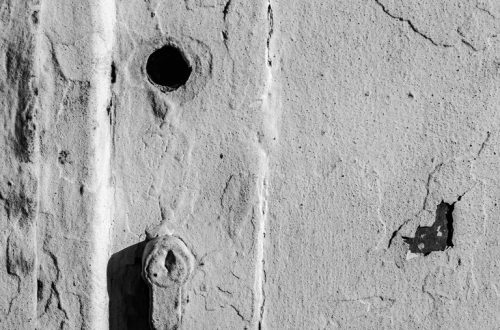
The photograph is focused on the weathered surface of a wooden door, its grain worn deep by time and use. At the centre sits a latch, secured by a small brass pin, surrounded by the scars of previous fittings. Above it, oversized keyholes mark the door’s history of repairs and replacements, each shadow stretching long across the wood in the midday light. Technically, the image is about texture and shadow. The exposure favours the roughness of the timber, rendering every fissure and nail hole in sharp detail. The sunlight is strong, but instead of washing out the surface, it enhances contrast, pulling the metallic coldness of the lock against the…
-
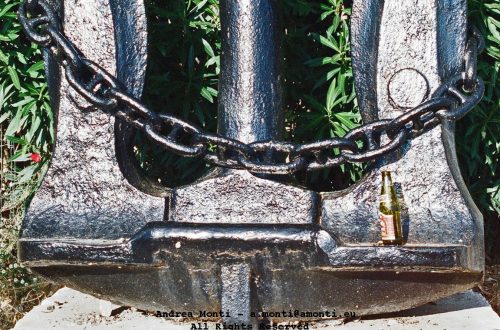
Thirsty
-
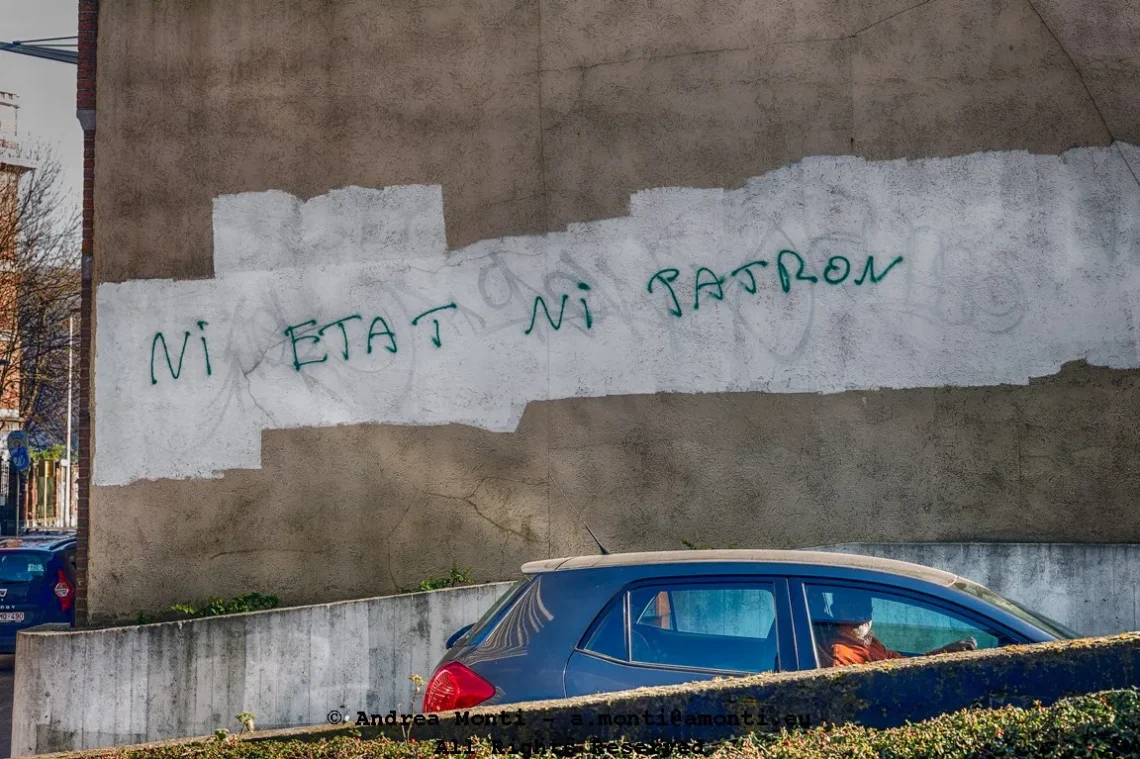
Ni État Ni Patron
Brussels. A quiet wall, a passing car, and a message that’s louder than both. The slogan is old—older than the paint used to scrawl it—Ni État Ni Patron. No state, no boss. A phrase that echoes from factories, barricades, pamphlets. And now, here it is again, on a half-covered stretch of rendered concrete. It wasn’t written to decorate. It was written to remain. The graffiti stands out not just for what it says, but for where it says it: in the middle of a freshly patched rectangle, painted over what was clearly another message before it. The wall becomes a palimpsest—layers of resistance, erasure, and return. Below it, a car…
-
Caged?
-
Cupido’s Fall
There was a time when Cupido ruled the world. Not the cherubic archer of myth, but the man on the torn poster — a champion accordionist, his name blazing in dotted capitals, promising music and spectacle. Now, the paper curls at the edges, bleached and scarred by weather, the glory half-erased by time and graffiti. The god of love meets the fate of every earthly name: reduced to a fading print on a damp wall, fighting a losing battle against rust, mould, and the next layer of urban scribble. The photograph works because it understands the poetry of decay. The black-and-white treatment is an apt choice — stripping the scene…
-
Siamese Boats On the Seine River
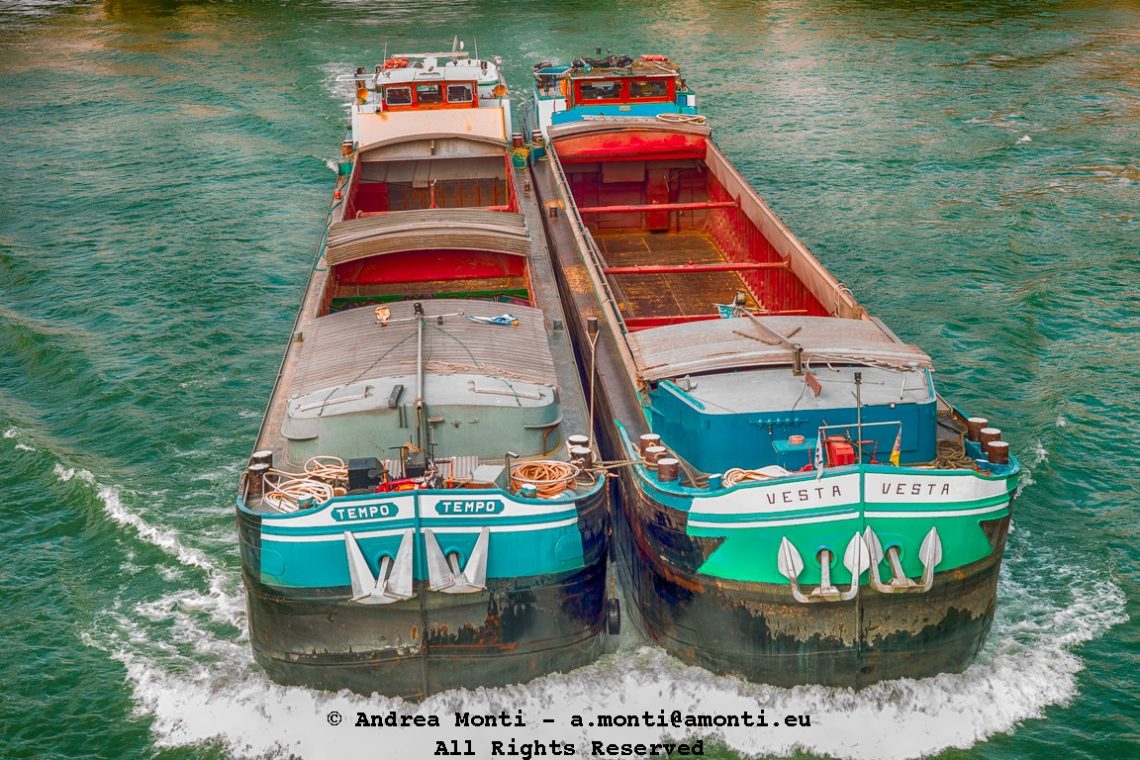
Two barges, TEMPO and VESTA, lashed together as if bound by some unspoken pact, making their way up the Seine. Seen from above, their pairing creates a symmetry that is almost architectural. The way their bows slice the water in unison feels more like choreography than navigation. The shot was taken from a bridge, directly aligned with their approach, which allowed me to keep both vessels centred and parallel in the frame. That alignment is crucial — a slight offset would have made the composition feel off-balance. Here, the geometry holds everything together: two hulls, two decks, two names, and a doubling of anchor motifs. The light was soft but…
-
The Teleferic de Montjiuc
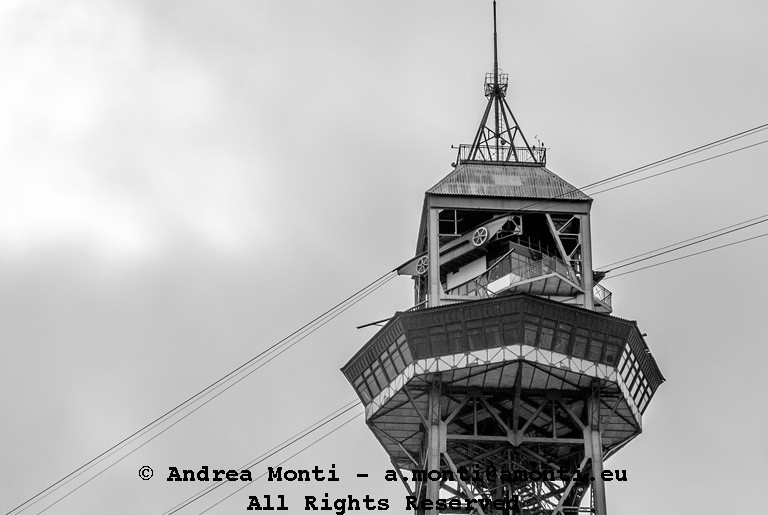
I framed this high, tight, and in monochrome. The tower holds its geometry clean against a washed-out sky, bisected by the tension of support cables that anchor the structure both physically and compositionally. The decision to exclude ground and context wasn’t aesthetic—it was structural. I wanted the image to stand on line, angle, and steel alone. Shot with a mid-telephoto to flatten depth slightly and reduce parallax across the girders. The light was diffuse but not flat. A break in the clouds gave enough gradient to define planes without creating shadow noise. The exposure leaned conservative: highlights retained in the clouds, midtones preserved in the riveted panels and pulleys. No…
-
A Fountain
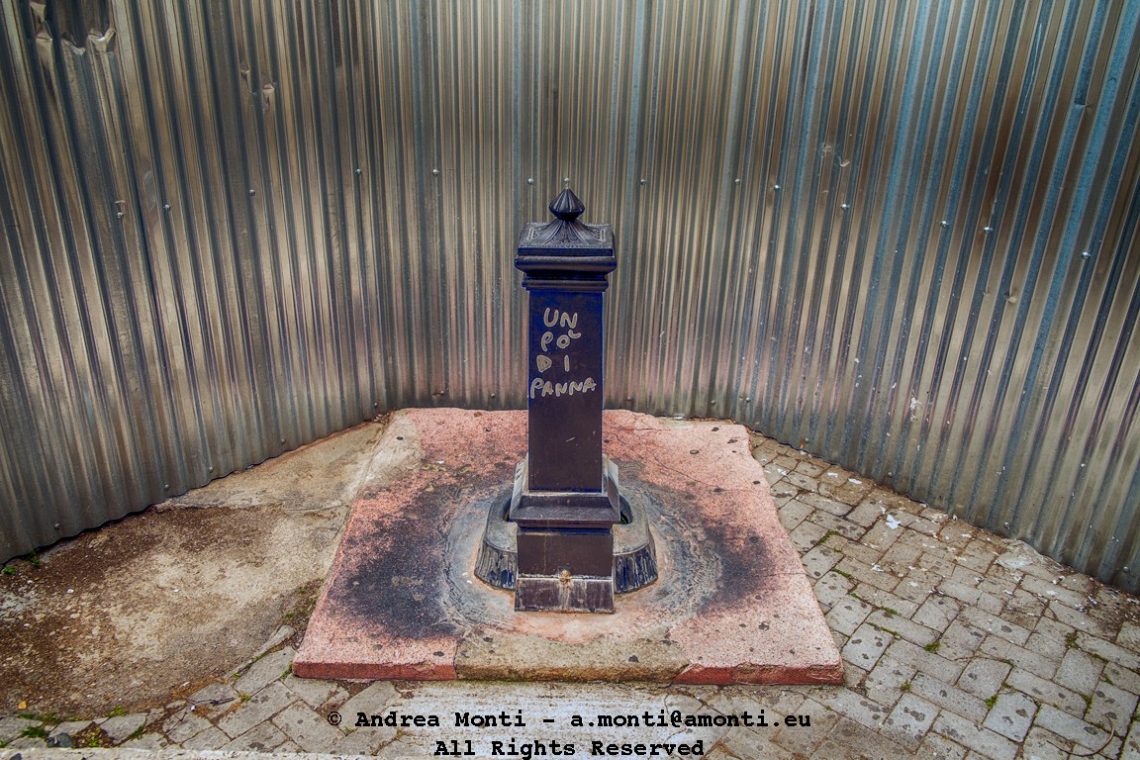
I made this photograph in a small corner where a public fountain once served a purpose. Now it stands fenced in by corrugated metal sheeting, isolated, its basin removed, its function suspended. The graffiti—“un po’ di panna”—is not aggressive. It reads more like a private joke left in public space, a whisper rather than a shout. That small phrase is what drew my eye first. It adds a voice to an object that has otherwise been silenced. The metal barrier creates an accidental stage. Its vertical ridges repeat across the background, directing the gaze inward toward the fountain. The pink stone base, stained and unevenly worn, introduces texture and a…
-
Inside the Elevator
Escher’s Relativity inspired these shots.
-
An Unplausable Perspective
There is something odd in this photo, isnt’it?
-
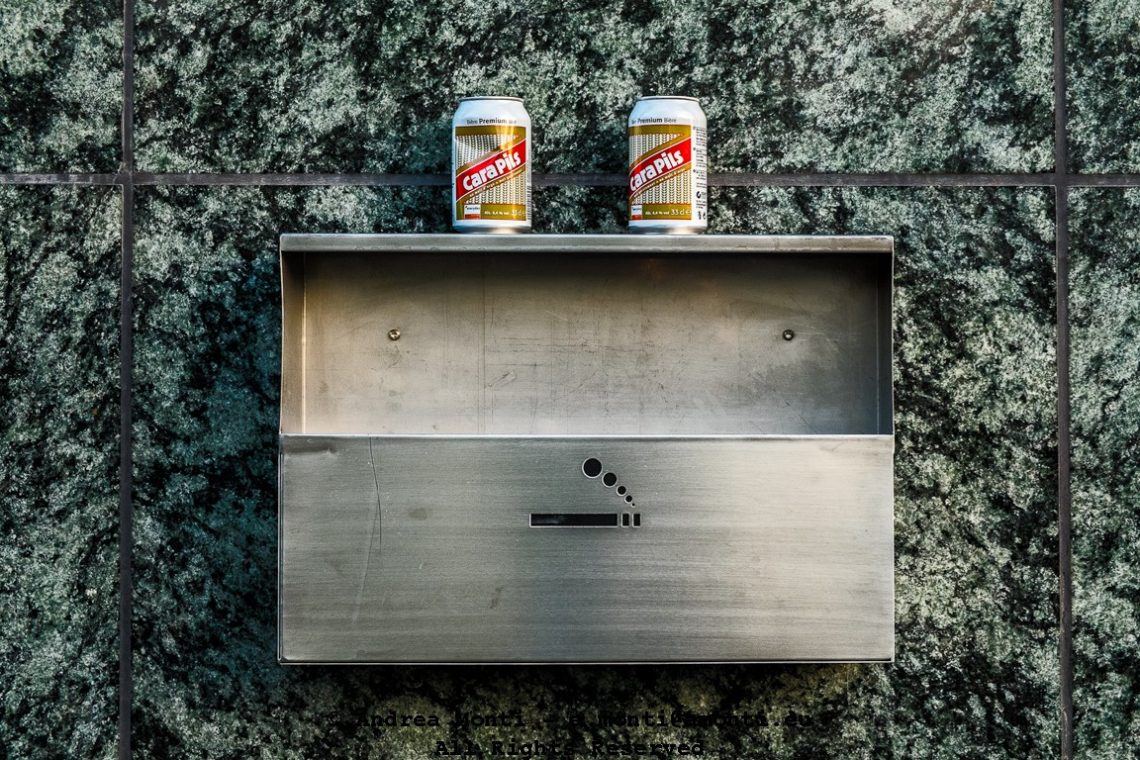
Two Beers, One Cigarette
Not staged. Swear to God!
-
Las Ramblas’ Lifestyle
Who cares about pickpockets?
-
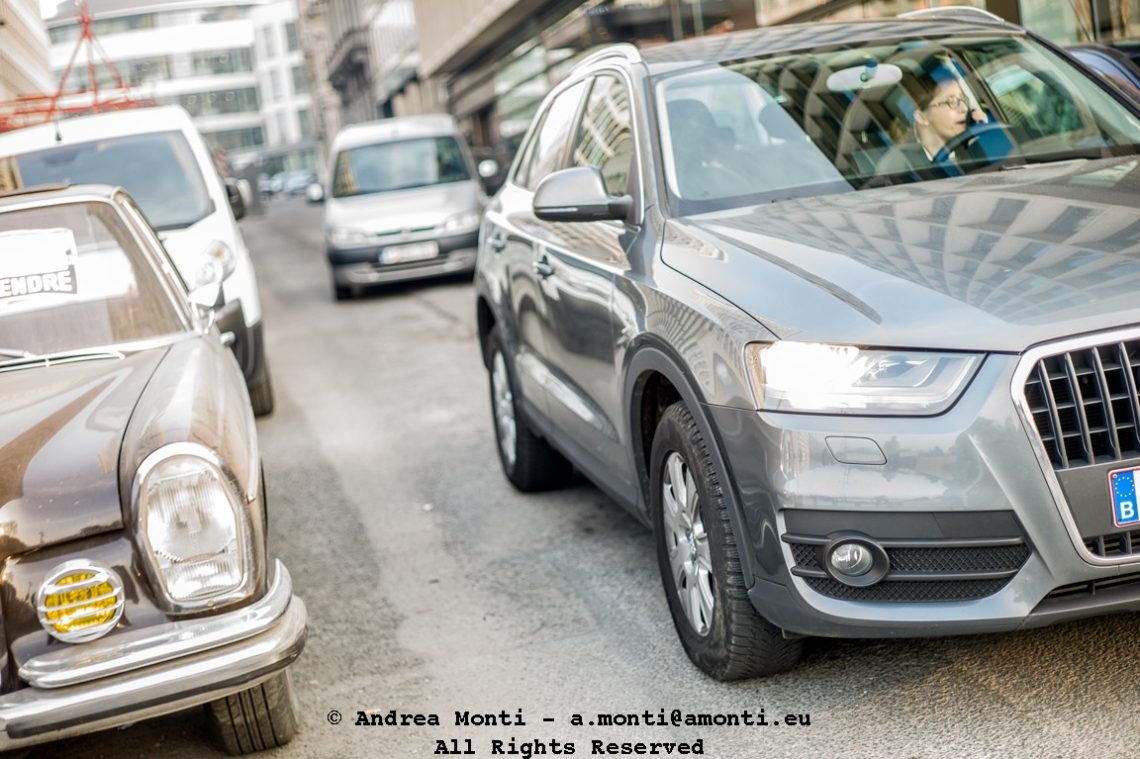
Traffic Jam in Bruxelles
-
A Roller Coaster… A Kind Of
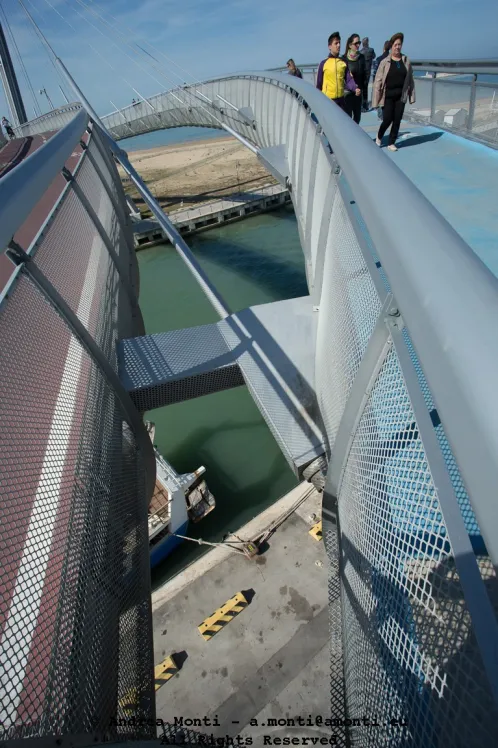
It’s not a ride. But it feels like one. Shot with an ultra-wide lens, this pedestrian bridge bends and twists like it’s unsure whether it’s architecture or attraction. The metal curves upward, forward, out of the frame—pulling your eye (and your balance) with it. Perspective doesn’t just stretch here—it spirals. Geometry gets theatrical. At the top of the climb, a small group walks calmly, as if unaware they’re part of the illusion. No one is rushing. One wears yellow, another carries a bag—ordinary people on a not-so-ordinary structure. The Adriatic glints below, a boat docked quietly at the base. It could be a coastal scene from anywhere in Italy, but…
-
Hanging Heart at via Olmetto
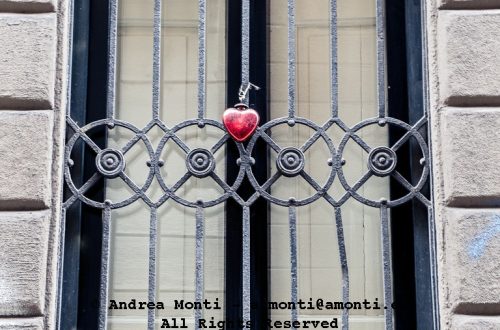
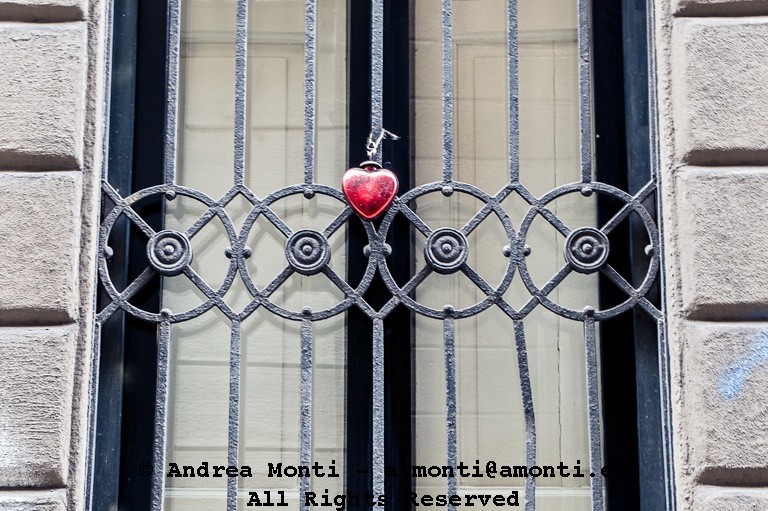
Taken in Milan, this photograph is built around a single point of chromatic and emotional focus — a small, glossy red heart suspended from the centre of an ornate iron grille. The restrained colour palette of the stone façade and dark metalwork works to its advantage, ensuring the heart becomes a magnetic anchor for the viewer’s gaze. The pattern of the wrought iron, a chain of interlocking circles bisected by vertical bars, lends the image symmetry and rhythm, subtly broken by the heart’s irregular organic shape. The composition is tightly framed, allowing no distraction from the relationship between object and setting. The verticals of the grille are aligned with precision,…
-
A
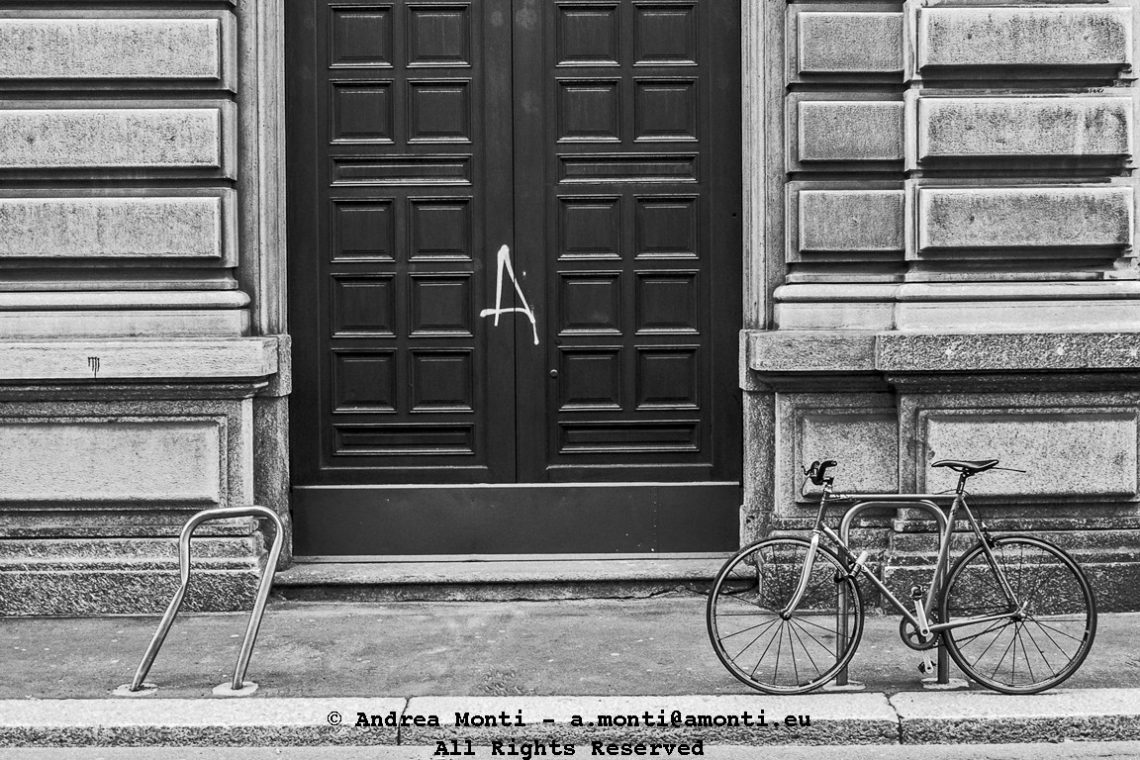
Some photographs are built on complexity — overlapping narratives, layered subjects, visual chaos distilled into coherence. This one is built on the opposite: a single, dominant letter and the deliberate restraint of elements. The capital “A” scrawled across the double wooden doors becomes both subject and statement. Whether an anarchist mark, an initial, or just a passing act of vandalism, it punctuates the otherwise rigid, formal architecture. The geometry of the building — rectangular panels, horizontal mouldings, the granite base — forms a rigid grid, and into this grid the bicycle is quietly inserted, its own triangles and curves breaking the dominance of the rectangles without challenging their order. Technically,…
-
Late for Lunch
-
Walking Table in via Cornaggia
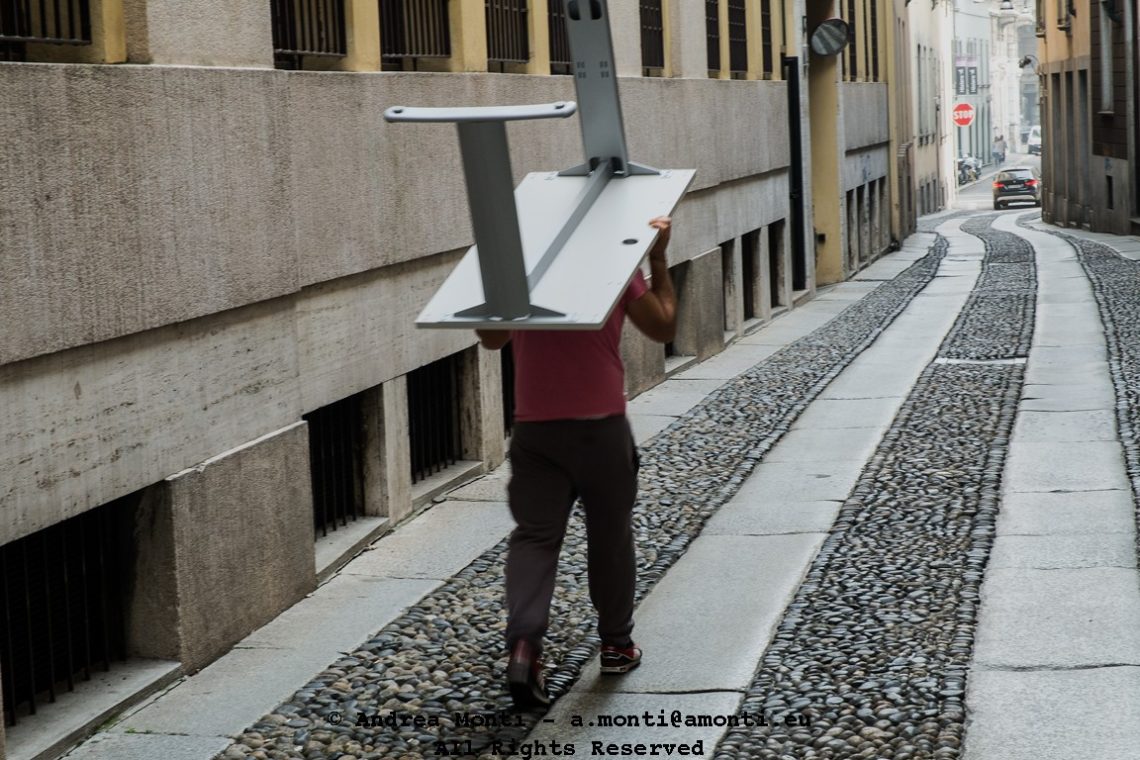
Via Cornaggia in Milan is not a place one usually associates with humour in photography, yet this image carries an almost surreal tone. A man strides down the cobblestone street, carrying a table on his shoulders, its legs pointing skyward like some awkward sculpture. His face is completely obscured, leaving only body language and context to speak for him. The everyday act of transporting furniture becomes, in this frame, an absurd visual gesture. The narrow perspective of the street enhances the composition. The converging lines of the walls and cobbled path guide the eye directly to the man, amplifying his centrality within the scene. The geometry of the table mirrors…
-
Hurry up and shut down the $%&? call!
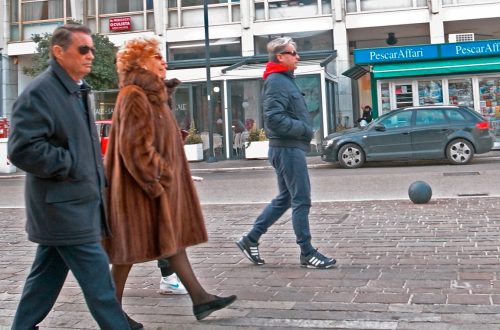
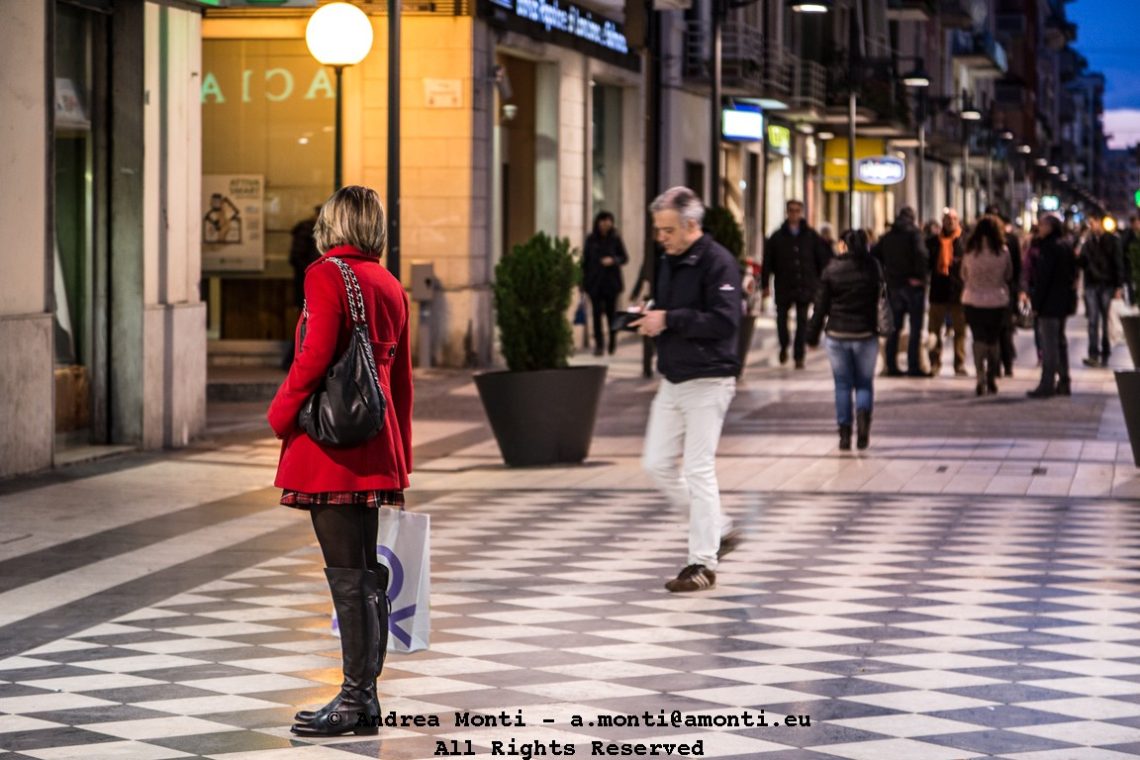
I shot this photograph on a winter evening when the city was still busy but already slowing down. The street lights had taken over from the sun, and the air was full of that post-work restlessness — half leisure, half impatience. In front of me, a couple had paused mid-walk. She waited, a shopping bag at her side, wrapped in a red coat that caught every ounce of the lamplight. He, a few steps ahead, was absorbed in his phone — fingers scrolling, face lowered. It was a scene of quiet tension, familiar to anyone who has ever waited for someone whose attention is elsewhere. The composition relies on opposition. She…
-
An Inside Irongate
Inside and old building, in the heart of Rome.
-
The Arson
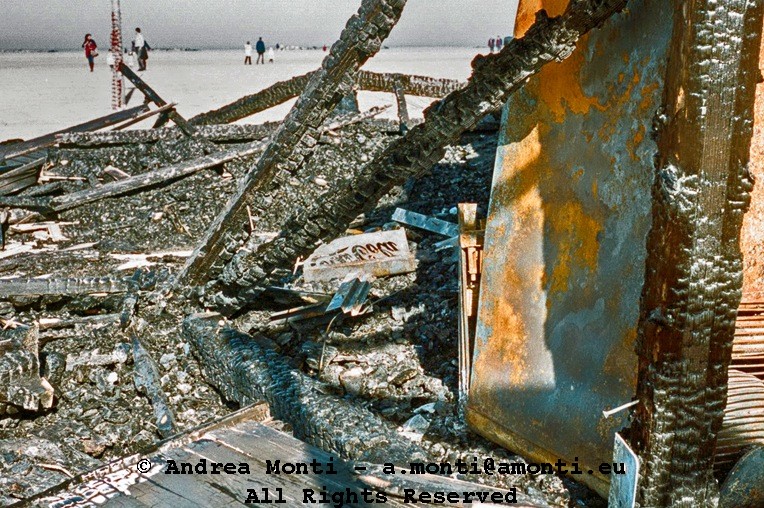
The wind had carried the scent long before I arrived—burnt resin, iron oxide, the telltale acridity of ash cooling under morning sun. What was once structure and story was now a cinder pile, framed awkwardly by two still-standing beams like broken arms. I didn’t need to ask what happened. I just raised the camera. This photograph leans into disorder. The eye stumbles across charred planks, twisted metal, and a scorched panel half-folded in retreat. It’s not elegant, and I didn’t want it to be. The strength of the frame lies in its refusal to sanitise. Destruction is inherently chaotic; presenting it neatly would be a betrayal of what it is.…