-
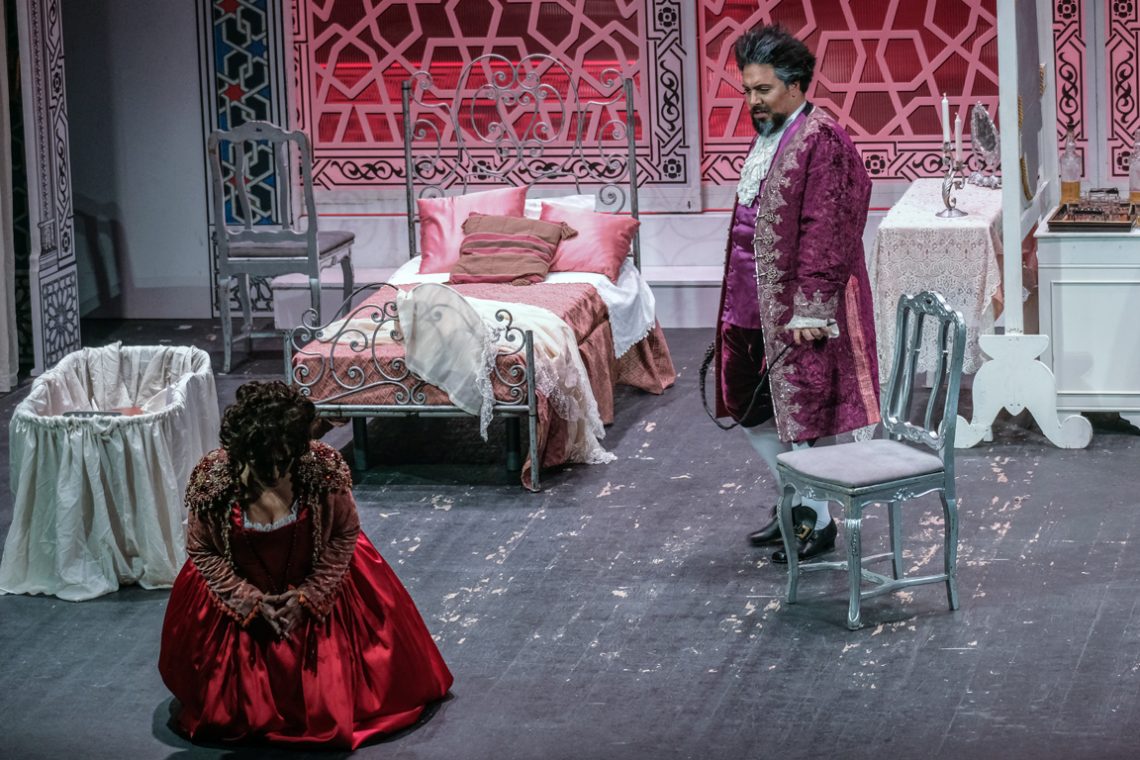
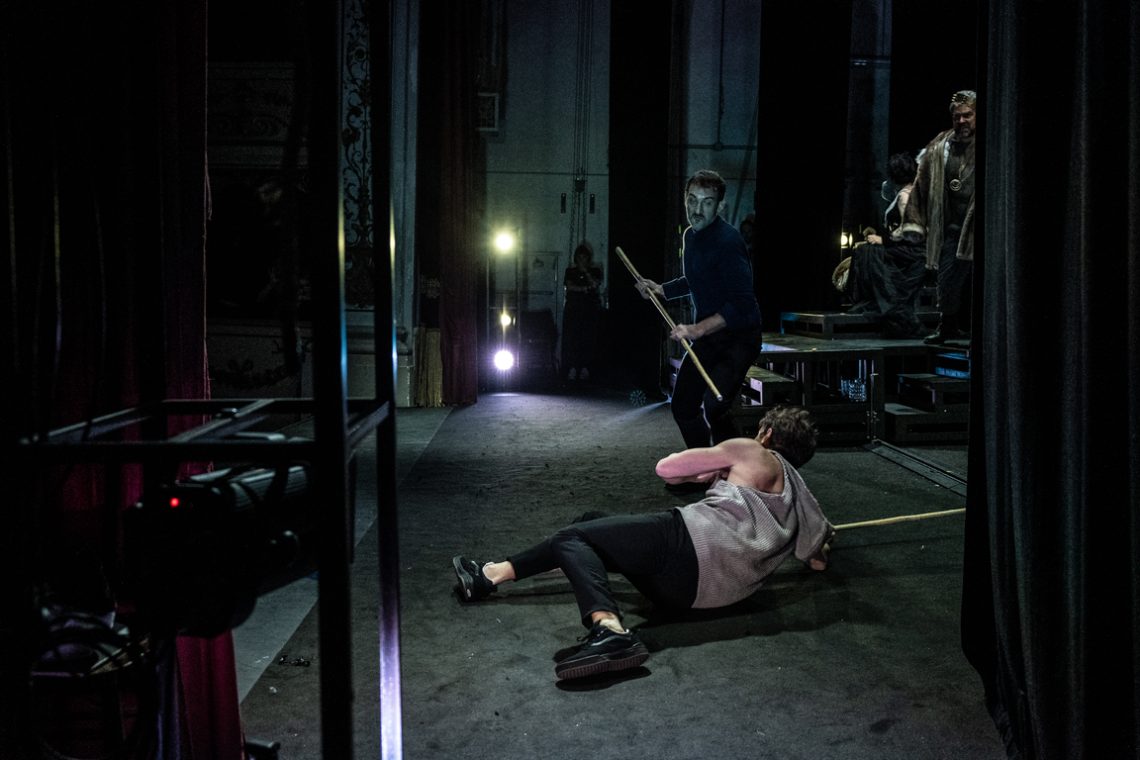
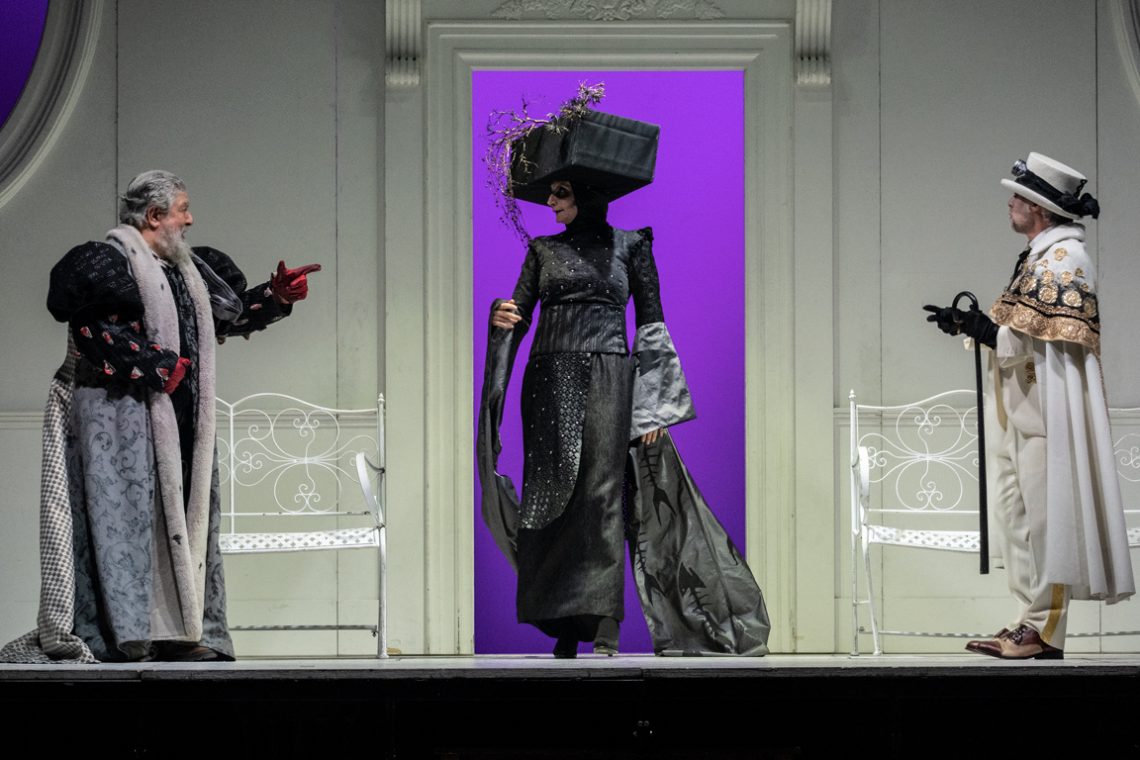
Il barbiere di Siviglia – Don Bartolo mad at Rosina
A shot from the mise en scene of the Il Barbiere di Siviglia I did as a scene-photgrapher for the Teatro Marrucino
-
Denegata Justitia
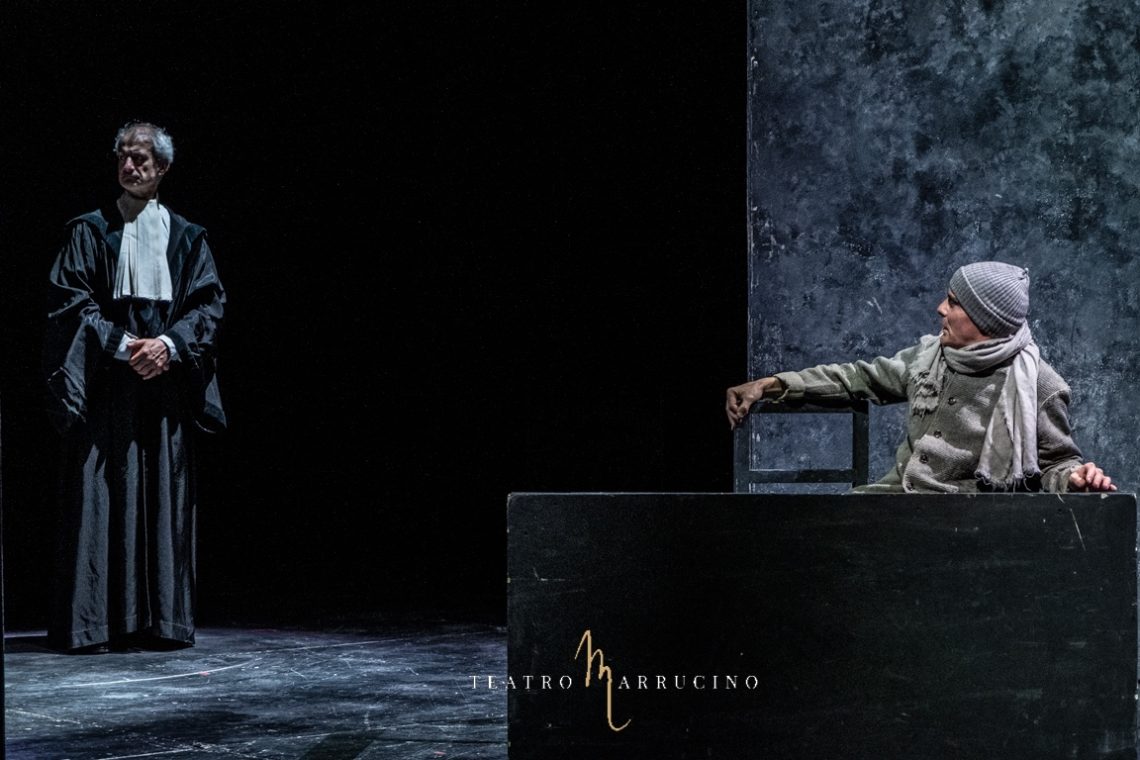
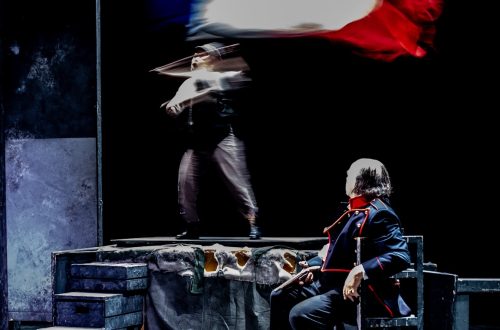
Sometimes a picture acquires a meaning that goes beyond the original intent of the photographer. In this case, taken from a reportage I did for Victor Hugo’s Les Miserables featured at Teatro Marrrucino, in Chieti, the photography becomes the archetype of the denegata Justitia. The defendant asks to speak, the justice stares elsewhere.
-
Breaking the Fourth Wall
Shooting a play is challenging because you must be ready to seize ‘the moment’ and, at the very same time, think of unusual compositions to avoid the boring ‘frontal’ perspective. Shooting part of the reportage from the backstage of Hamlet, with Giorgio Pasotti and Mariangela D’Abbraccio directed by Francesco Tavassi I had the possibility to experiment the breaking of the fourth wall. This picture is one of the results.
-
When Colour Helps Composition
This photo I took during a reportage of Miseria e nobiltà – a classic of the Neapolitan comedy by Eduardo Scarpetta – in the mise en scene of Lello Arena e Luciano Melchionna gives a lot of insights on how composition works. The triangle designed by the two actors on the sides and the taller actress in the centre is reinforced by the colours of the costumes: black in the centre, white in the sides. Finally, the purple background behind the black figure enhances the eye-driving effect toward the centre.
-
On “timing the moment”
This photo I took during an assignment for a reportage on the theatre drama called “Le Signorine” with Giuliana De Sio and Isa Danieli is an excellent example of the “Timing the moment” concept. “Timing the moment” is a skill any event-based photographer should develop (or hone, if he’s gifted enough to have been born with the gift.) Especially in sport – but too in concerts and theatre’s show if you did not attend the rehearsal – you don’t know in advance what is going to happen. A unique mixture of intuition, reflex and decision (what the Japanese would call 決め – kime) allows capturing an unforeseen – and excellent…
-
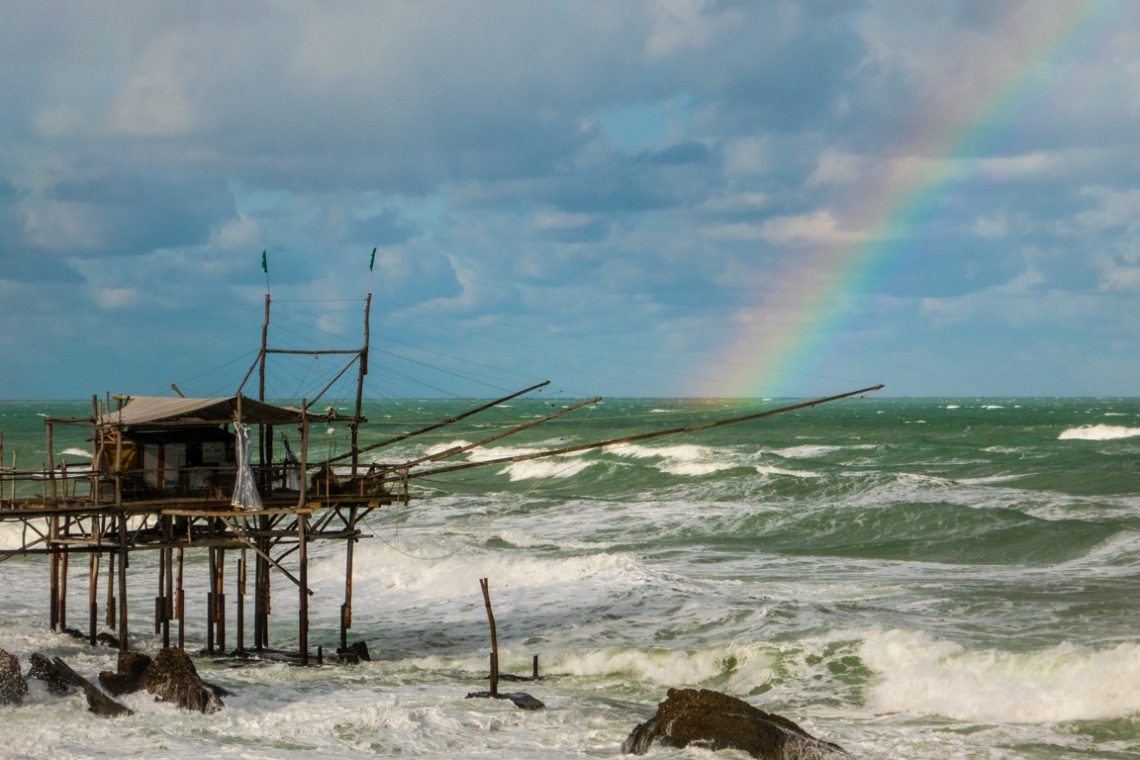
Hope after the Storm
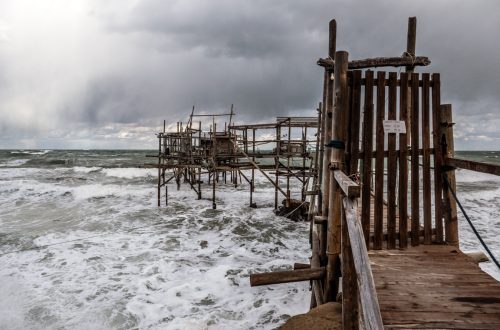
The sea hadn’t quite calmed when I made this frame—the wind still cut the crests sharp, and the noise of the waves clashing against the pilings of the trabocco was thick, physical. I waited for a break in the light, not hoping for much, and then the rainbow broke into view—just briefly—and gave the scene a tension it was missing. Not the kitsch kind of rainbow, but the kind that appears in defiance of ruin. The trabocco—an ancient fishing machine precariously perched on stilts—has always struck me as the embodiment of resilience. I framed it slightly to the left to leave space for the arc, letting the rainbow anchor the…
-
The Power of Underexposing
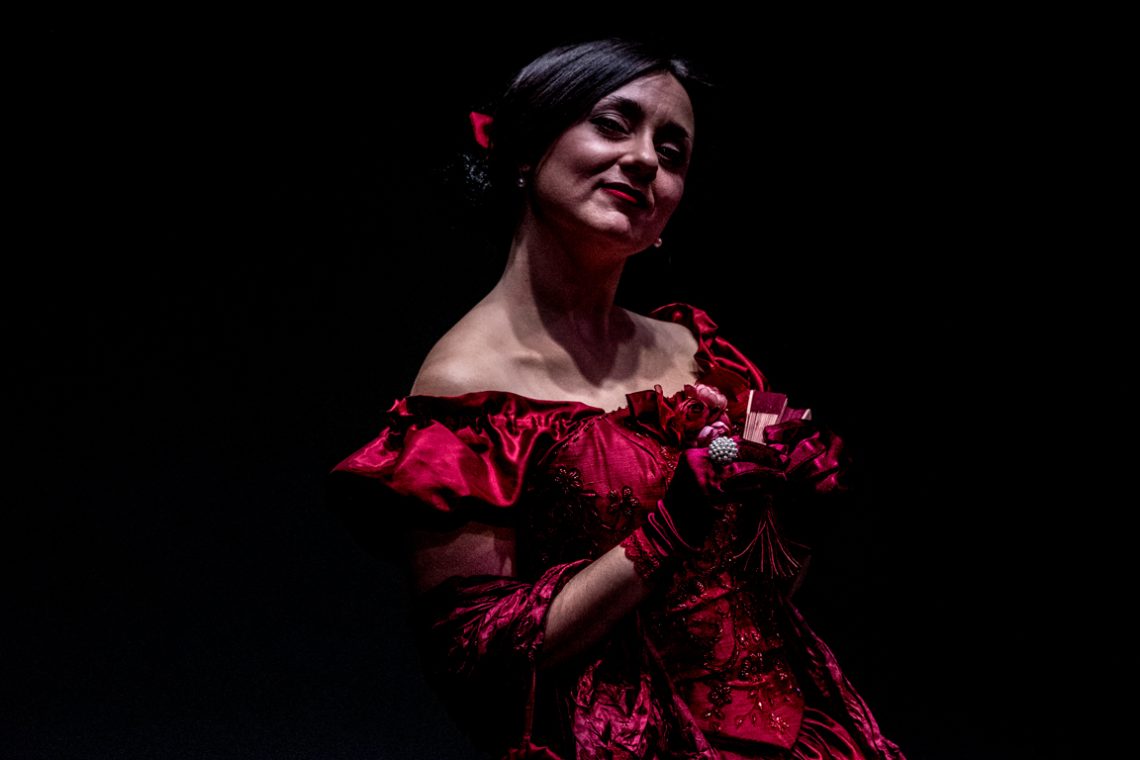
This portrait was built in the shadows. Underexposing by design meant letting darkness dominate the frame, allowing only the essentials — the face, the glint of an earring, the folds of the dress — to emerge. The result is a scene stripped of distraction, where every visible element has earned its place. The composition is weighted to the left, pulling the viewer into the subject’s gaze and leaving negative space to amplify the drama. The rich crimson of the gown benefits from the controlled exposure: under normal lighting, its details might have flattened into uniform red; here, the fabric’s texture and the embroidery’s sparkle gain depth from the way light…
-
When Tilted Photos Work
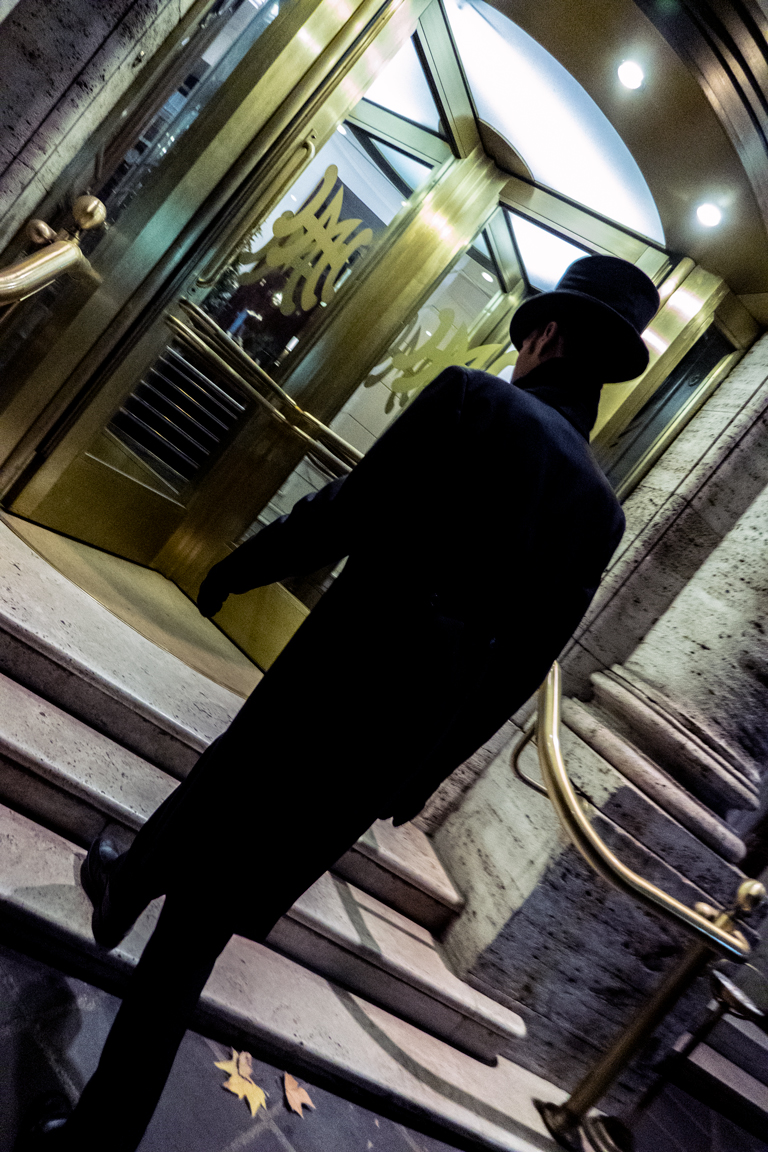
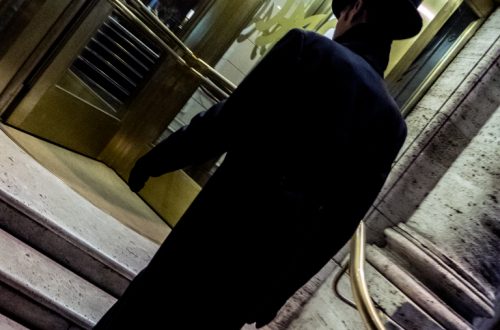
Tilted photos are very challenging to take. It is easy to break the composition, lose an essential part of the scene, or take a bad picture. Furthermore, making sense out of a diagonal orientation with a ratio that is not square (Hasselblad people, I can hear you loud and clear!) adds layers of difficulties. As counterintuitive as it might look, this photo taken in a “normal” orientation would have lost all its visual impact.
-
Good Plan, Poor Execution
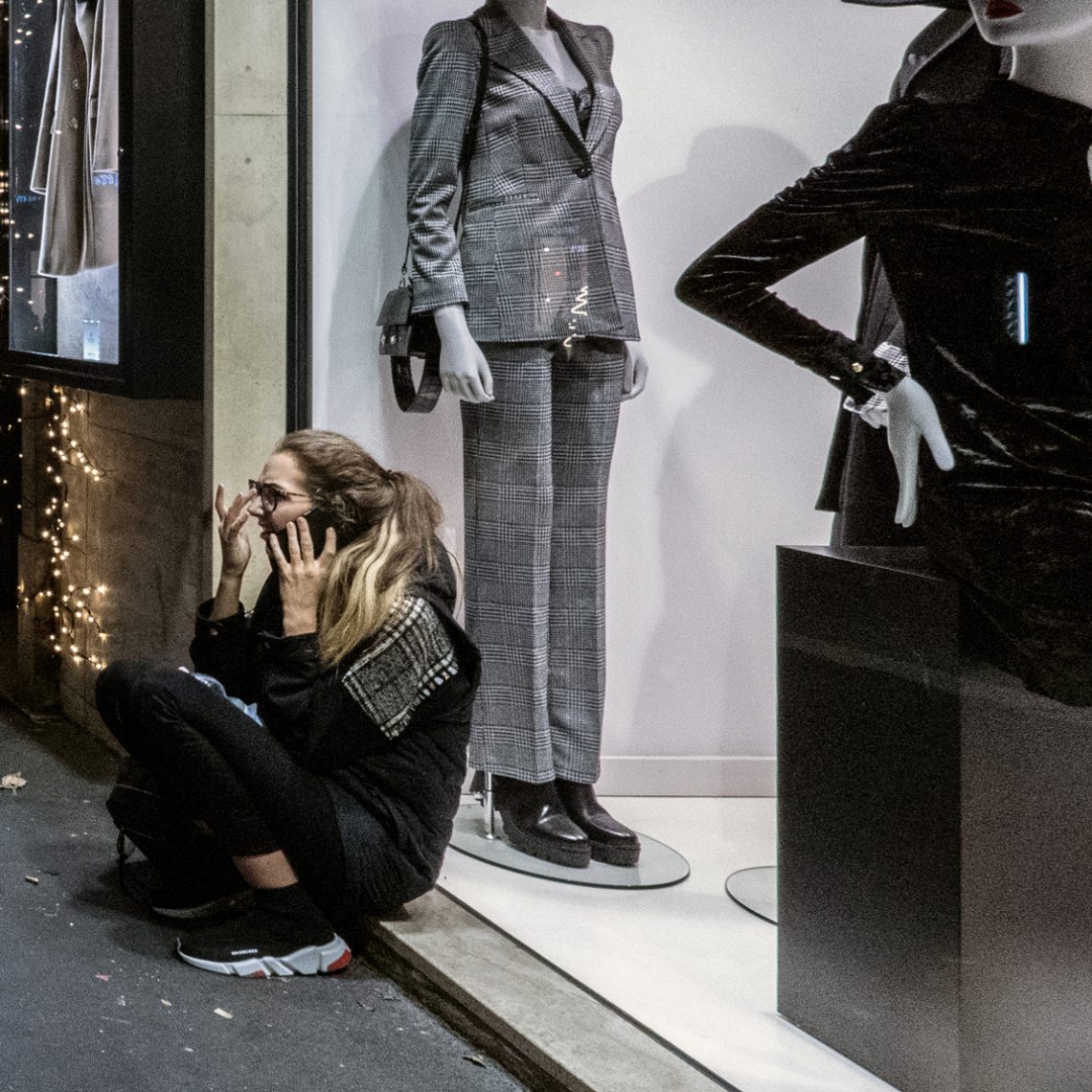
The idea behind the composition is entirely correct. The mannequins and the girl form a triangle, as does the direction of the stares, conveying both a sense of symmetry and counterposing the liveness of a human being to the puppets’ lack of. A poor execution, though, led to the mannequins’ head cut, turning a visually appealing photography into a meaningless shot.
-
Light as Meaning Shifter
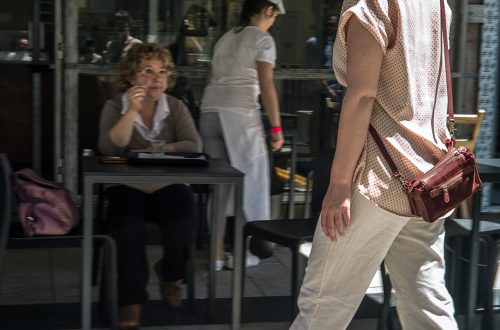
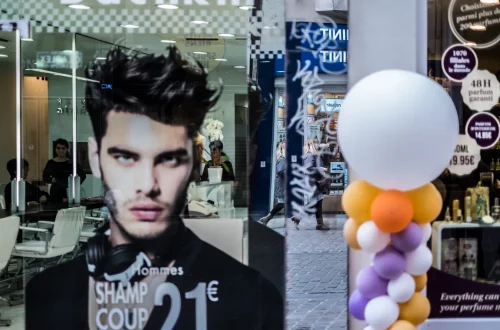
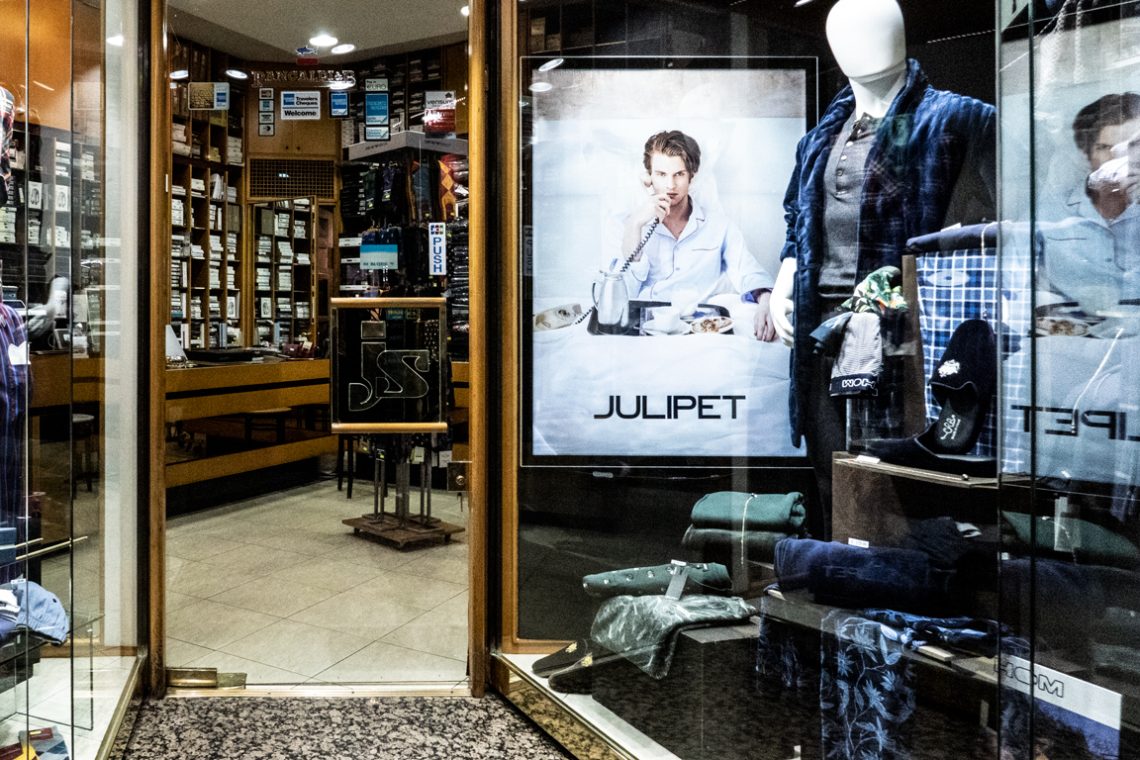
The original idea behind this picture was to match the emptiness of the shop with the facelessness of the mannequin posing as a store clerk, to convey a general feeling of depersonalization. Unfortunately, the big lightblot represented by the poster close to the mannequin catches the observer’s attention and reduce the effectiveness of the composition. Instead of connecting the mannequin with the internal part of the store thus making sense of the whole picture, the eye just “sees” an ad poster.
-
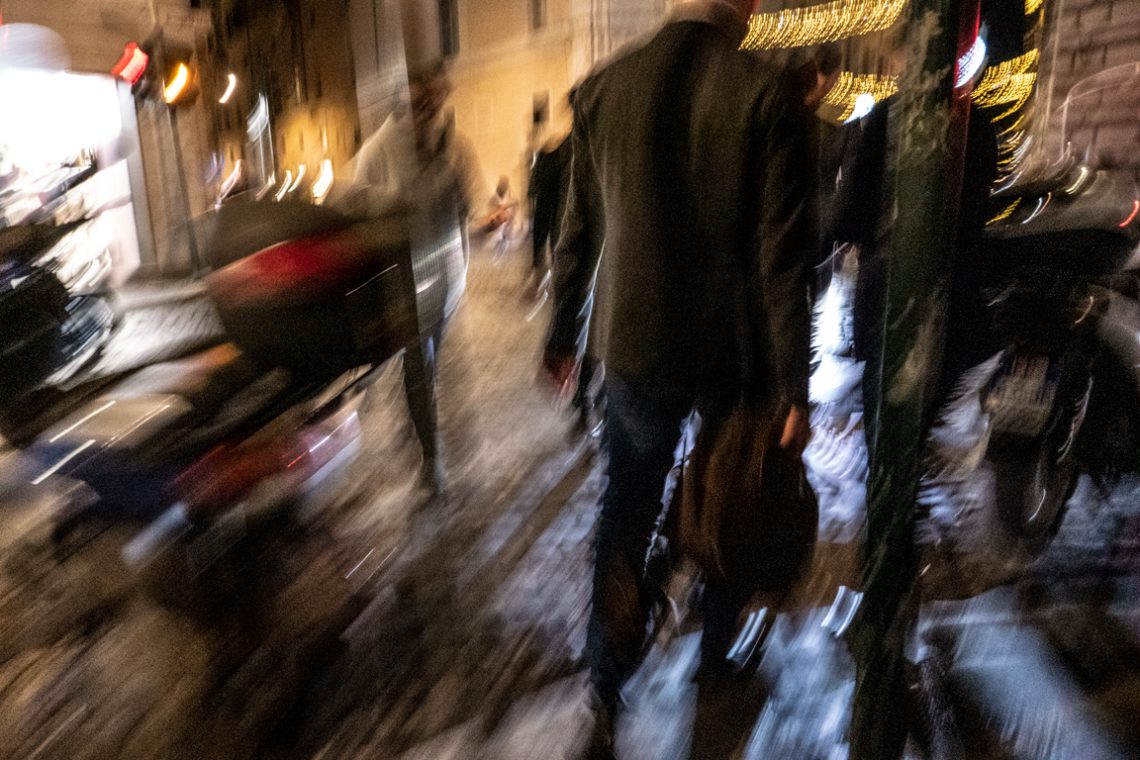
Photopanning in Rome
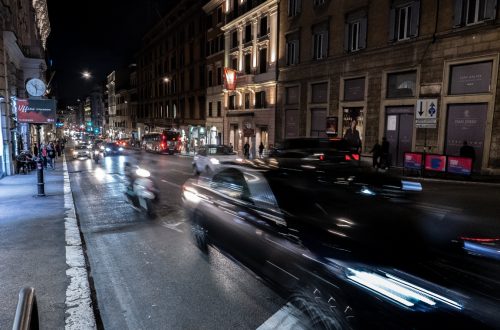
Photo panning is an art in itself and – when adequately practised – is able to deliver a stunning visual experience. In this picture (that has not been altered but for contrast and clarity) the overall experience reminds the Impressionism aesthetics.
-
Keep Out!
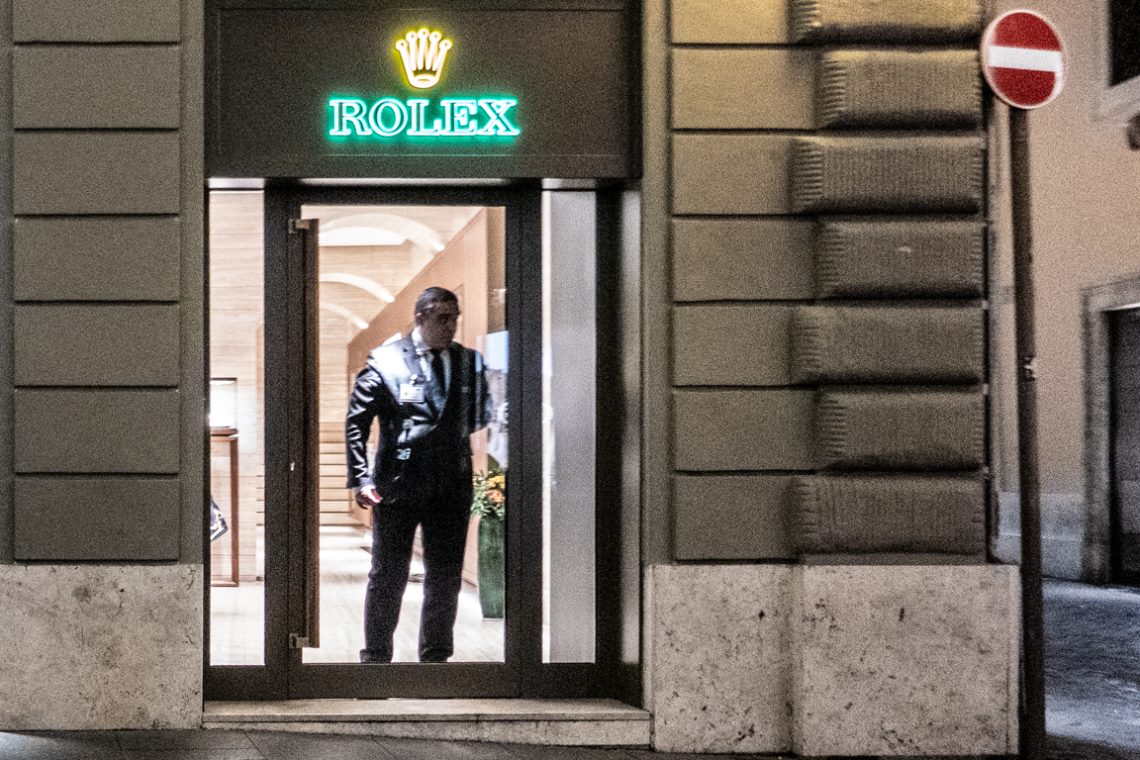
This photo conveys a message of “rejection”: first, a security guard who blocks access to the jewellery and then a signal of a prohibition of access reinforces the concept, thanks to a composition that guides the eye to a diagonal that goes from the bottom to the top, from left to right. Obviously, there is nothing “true” about all this because the overall result is the result of the organization of the spaces and the management of the perspective that allow connecting semantically elements that, in reality, have no relationship between them. It would have been enough to shoot from a different angle – or not juxtapose the security guard…
-
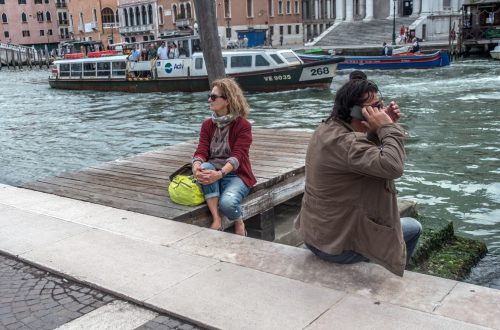
Evolution in Red
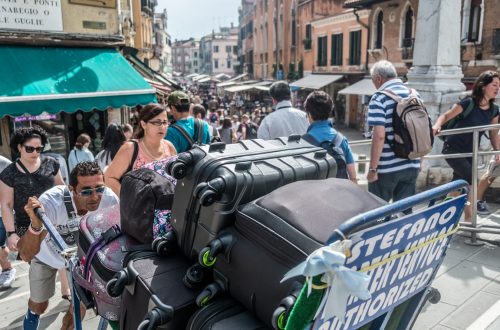
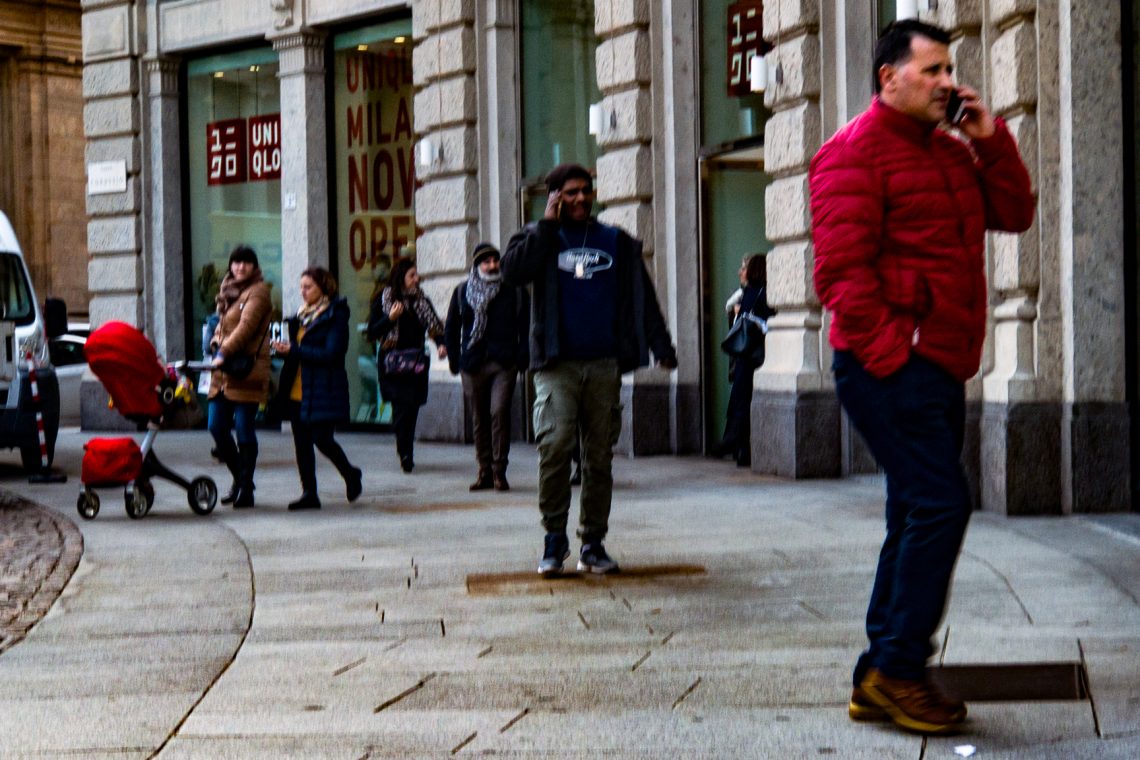
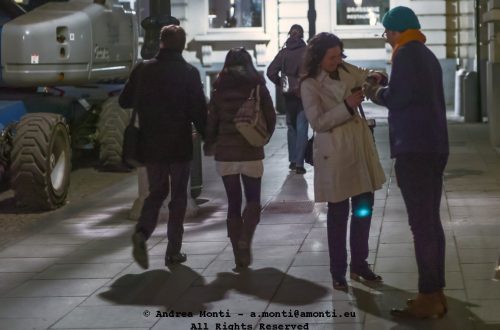
The frame unfolds on a Milanese street, a busy scene of people moving in different directions, yet bound by an unplanned visual thread — the colour red. On the far left, a stroller stands out, its fabric vivid against the muted tones of the pavement and stone façades. On the far right, a man in a red jacket, phone pressed to his ear, anchors the other end of the composition. Between them lies the space in which meaning is manufactured by the viewer: a perceived transition from childhood to adulthood, implied but never intended by reality itself. The technical construction supports this interplay. The image uses depth rather than focus…
-
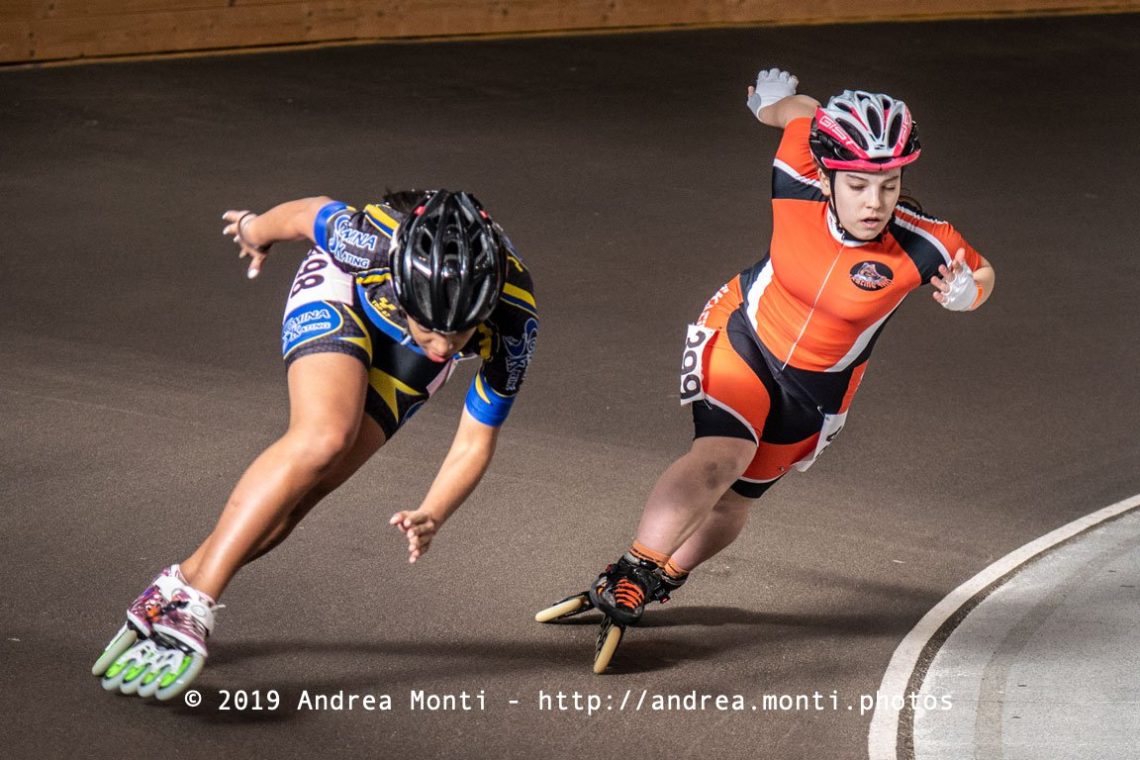
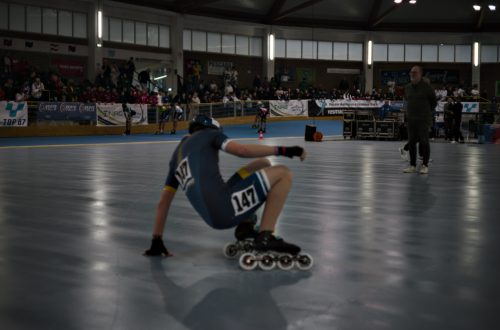
Italian National Skating Championship 2019
-
Americana Skating – Italian National Championship 2019
-
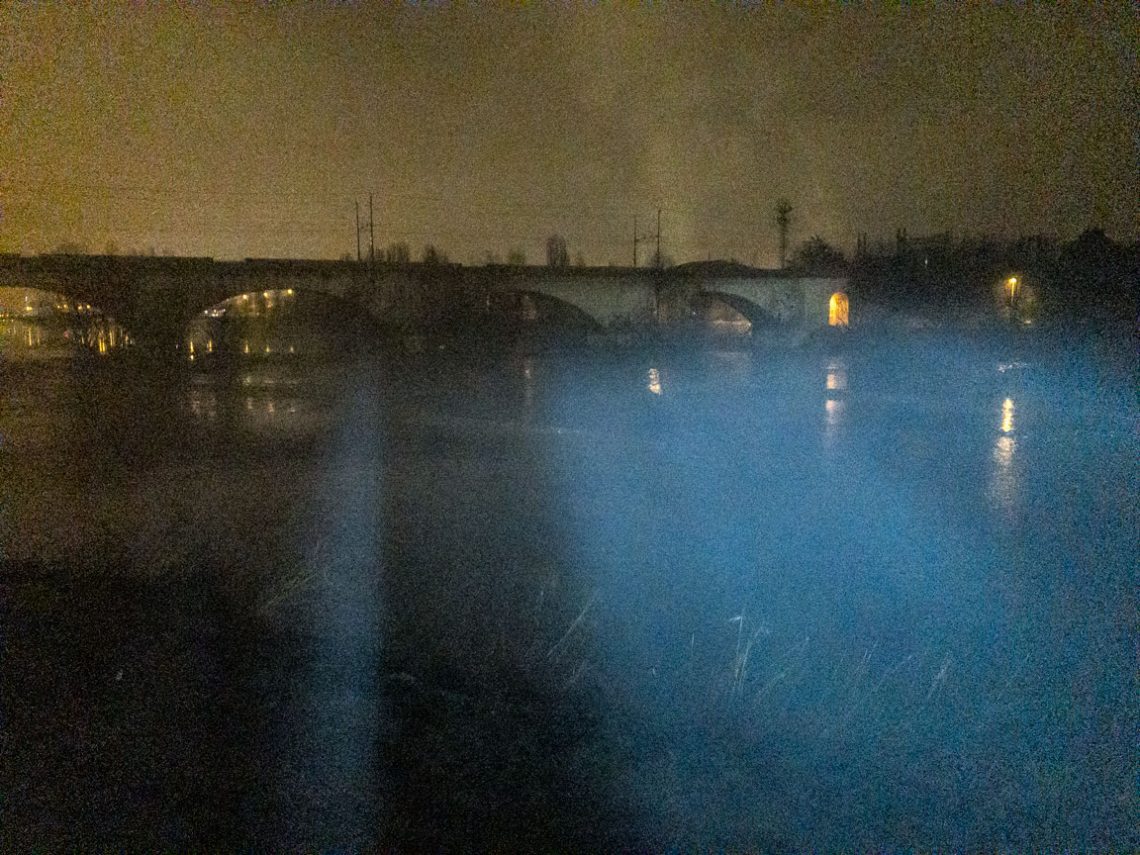
Wasted Shot Because iPhone 7 Poor Low-Light Handling
There’s a certain frustration in watching a scene unfold that you know deserves better than the tool in your hands can give it. This was one of those moments. The Adige was shrouded in mist, the bridge arches glowing faintly from warm streetlights, the water reflecting pinpricks of gold — a scene so atmospheric it almost photographed itself. Almost. The iPhone 7 Plus, for all its merit in good daylight, simply doesn’t hold up when the light falls away. The sensor struggles, the noise reduction turns painterly, and dynamic range collapses into a murky smear. What was meant to be a layered play of mist, water, and stone turned into…
-
The First Picture of the Year
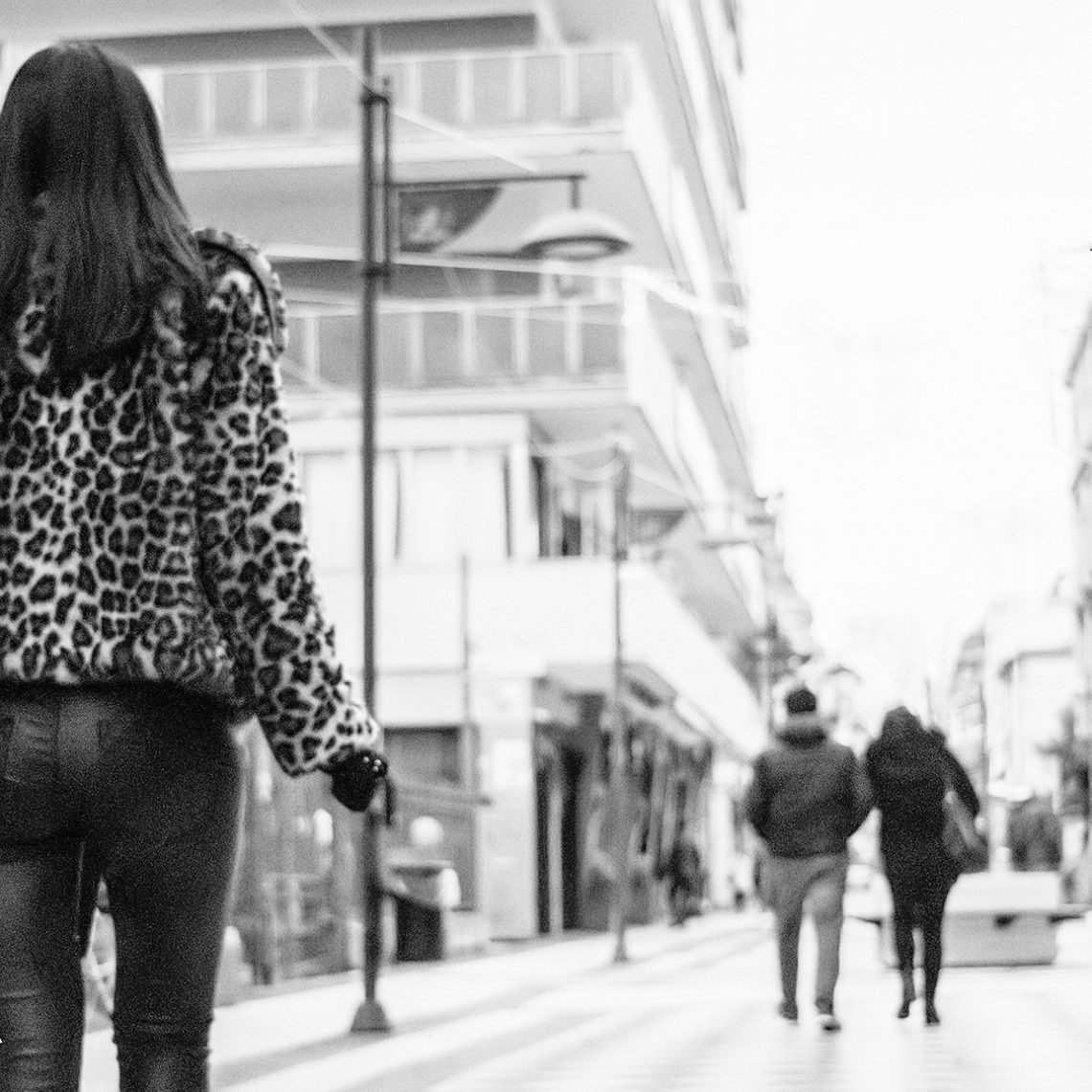
The year opens with a frame caught mid-step — a street scene suspended between the casual and the cinematic. The woman in the leopard-print coat commands the foreground, her figure sharply rendered against the soft haze of the street beyond. Her presence is decisive, yet she faces away, offering no expression, only movement. The background melts into a gentle blur, two figures walking arm in arm becoming silhouettes of intimacy. The shallow depth of field works well here: the compression between crisp foreground and ghosted distance draws the viewer through the frame, making the eye travel naturally from the coat’s texture to the vanishing point of the street. Technically, the…
-
Italian Boxing Amateur Championship 2018. The Reportage
-
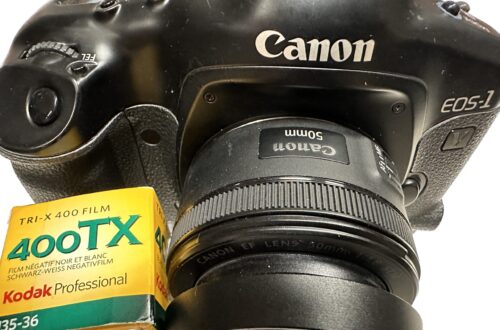
Lockpicking Tools
-
Superpila still rides…
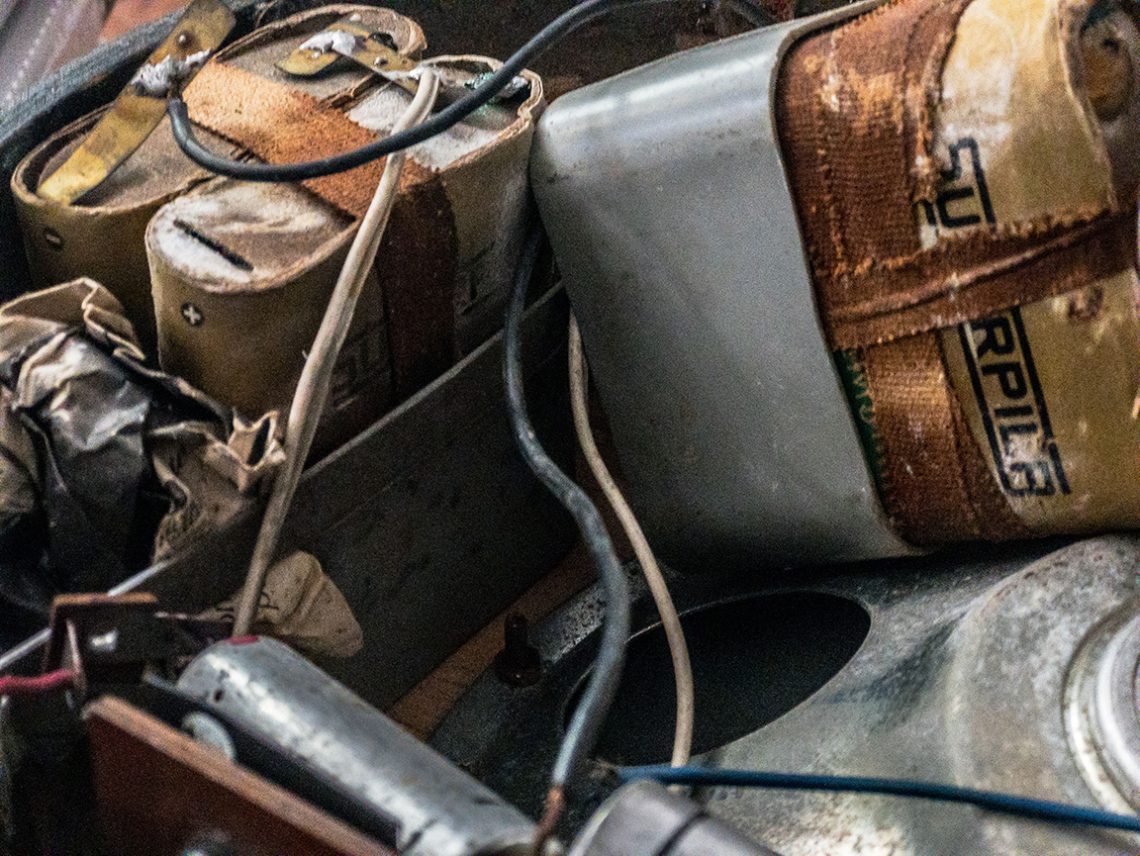
This frame came together almost by accident. I was rummaging through a heap of obsolete electronics, mostly as a curiosity, and found myself fixated by the material fatigue of an old battery unit—branded “Superpila”—held together by deteriorating fabric tape. Time had clearly done its job: oxidation, dust, flaked paint. Yet, paradoxically, the components still looked like they could spark into life. That tension—between decay and function—is what led me to raise the camera. The shot leans heavily on texture and chaos. Compositionally, it’s tight and cramped, bordering on claustrophobic, and that’s deliberate. I wanted the viewer to feel immersed, maybe even overwhelmed, as though peering into something that’s no longer…
-
The Coach
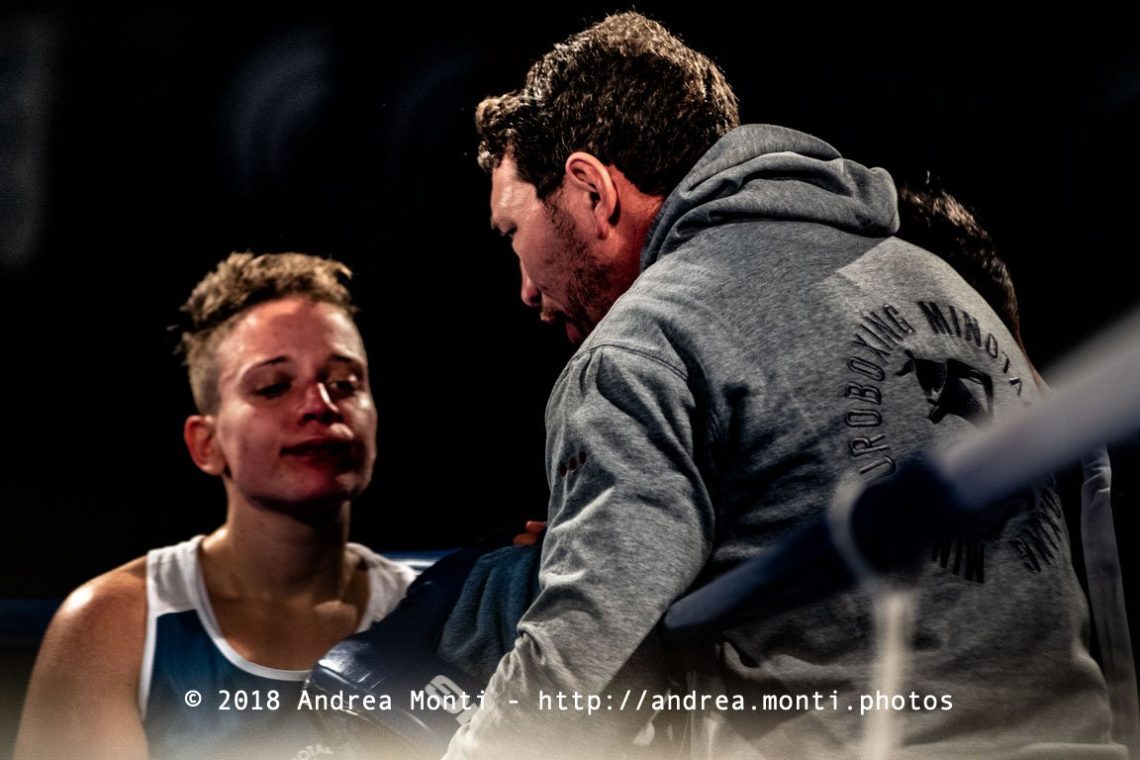
In the corner of the ring, where no cameras reach and the noise momentarily fades, something deeper than training unfolds. This image doesn’t speak of punches thrown or points scored. It captures that fleeting minute between rounds—the space where a fighter breathes, bleeds, and breaks, while a coach rebuilds with nothing more than words, water, and presence. The boxer’s face tells of the cost: a swollen lip, a grimace barely masking pain, but also something else—determination still flickering beneath the bruises. The coach leans in, not shouting, not berating. This is not strategy; it is communion. The fight, at this point, is as much against doubt as it is against…
-
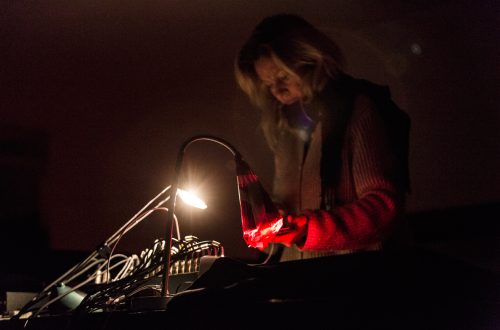
Davide Grotta – Live
-
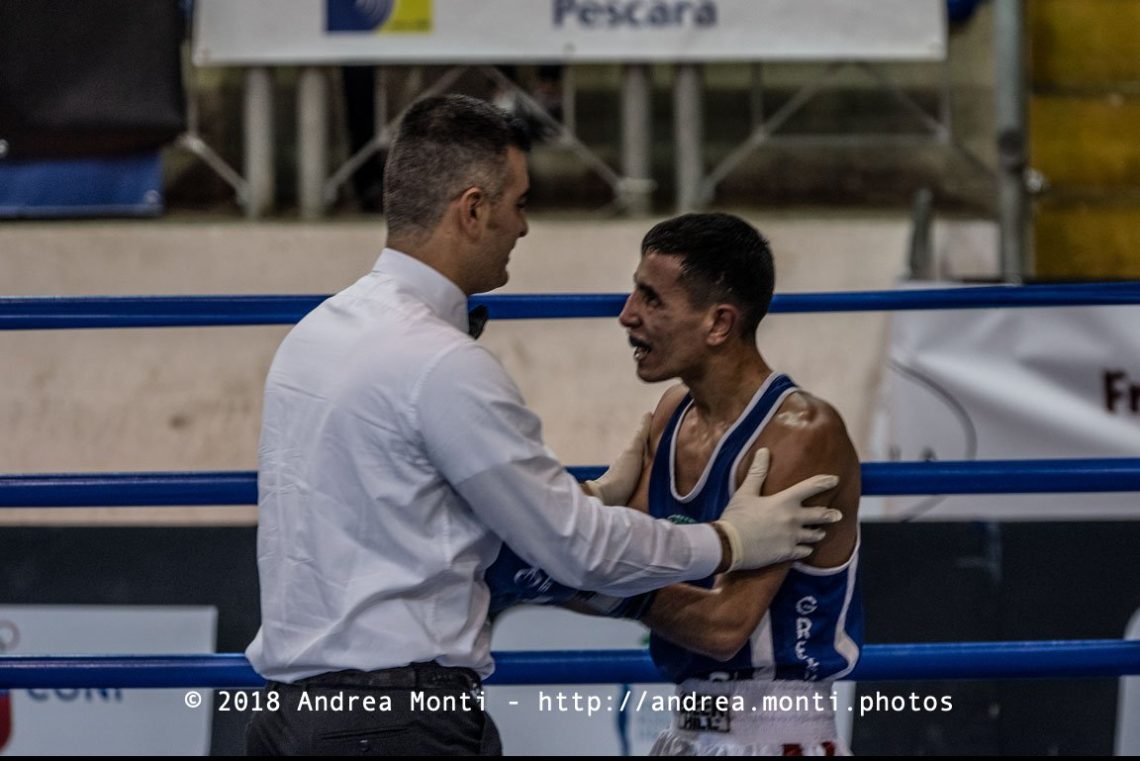
Stop
In the squared circle, adrenaline and instinct often outrun reason. A fighter, eyes blazing, may push past his body’s warning signs, driven by pride, by the will to win, or simply by the refusal to yield. It is in these moments that the referee’s role shifts from arbiter of the rules to guardian of life itself. This image captures that exact intersection—one man still in the heat of battle, the other standing between him and the risk of irreversible harm. The referee’s gloved hands rest firmly yet not aggressively, an unspoken command to stop. His gaze is steady, his body language unshaken, projecting both authority and concern. In boxing, bravery…
-
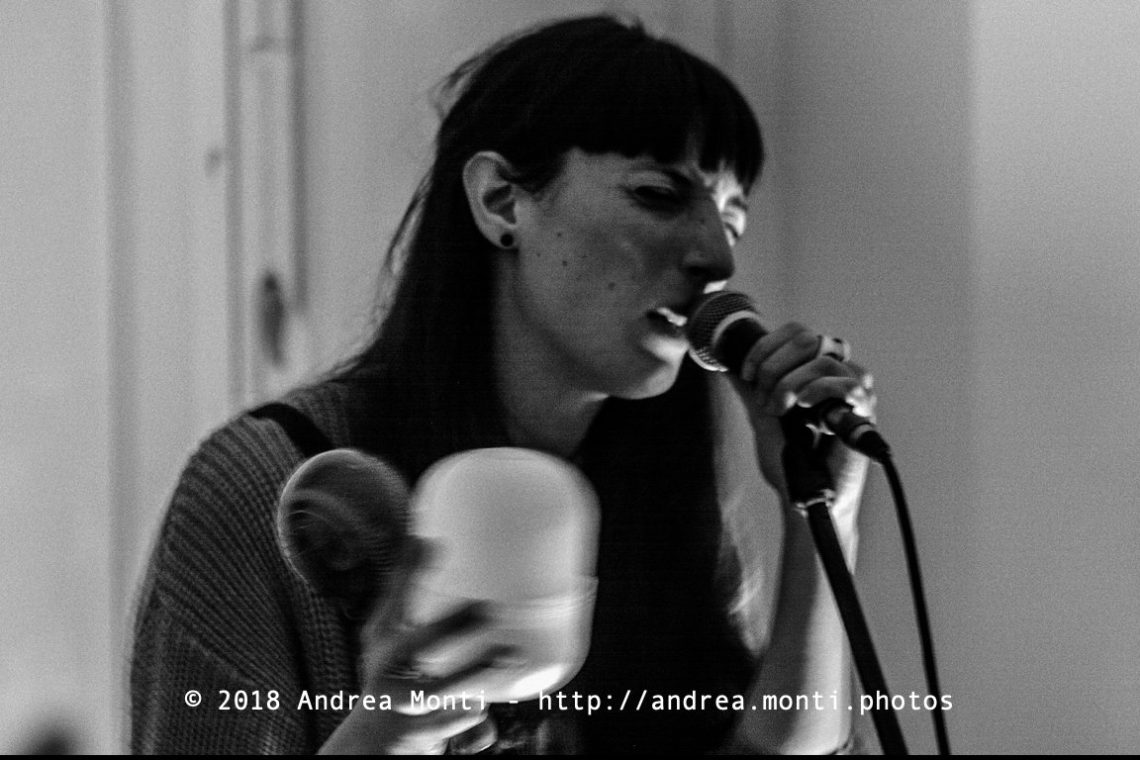
Marianna D’ama – Live
The stage is barely the size of a rug. The audience—two dozen at most—sits within arm’s reach. There is no spotlight to hide behind, no sound engineer to balance the mix, no roaring crowd to dissolve into. Just a voice, an instrument, and the intimacy of shared air. In this photograph, the singer leans into the microphone with the same intensity one might expect in front of thousands. Her eyes are half-closed, her body wrapped around the rhythm, maracas held like extensions of her heartbeat. The grain of the black and white frame amplifies the sense of proximity—every shadow a whisper, every highlight a breath. House concerts are unforgiving in…