-
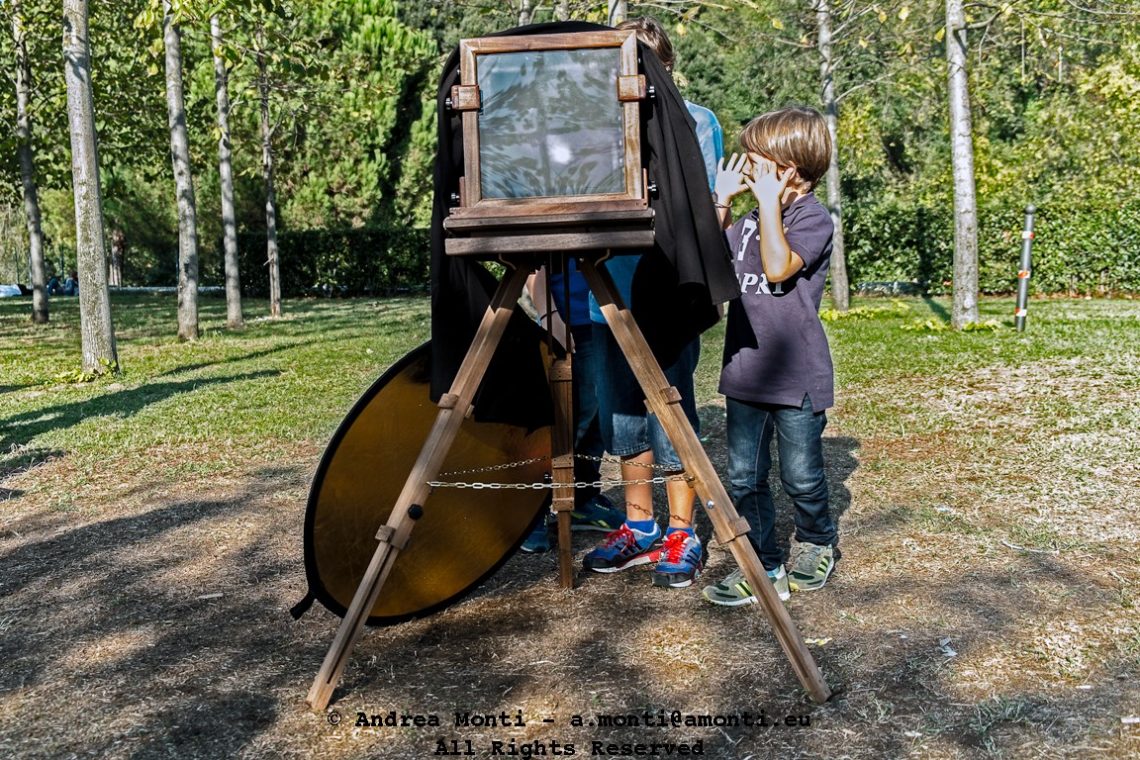
An Old Portable Camera
I didn’t stage this. The camera was already set up for a workshop in the park, a portable wooden box on a tripod, complete with focusing cloth and a ground glass screen. What drew me wasn’t the device itself—it was the reaction it triggered. The boy shielding his eyes, squinting into the past through a lens designed long before smartphones flattened photography into a gesture. The composition is dense in its centre, almost chaotic with overlapping limbs and sneakers. But the tripod anchors it. The machine, primitive and precise, holds its ground in a circle of discovery. I kept the perspective low and frontal to emphasise its presence as a…
-
@Rome Maker Faire – 3. Stare Of The Mechanical Man
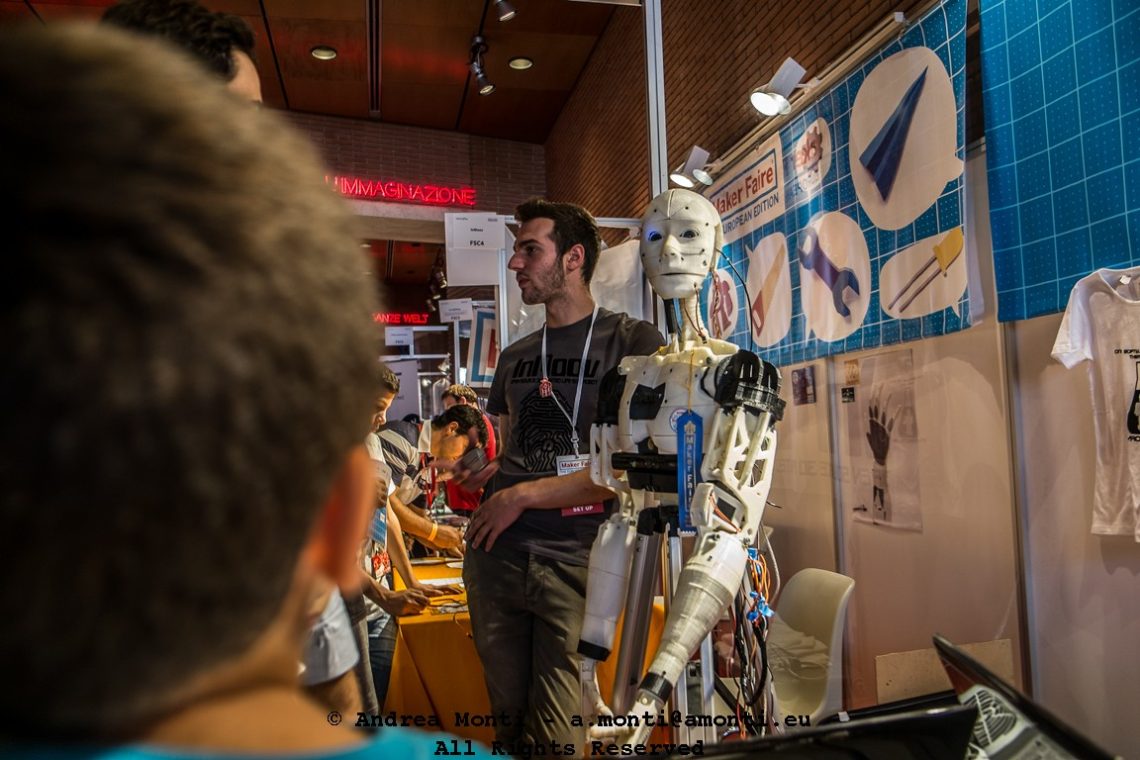
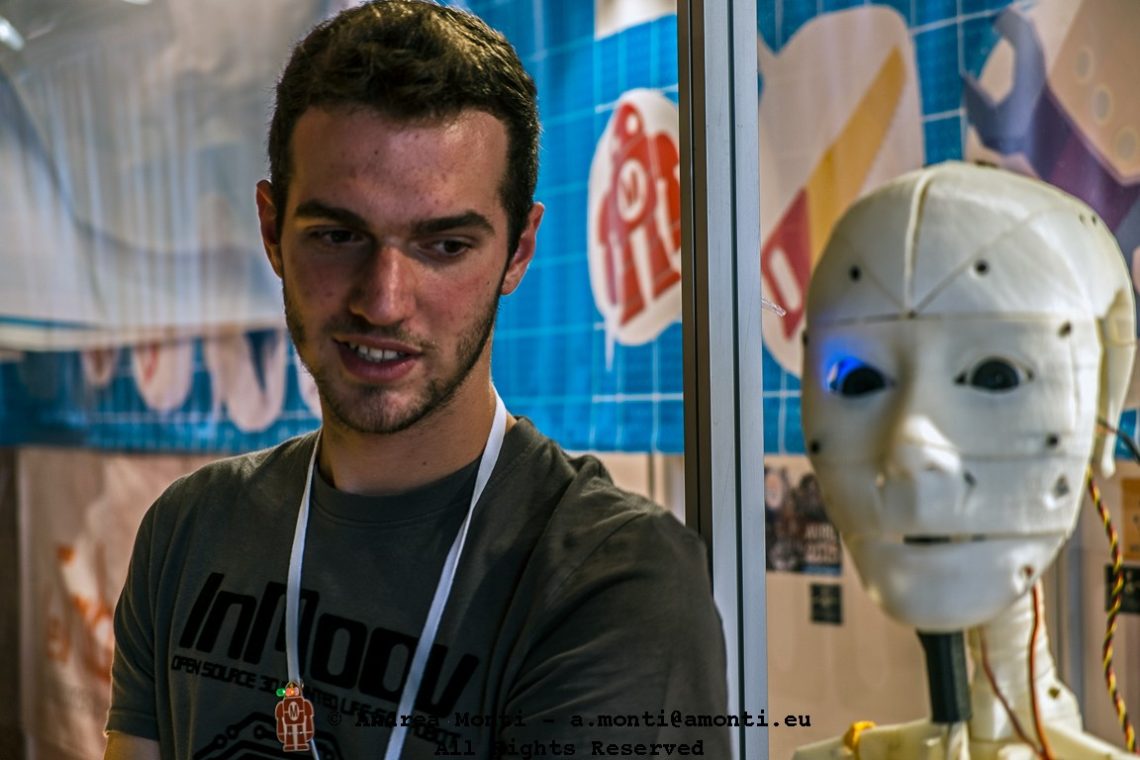
I’ve always been fascinated by that moment in an exhibition when human curiosity meets mechanical indifference. In this frame, the robot’s gaze — fixed, almost expectant — seems to cut through the bustle of the Maker Faire. There’s a quiet in its stare that stands in stark contrast to the crowded, noisy energy of the scene. I chose to let the human operator stand slightly behind the machine, not in front of it. This composition allowed the robot to dominate the foreground while still including the person who, ironically, brings it to life. The presence of an out-of-focus head in the bottom left was a conscious choice to keep the…
-
Hanging Bottle
-
@Rome Maker Faire – 2
-
@Rome Maker Faire – 1
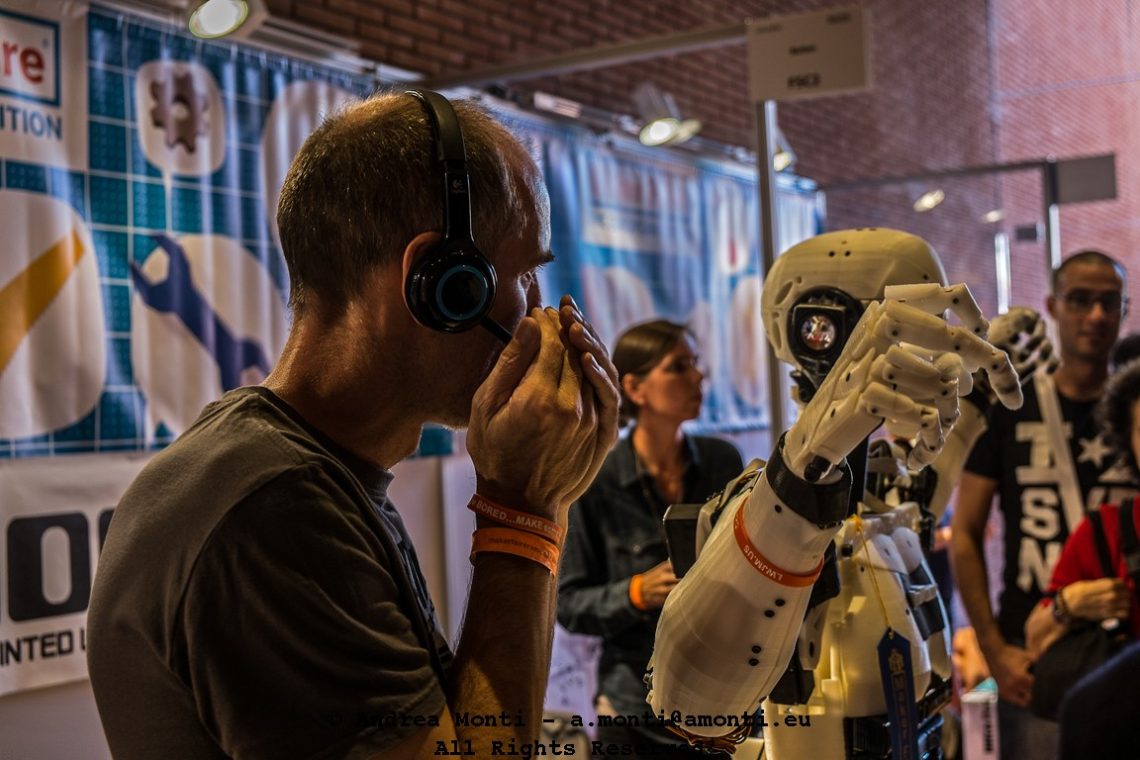
I made this photograph during Rome’s Maker Fair, where the noise of servo motors and animated enthusiasm filled the air. The scene, however, was quiet. Not in sound, but in intent. A man and a machine facing each other, both wearing headsets, locked in an interaction so human in posture it almost defied the clinical setting around them. From a technical perspective, I chose a shallow depth of field to detach the primary interaction from the noise in the background. I wanted the robot and the man—particularly their faces and hands—to carry the emotional weight. The focus falls on the robot’s articulated fingers and the man’s hands raised in some…
-
Free Shoes On A Hot Day
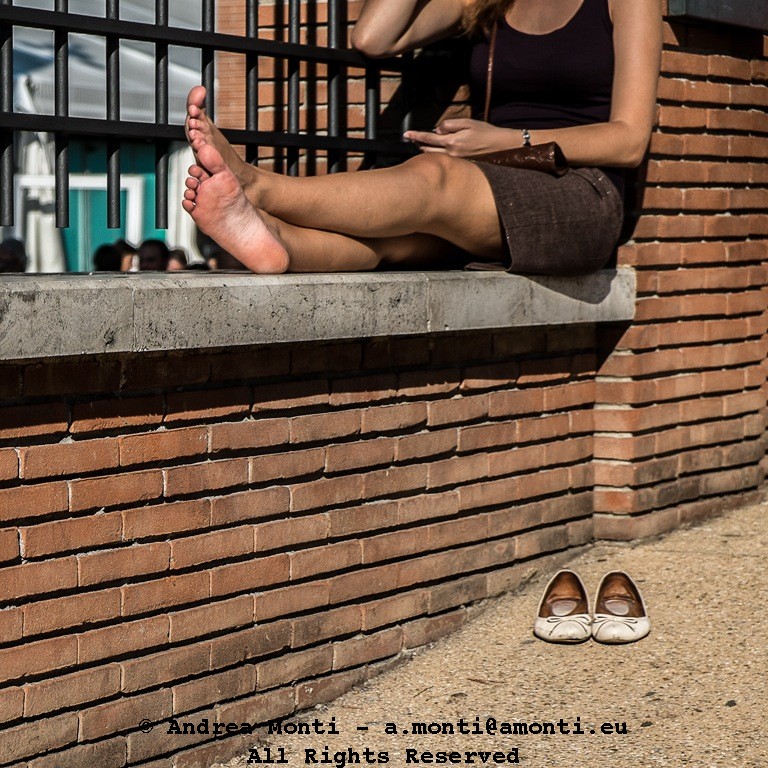
I took this photograph on a brutally hot afternoon, the kind where the pavement seems to radiate heat back at you with equal force. The scene was simple: a young woman, barefoot, perched on a low ledge in the sun, her shoes neatly placed on the ground below. The shoes caught my eye first — perfectly aligned, toes pointing towards the wall, almost as if waiting for their owner to return to them. From a compositional point of view, I like how the image naturally splits into two planes. The lower half — brick, pavement, and shoes — is all about structure and order, while the upper half — bare…
-
Vive La France, The Oslo’s Way
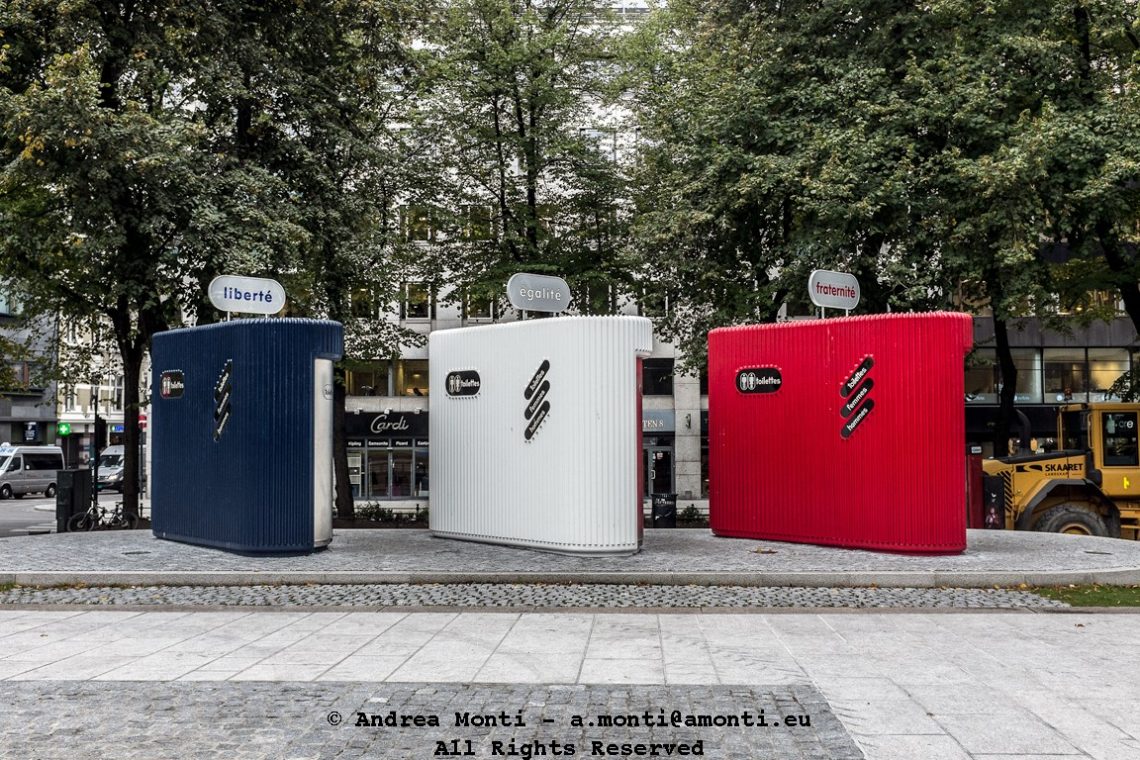
Occasionally, photography rewards us with moments where irony, design, and national symbolism collide in a way that demands to be captured. Vive La France, The Oslo’s Way is one such moment. Here, three public toilets stand in perfect alignment, painted in the tricolour of the French flag—blue, white, and red—each proudly labelled with one of the national motto’s words: liberté, égalité, fraternité. From a compositional standpoint, the image works because of its symmetry and spacing. The photographer has placed the trio dead centre in the frame, allowing the architectural rhythm of the background—trees and modernist façades—to act as a neutral backdrop. The careful alignment ensures that each structure has breathing…
-
Out Of Focus, Once More
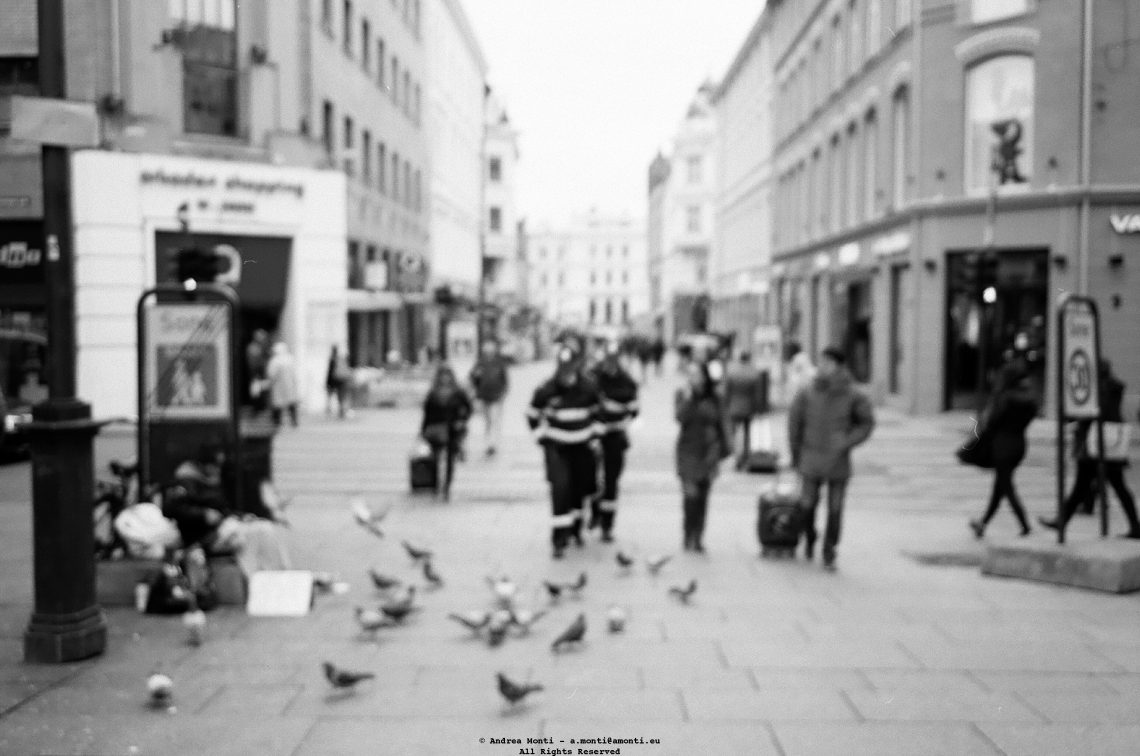
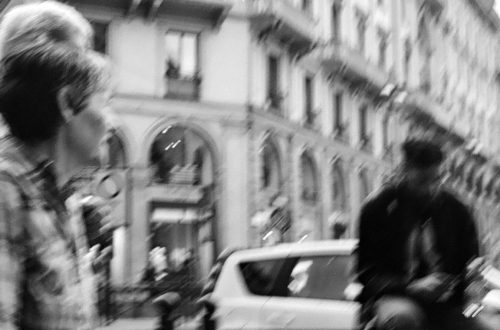
Missed focus. Again. And no, it wasn’t intentional. This wasn’t a conceptual experiment, nor a nod to dreamlike abstraction. It was simply a technical failure, shot with a manual lens, rushed framing, and an optimistic assumption that I’d nailed the hyperfocal distance. I hadn’t. Still, I kept the frame. It’s a street in Munich, pigeons pecking at the ground, firemen walking down the centre. A homeless encampment crowds the left edge. None of it sharp. But despite that—or maybe because of it—the image speaks. Context persists. Silhouettes are enough. The story doesn’t vanish with the detail. Technically, the photo lacks precision: the aperture was too wide, depth of field too…
-
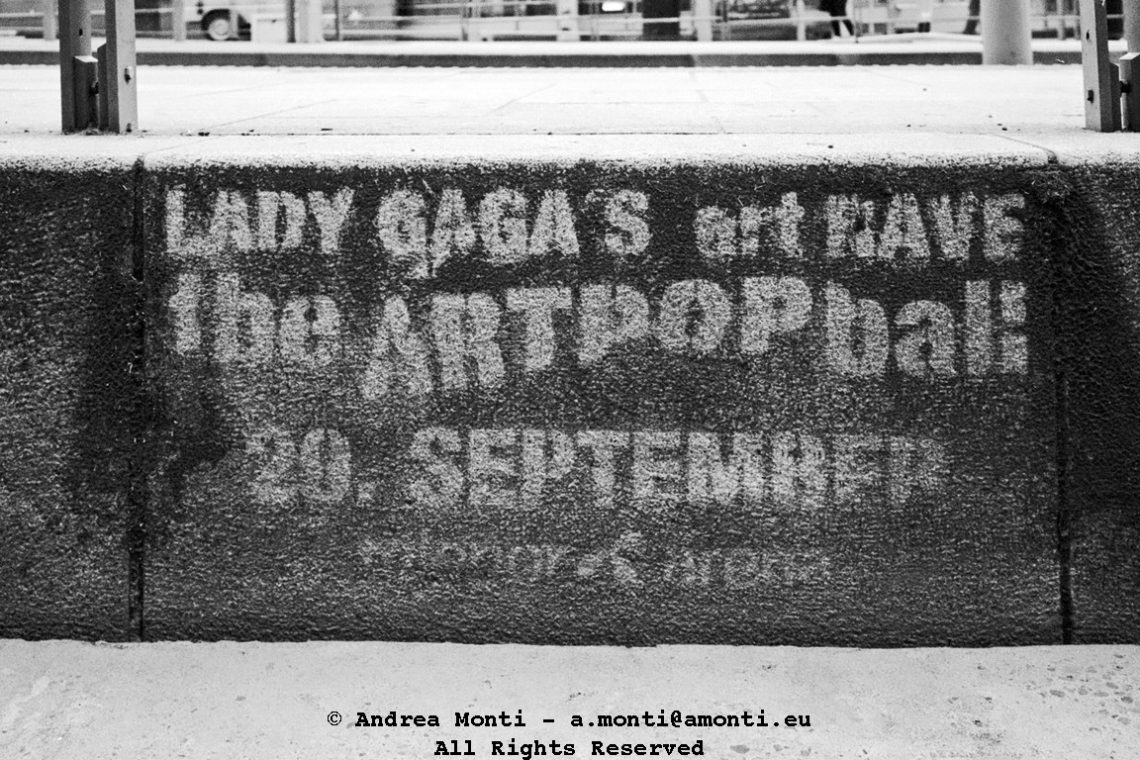
Lady Gaga Art Rave
-
Cold Freezing Tour Through Oslo’s Fjord
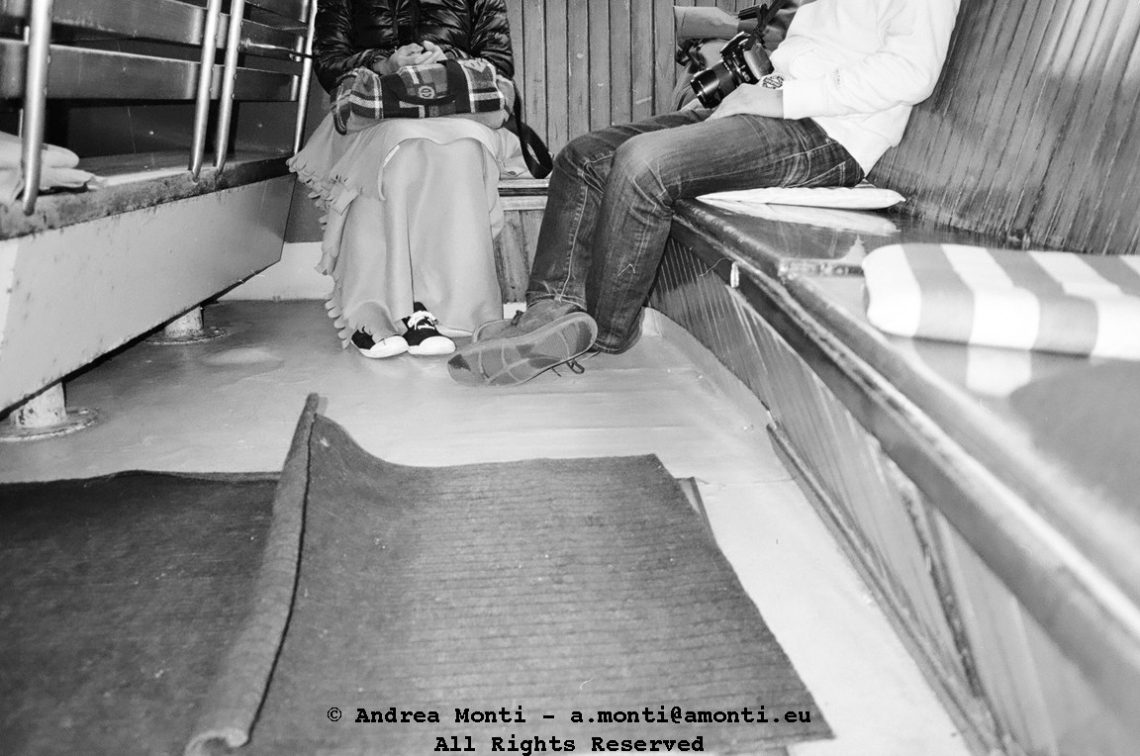
I took this photograph aboard a ferry cutting through the Oslo fjord in winter. The cold was penetrating, the kind that seeps into bones despite layers of clothing. The passengers’ body language tells the story more effectively than words: one figure wrapped in a blanket, hands folded in stillness; the other with a camera resting idly on his lap, shoulders hunched, jeans stiffened by the chill. Compositionally, I aimed for a low angle, using the perspective of the floor and the rug leading diagonally into the frame. This draws the eye directly toward the two figures without needing to show their full faces. The benches on either side narrow the…
-
Behind a Shop Window in Oslo
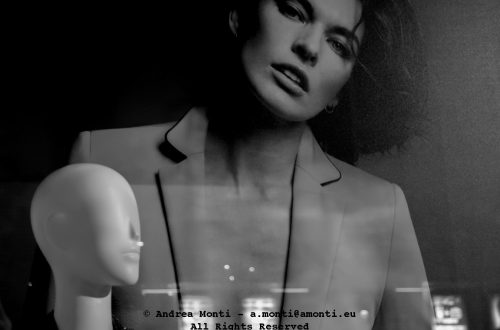
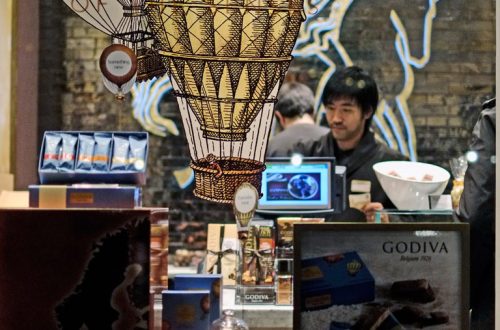
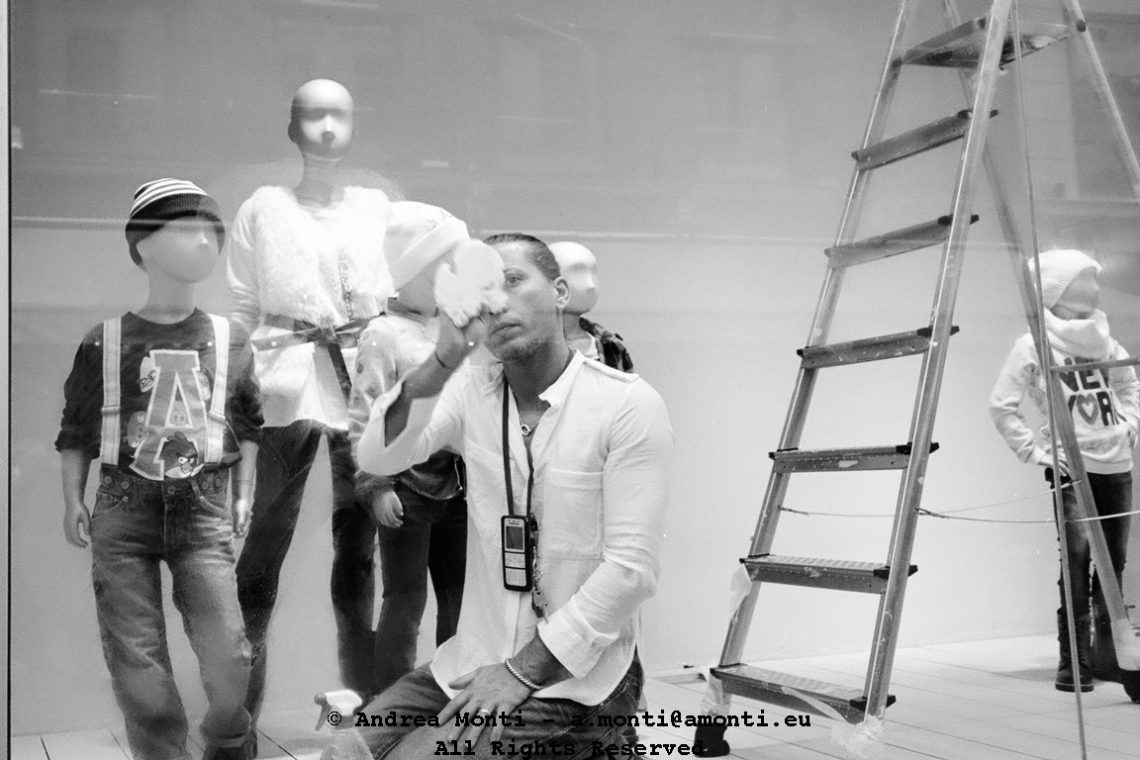
This was one of those scenes that unfolded on its own terms. No decisive moment, no split-second drama—just a man behind glass, cleaning or adjusting or both, surrounded by faceless mannequins and the awkward geometry of retail preparation. I raised the Nikon 35 TI and pressed the shutter before overthinking it. Shot through the shop window, the glass worked both against me and with me. It introduced layers—literal and symbolic. Reflections were minimal but present, just enough to remind us we’re on the outside looking in. The man is inside a constructed world, arranging it, tidying its surfaces for consumption. The mannequins—blank-eyed children—stand frozen, already staged, while he works between…
-
The Path To Freedom
-
Running On The (Oslo’s) Docks
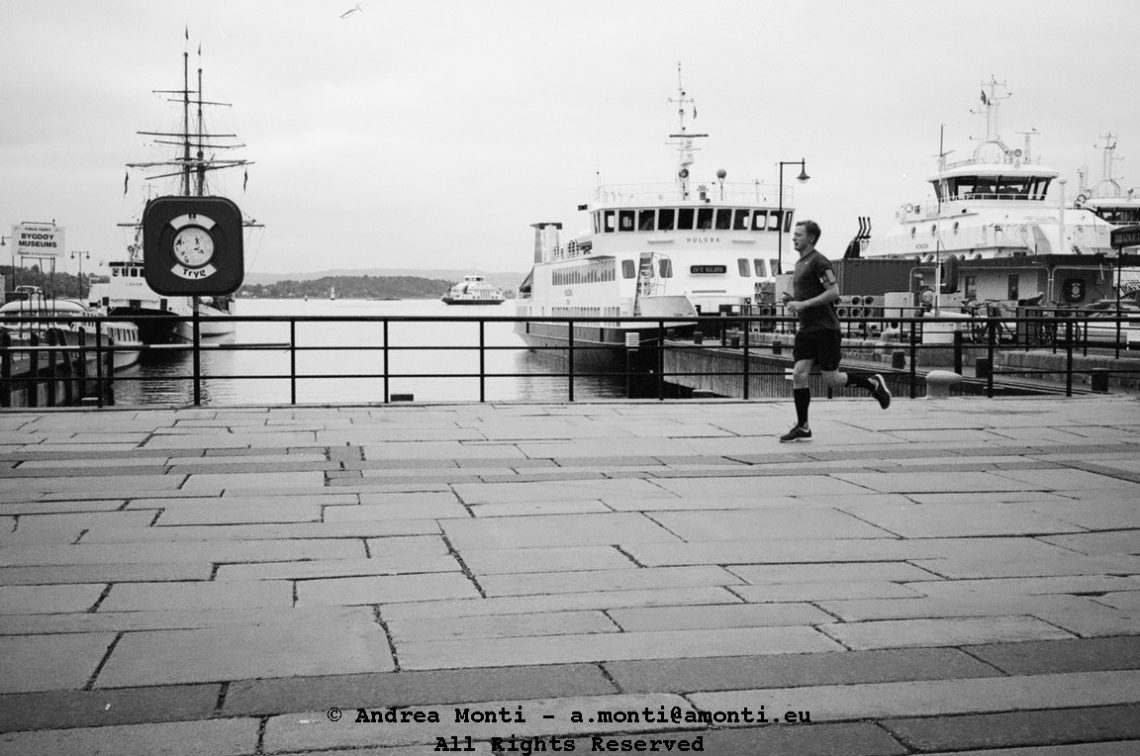
The moment lasted a fraction of a second. I was walking along the Oslo harbour, camera hanging loosely, eyes half on the ships and half on the geometry of the paving stones when he entered the frame — the runner. Perfect posture, right leg extended mid-stride, left arm balancing out the rhythm, and most crucially, isolated against the background clutter of docked ships and cranes. This image isn’t about the athleticism. It’s about pace, solitude, and counterpoint. The city rests behind him, still and orderly, while he pushes forward, cutting through the quiet with motion and intention. He’s small against the marine industrial backdrop, but all attention lands on him.…
-
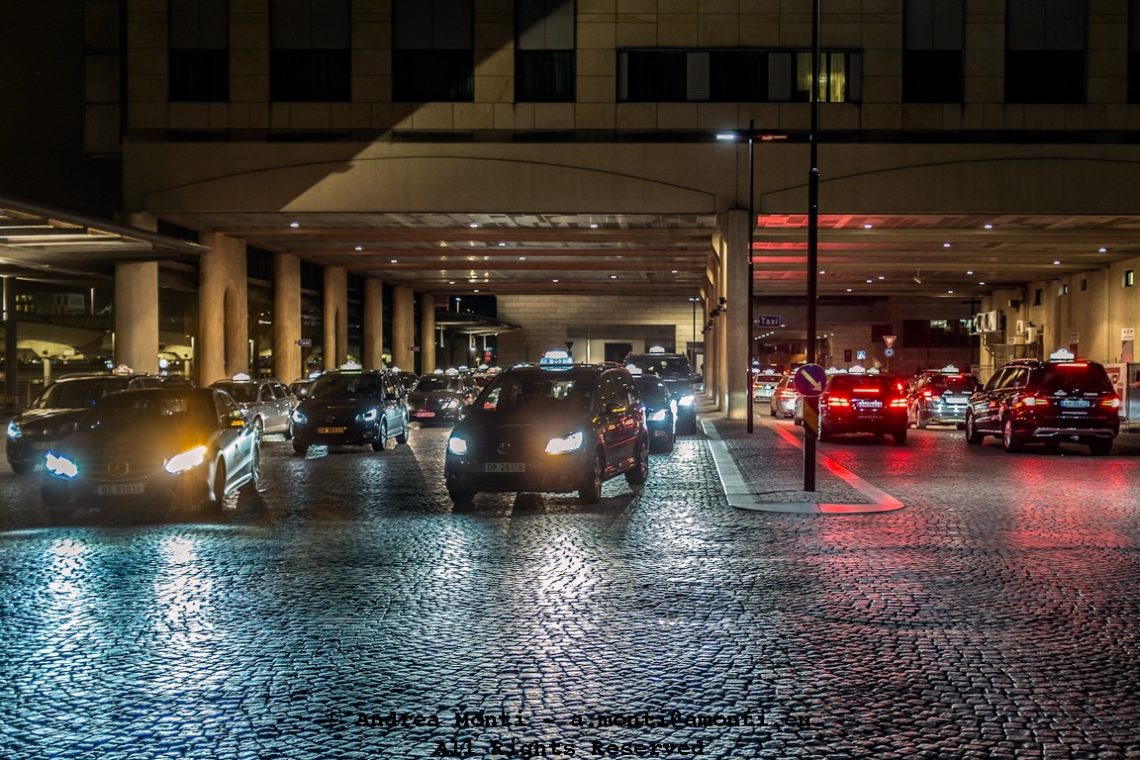
A Taxi Night Fleet At Oslo’s Central Station
I took this frame at a moment of pure symmetry and friction. The way taxi lines form outside Oslo Central Station at night—almost militaristic in their discipline, yet each vehicle pulsing with its own colour rhythm—felt like an urban ballet set to the low hum of idling engines and the soft scuff of rubber on wet cobblestones. Technically, night shots like this are unforgiving. The cold light from the LEDs clashes sharply with the warmth of the taillights and the overhead sodium vapour glow, which is why I resisted neutralising the colour balance too much. The visual tension between the icy blue reflected on the left and the bleeding red…
-
An Old Lady in Great Shape
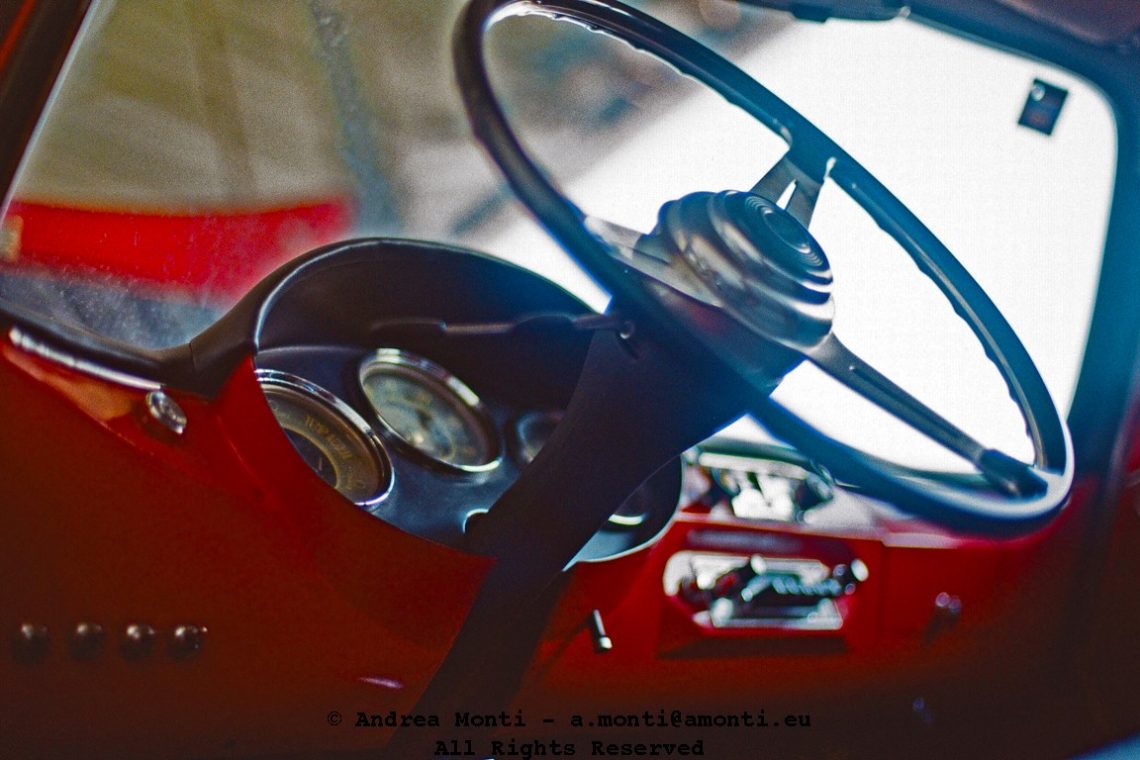
There’s something about old cars that asks you to listen before you look. You don’t photograph them—you make their acquaintance. This shot was taken inside an Alfa Romeo Giulia. She’s a machine from another time, but she doesn’t wear her age like a burden. The patina on the steering wheel, the soft wear on the dashboard controls, the dusty glow on the gauges—they don’t speak of decay, but of use. Of stories lived in full throttle and long idles. I didn’t stage this frame. I simply opened the door and saw her waiting there in quiet elegance. The light slipped through the glass just enough to kiss the rim of…
-
Not A Photography Anymore
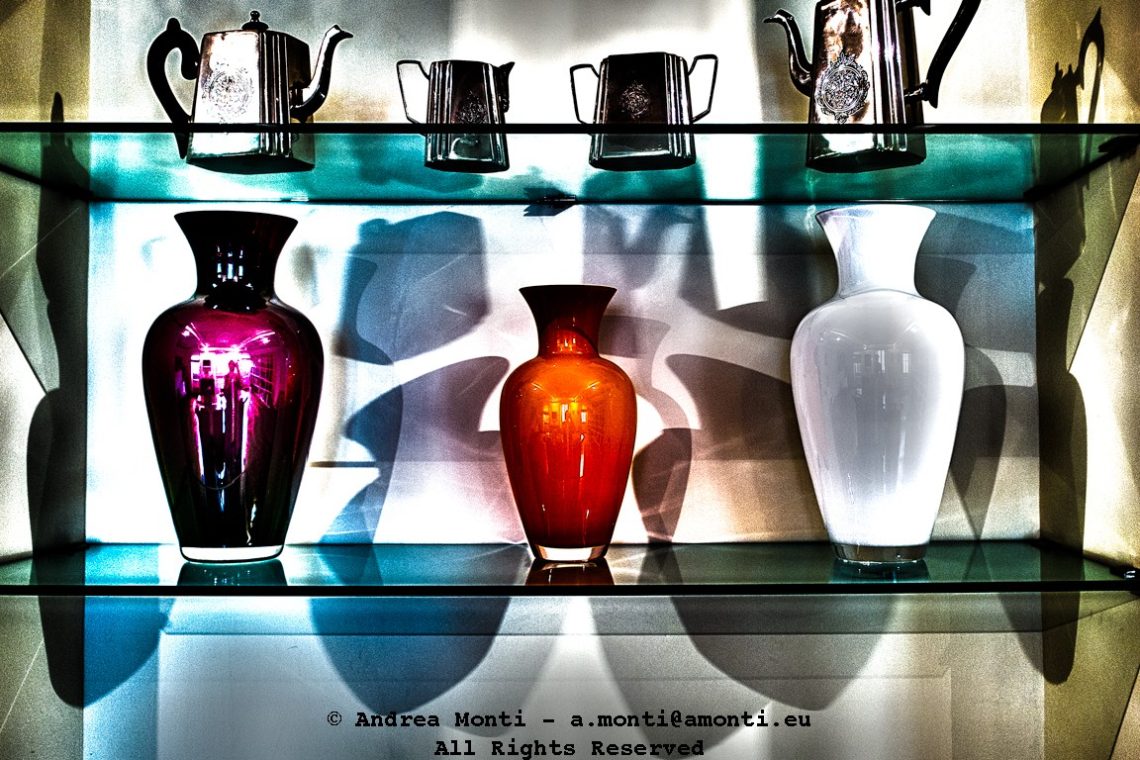
I approached this shot with the intention of exploring the point at which photography begins to lose its documentary role and drifts into the territory of constructed image-making. The Leica M9, with its CCD sensor, is unforgiving in its rendering of highlights, and here I chose to exploit that to push the tones far beyond their natural state. The result is an image that wears its artificiality openly. The composition is rigidly symmetrical: three vases, evenly spaced, under a line of metallic coffee pots and creamers. The symmetry is disrupted only by the interplay of colours — magenta, amber, and white — and the bold shadows they cast. These shadows…
-
An Off Duty Anchor
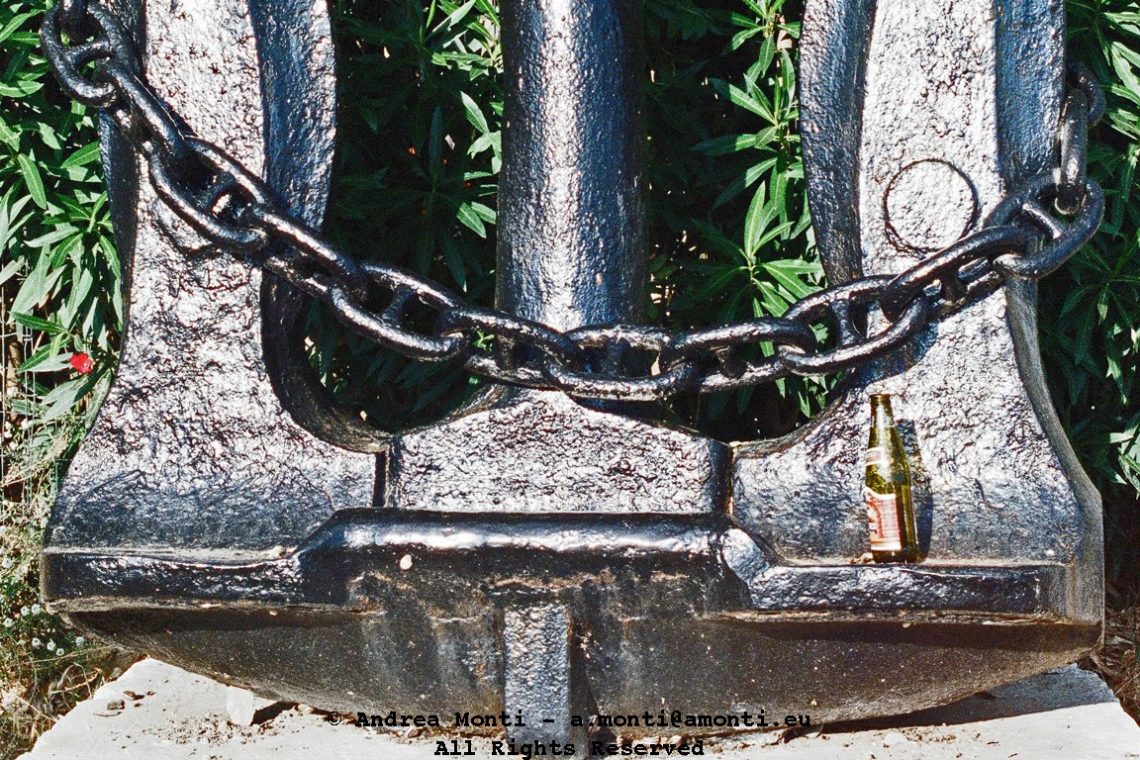
I photographed this anchor in bright sunlight, a massive piece of ironwork chained and set as a monument. What caught my attention, however, was not just the object itself but the casual intrusion of a beer bottle resting at its base. The contrast between permanence and ephemerality, between weight and disposability, was too striking to ignore. Compositionally, the frame is cropped tightly to remove distractions and place the focus squarely on the anchor’s texture and the bottle’s fragility. The dark chain arcs across the image, cutting a diagonal line that divides the weighty form. Against it, the amber glass sits small and almost ridiculous, yet it steals attention precisely because…
-
Efesto’s New Production Line
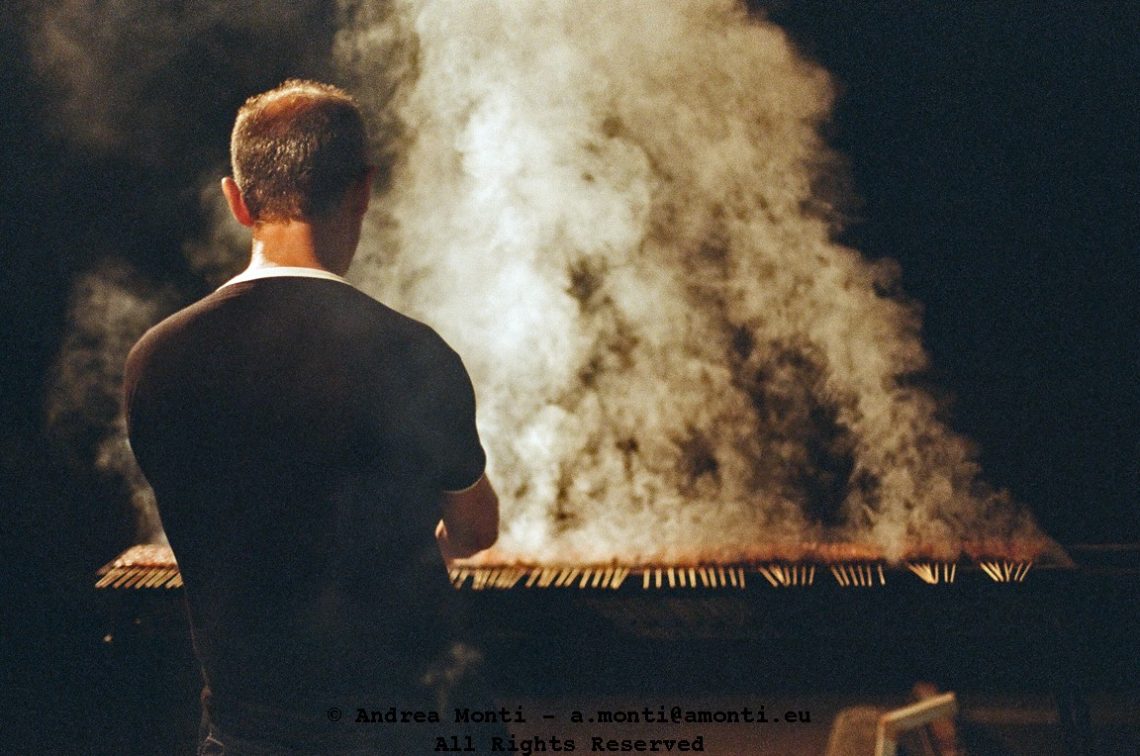
Just behind the barbecue master, the heat rose sharply and the smoke thickened into a shifting wall. The man stood at the centre of it, absorbed in the intensity of roasting slices of lambs, his back straight, shoulders tight, arms moving with controlled force. There was no theatrical pose—only concentration. From this angle, the scene feels more like a workshop than a stage.
-
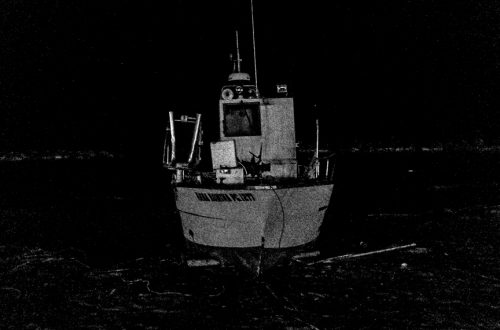
A Haunted(?) House
-
Urban Desolation
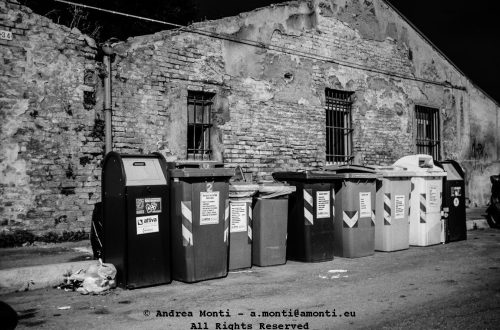
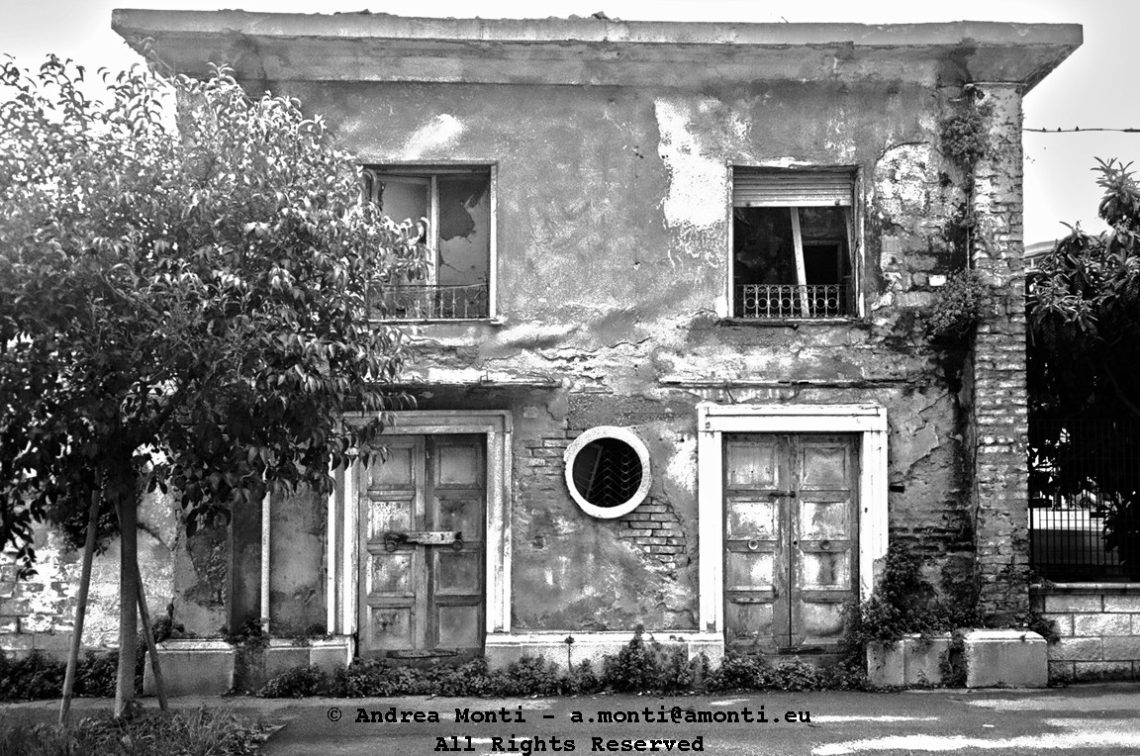
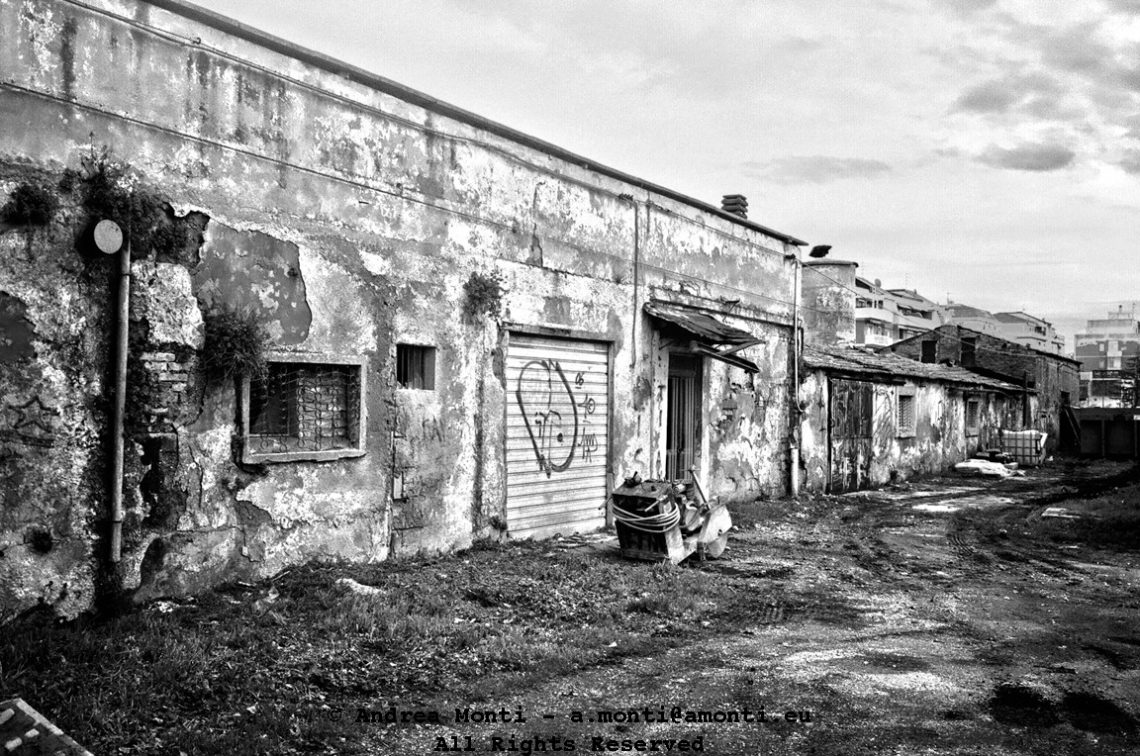
This photograph is part of a study I’ve been developing on marginal architecture—spaces neglected by urban development yet still clinging to presence. The building isn’t ruined in a picturesque way. It’s just exhausted. Scarred concrete, flaking plaster, and rusted grates stand as accidental testimonies of permanence beyond usefulness. I composed the frame to draw the viewer’s eye along the length of the structure, ending with the blurred outlines of new buildings in the background. The juxtaposition isn’t subtle—it wasn’t meant to be. These walls hold layers of past usage, from the makeshift repairs to the graffiti tags now fading like old memories. Technically, the photo rides a fine line between…
-
Ramping Up
-
Food For Thought
-
Via Collina, Empty, From Above
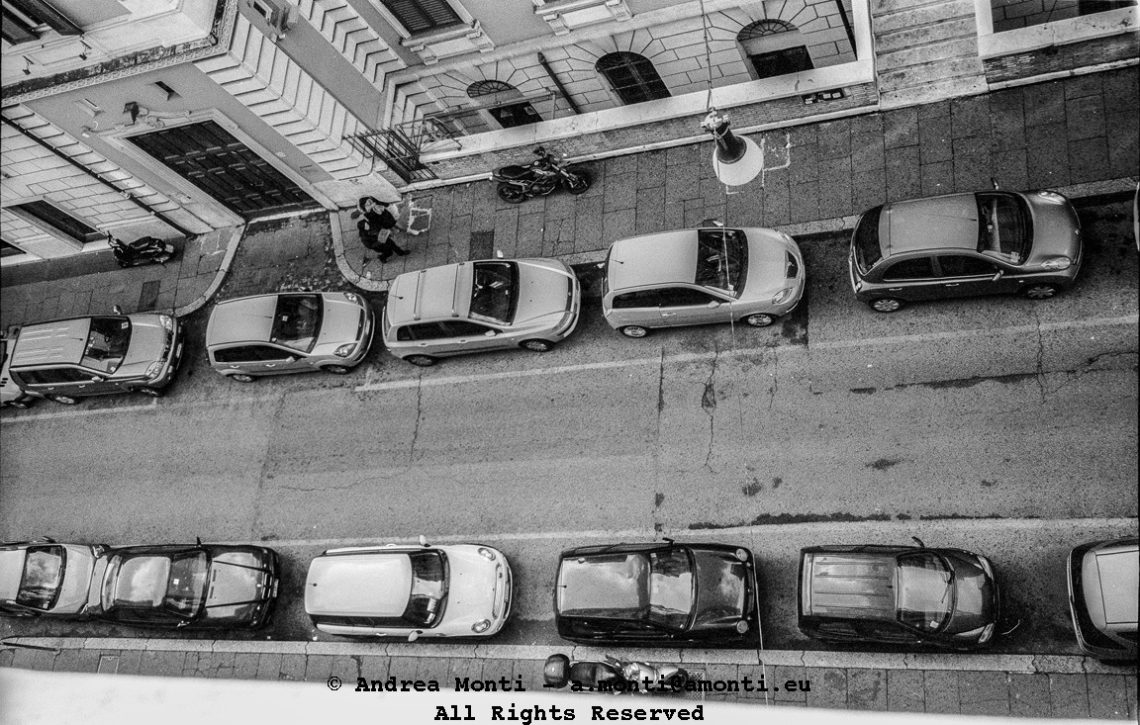
The perspective is vertical, as if leaning out and looking straight down. Cars line both sides of the narrow street, parked in strict succession, their roofs forming a patchwork of tones. The pavement and façades edge the scene, flattening into geometry under the camera’s angle. At the centre, however, the street itself is bare—an unexpected strip of emptiness in a crowded frame. Composition relies on symmetry and repetition. The rhythm of vehicles, rectangles of windows, and parallel lines of pavement create a structured grid. The lamppost, suspended on its wire, interrupts this order with a curve, offering a counterpoint to the rectilinear logic. Two pedestrians near the corner introduce scale,…
-
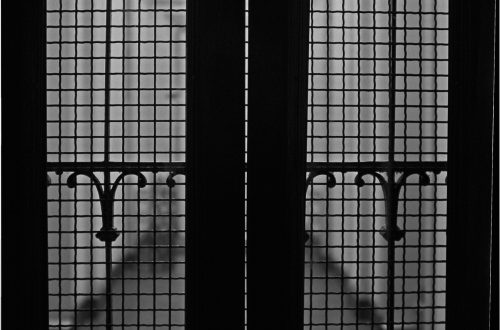
A Rusted Window