-
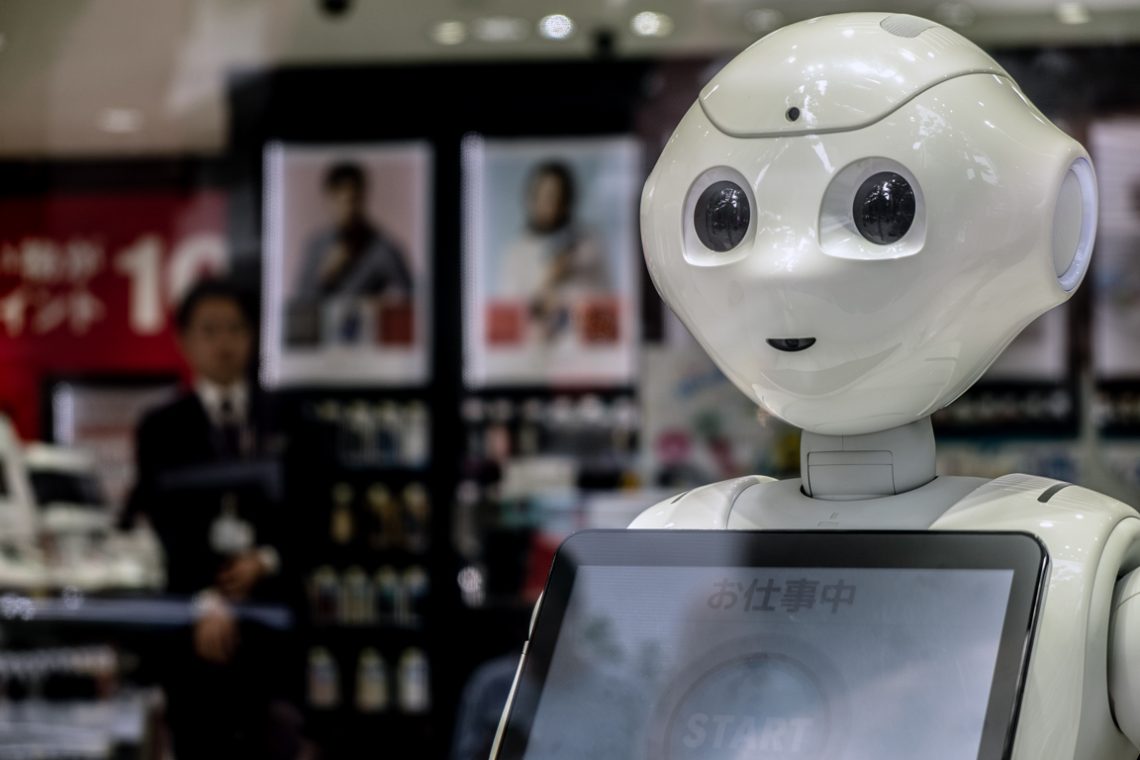
Shin Pepper@Harajuku
-
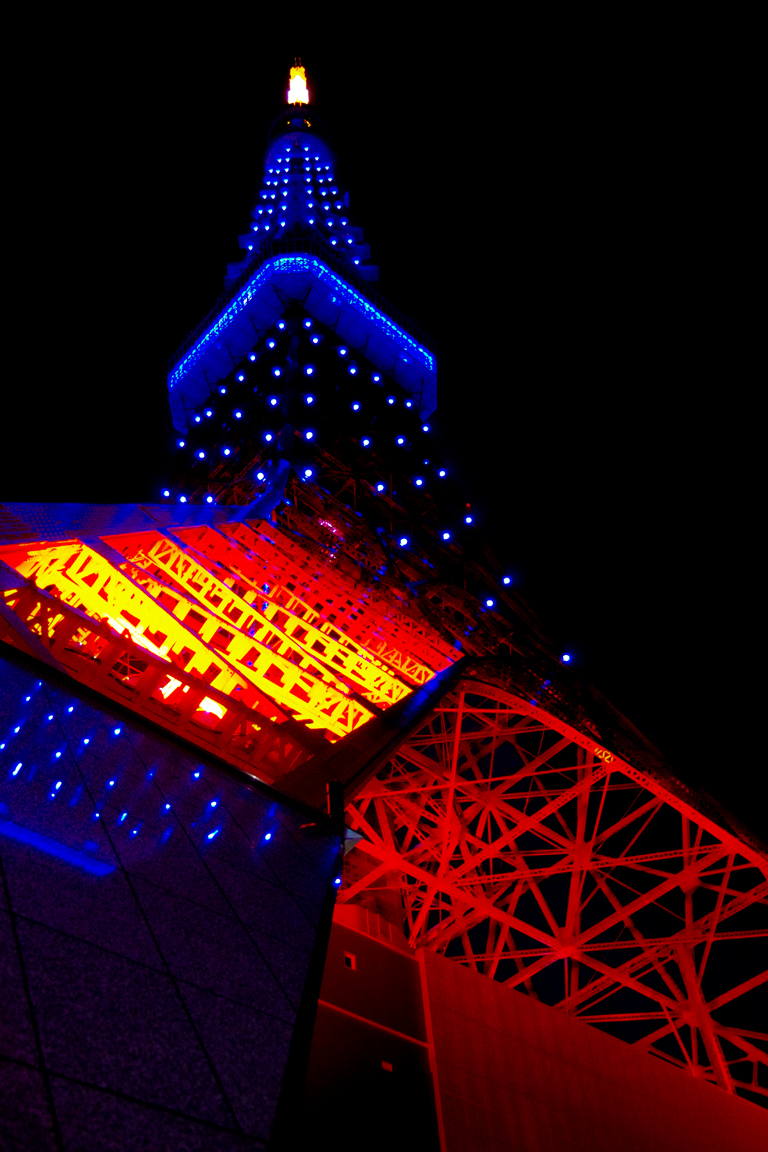
Yet Another Tokyo Tower Nightshot
It’s a cliché, and it knows it. Tokyo Tower, photographed countless times from every angle, under every sky, in every season. And yet—here it is again, demanding to be seen. This frame sidesteps the usual postcard treatment. Shot from below, the tower’s latticework bursts upward into the night, slicing through blackness with an almost aggressive geometry. The steel glows in saturated reds and yellows, while electric blue dots climb its spine like frozen sparks. The colour contrast is jarring, theatrical, impossible to ignore. What makes it work is the tilt. The camera’s skewed perspective turns the familiar into something unstable, almost vertiginous. The structure seems to lean, to lurch forward,…
-
The Commuter
He was already asleep when I boarded. Head bowed, earphones in, hands gently clasped over a leather bag as if the weight of his entire week rested beneath his fingers. The sun had just begun to bleed through the train window—flat and indifferent—casting the kind of unflattering, directional light that most photographers instinctively reject. But I didn’t. I raised my phone and shot. This isn’t a grand composition. It’s quiet. Framed tightly, perhaps even uncomfortably so, with the seat backs hemming in the edges and drawing the eye into the compact geometry of his body folded forward. The line of the armrest cleaves the image horizontally, a visual interruption that…
-
A Three Legged Commuter?
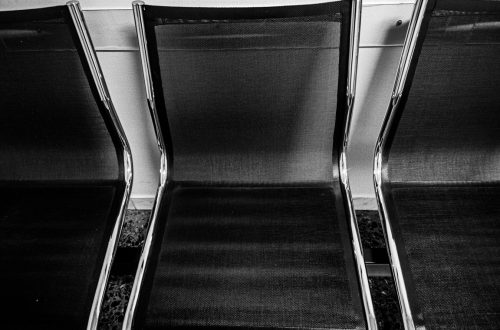
On the Shinkansen towards Kyoto, the camera is often seduced by speed: the promise of arrival, the glamour of engineering, the blur beyond the window. This photograph refuses that temptation. It turns inward, to the carriage’s ordinary theatre—seats, signage, texture—and finds its strangeness not in motion but in composition.
-
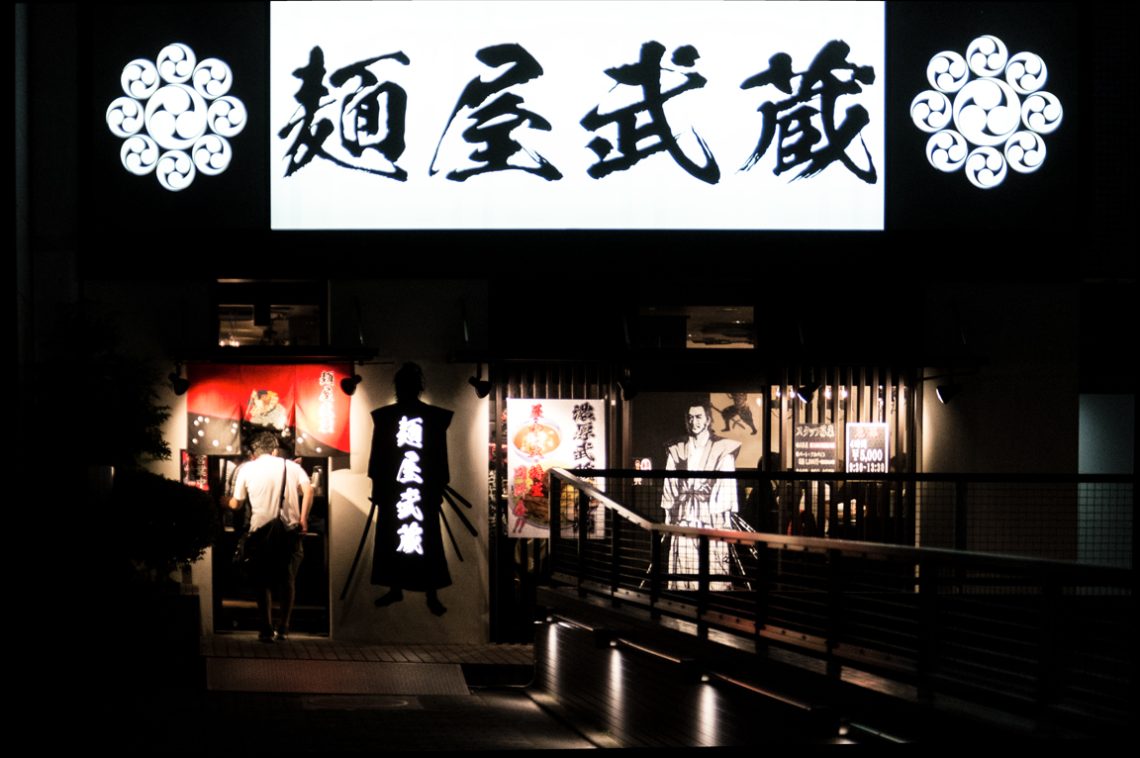
Restaurant or Killing House?
Taken in Tokyo, this photograph shows the façade of Musashi, a ramen restaurant, but the presentation is far from the warm, inviting atmosphere one might expect from an eatery. At night, under the glare of its signage, the scene takes on an ambiguous mood. The bold kanji, stark in black against an overexposed white panel, dominate the frame’s upper third, flanked by circular emblems. Below, the silhouette of a swordsman — rendered in cut-out form with glowing characters down the centre — adds an almost cinematic tension, more reminiscent of a samurai film poster than a dinner venue. From a compositional standpoint, the frame is split into strong horizontal bands:…
-
Addicted to (Nintendo) Switch
-
Waiting for the Shinkansen – 2
Tokyo Station is a place of constant movement, a rhythm of arrivals and departures so precise it borders on choreography. Yet, in the midst of this perpetual motion, there are moments of stillness — moments like this one. The young woman stands against a marble column, a vivid pink handbag in one hand, a green tea bottle in the other. The shinkansen, sleek and cream-coloured, is a quiet presence in the background, its windows reflecting the muted tones of the platform. Her gaze, directed somewhere past the camera, is calm yet unreadable — a mix of patience and expectation. From a compositional standpoint, the frame benefits from its vertical alignment.…
-
Every Single Day
-
Waiting for the Shinkansen – 1
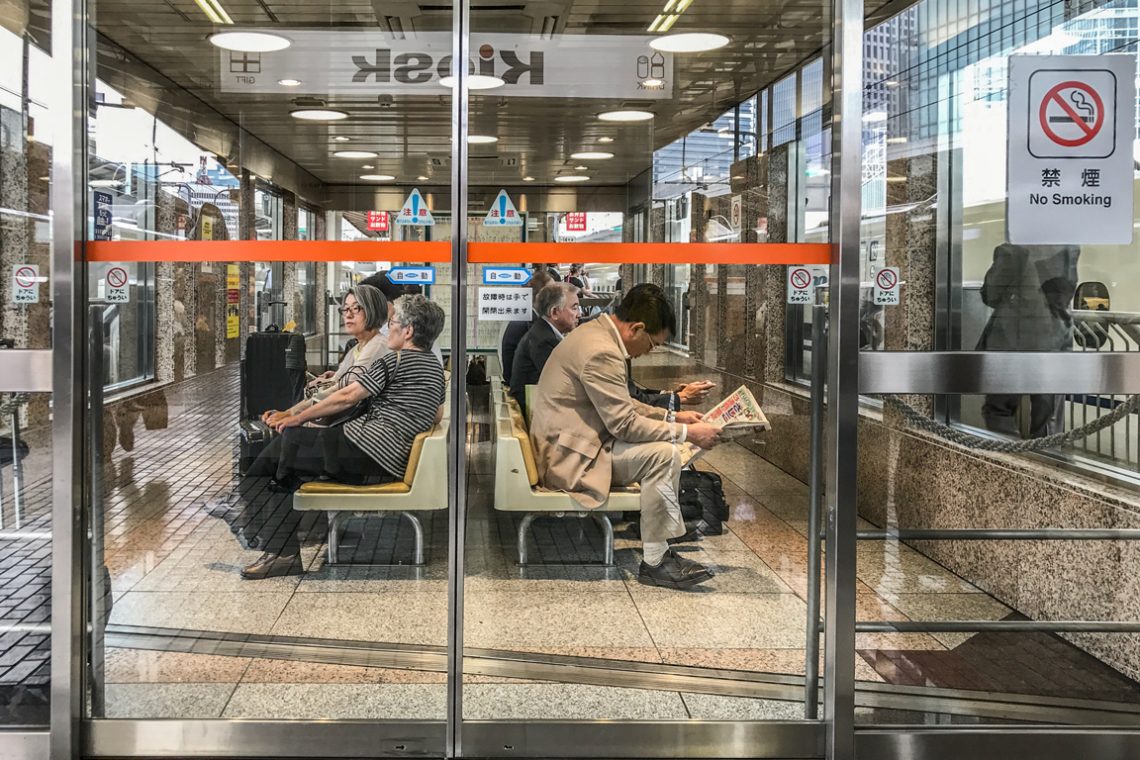
There’s a certain theatre in waiting rooms. The cast changes, the script is unwritten, yet the rhythm is always the same—an ebb and flow of arrivals, departures, and the suspended time in between. In Waiting for the Shinkansen, this sense of suspended animation is rendered with quiet precision. Framed through the glass walls of the station lounge, the photograph gives us a compartmentalised view into a small world sealed from the rush outside. The clear vertical lines of the door frames bisect the scene into distinct visual panels, almost like frames in a film strip, each containing a vignette of stillness: a pair of women in mid-conversation, a businessman absorbed…
-
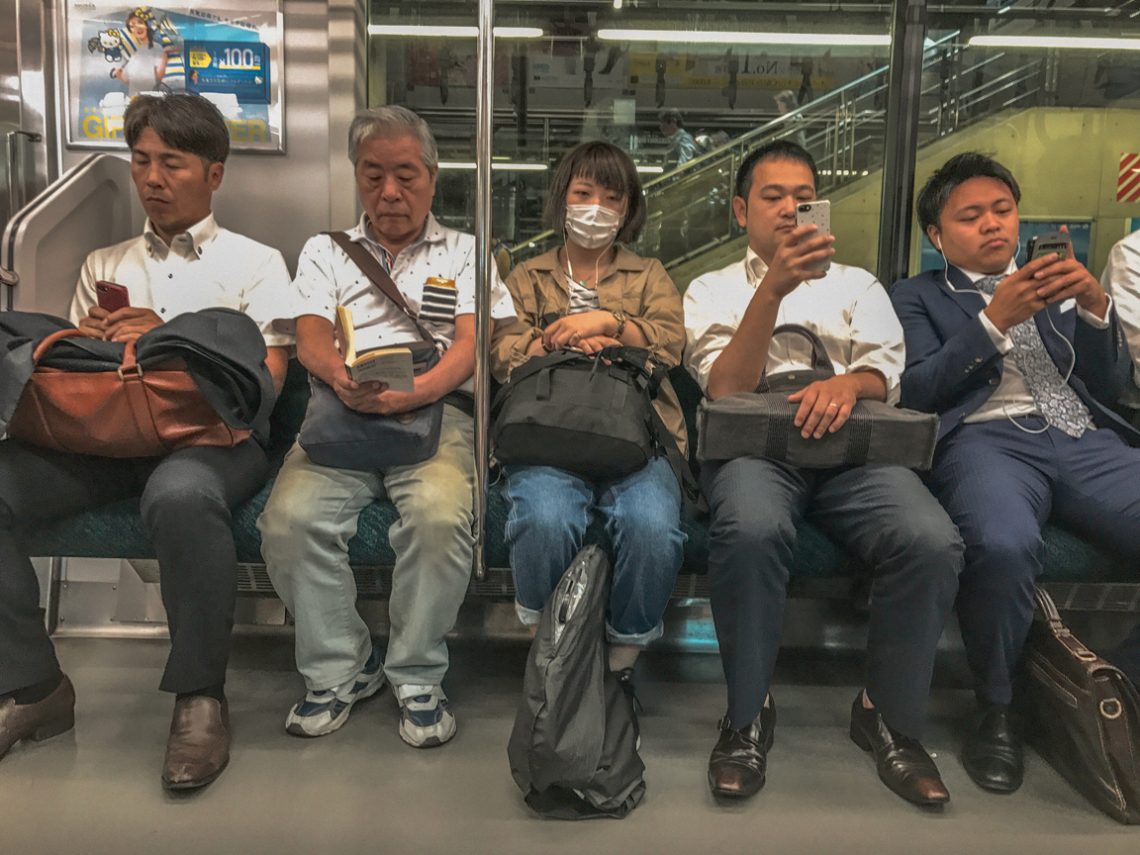
All Mobiles But One Book