-
The Bystander
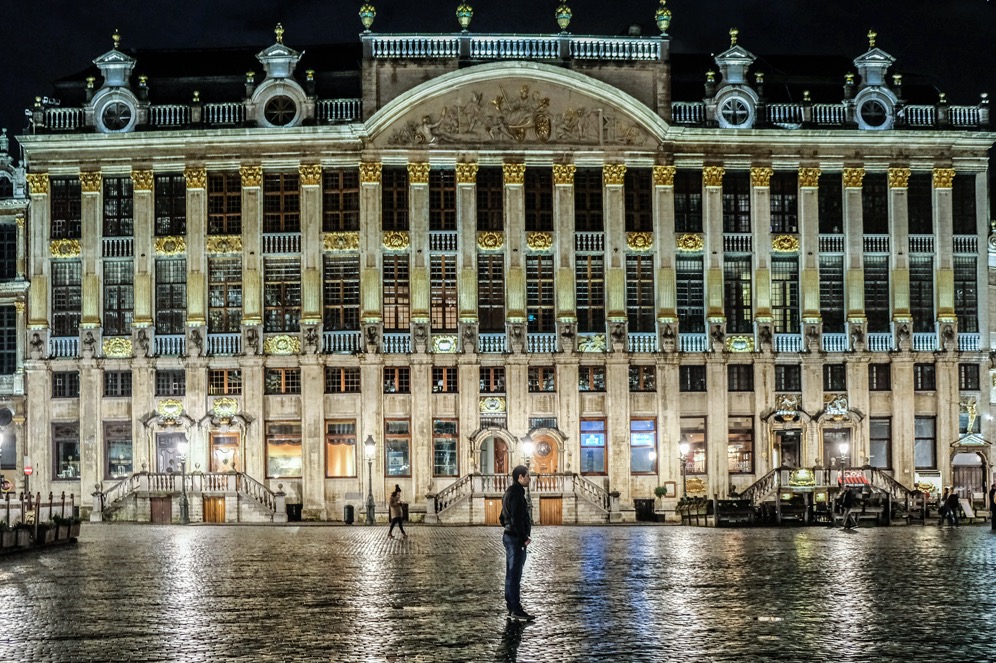
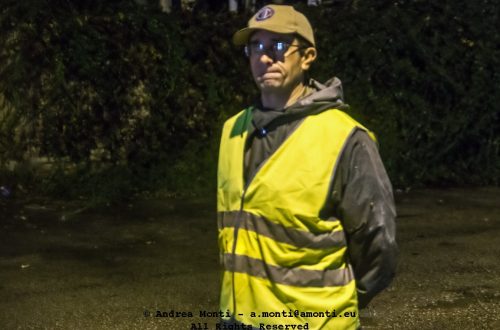
Standing in the Grand-Place at night, I waited for something—anything—to break the near-perfect symmetry. Then he arrived. The man didn’t pose. He just paused in the middle of the cobbles, framed squarely between the elegant baroque façades and the soft reflection of lamplight on wet stone. His silhouette gave scale and narrative to the grandeur behind him. Alone but not lonely, motionless yet in transit—he became the photograph’s axis. I shot handheld at high ISO. Noise was a concern, but the Nikon sensor held up. I retained the grain because it added texture to the shadows without crushing the blacks. Technically, this is a symmetrical composition, but it’s also layered:…
-
The Quiet Riot
-
Renovating Milan
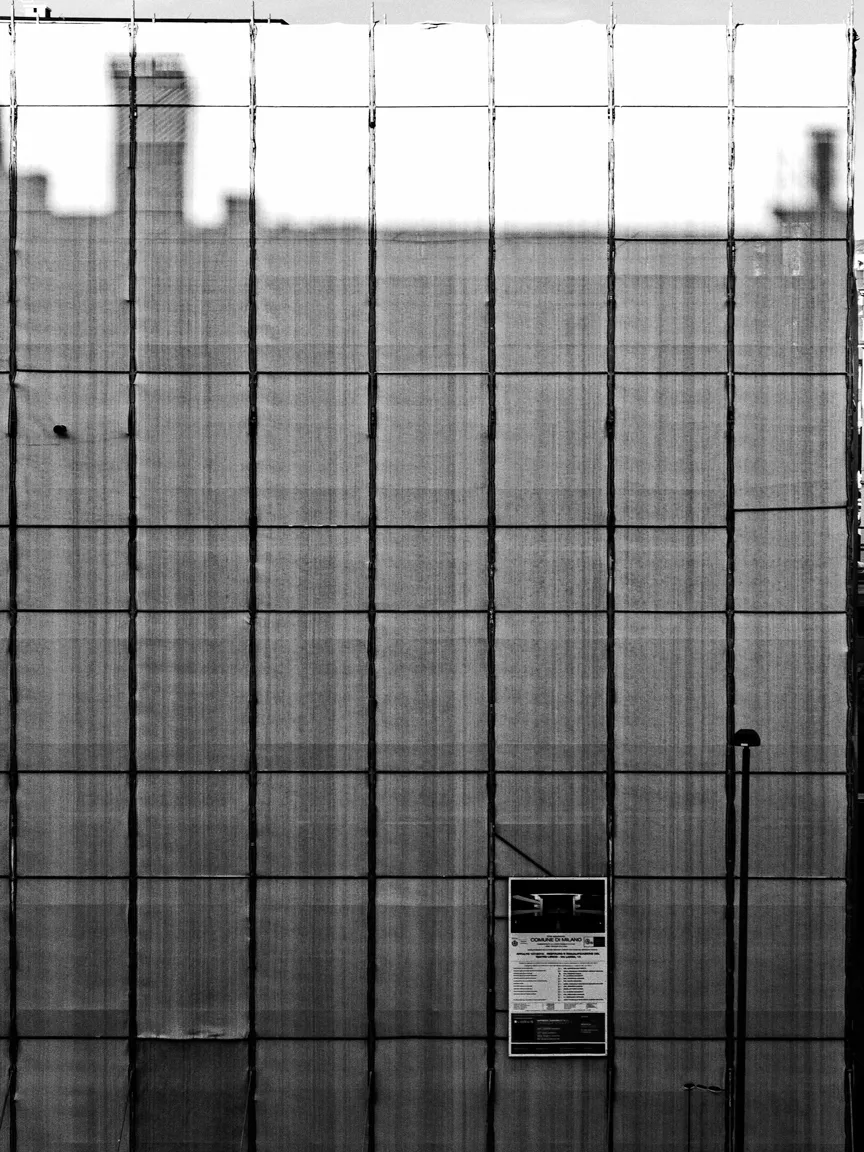
Milan, November 2017. A construction site—not the kind that demands attention, but the quiet kind that hides behind fabric and scaffolding. I took this photo walking past it for the third or fourth time. What stopped me wasn’t the building itself, but its ghost. Behind the mesh screen, the silhouette of the old façade still lingered, like a memory bleeding through fabric. Chimneys, outlines, the suggestion of windows. The city behind the curtain. At the bottom, the standard construction notice: printed bureaucracy stapled to metal, a reminder that change is always sanctioned, scheduled, structured. But the rest of the image resists clarity. Straight lines waver, verticals drift. Even the fence…
-
The Silent Ceremony
-
Red Cross
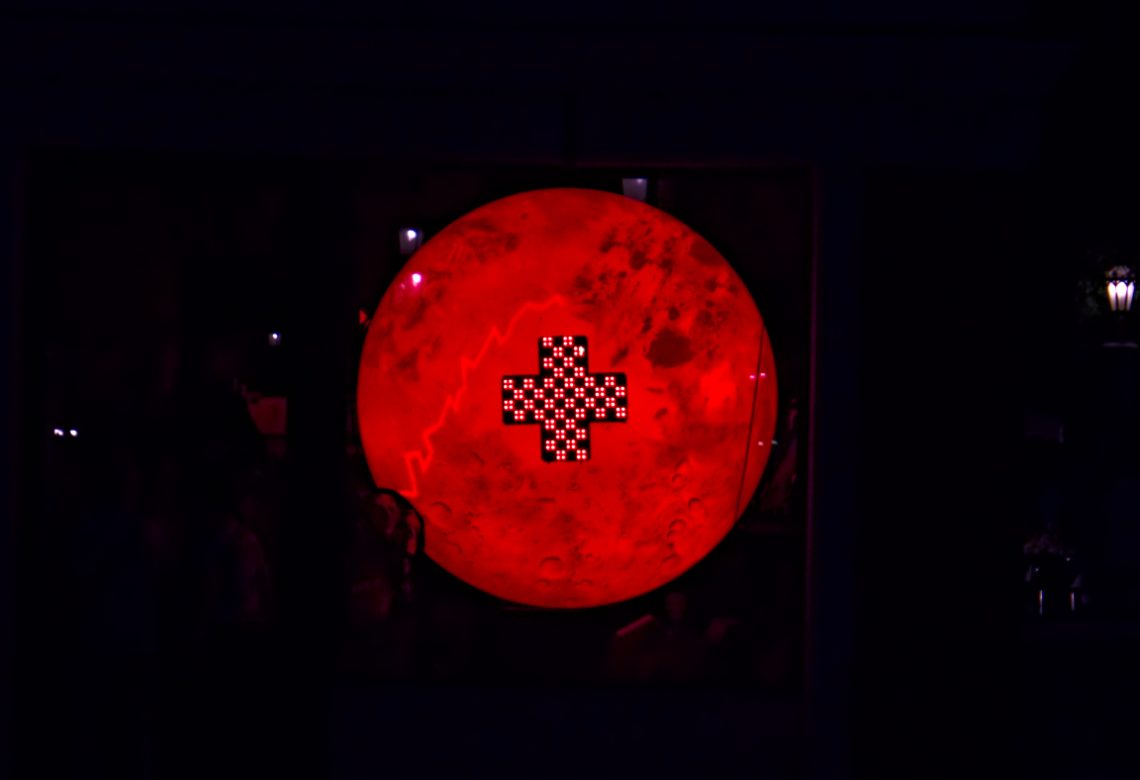
Some photographs are taken instinctively, almost without the usual premeditation that guides my framing. This one emerged from a walk at night, when the glow of an illuminated red circle caught my eye—a signal cutting through the darkness. At its centre, a cross of tiny LEDs blinked rhythmically, part medical icon, part abstract light sculpture. Framing it was straightforward: the dark surroundings worked like a natural vignette, pushing the viewer’s gaze towards the centre. I positioned myself to keep the circle symmetrical within the frame, knowing that the composition’s strength would lie in its stark simplicity. Technically, this was a delicate balance. Shooting at night with such a bright light…
-
Late Evening Break In Piazza Dante
-
An Essay on Light
-
An Essay in Composition
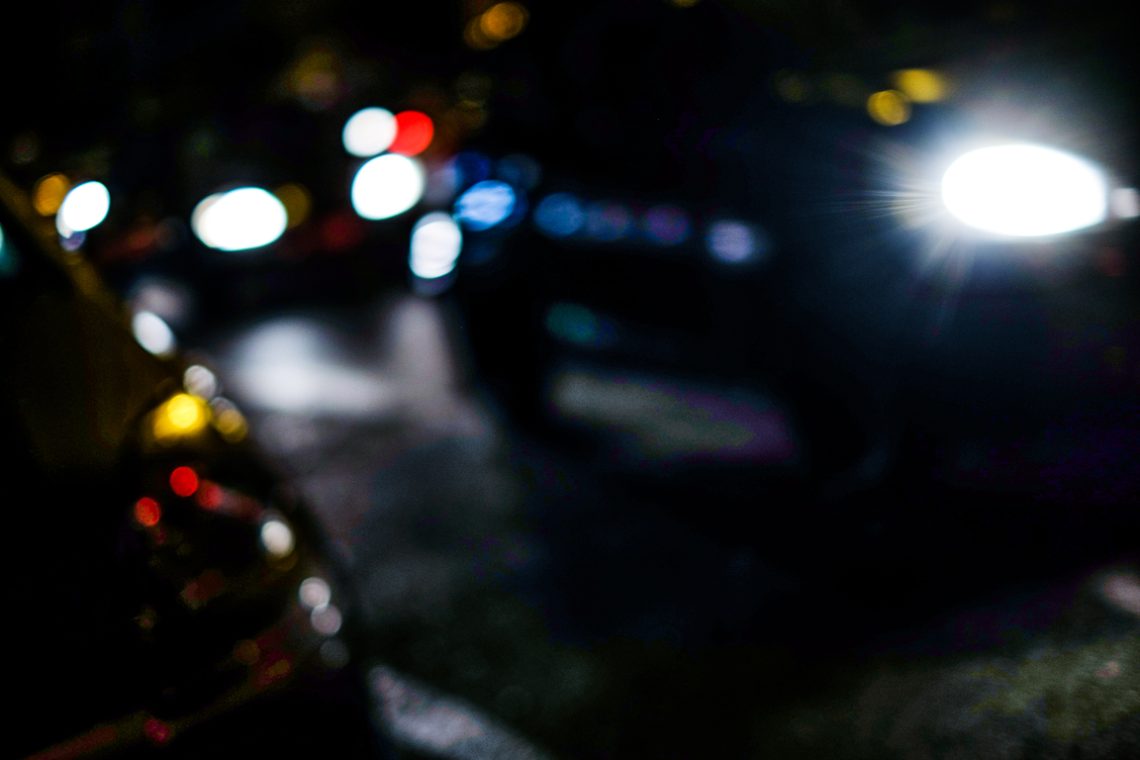
I made this image out of defiance. The street was a mess of cars, headlights flaring, bodies moving — and instead of chasing sharpness or narrative, I stripped it down to pure visual rhythm. Defocused on purpose. Not by mistake, not due to speed, but as a choice to let form take over function. What remains is balance. The white beam on the right anchors the frame, violent in intensity, flaring just enough to fracture the blacks. On the left, the warmer tones — yellows, reds, soft reflections in polished metal — counterbalance with weight and curve. The centre dissolves into suggestion. Light, motion, nothing literal. The street disappears. Technically,…
-
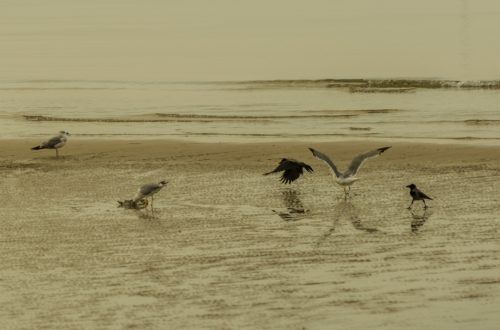
Damned Pidgeons…
-
The Aperitif
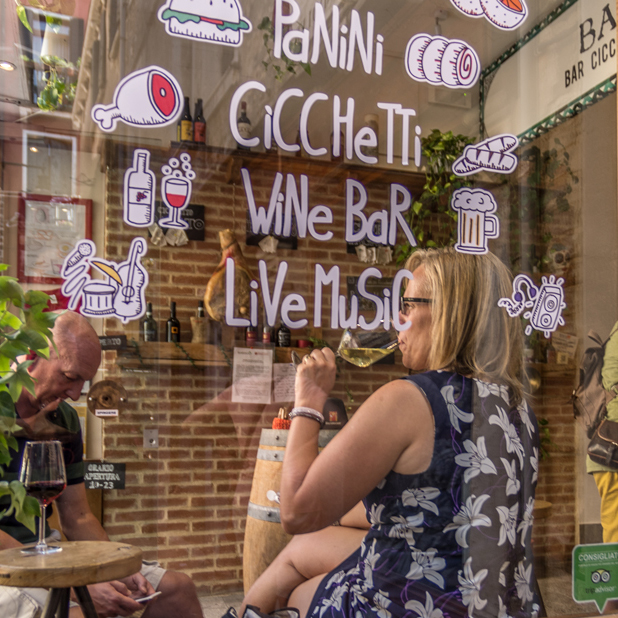
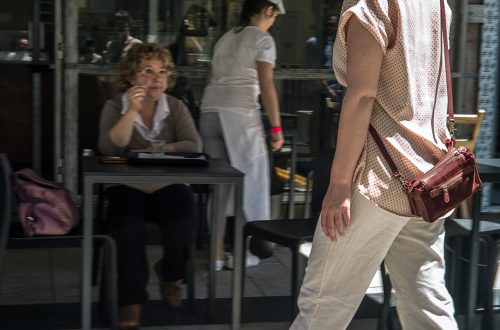
This image was taken quickly, just as I passed the window. What struck me wasn’t the act of drinking — which is unremarkable in itself — but the multiple surfaces at play. A woman in profile, lifting her glass; a man absorbed in his phone; reflections of pedestrians I didn’t see until after the shutter clicked. And then the writing — bold, cartoonish, childish even — floating across the image like subtitles with no film. I shot through the glass deliberately, without trying to erase myself or the distractions. The transparency becomes part of the narrative. The drawing on the window, playful and crude, contrasts with the subdued tones inside:…
-
The Prisoner’s View from the Sospiri’s Bridge
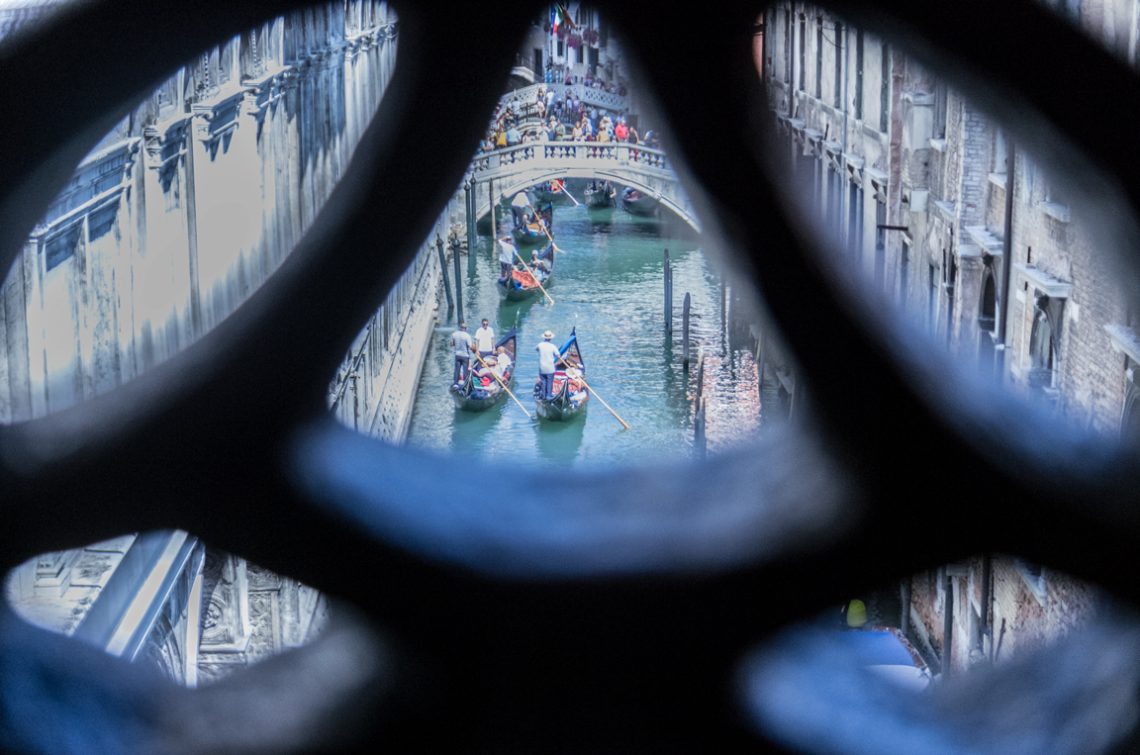
There is a certain poignancy in photographing through a barrier. The eye is forced to acknowledge not only what is visible but also the fact that the view is restricted, filtered, mediated by an obstruction. In this case, the lattice of stone from Venice’s Ponte dei Sospiri frames the canal beyond like an unwilling picture frame — one that speaks of confinement, not choice. From this vantage point, gondolas glide lazily beneath a small bridge, their passengers unaware of the weight of history pressing against the vantage point from which we watch them. The image is built on the interplay between sharpness and softness: the stonework in the foreground is…
-
Conversation
-
Seats
-
Natural Silohuette
-
The Glassmaster
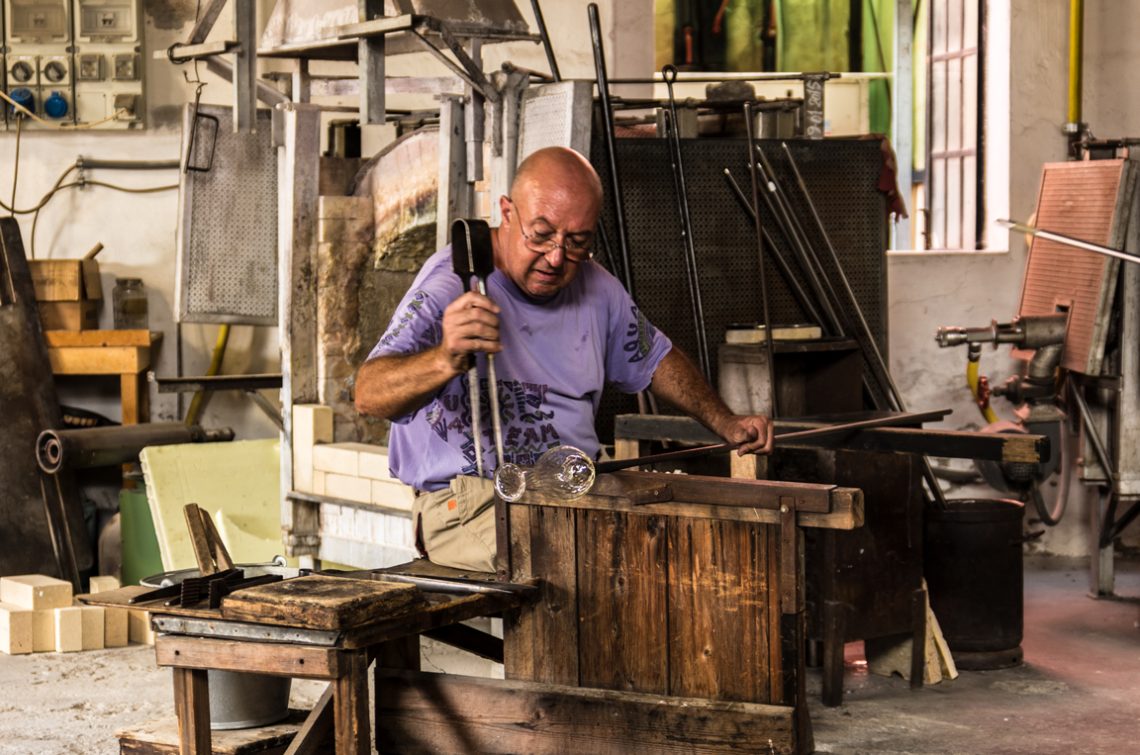
I took this photograph in a small workshop where the air was thick with heat and the faint scent of molten silica. The man at the bench was a veteran glassblower, his movements so fluid they seemed choreographed—every rotation of the blowpipe, every precise turn of the wrist, shaped the glowing mass at its tip into something delicate and exact. In composing the image, I wanted to give space to the environment. This wasn’t simply a portrait; it was a record of a craft. The cluttered benches, the brick furnace, the scattered tools—these were as much a part of the story as the craftsman himself. I framed him slightly off-centre,…
-
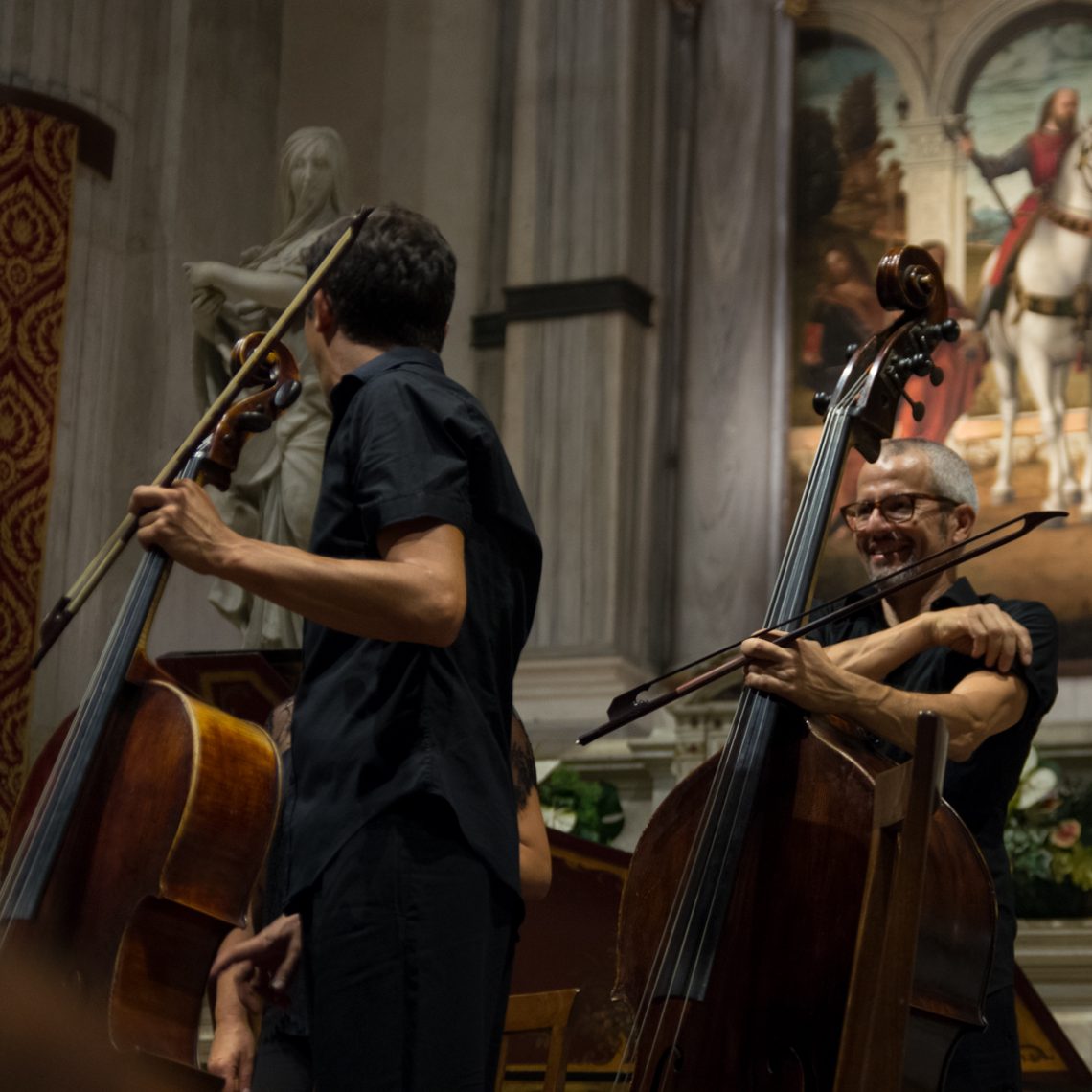
Interpreti Veneziani – Vivaldi’s Four Seasons Live@San Vidal
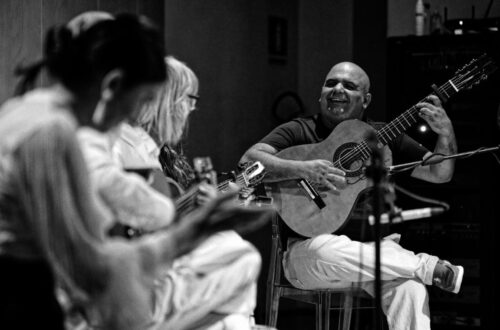
I took this photograph in the interval just after the final piece had ended. The applause was still fading, and the musicians were easing out of performance mode and back into themselves. That is the moment I am often most drawn to—the release, the unguarded shift from concentration to relief or quiet joy.
-
Yet Another Tokyo Tower Nightshot
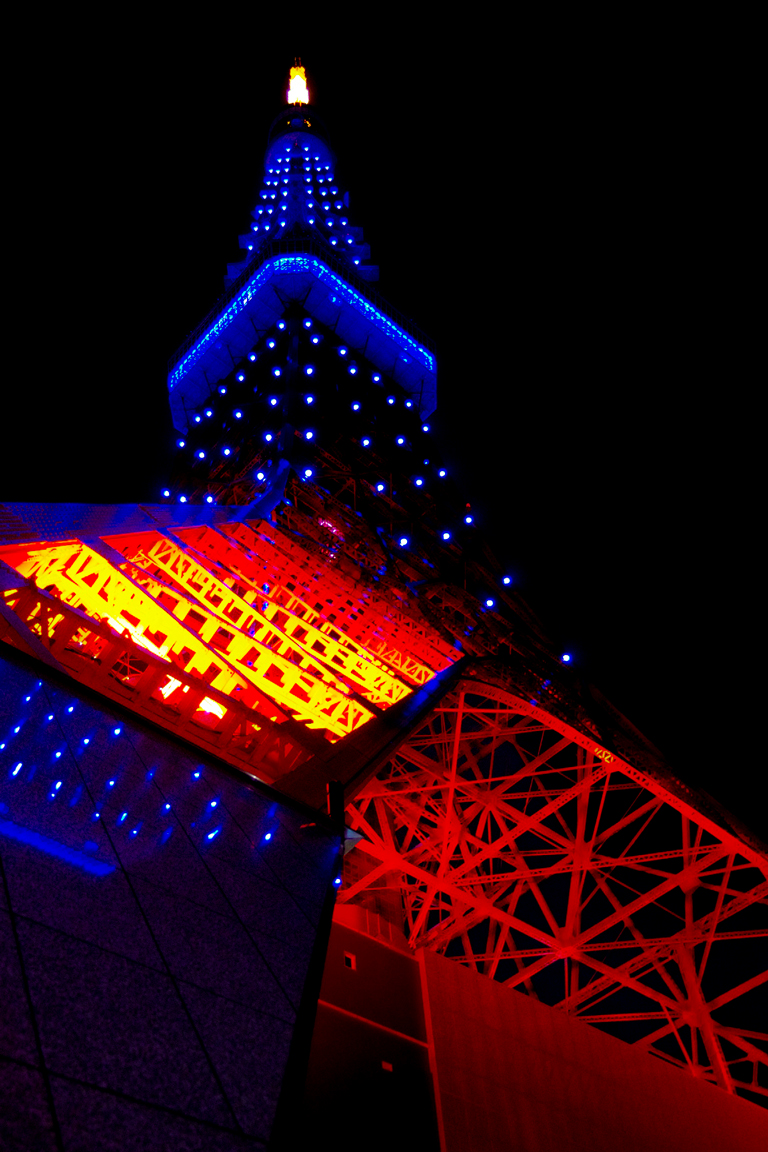
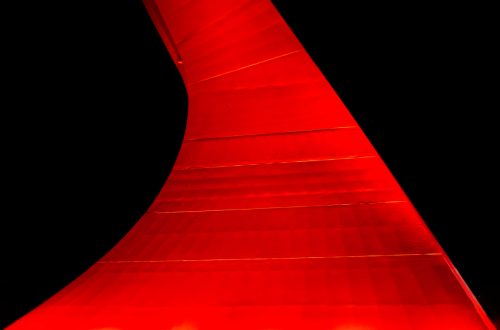
It’s a cliché, and it knows it. Tokyo Tower, photographed countless times from every angle, under every sky, in every season. And yet—here it is again, demanding to be seen. This frame sidesteps the usual postcard treatment. Shot from below, the tower’s latticework bursts upward into the night, slicing through blackness with an almost aggressive geometry. The steel glows in saturated reds and yellows, while electric blue dots climb its spine like frozen sparks. The colour contrast is jarring, theatrical, impossible to ignore. What makes it work is the tilt. The camera’s skewed perspective turns the familiar into something unstable, almost vertiginous. The structure seems to lean, to lurch forward,…
-
The Commuter
He was already asleep when I boarded. Head bowed, earphones in, hands gently clasped over a leather bag as if the weight of his entire week rested beneath his fingers. The sun had just begun to bleed through the train window—flat and indifferent—casting the kind of unflattering, directional light that most photographers instinctively reject. But I didn’t. I raised my phone and shot. This isn’t a grand composition. It’s quiet. Framed tightly, perhaps even uncomfortably so, with the seat backs hemming in the edges and drawing the eye into the compact geometry of his body folded forward. The line of the armrest cleaves the image horizontally, a visual interruption that…
-
A Three Legged Commuter?
On the Shinkansen towards Kyoto, the camera is often seduced by speed: the promise of arrival, the glamour of engineering, the blur beyond the window. This photograph refuses that temptation. It turns inward, to the carriage’s ordinary theatre—seats, signage, texture—and finds its strangeness not in motion but in composition.
-
Restaurant or Killing House?
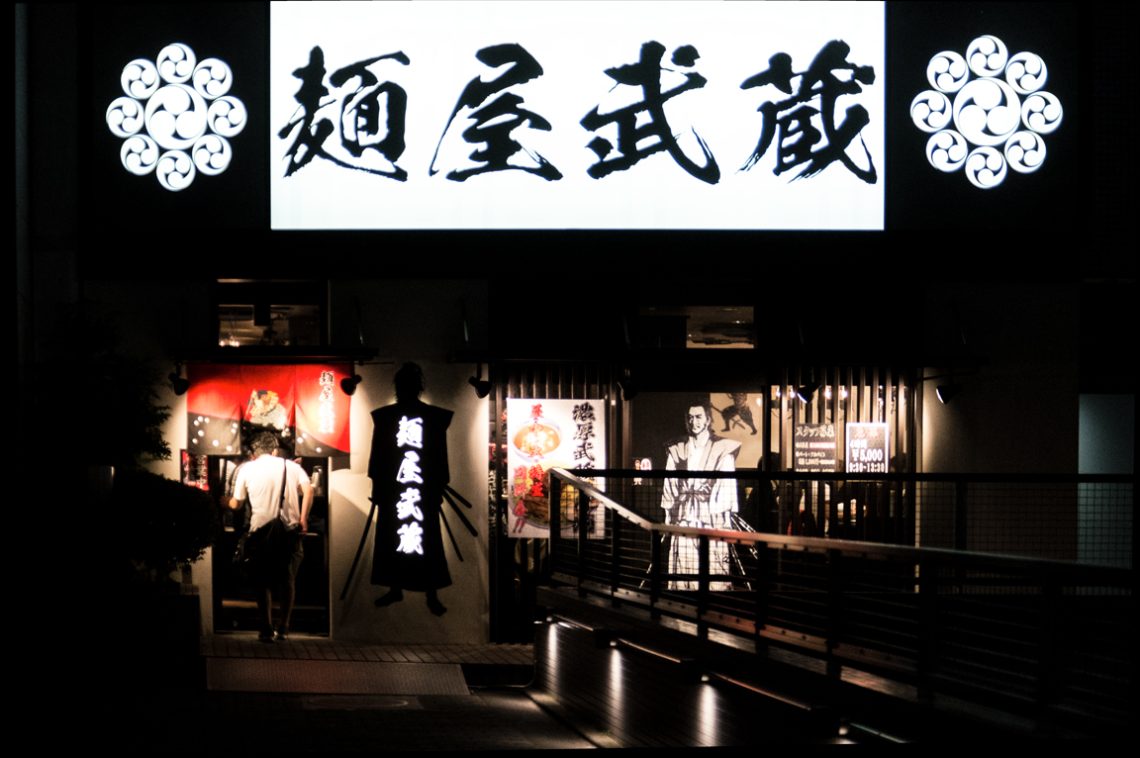
Taken in Tokyo, this photograph shows the façade of Musashi, a ramen restaurant, but the presentation is far from the warm, inviting atmosphere one might expect from an eatery. At night, under the glare of its signage, the scene takes on an ambiguous mood. The bold kanji, stark in black against an overexposed white panel, dominate the frame’s upper third, flanked by circular emblems. Below, the silhouette of a swordsman — rendered in cut-out form with glowing characters down the centre — adds an almost cinematic tension, more reminiscent of a samurai film poster than a dinner venue. From a compositional standpoint, the frame is split into strong horizontal bands:…
-
Addicted to (Nintendo) Switch
-
Waiting for the Shinkansen – 2
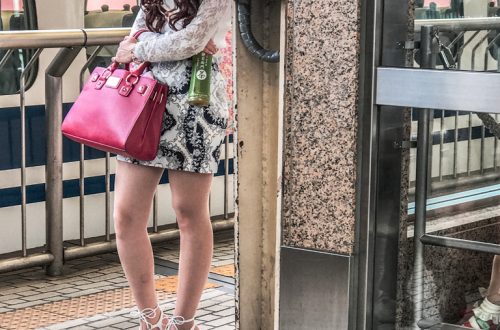
Tokyo Station is a place of constant movement, a rhythm of arrivals and departures so precise it borders on choreography. Yet, in the midst of this perpetual motion, there are moments of stillness — moments like this one. The young woman stands against a marble column, a vivid pink handbag in one hand, a green tea bottle in the other. The shinkansen, sleek and cream-coloured, is a quiet presence in the background, its windows reflecting the muted tones of the platform. Her gaze, directed somewhere past the camera, is calm yet unreadable — a mix of patience and expectation. From a compositional standpoint, the frame benefits from its vertical alignment.…
-
Every Single Day
-
Waiting for the Shinkansen – 1
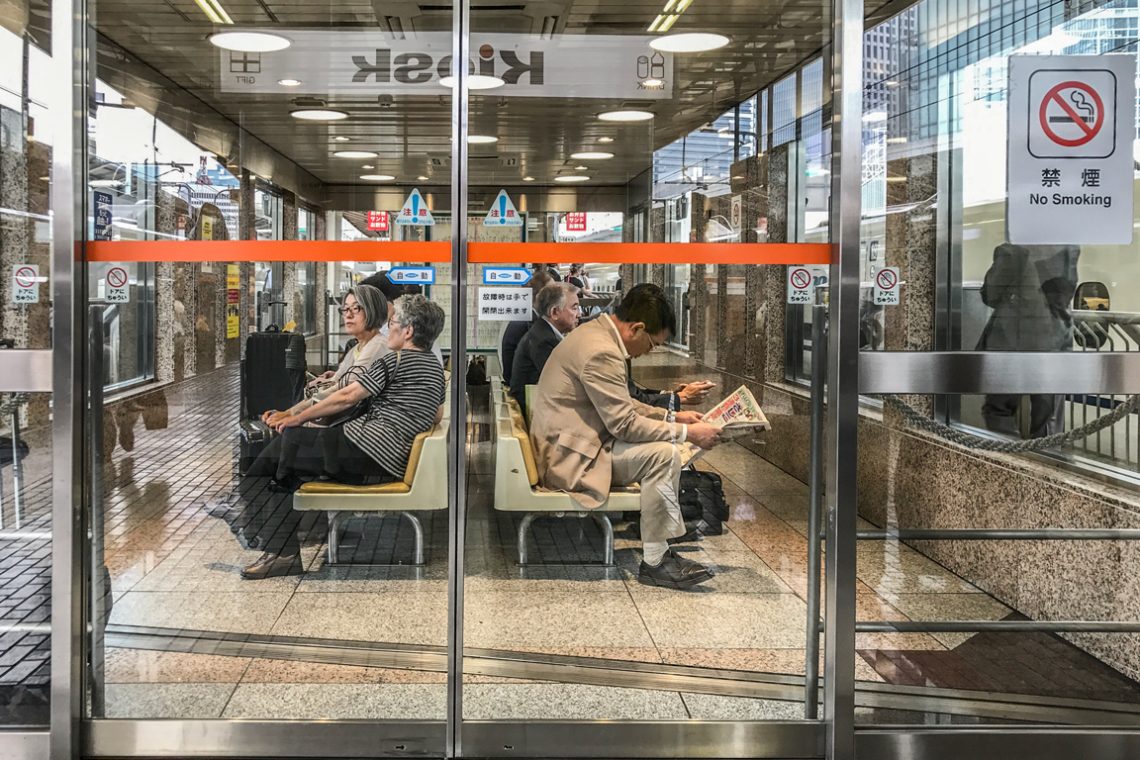
There’s a certain theatre in waiting rooms. The cast changes, the script is unwritten, yet the rhythm is always the same—an ebb and flow of arrivals, departures, and the suspended time in between. In Waiting for the Shinkansen, this sense of suspended animation is rendered with quiet precision. Framed through the glass walls of the station lounge, the photograph gives us a compartmentalised view into a small world sealed from the rush outside. The clear vertical lines of the door frames bisect the scene into distinct visual panels, almost like frames in a film strip, each containing a vignette of stillness: a pair of women in mid-conversation, a businessman absorbed…