-
Parisian’s Bags
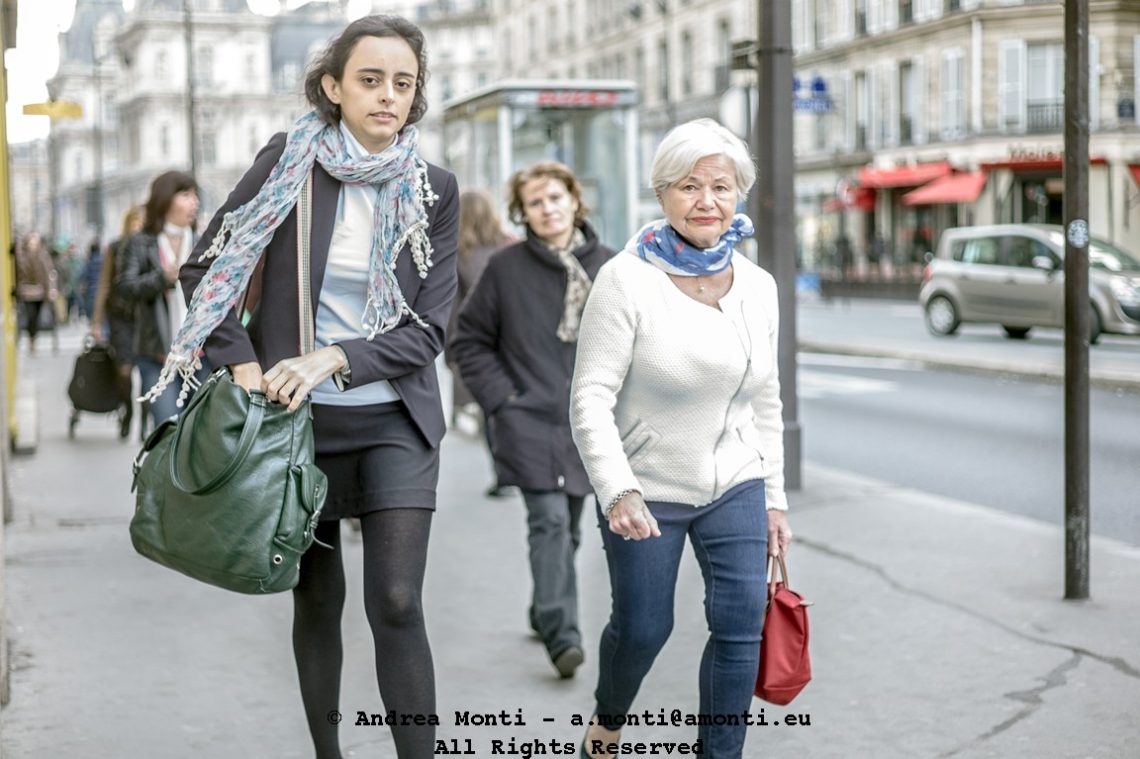
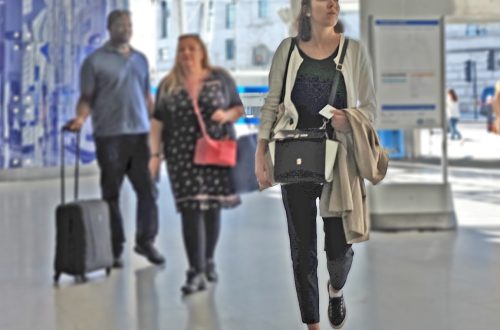
On a brisk afternoon in Paris, the pavements fill with people moving at slightly different speeds, each carrying the traces of their own direction. What drew me to the scene was the convergence of three figures—unrelated to each other yet momentarily aligned—walking toward me with distinct rhythms and expressions. Their presence formed a kind of spontaneous procession, defined not by ceremony but by the simple momentum of city life. The woman on the left moved with purpose, her large green bag swinging in counterbalance to her stride. The scarf softened the sharp lines of her businesslike outfit, adding a touch of looseness to an otherwise structured silhouette. The woman on…
-
Perfect Strangers
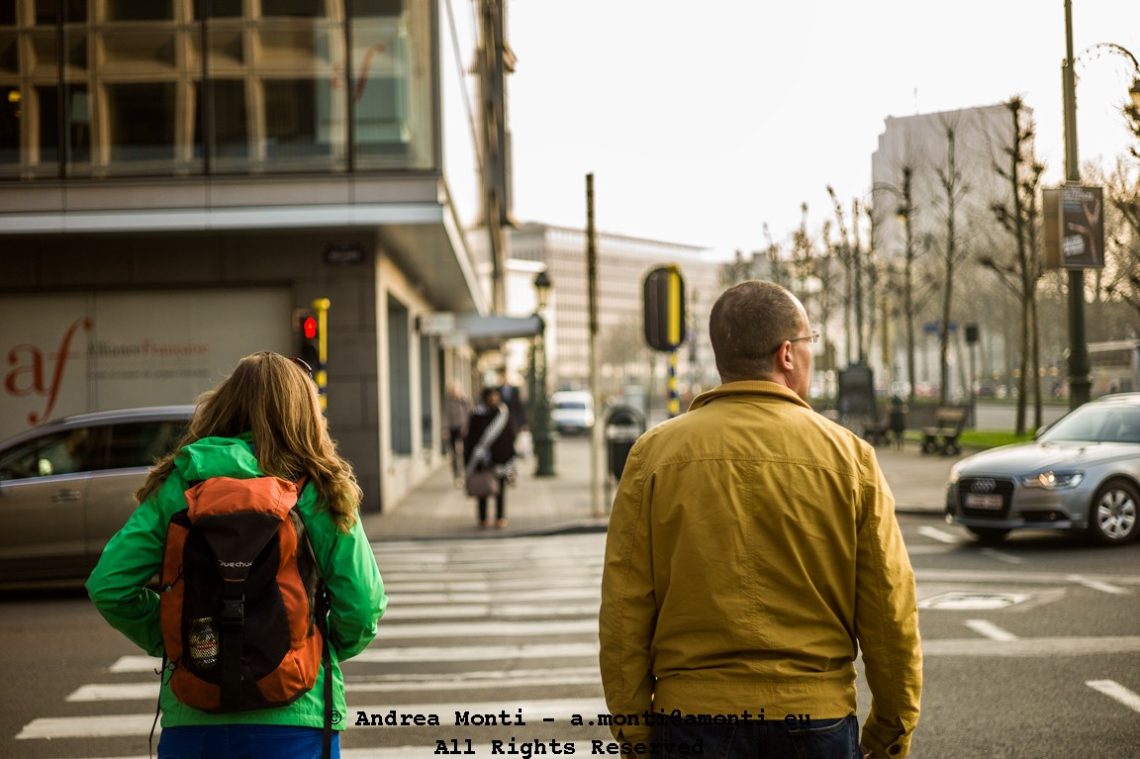
This was shot at a crossing in Brussels. Late afternoon, golden hour starting to lean into haze, and the kind of sidelight that makes the most mundane street scenes feel sculptural. I wasn’t looking for a story—I was just following the light. What I got instead was this: two people, frozen in proximity, framed by urban geometry and indifferent routine. They didn’t know each other. That much was clear. No shared glances, no body language suggesting connection. Just two people waiting for the light to change, locked in that brief, suspended moment before movement resumes. But visually, they worked in tandem—her neon green jacket, his mustard ochre coat, both cutting…
-
National Security
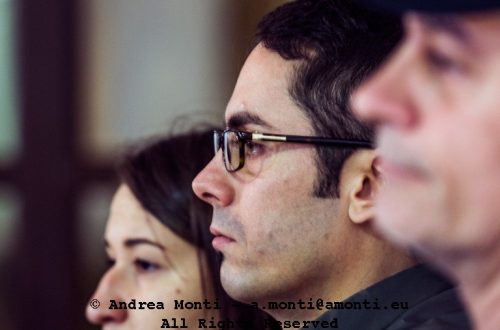
A danger for the National Security? This picture is nothing special, but for the fact that while I was taking it a security guard at the European Parliament tried to stop me on the “National Security” excuse, by claiming that photos were not allowed. Minding the lesson of “Stand your ground” I countered politely the requests of the guard, by telling him: – First: shooting in public spaces is perfectly legal, – Second: there where no “no-photos allowed” signs, – Third: “I am a lawyer and a journalist. I checked both EU and Belgian Law and find nothing that could prevent me to do what I am doing. Could you…
-
Skating on Avenue Louise
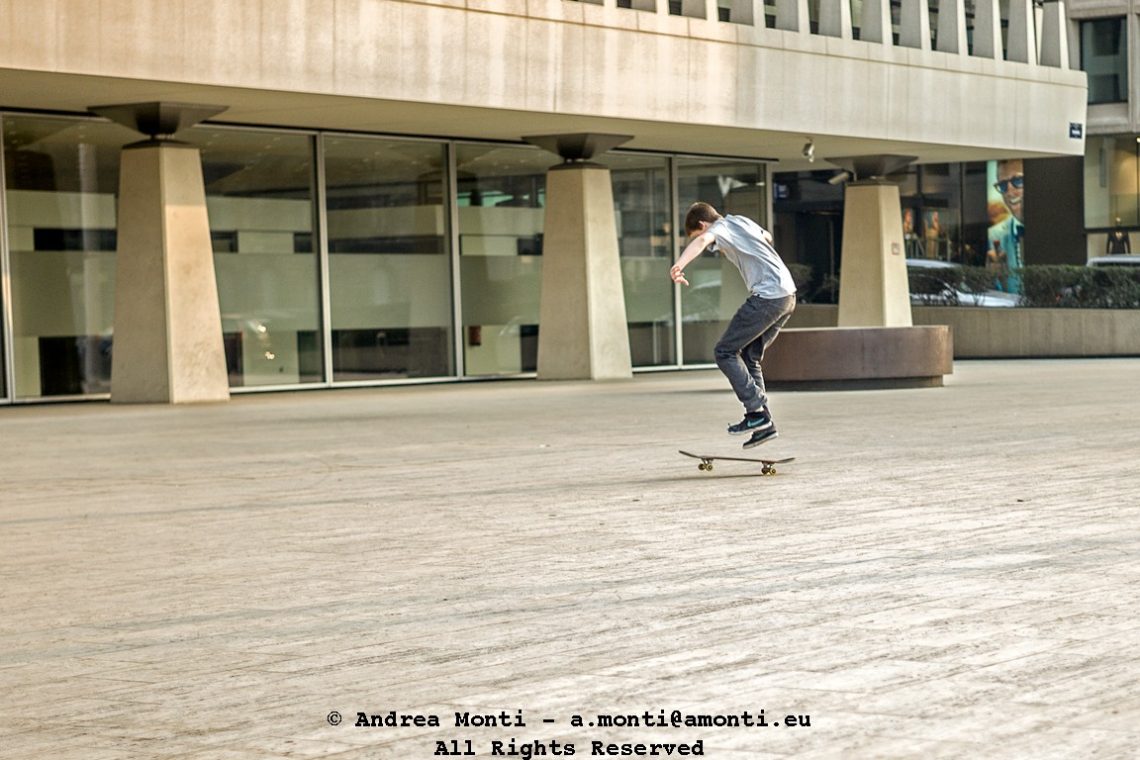
The architecture of Avenue Louise is built to impress — symmetrical, imposing, wrapped in glass and concrete. It speaks the language of power, efficiency, and institutional gravitas. Yet here, cutting across the uniformity of its grid, a lone skateboarder defies gravity and symmetry alike. In mid-air, suspended between takeoff and landing, the young skater rewrites the function of space. This plaza wasn’t designed for movement like his — spontaneous, raw, unruly — yet it hosts it with unexpected grace. The stark concrete façade becomes a backdrop, not a boundary. This is the city as canvas, the act of skating as resistance and reinterpretation. While others walk briskly from meeting…
-
Hanging Heart at via Olmetto
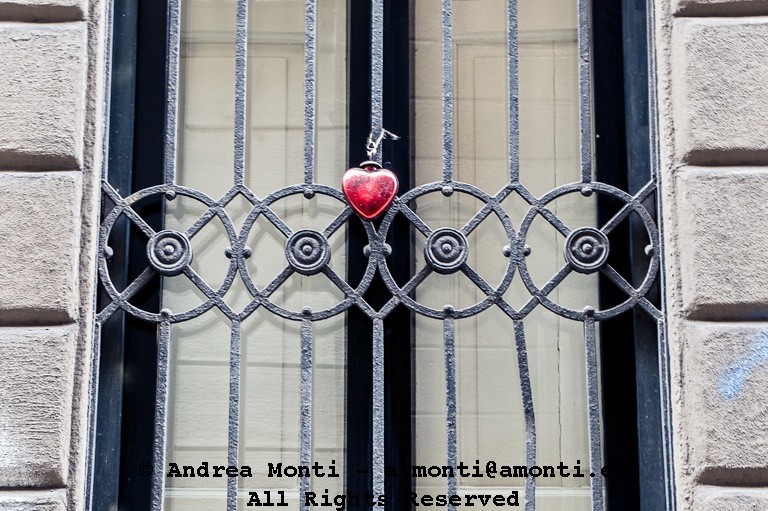
Taken in Milan, this photograph is built around a single point of chromatic and emotional focus — a small, glossy red heart suspended from the centre of an ornate iron grille. The restrained colour palette of the stone façade and dark metalwork works to its advantage, ensuring the heart becomes a magnetic anchor for the viewer’s gaze. The pattern of the wrought iron, a chain of interlocking circles bisected by vertical bars, lends the image symmetry and rhythm, subtly broken by the heart’s irregular organic shape. The composition is tightly framed, allowing no distraction from the relationship between object and setting. The verticals of the grille are aligned with precision,…
-
A
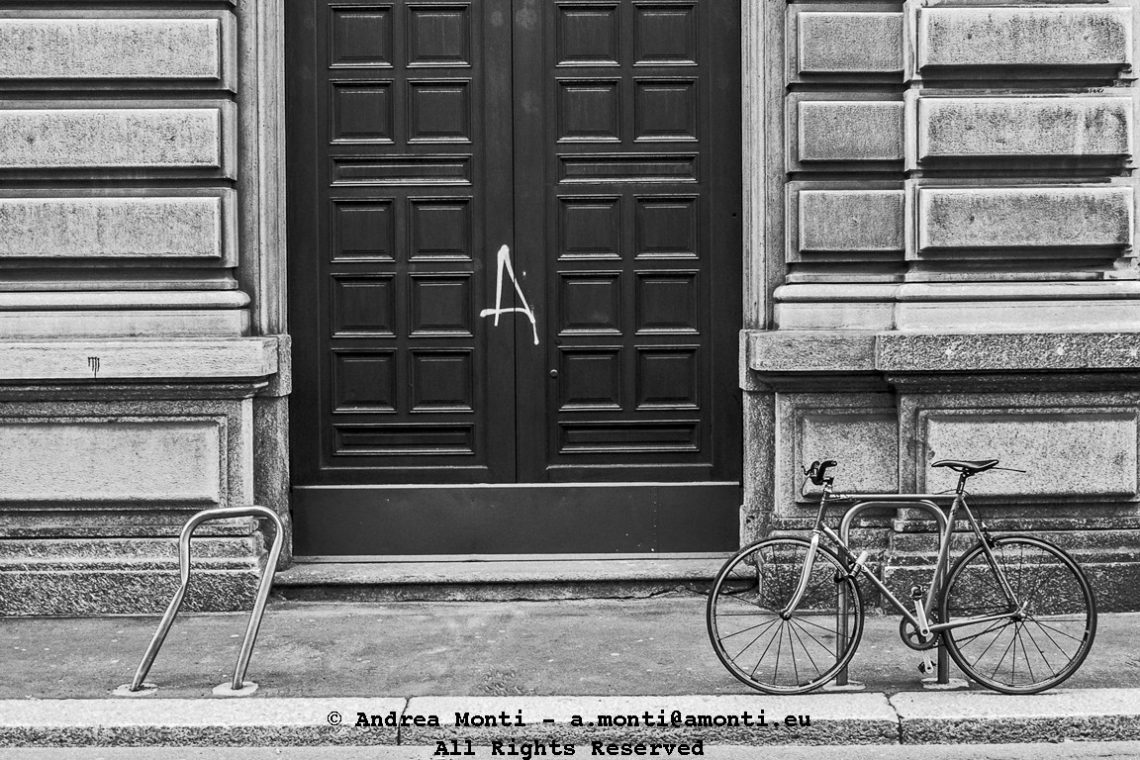
Some photographs are built on complexity — overlapping narratives, layered subjects, visual chaos distilled into coherence. This one is built on the opposite: a single, dominant letter and the deliberate restraint of elements. The capital “A” scrawled across the double wooden doors becomes both subject and statement. Whether an anarchist mark, an initial, or just a passing act of vandalism, it punctuates the otherwise rigid, formal architecture. The geometry of the building — rectangular panels, horizontal mouldings, the granite base — forms a rigid grid, and into this grid the bicycle is quietly inserted, its own triangles and curves breaking the dominance of the rectangles without challenging their order. Technically,…
-
Off-Duty Eurocrats in Bruxelles
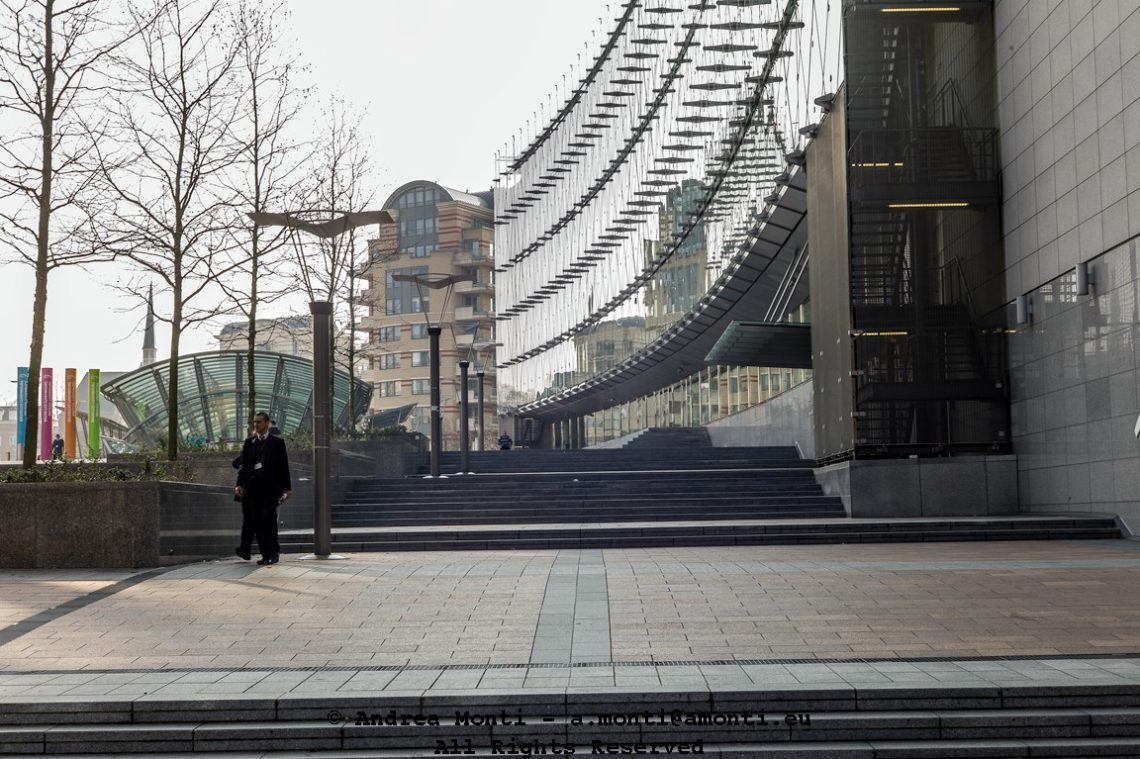
Late afternoon outside the European Parliament is a curious time. The intensity of the day’s debates, meetings, and bureaucratic rituals evaporates into the chill air, leaving behind something more recognisably human. I caught this scene as the sun was sinking, the light flattening into that pale, slightly diffused wash Brussels often wears in winter. I framed the shot to emphasise the contrast between the rigid geometry of the architecture and the small figure of the man stepping into the foreground. The curved glass façade on the right dominates, its repeating elements pulling the eye deeper into the image. The building almost seems to lean forward, pressing its presence into the…
-
Tour Saint-Jacques, Standby
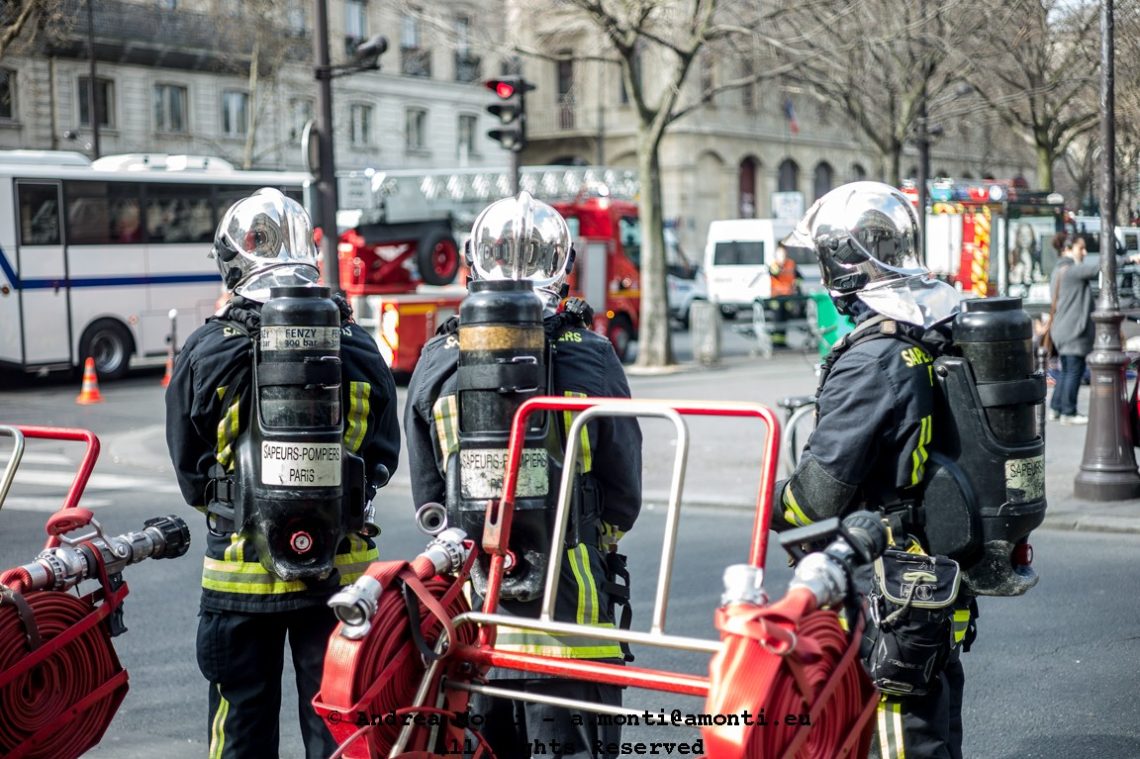
Paris, the city of light, reflects off the polished chrome helmets of the sapeurs-pompiers. The firemen stand poised, immobile but ready. Their posture does not betray fatigue, nor doubt—it’s the stance of trained patience, of focused anticipation. This image captures a moment between action and calm. The fire hoses lie coiled with potential energy, valves shut, mechanisms still untouched. Behind them, the urban rhythm carries on: buses glide, pedestrians move, the sirens wait. The presence of the firefighters, framed by the bustle of Haussmannian façades and traffic, signals that something mighthave happened—or almost did. The mirrored helmets become metaphors themselves. They do not just shield: they reflect the world around them. Their function is…
-
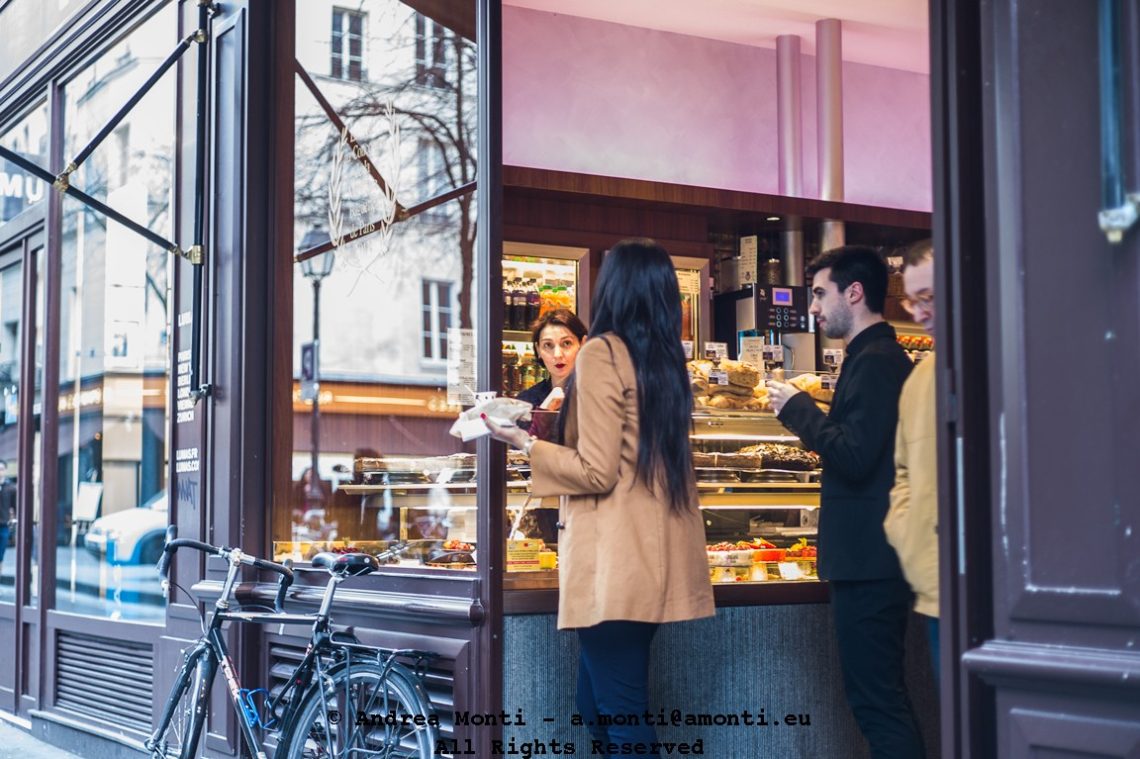
Breakfast at Rue Brisemiche
-
Mid-Morning Break at Place Jourdan
-
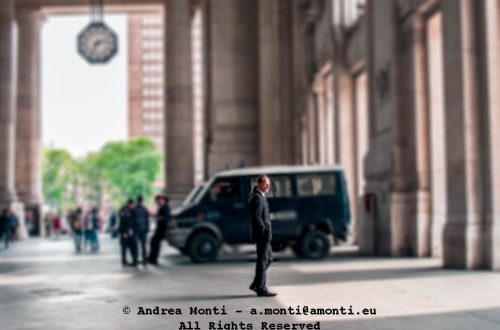
Early Leave at Bruxelles-Midi
-
Walking Table in via Cornaggia
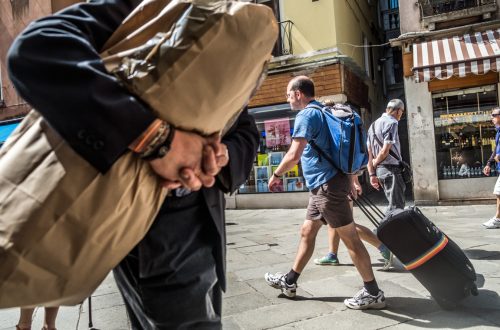
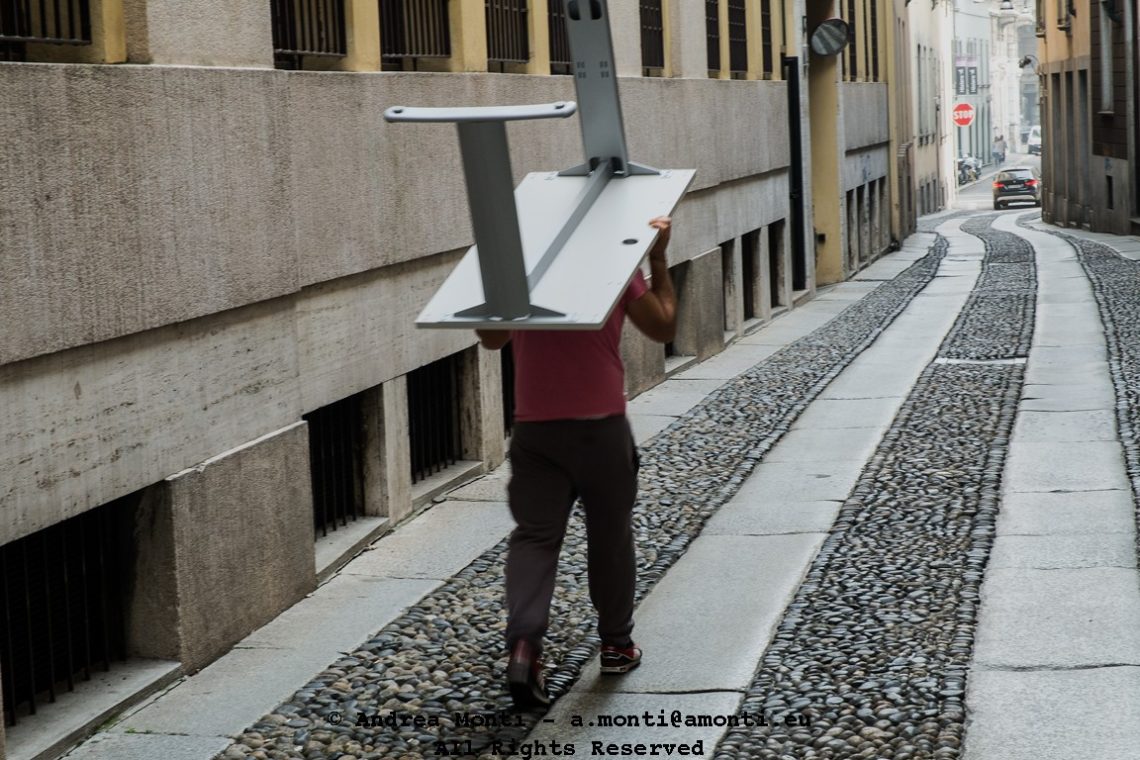
Via Cornaggia in Milan is not a place one usually associates with humour in photography, yet this image carries an almost surreal tone. A man strides down the cobblestone street, carrying a table on his shoulders, its legs pointing skyward like some awkward sculpture. His face is completely obscured, leaving only body language and context to speak for him. The everyday act of transporting furniture becomes, in this frame, an absurd visual gesture. The narrow perspective of the street enhances the composition. The converging lines of the walls and cobbled path guide the eye directly to the man, amplifying his centrality within the scene. The geometry of the table mirrors…
-
Hard Choice In Quai de la Corse
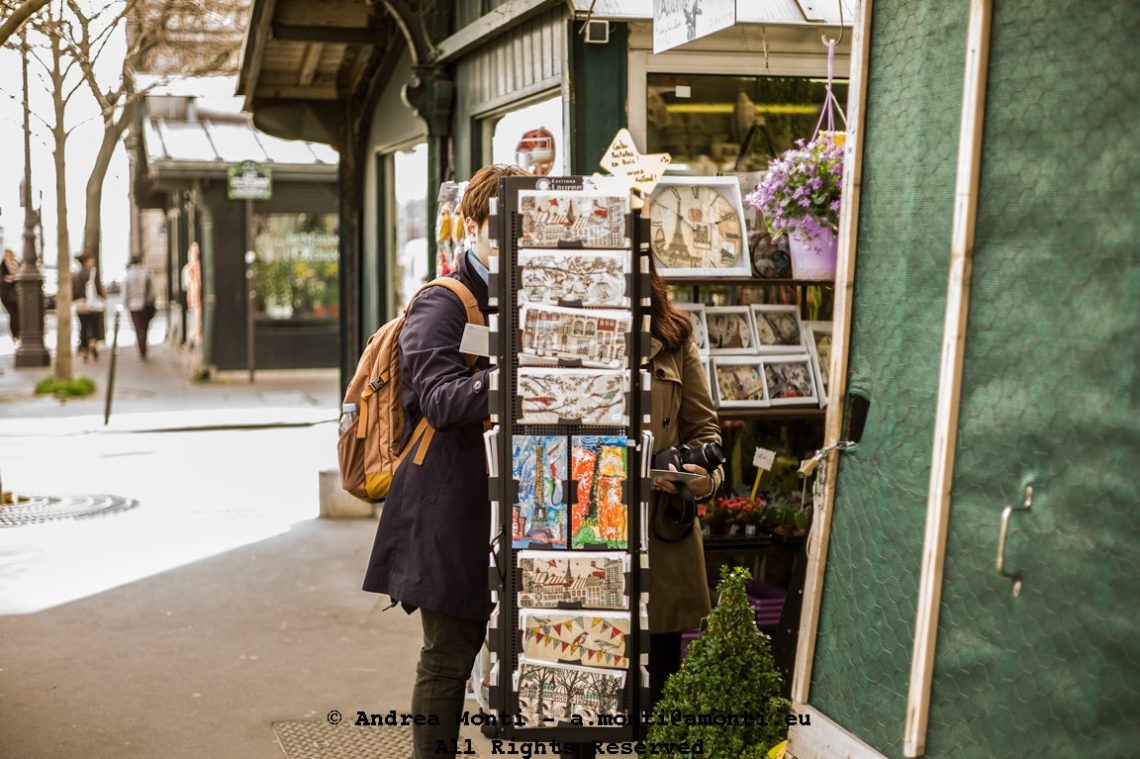
I made this frame near Île de la Cité, on Quai de la Corse—one of those places where the mundane and the picturesque casually coexist. What first drew my attention wasn’t the postcard rack, but the slight choreography unfolding around it. Two figures—clearly together, maybe tourists or locals revisiting the familiar—stood split by the display, momentarily anonymised by a turnstile of nostalgia. That was the hook: a photo of people concealed by the very thing designed to represent their surroundings. The irony held my attention long enough to lift the camera. I composed the shot with that in mind. The vertical rack bisects the frame precisely, interrupting the couple’s presence…
-
Relaxed Call at Boulevard du Palais
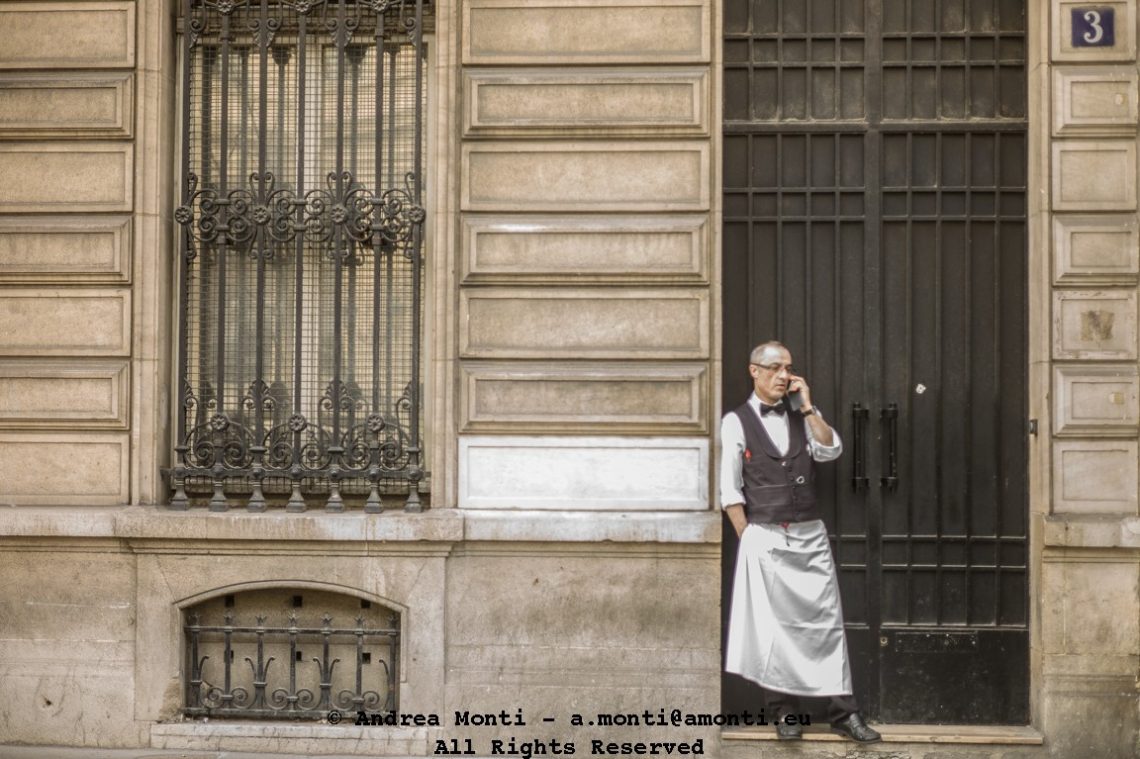
Paris lends itself so well to moments of quiet theatre, and this image captures one of those understated urban vignettes — a waiter leaning against a doorway, mid-call, somewhere between duty and a fleeting pause. The scene’s composition is clean and deliberate. The vertical symmetry of the architecture — the heavy wrought-iron window on the left, the dark panelled doors on the right — creates a structured backdrop that frames the human subject without overpowering him. The soft patina of the stone façade carries a sense of history, its muted tones setting off the crisp whites of the waiter’s apron and shirt. His black vest and bow tie anchor him…
-
Trust Us, We Care About You
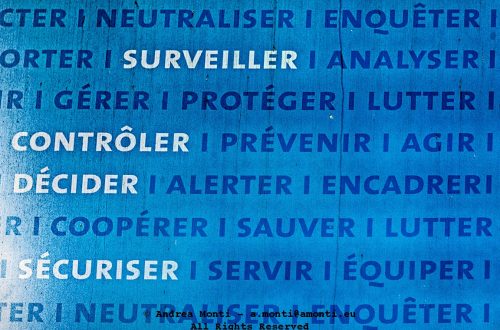
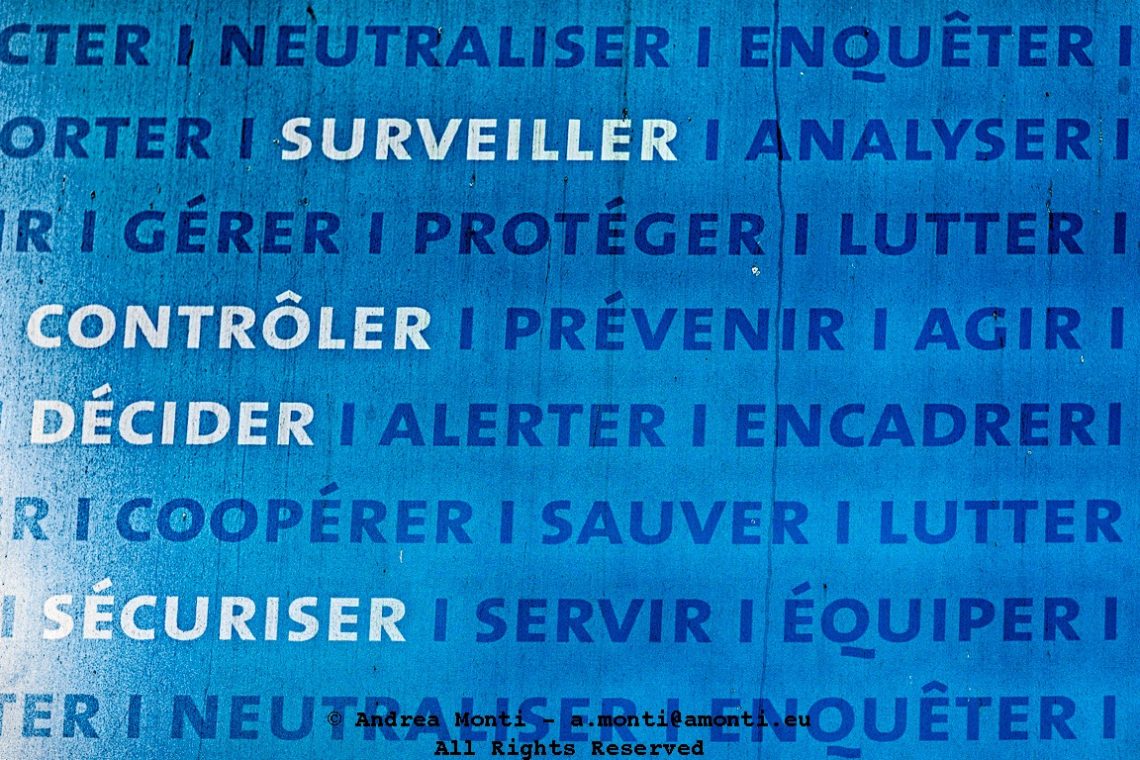
This is a close-up of a banner hanging from the Prefecture de police, Paris, Rue de la citè. I don’t know why, but every time I hear a public power saying that he cares about me I feel a bit worried… — This is the Google Map link, currently displaying the complete image, and here is a screen capture, just in case:
-
Lost in Another World
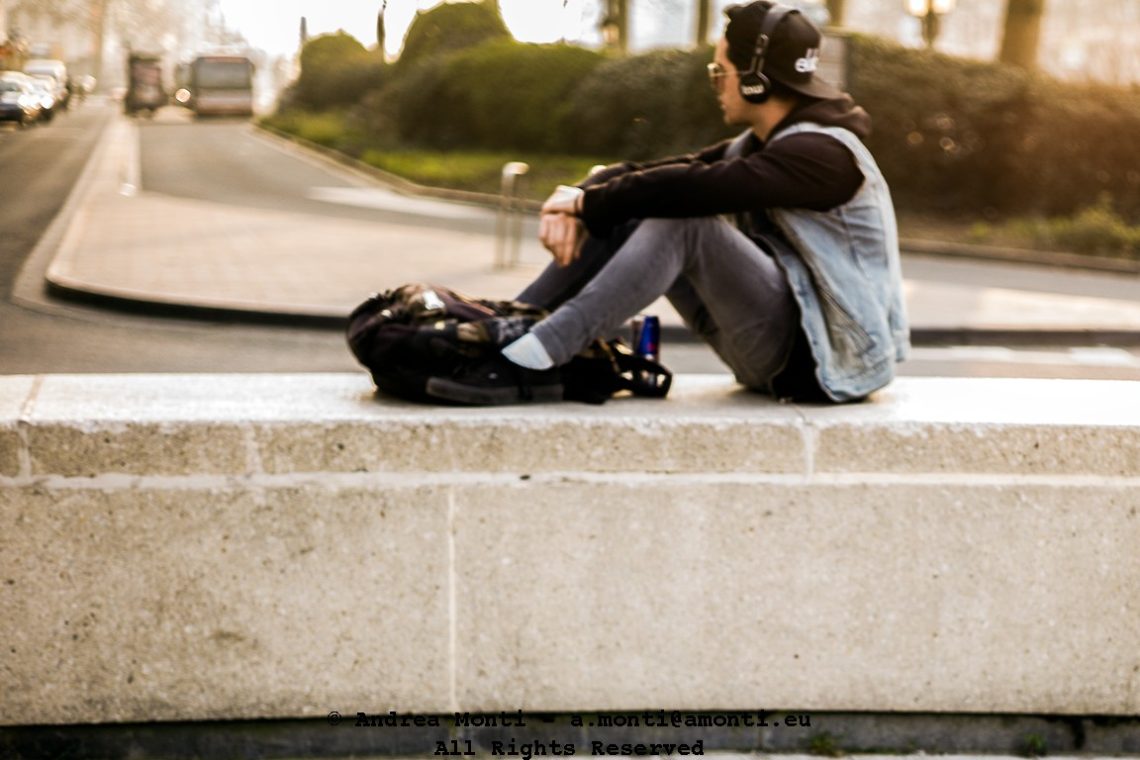
Bruxelles, late afternoon. The light was fading, but not fast enough to kill the warmth spilling across the stone. I was walking the perimeter of the European Quarter when I caught this boy, not moving, not restless—just elsewhere. Legs crossed, Red Bull in the shade of his knee, a pair of thick-cushioned headphones pulling his attention far from the buses trundling behind him. The city was loud, but he was silent. I framed him against the soft curve of the road, letting the concrete bench anchor the composition. The wall bisects the image cleanly, dividing the raw street texture from his calm, introspective stillness. He became part of the architecture—concrete,…
-
Still Standing
-
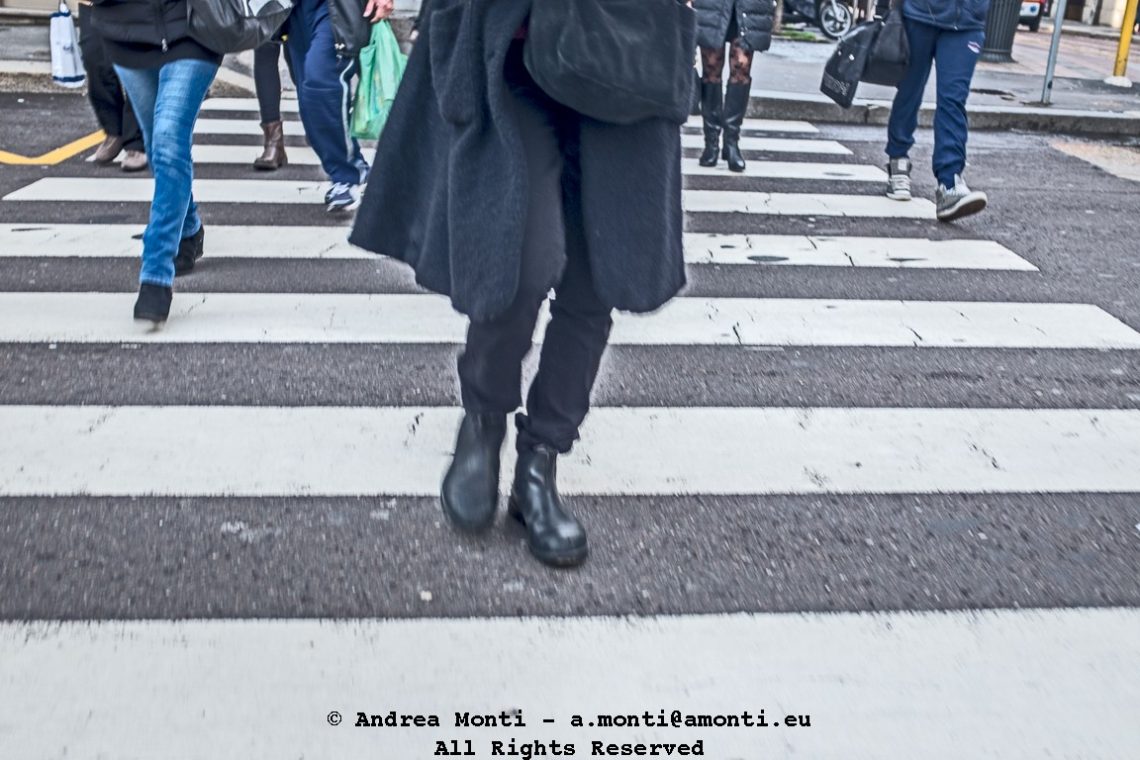
Zebra Crossing
-
Street Food in Via Salaria
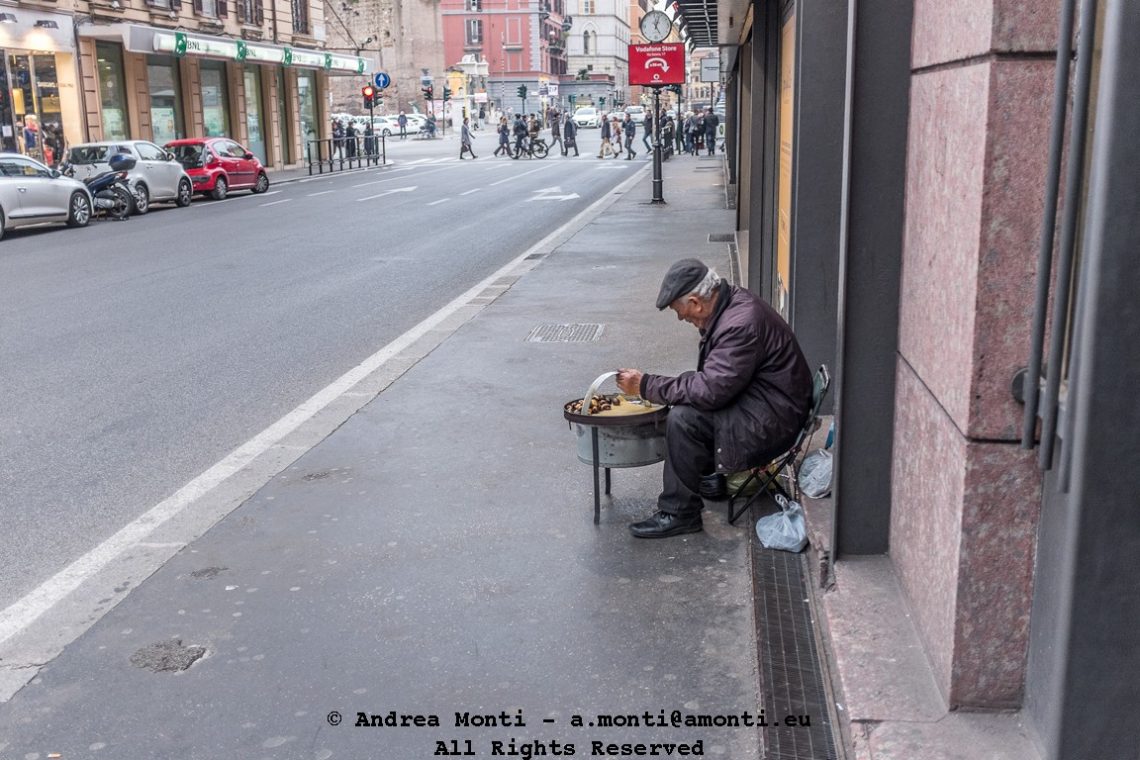
A Chestnut Maker, making everything ready for another day of hard work.
-
Shoes’ Meeting in Corso Vittorio
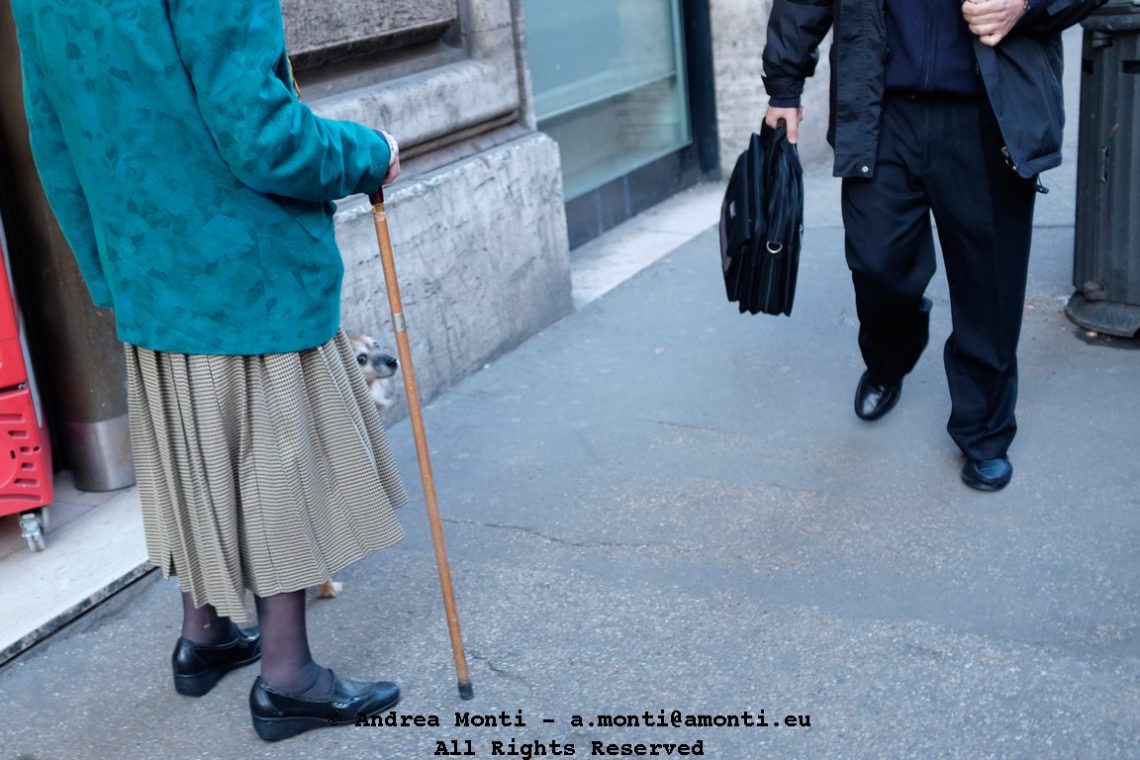
The tension lies in the simplicity—two halves of two lives crossing paths on a Milanese sidewalk. One steady, slow, anchored by age and rhythm; the other urgent, purposeful, briefcase in tow. The small dog peering from beneath the skirt becomes the silent witness. It adds a twist, a subtle distortion to an otherwise linear narrative. Compositionally, I framed low and tight, avoiding faces deliberately. I wanted the shoes, the cane, the movement—or its absence—to speak. Technically, the image pushes no boundaries. The exposure was conservative. Natural light softened by overcast skies made for even tones, no harsh shadows. Colours are muted, the teal jacket doing most of the visual lifting.…
-
A Toilet of the Court of Rome
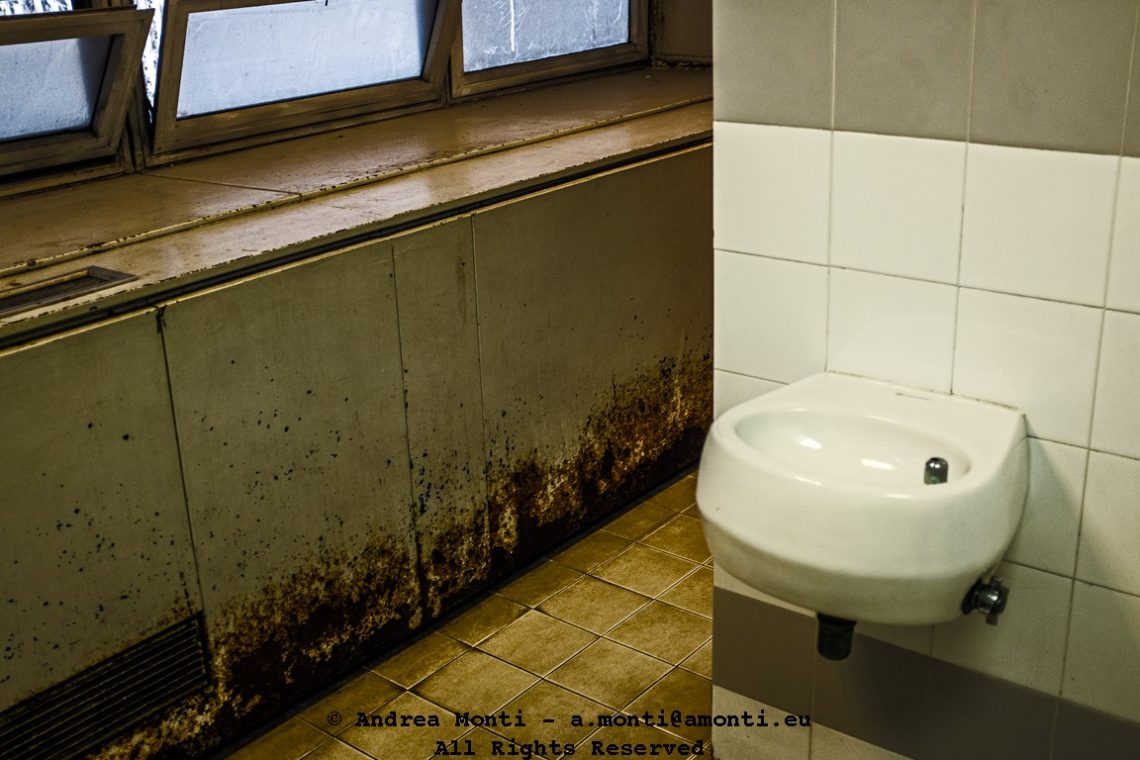
This image wasn’t taken to shock, or to moralise. It was taken to document—to observe the banal degradation of a public space that ought to represent dignity, order, and functionality. The Court of Rome is not some anonymous bureaucratic annex. It’s an institution, a symbol of authority. And this—this corner of neglect, dirt, and rust—is part of its daily mise en scène. The frame is unadorned. The composition is split by a hard vertical: clean white tiles with a wall-mounted sink on the right, and a long, filth-streaked heating unit under sealed windows on the left. It’s the juxtaposition that struck me—two realities in the same room. One part designed…
-
Rush Hours
Morning’s rush hours at Milan, Corso Italia.
-
Scarf’s Meeting
-
Windows XVIII … Century
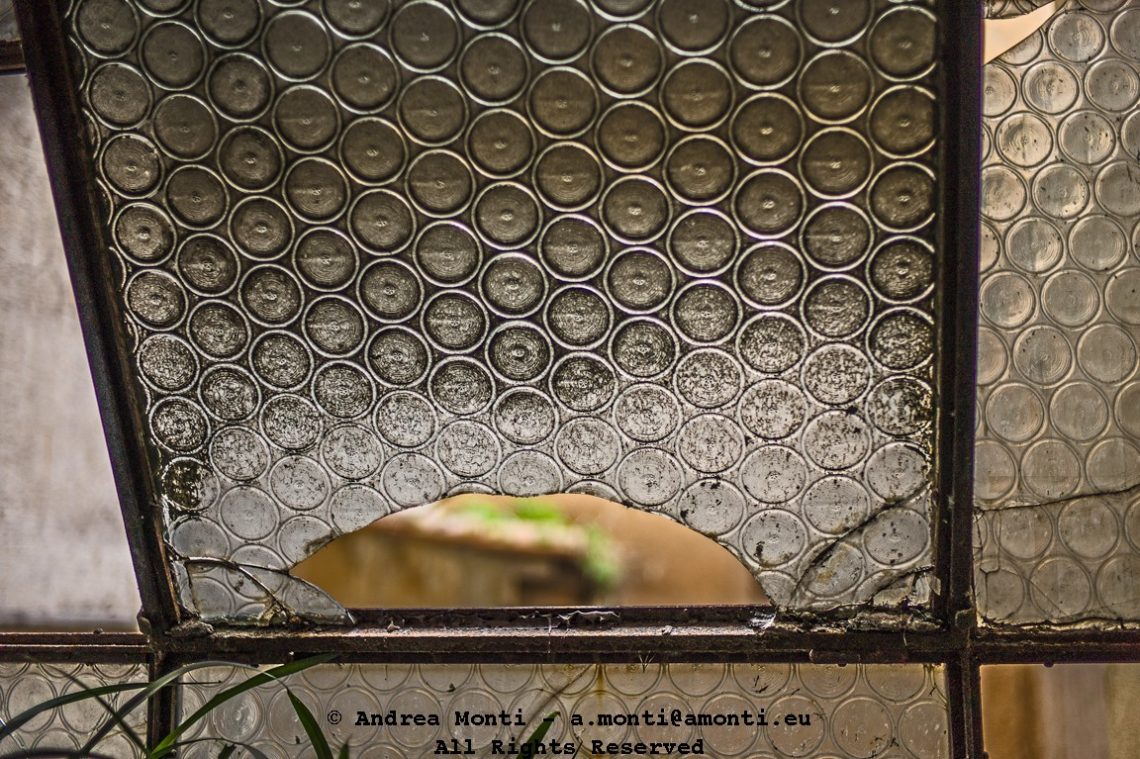
This photograph came from an unplanned encounter while wandering through the corridors of a fading building in via del Governo Vecchio — the sort of place where time has done more than simply pass; it has settled in, quietly shaping every surface. The pane of glass here isn’t modern, nor mass-produced. Its circular impressions are the handiwork of an 18th-century glassmaker, each bubble imperfect, each one carrying the slight distortion of a craft long past. The Leica M9, with its full-frame CCD sensor, brought something special to the scene. That sensor has a way of rendering colour and micro-contrast that feels almost film-like, which was ideal for this subject. The…