Colour
Vivid colour photography showcasing light, detail and atmosphere to capture life’s moments with depth, energy and emotion.
-
Hard Choice In Quai de la Corse
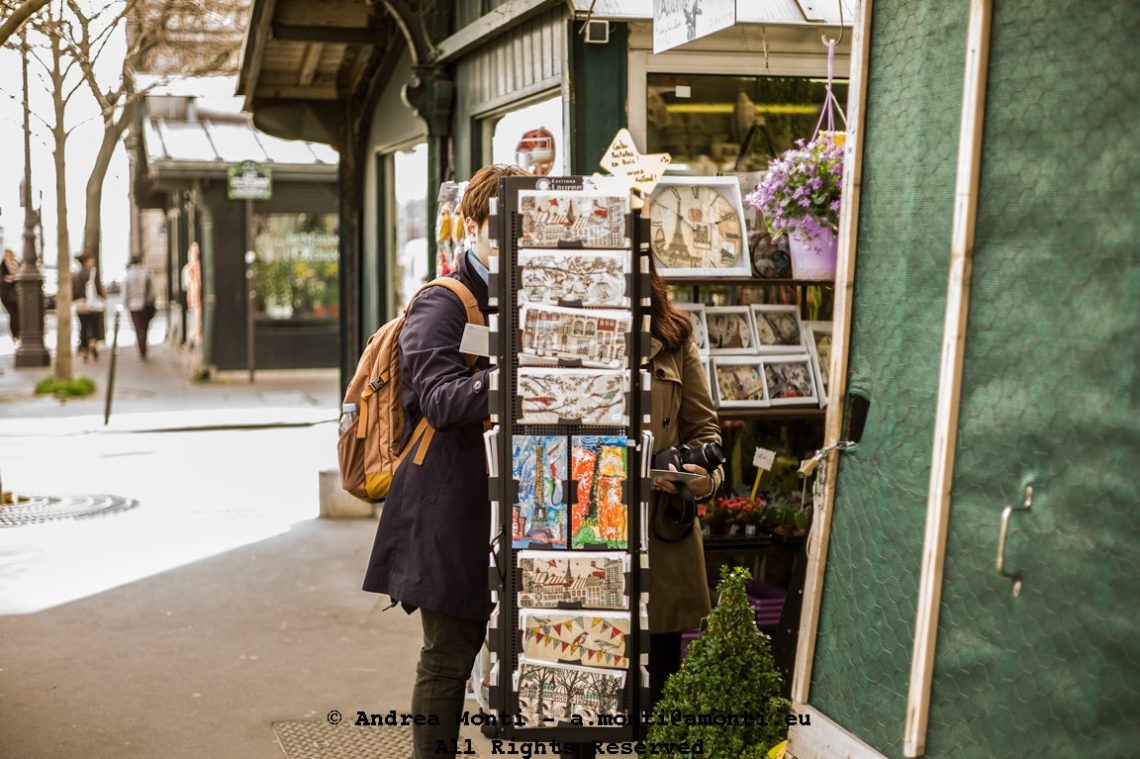
I made this frame near Île de la Cité, on Quai de la Corse—one of those places where the mundane and the picturesque casually coexist. What first drew my attention wasn’t the postcard rack, but the slight choreography unfolding around it. Two figures—clearly together, maybe tourists or locals revisiting the familiar—stood split by the display, momentarily anonymised by a turnstile of nostalgia. That was the hook: a photo of people concealed by the very thing designed to represent their surroundings. The irony held my attention long enough to lift the camera. I composed the shot with that in mind. The vertical rack bisects the frame precisely, interrupting the couple’s presence…
-
Is This Photo Illegal?
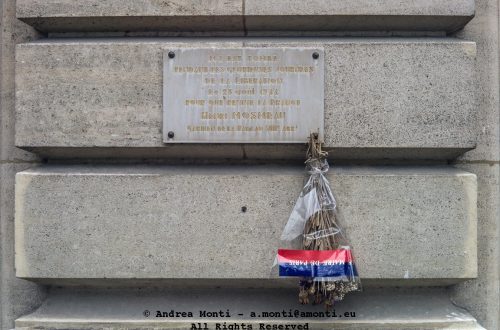
Yes, if it were taken in Hungary. Against the European Convention of Human Rights, Hungary passed a law that by next March 15 will require any photographer shooting in public space to obtain a signed “model release form”. This provision will be bashed by either the EU Court of Justice or the European Court of Human Rights (for the very same reasons I explained here), but it will take time and – first of all – a photographer that sacrifices himself on the altar of freedom.
-
Relaxed Call at Boulevard du Palais
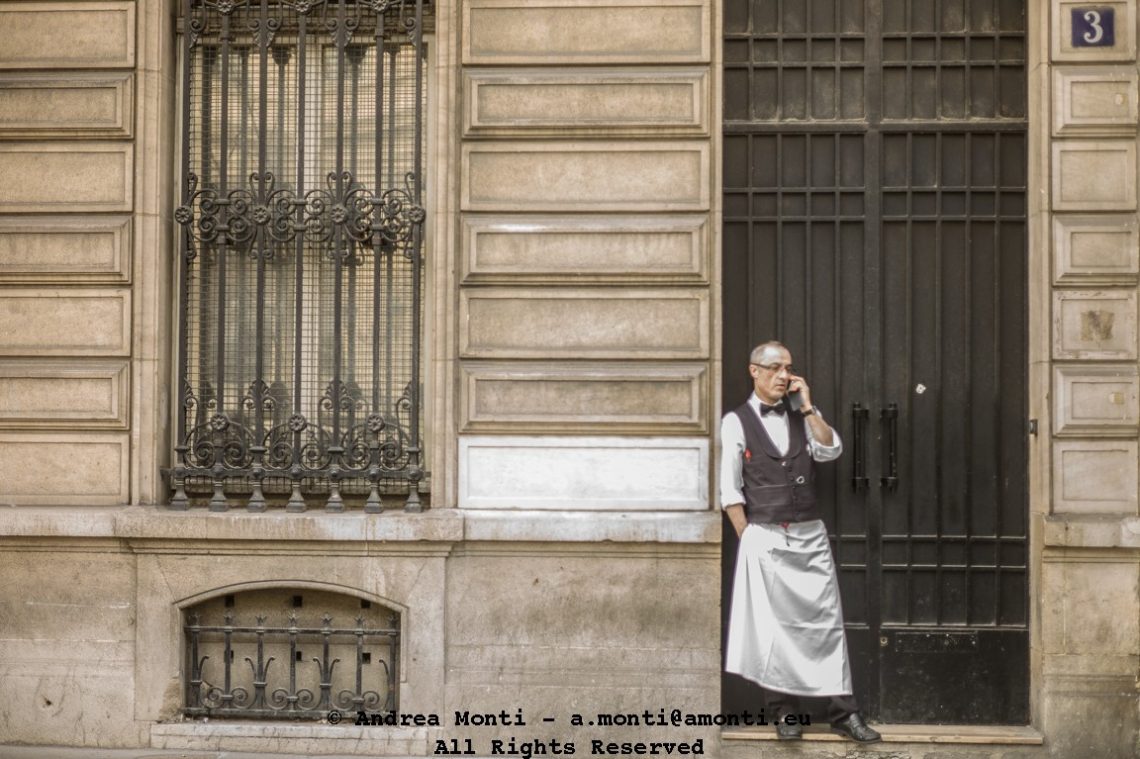
Paris lends itself so well to moments of quiet theatre, and this image captures one of those understated urban vignettes — a waiter leaning against a doorway, mid-call, somewhere between duty and a fleeting pause. The scene’s composition is clean and deliberate. The vertical symmetry of the architecture — the heavy wrought-iron window on the left, the dark panelled doors on the right — creates a structured backdrop that frames the human subject without overpowering him. The soft patina of the stone façade carries a sense of history, its muted tones setting off the crisp whites of the waiter’s apron and shirt. His black vest and bow tie anchor him…
-
Trust Us, We Care About You
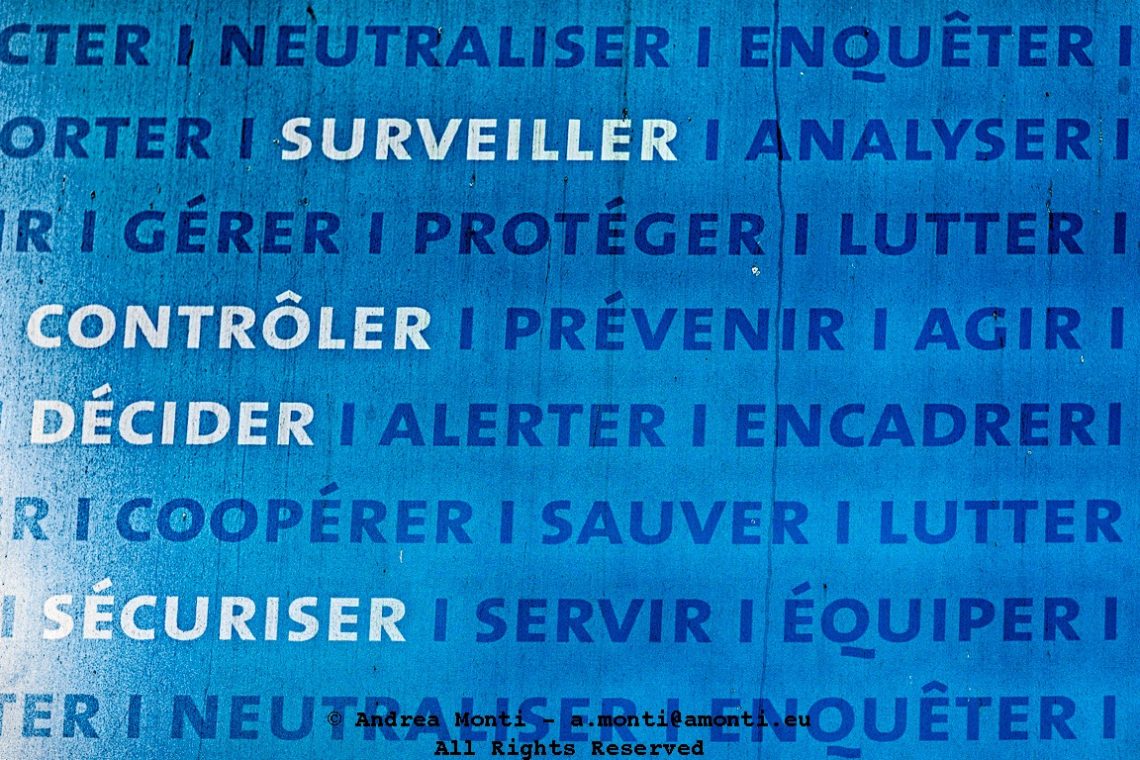
This is a close-up of a banner hanging from the Prefecture de police, Paris, Rue de la citè. I don’t know why, but every time I hear a public power saying that he cares about me I feel a bit worried… — This is the Google Map link, currently displaying the complete image, and here is a screen capture, just in case:
-
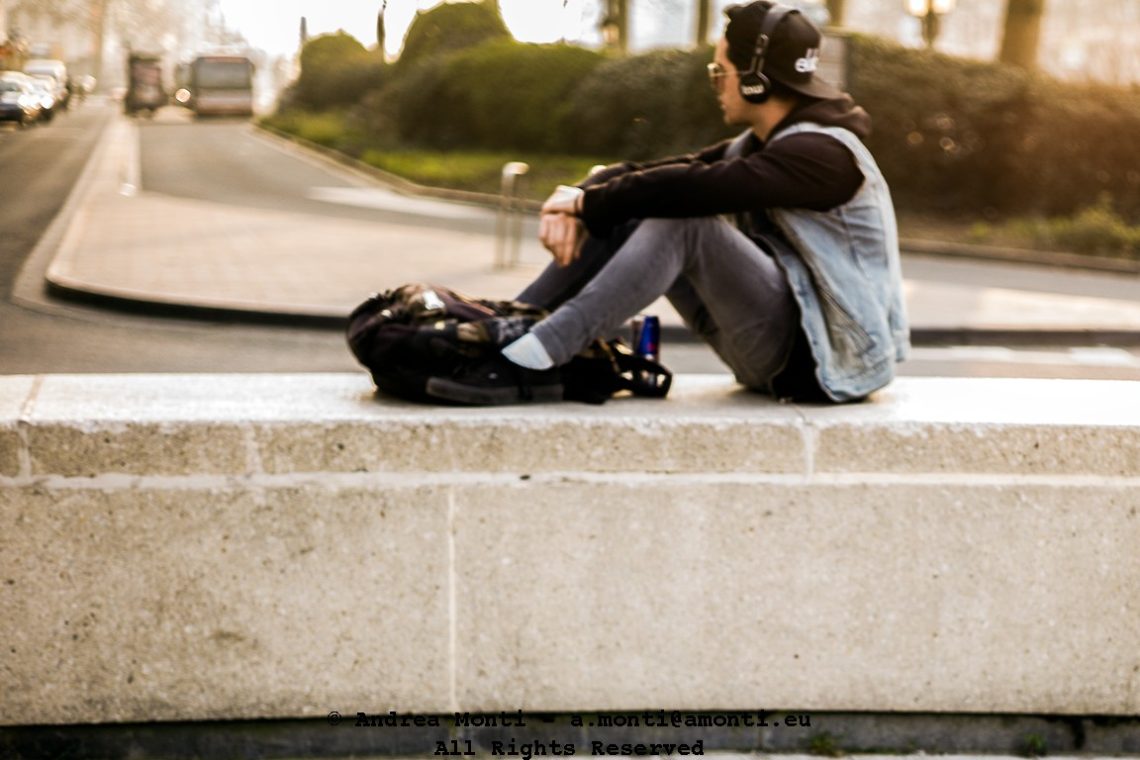
Lost in Another World
Bruxelles, late afternoon. The light was fading, but not fast enough to kill the warmth spilling across the stone. I was walking the perimeter of the European Quarter when I caught this boy, not moving, not restless—just elsewhere. Legs crossed, Red Bull in the shade of his knee, a pair of thick-cushioned headphones pulling his attention far from the buses trundling behind him. The city was loud, but he was silent. I framed him against the soft curve of the road, letting the concrete bench anchor the composition. The wall bisects the image cleanly, dividing the raw street texture from his calm, introspective stillness. He became part of the architecture—concrete,…
-
Stylish
-
Still Standing
-
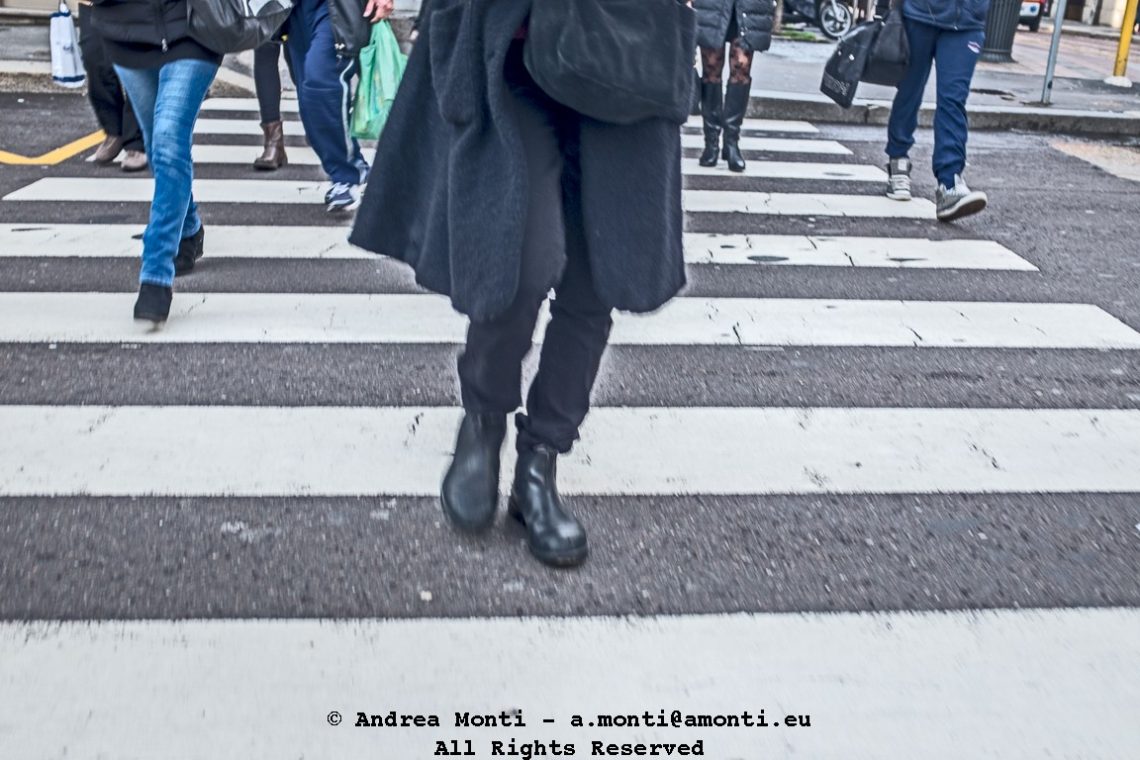
Zebra Crossing
-
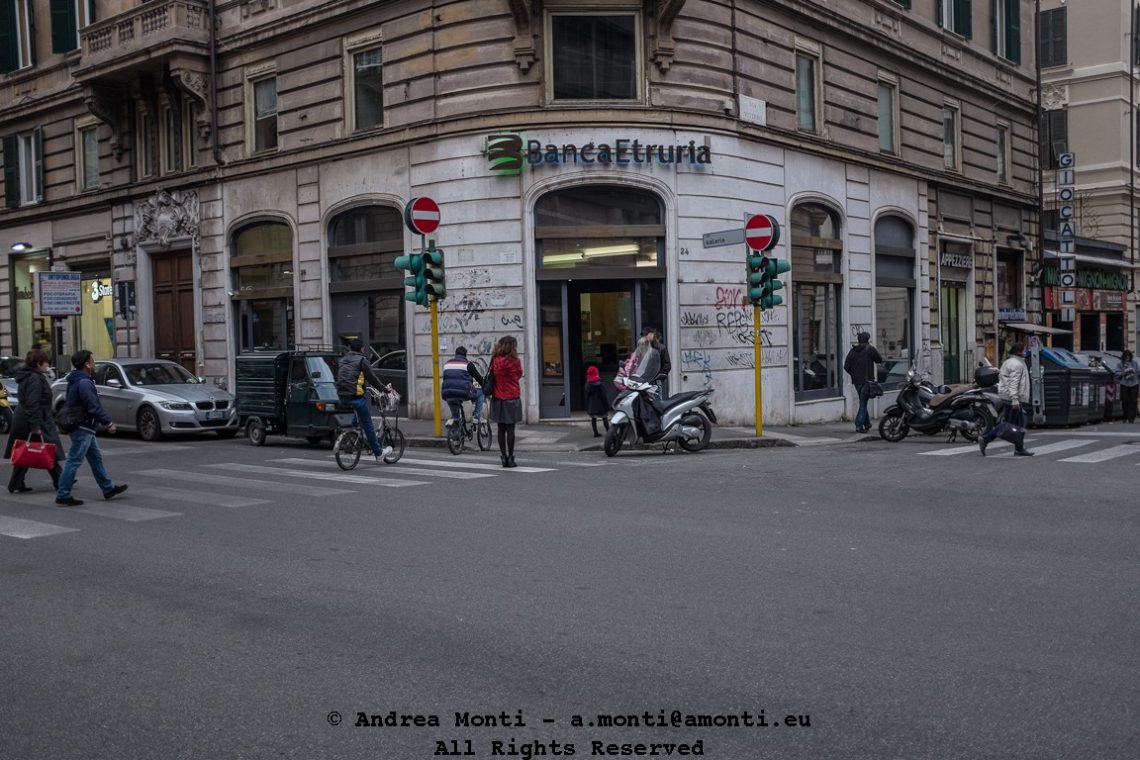
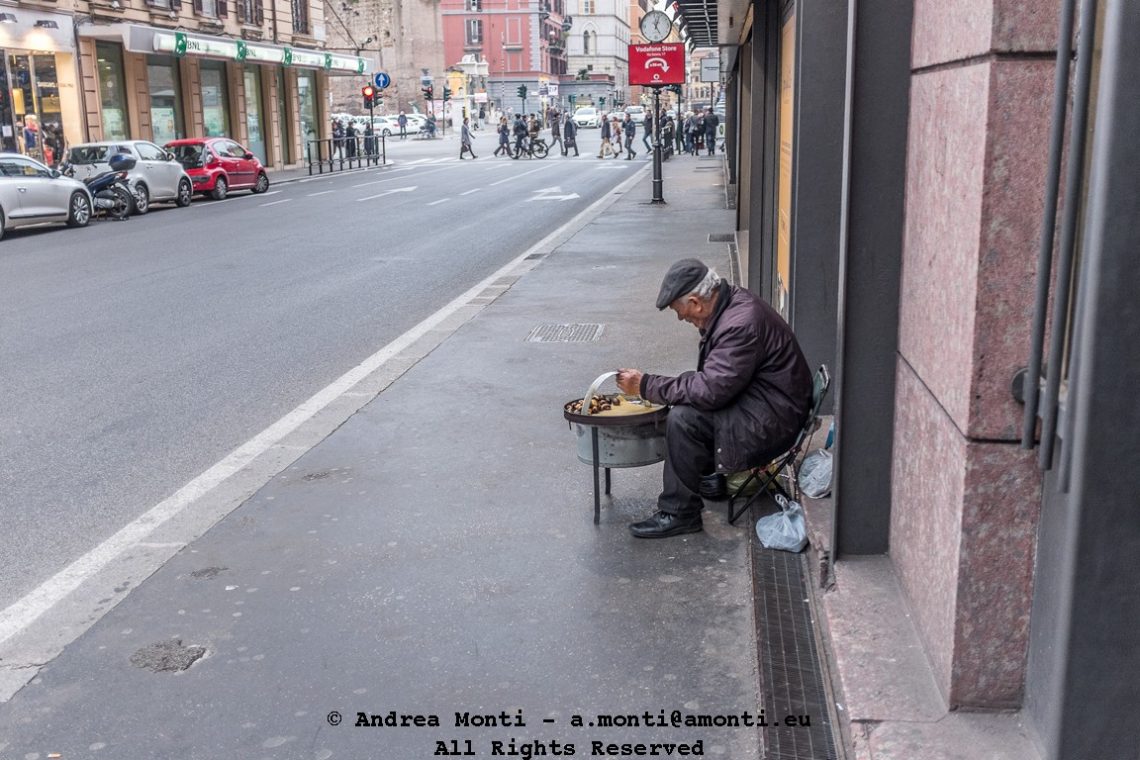
Street Food in Via Salaria
A Chestnut Maker, making everything ready for another day of hard work.
-
Shoes’ Meeting in Corso Vittorio
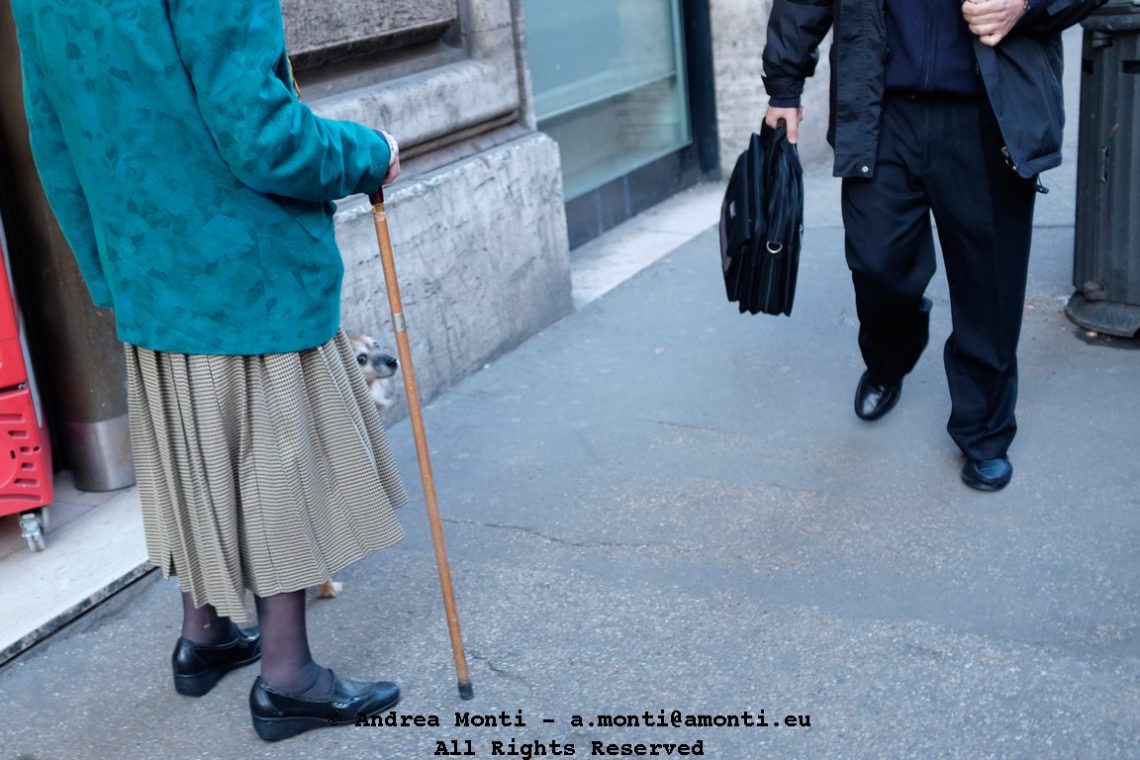
The tension lies in the simplicity—two halves of two lives crossing paths on a Milanese sidewalk. One steady, slow, anchored by age and rhythm; the other urgent, purposeful, briefcase in tow. The small dog peering from beneath the skirt becomes the silent witness. It adds a twist, a subtle distortion to an otherwise linear narrative. Compositionally, I framed low and tight, avoiding faces deliberately. I wanted the shoes, the cane, the movement—or its absence—to speak. Technically, the image pushes no boundaries. The exposure was conservative. Natural light softened by overcast skies made for even tones, no harsh shadows. Colours are muted, the teal jacket doing most of the visual lifting.…
-
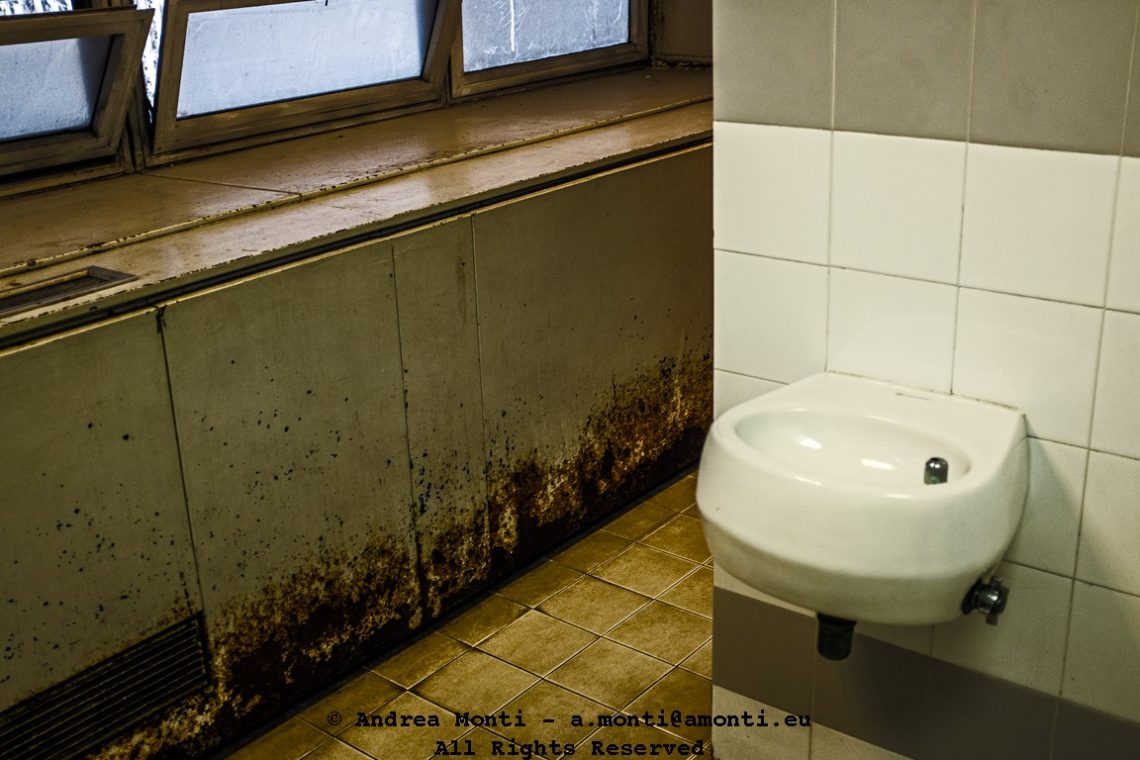
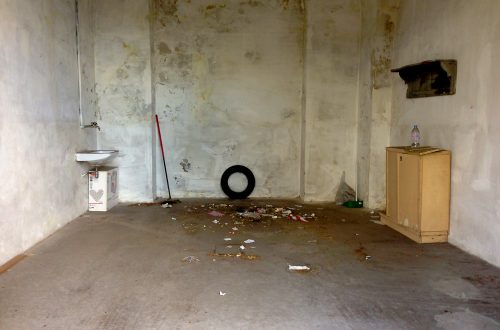
A Toilet of the Court of Rome
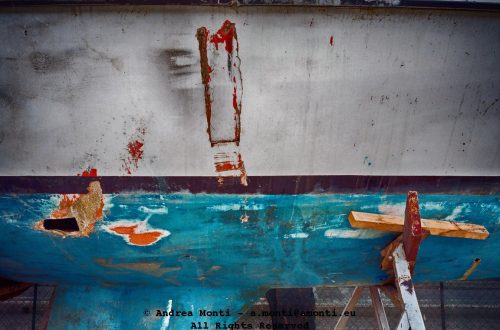
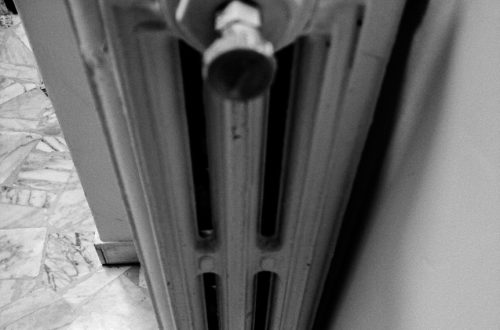
This image wasn’t taken to shock, or to moralise. It was taken to document—to observe the banal degradation of a public space that ought to represent dignity, order, and functionality. The Court of Rome is not some anonymous bureaucratic annex. It’s an institution, a symbol of authority. And this—this corner of neglect, dirt, and rust—is part of its daily mise en scène. The frame is unadorned. The composition is split by a hard vertical: clean white tiles with a wall-mounted sink on the right, and a long, filth-streaked heating unit under sealed windows on the left. It’s the juxtaposition that struck me—two realities in the same room. One part designed…
-
Rush Hours
Morning’s rush hours at Milan, Corso Italia.
-
Stairway to Nothing
-
Stand-up, Sugar!
-
Friendship is Forever
-
Scarf’s Meeting
-
The call that never quite ends
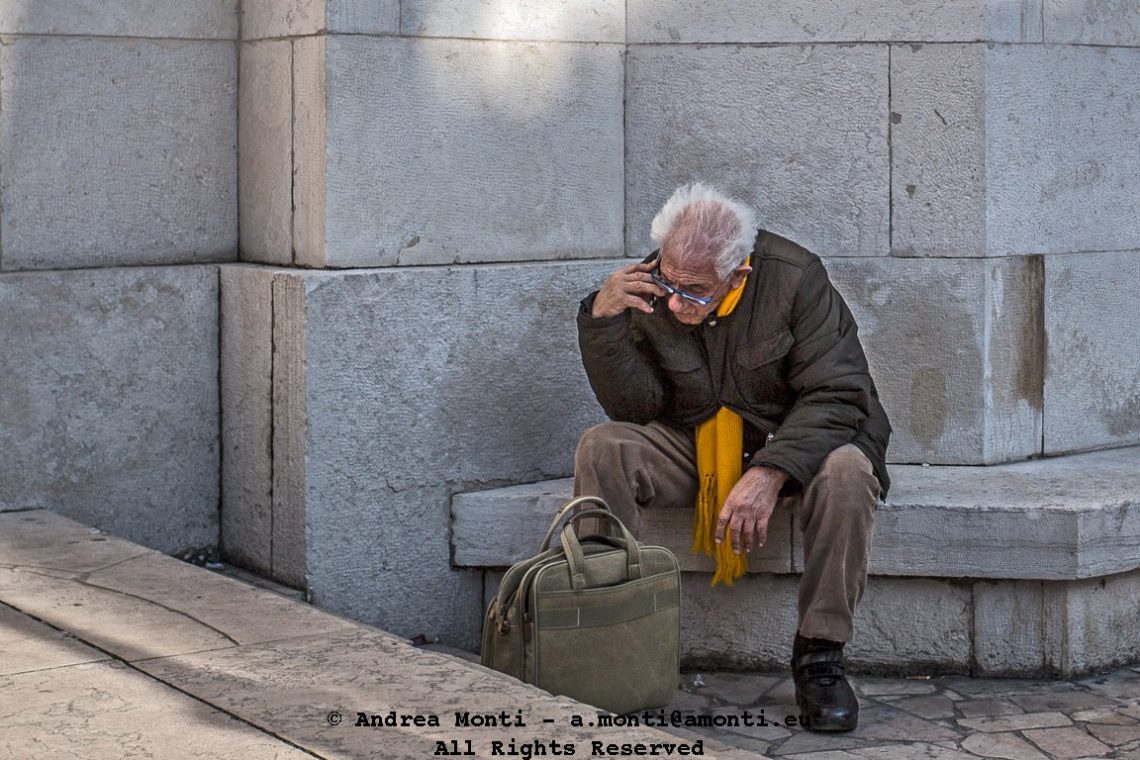
Street photographs often succeed by what they withhold. Here, the frame is built from reticence: a lone older man sits on a low stone ledge, pressed into the corner where two monumental walls meet. The architecture dominates—big blocks, hard seams, an impersonal geometry—while the figure occupies a comparatively small portion of the image, almost as if the city has filed him into the margin.
-
The Taste Master
Through the glass, the words float like ingredients in the air—sugar, chocolate, honey, milk—layered over the figure in the white chef’s hat. He stands in the narrow frame of the kitchen window, hands mid-motion as he pulls on a pair of blue gloves. The gesture is deliberate, unhurried, the quiet preparation before work begins. Behind him, the corkboard pins up the rhythm of the week—Tuesday, Wednesday, Saturday—handwritten notes, printed orders, the mundane scaffolding behind the alchemy. But the chef himself is framed as something more than a worker; he is the “taste master,” the one who turns lists into flavours, recipes into experiences. The typography on the glass becomes part…
-
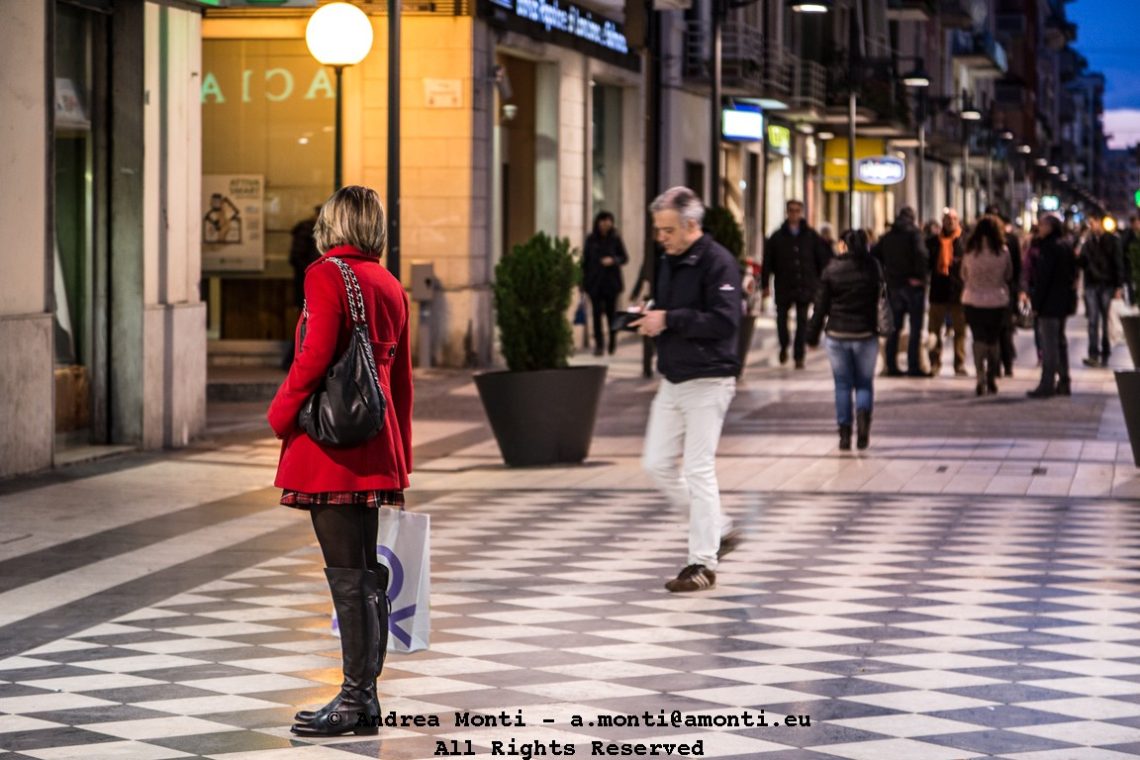
Hurry up and shut down the $%&? call!
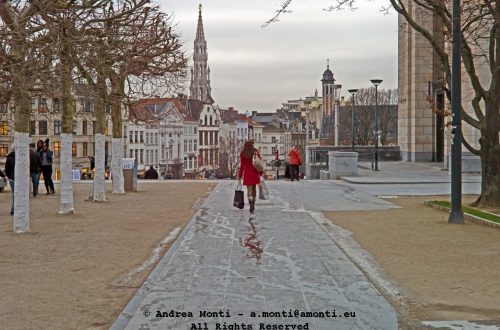
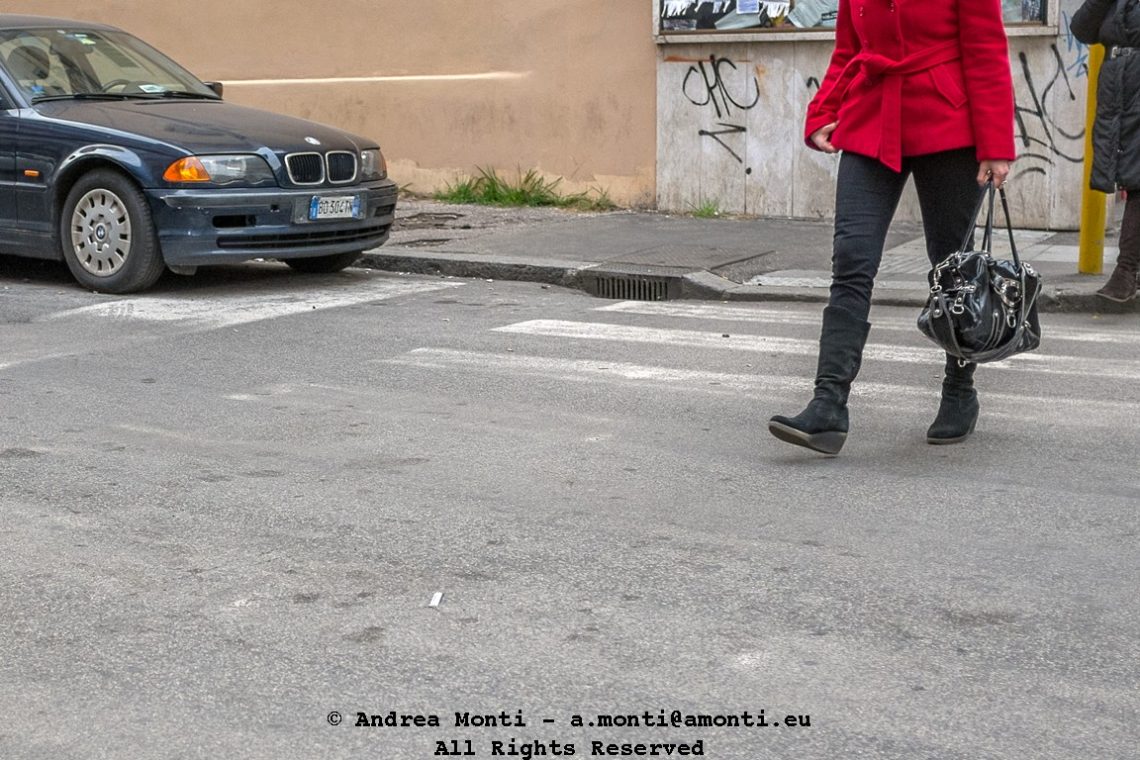
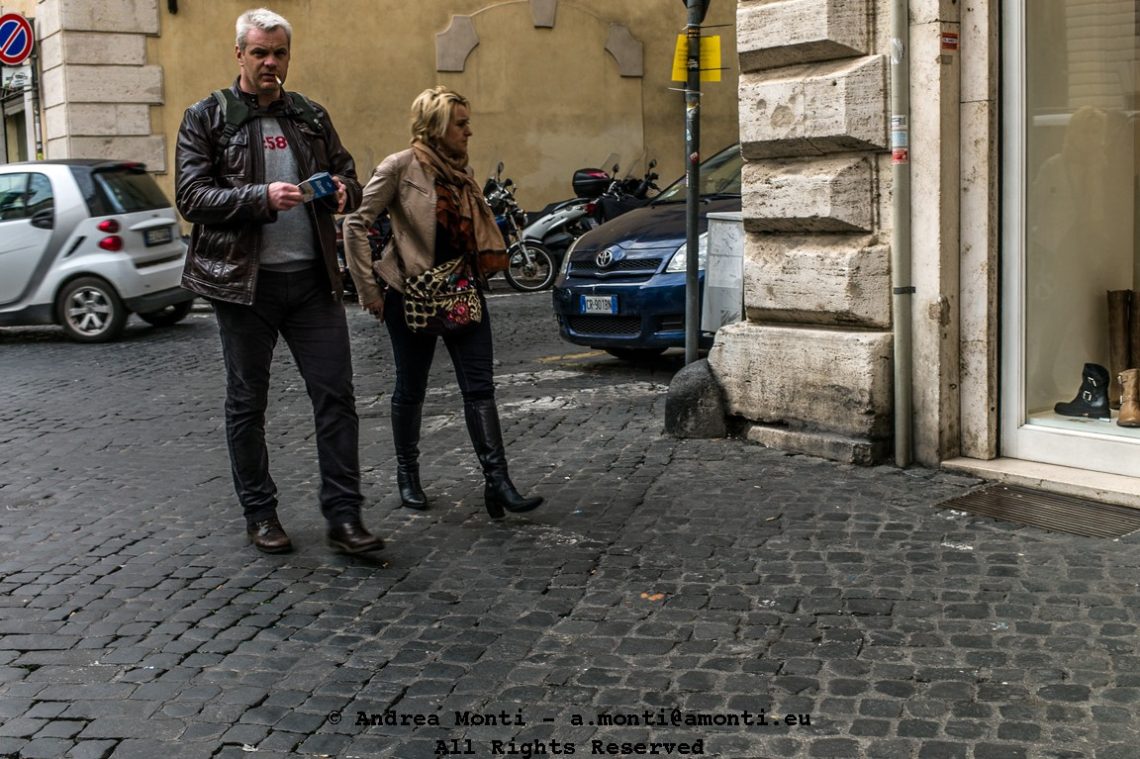
I shot this photograph on a winter evening when the city was still busy but already slowing down. The street lights had taken over from the sun, and the air was full of that post-work restlessness — half leisure, half impatience. In front of me, a couple had paused mid-walk. She waited, a shopping bag at her side, wrapped in a red coat that caught every ounce of the lamplight. He, a few steps ahead, was absorbed in his phone — fingers scrolling, face lowered. It was a scene of quiet tension, familiar to anyone who has ever waited for someone whose attention is elsewhere. The composition relies on opposition. She…
-
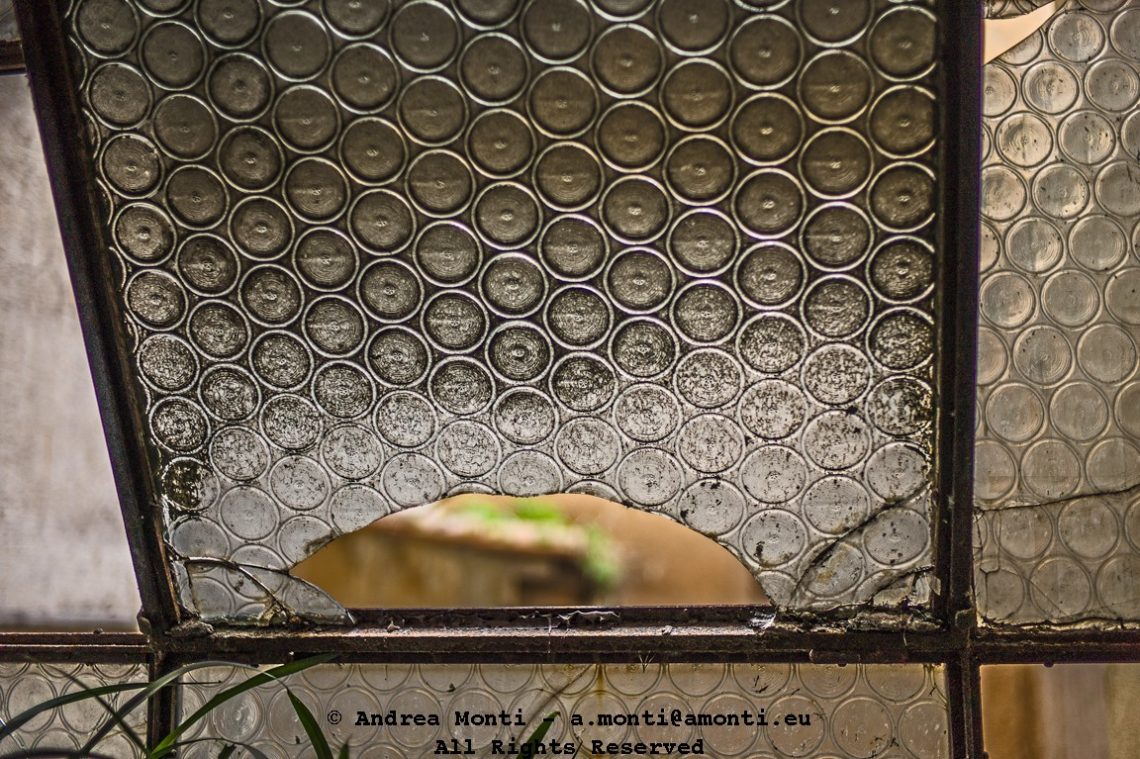
Windows XVIII … Century
This photograph came from an unplanned encounter while wandering through the corridors of a fading building in via del Governo Vecchio — the sort of place where time has done more than simply pass; it has settled in, quietly shaping every surface. The pane of glass here isn’t modern, nor mass-produced. Its circular impressions are the handiwork of an 18th-century glassmaker, each bubble imperfect, each one carrying the slight distortion of a craft long past. The Leica M9, with its full-frame CCD sensor, brought something special to the scene. That sensor has a way of rendering colour and micro-contrast that feels almost film-like, which was ideal for this subject. The…
-
Almost Spotted
The tension in this frame comes not from composition or contrast, but from that split-second ambiguity between being invisible and being noticed. He looked straight into the lens. That frozen glance holds a question—maybe suspicion, maybe curiosity—but crucially, it didn’t escalate. No words, no confrontation. I kept walking, shutter fired, unnoticed… or almost. Street photography isn’t about stealth. It’s about presence—yours, and theirs. Technically, I was working fast. The light was uneven, filtered through a late afternoon overcast, bouncing off the ochre plaster and cobblestones. I kept the exposure slightly under to preserve detail in the midtones, letting shadows fall naturally. The colours hold their weight without shouting—muted leather, grey…
-
The Angel Maker
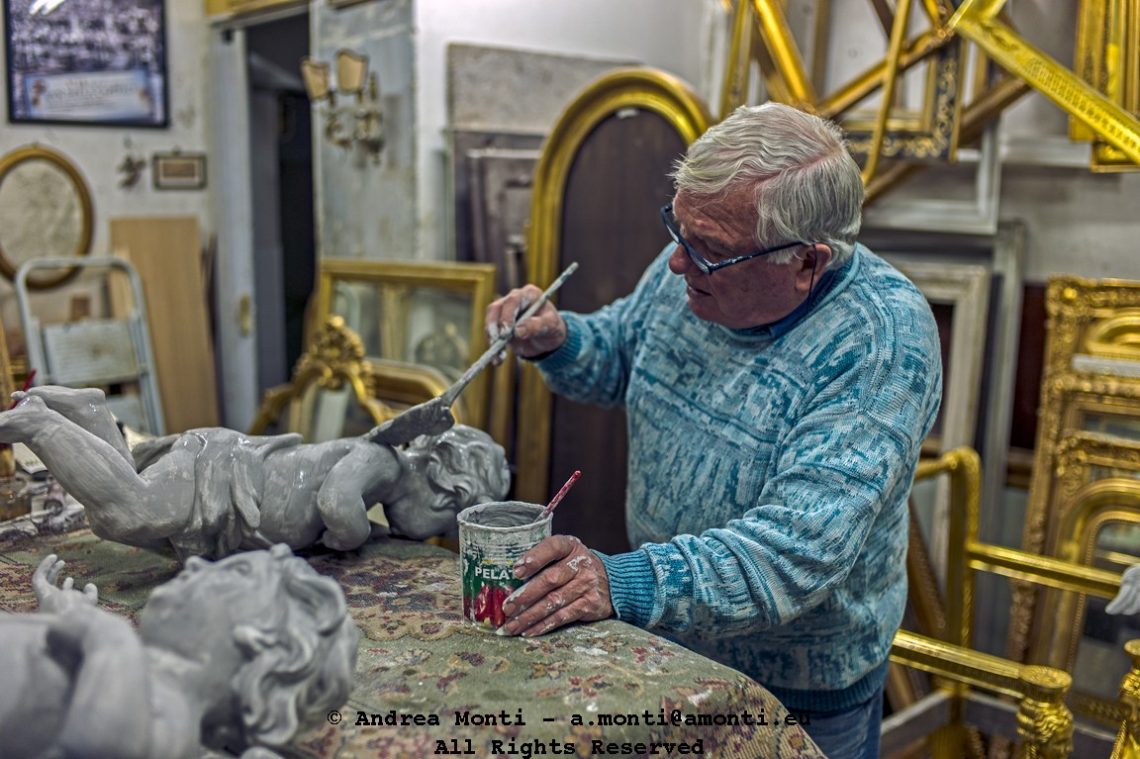
There are some things you only find in Rome. Down a narrow street behind the Teatro di Pompeo, inside a studio that smells of dust, turpentine and time, I watched a man restoring angels. Not metaphorically—literally. Plaster cherubs laid out across the table, grey with primer, one mid-stroke under his steady brush. The place looked more like a reliquary than a workshop. And in a way, it was. He’s a master restorer. The kind of figure you expect in an old Fellini film, surrounded by faded tapestries, cracked frames, and gold leaf so fine it breathes when you exhale near it. But this wasn’t a scene. This was a day’s…
-
Do Not Disturb the News Reader
-
Italy, Landscape Photography and the Law – Part Two
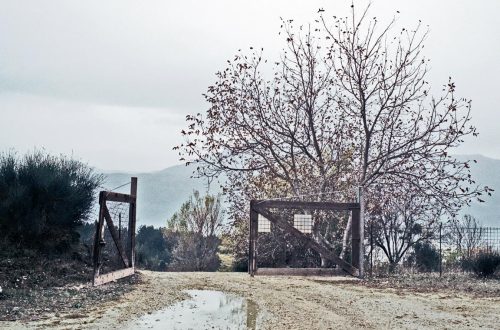
In a previous post I addressed some of the legal issues involved in Landscape Photography where copyright was willfully not mentioned: since copyright is an outcome of human creativity who might ever think of imposing it over a landscape? Well, as much as it sounds crazy, somebody did it: on 2o11 the Town of San Quirico d’Orcia, in Tuscany, passed a local regulation that copyrights landscape images and artistic, cultural, environmental and architectural “stuff”, making mandatory pro shooter to ask for an authorization before starting their sessions. This local regulation is simply illegal, because “copyright” implies an act of creativity, while the landscape in itself doesn’t (unless you believe in…