Carl Zeiss Jena Triotar 85/4 and Nikon Z5 – An Empirical Field Test
This empirical field test of a fairly well-preserved CZJ Triotar 85/4 lens confirms its well-known performance, although a final judgement needs to wait the lens to be serviced by master Adriano Lolli in order to clean veiled glasses.
At F4, central sharpness is moderate yet usable, with a lack of microcontrast. By contrast, the corners are softer. Flare resistance is suboptimal by modern standards, while colour rendition is accurate enough, although robust tweaks are needed in post-production.
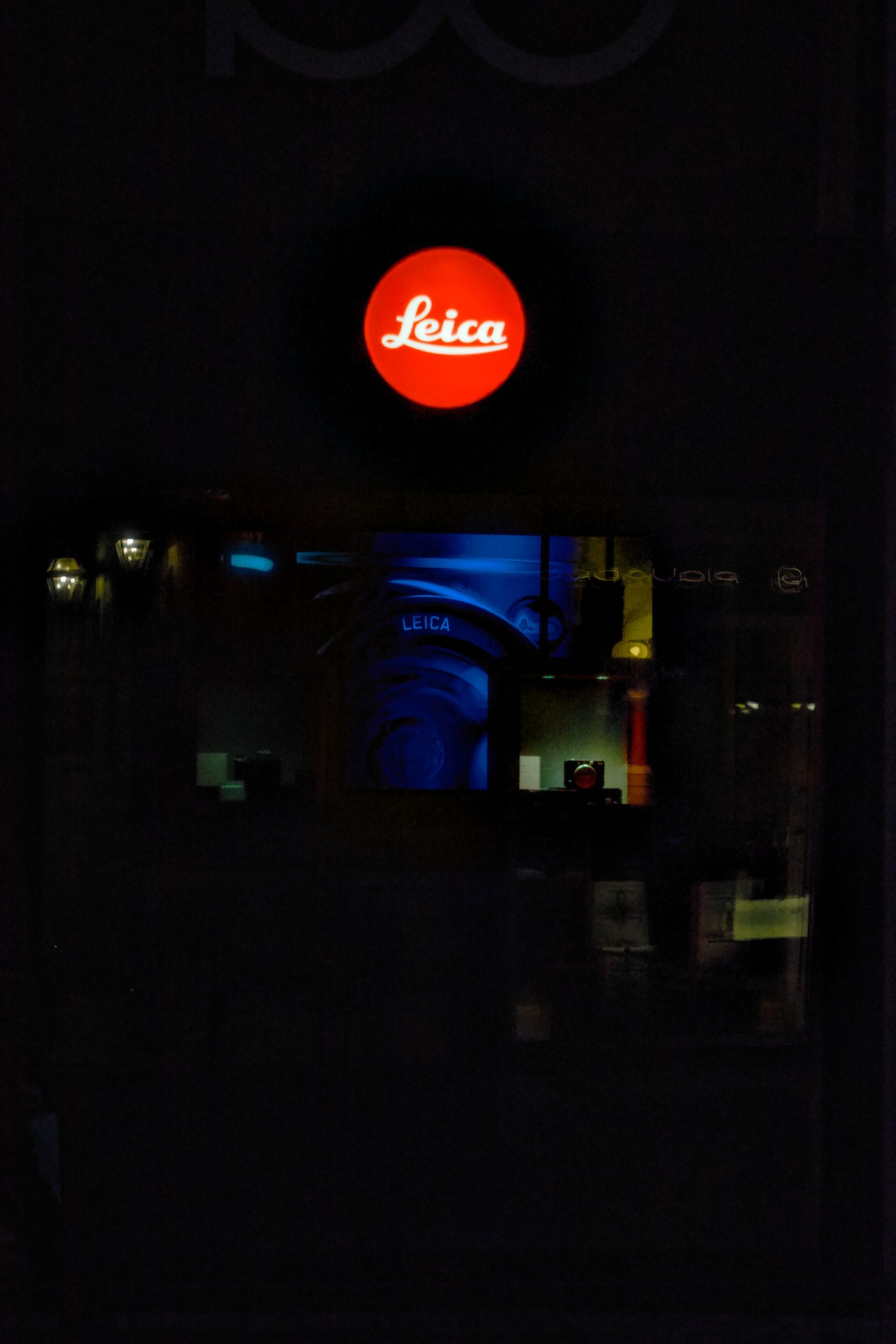
This photo of the Leica store display in Via dei Due Macelli, Rome, is a flare torture test. The bright, emissive Leica sign against a dark background, plus additional reflections and obstructions, creates a challenging scenario. The outcome is that the blacks lift and deep separation is lost. Ghosting appears near the top, as well as a general haze around the sign. The highlight bloom around the red disc and the white script demonstrate how spherical aberration and flare interact. In short, this Triotar is not well suited to handheld, high-contrast nocturnes photography at F4.
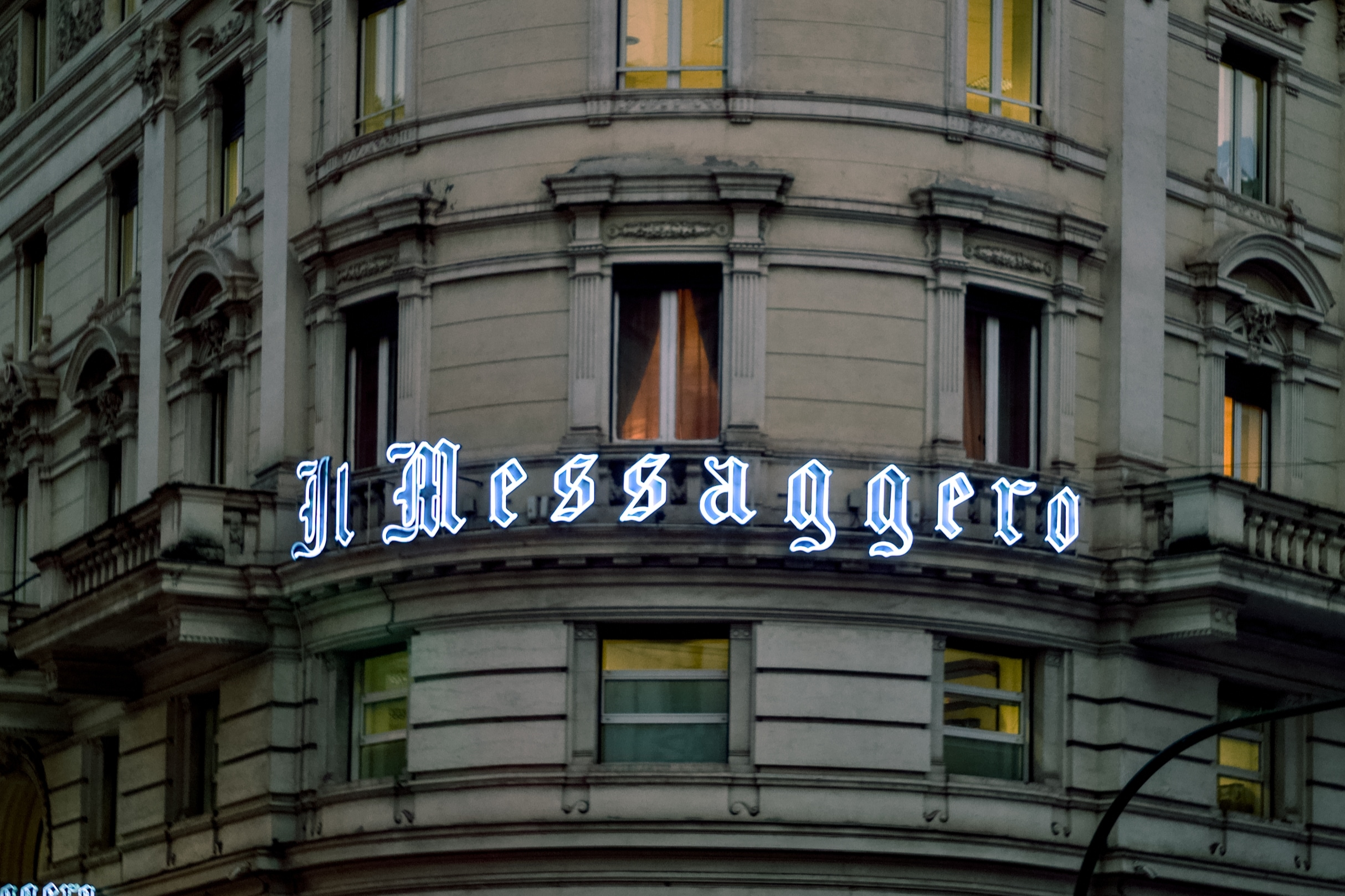
This photo of the Il Messaggero headquarters in Via del Tritone, home to one of Italy’s most important daily newspapers, allows us to assess mid-field and edge behaviour thanks to the fine architectural detail and high-contrast lettering. The difference in sharpness between the centre and the corners is evident: the centre appears reasonably resolved, but the image lacks ‘bite’. As with the Leica display, there is halation around neon edges. This is partly due to the shooting conditions, but the lens also contributes by adding flare and reducing edge contrast. Architectural details and edges away from the centre rapidly lose crispness.
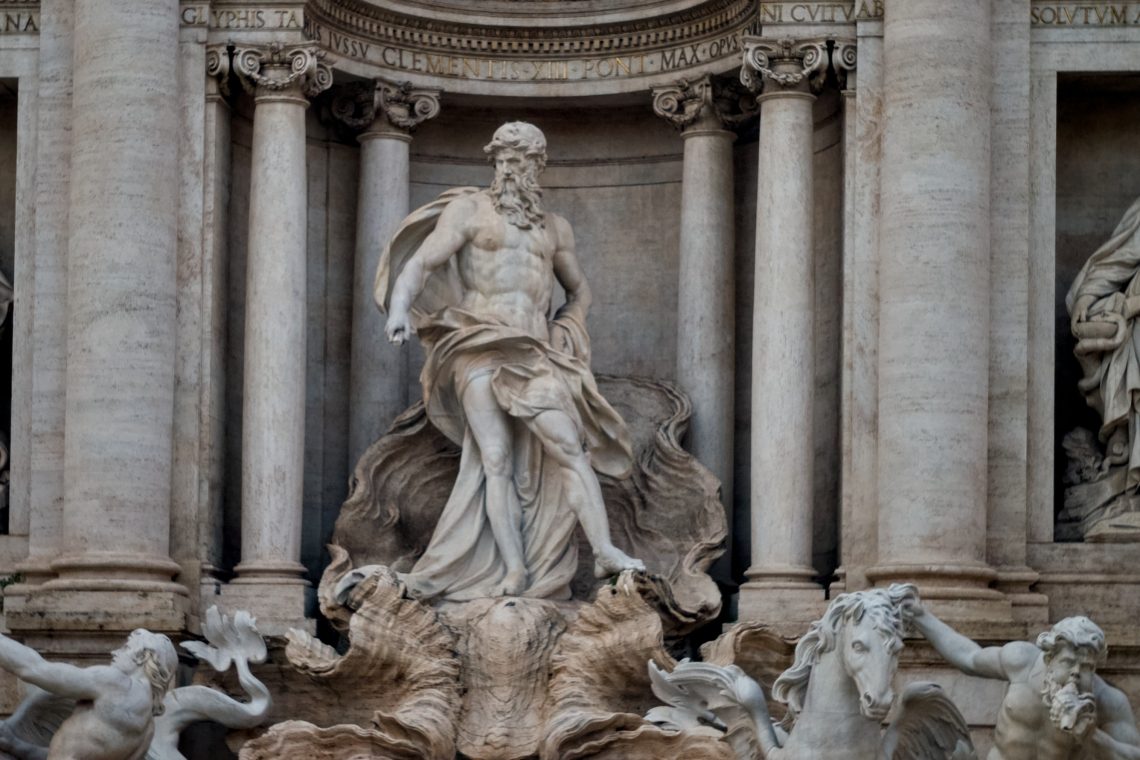
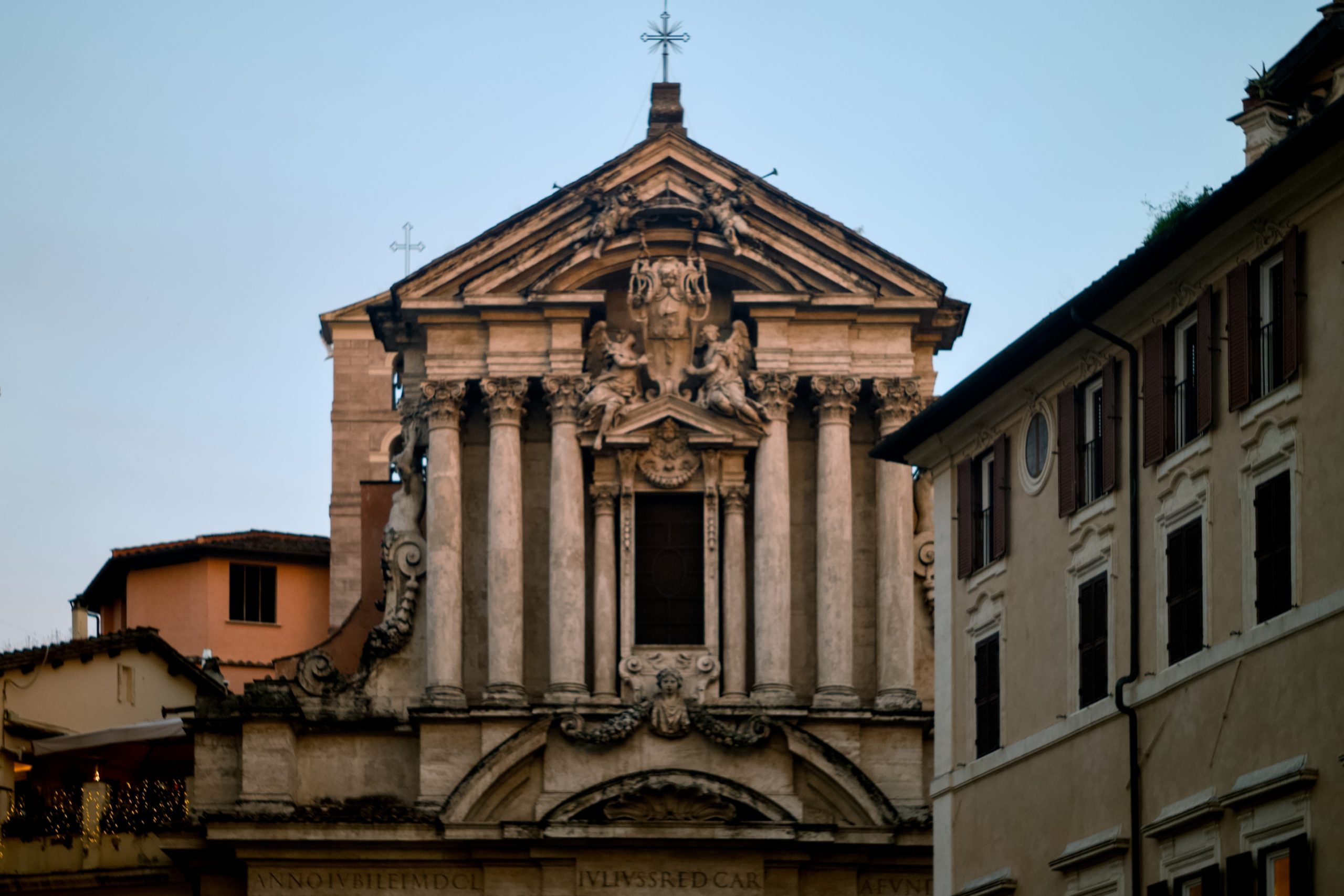
There is nothing to add about this mid-distance photo of Santi Vincenzo and Anastasio next to Trevi’s Fountain, except that it demonstrates the Triotar’s performance in high-contrast conditions. The tonality is pleasant, the edge integrity not the lens main strenght.
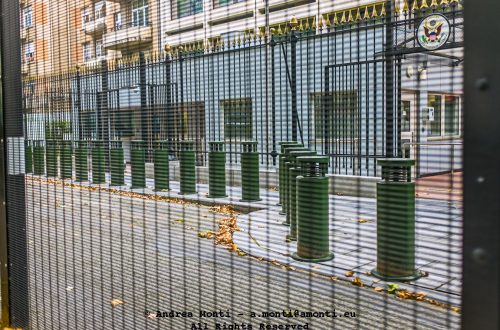
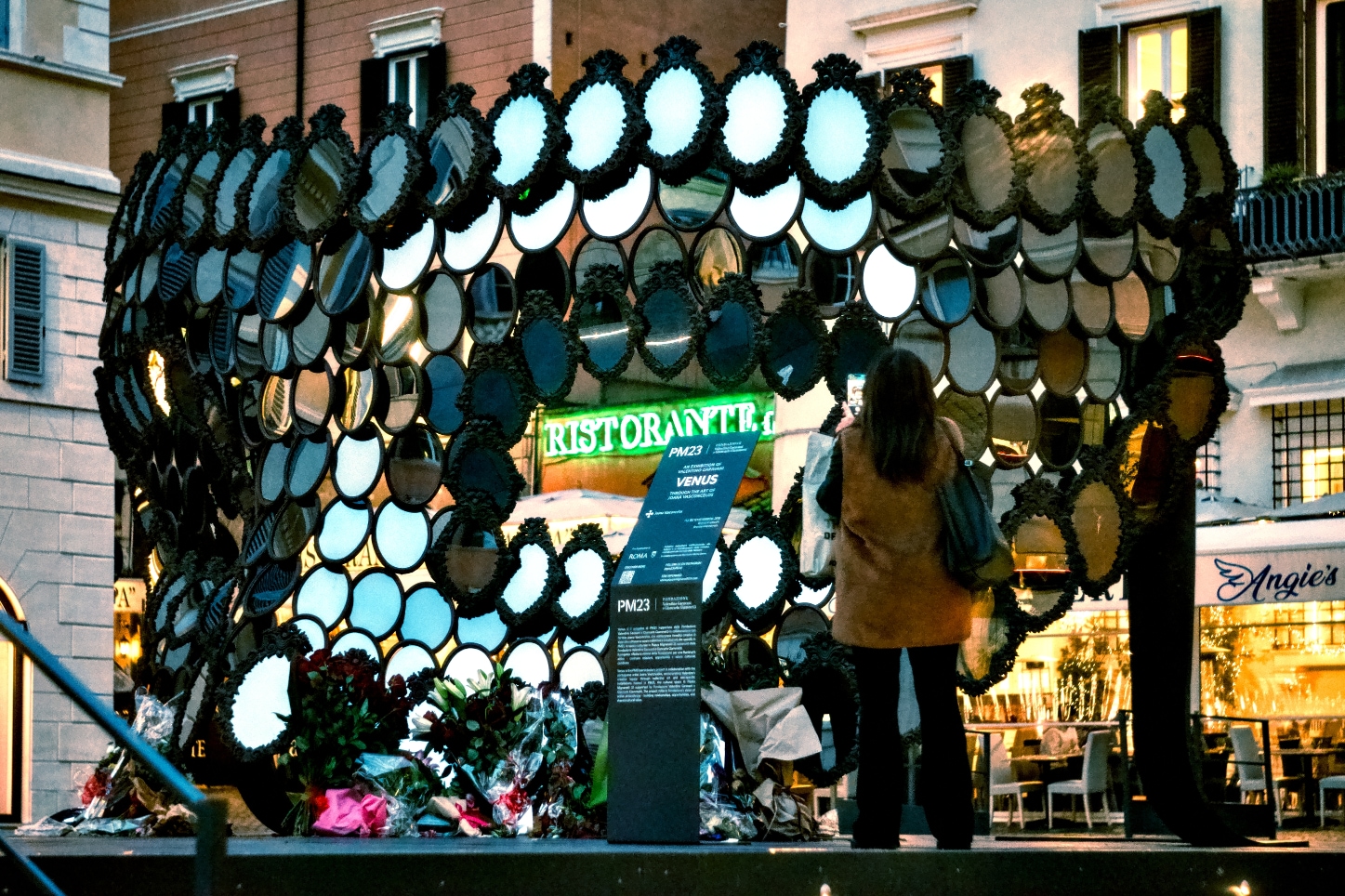
This installation, which is aesthetically questionable, is located next to Valentino’s headquarters and is another unfair torture test for the Triotar. The complex textures and highlights across the field mercilessly expose flare and poor off-axis performance.
In summary, as always, it all comes down to what you expect from a lens.
The Triotar is an old lens from another era, with its own peculiarities and quirks, so I don’t see the point in comparing it to its ‘nobler’ contemporaries or modern lenses.
The Triotar does exactly what its design was intended to do. It may improve significantly at f/5.6 and f/8, but its character will stay the same. So, the question is: what are you looking for? If the goal is to capture the mood of a particular era, there’s no point using an ultra-sophisticated contemporary lens and then editing the photo in post to make it look like it was taken in the past. Better go for the real thing.